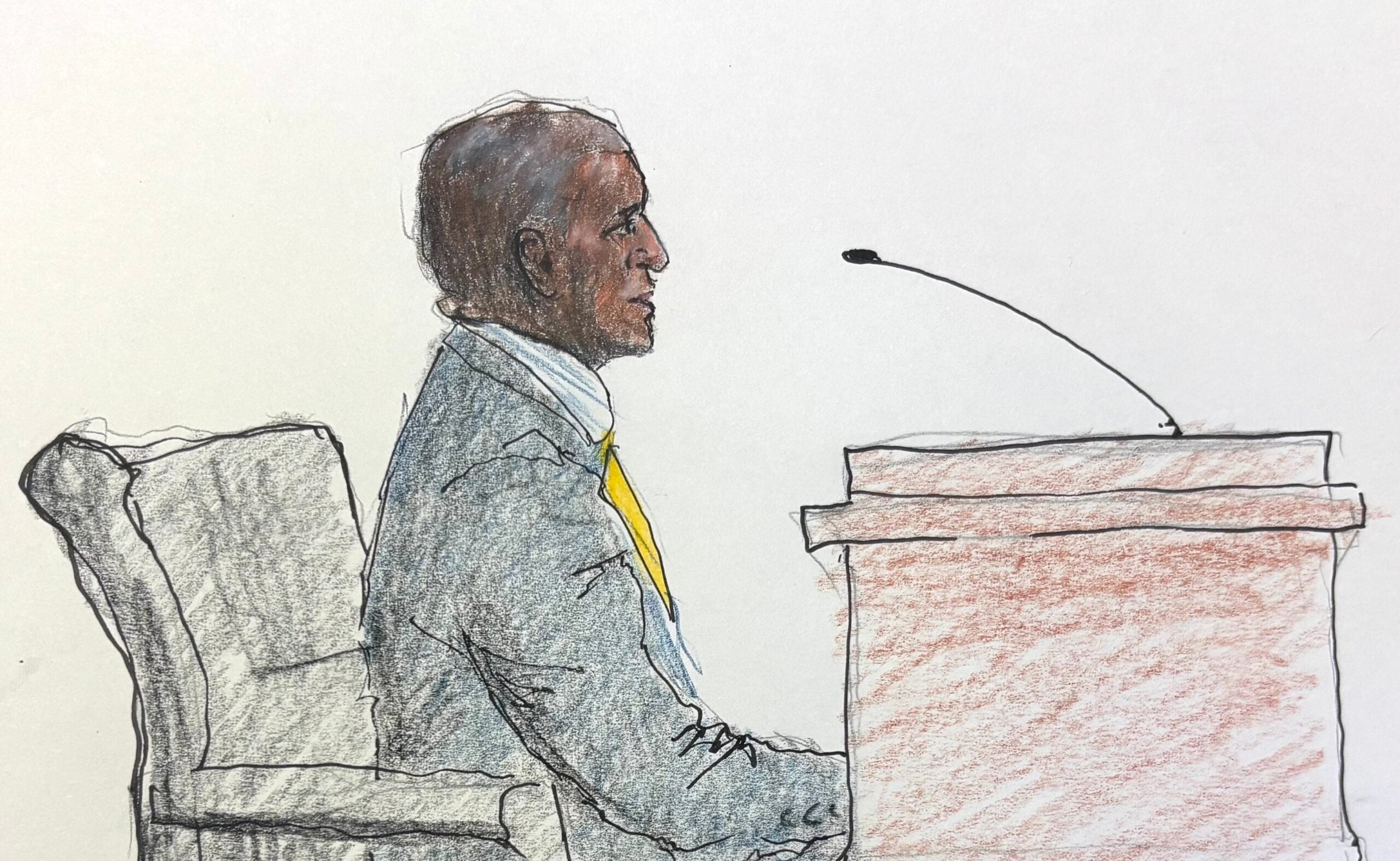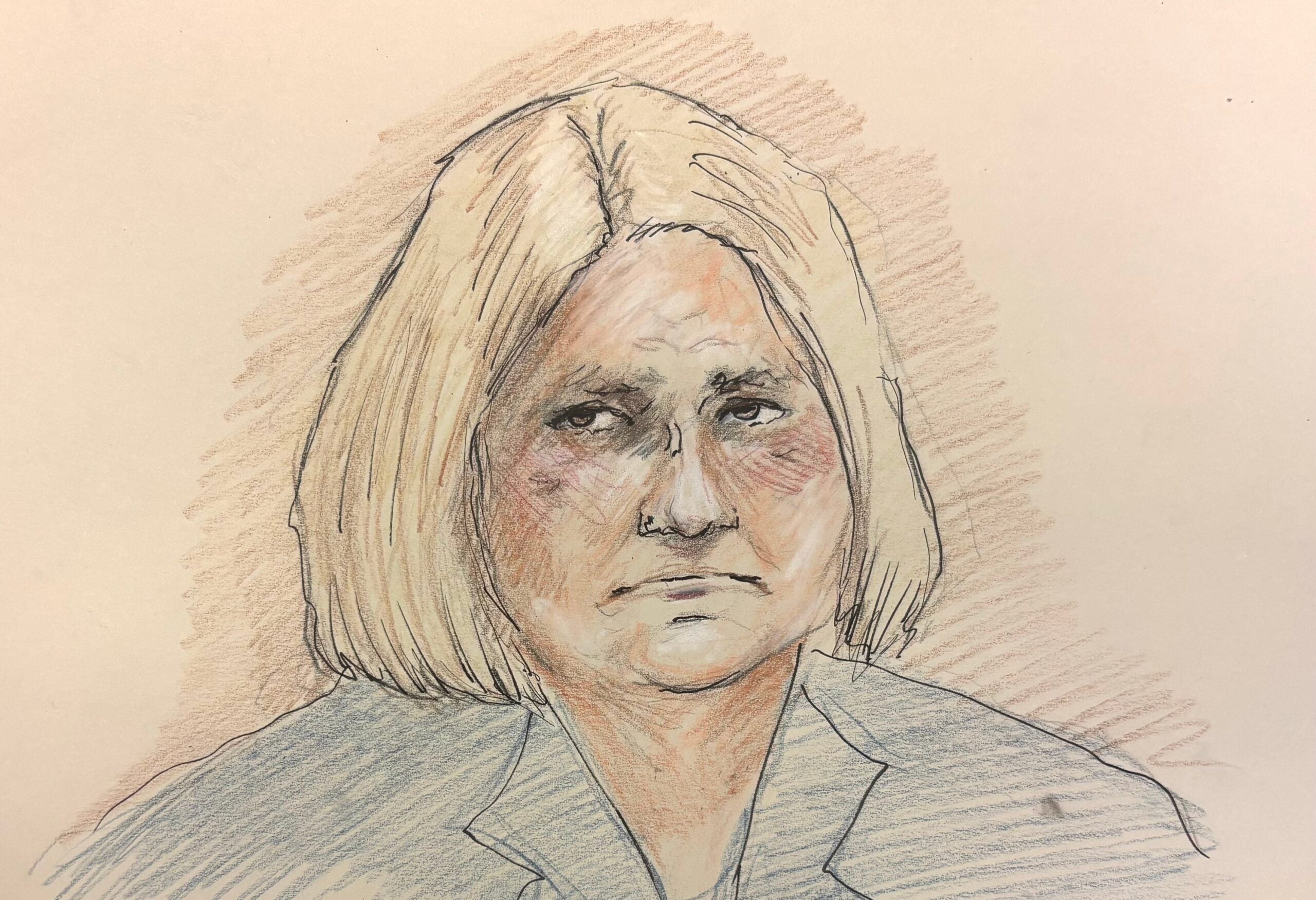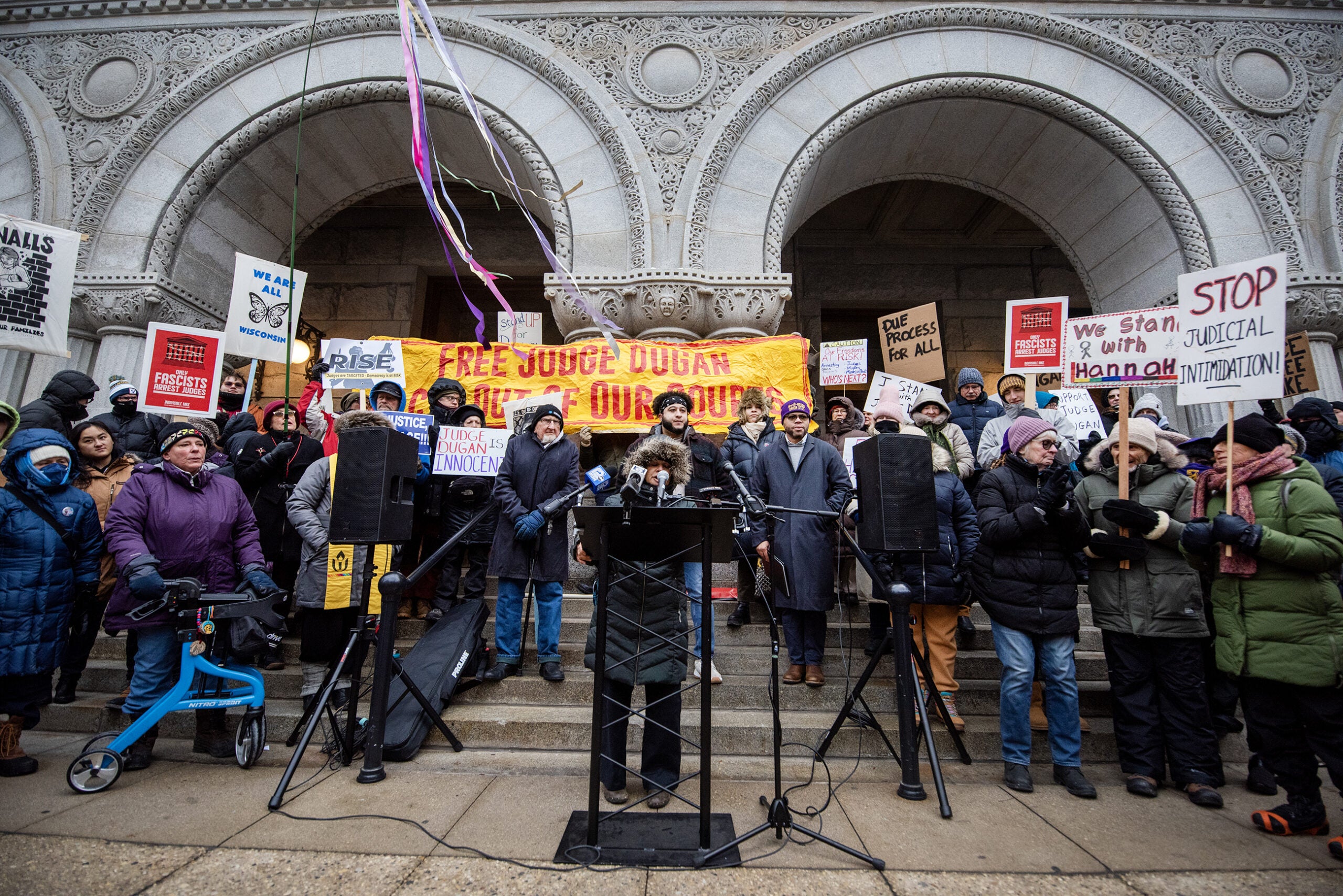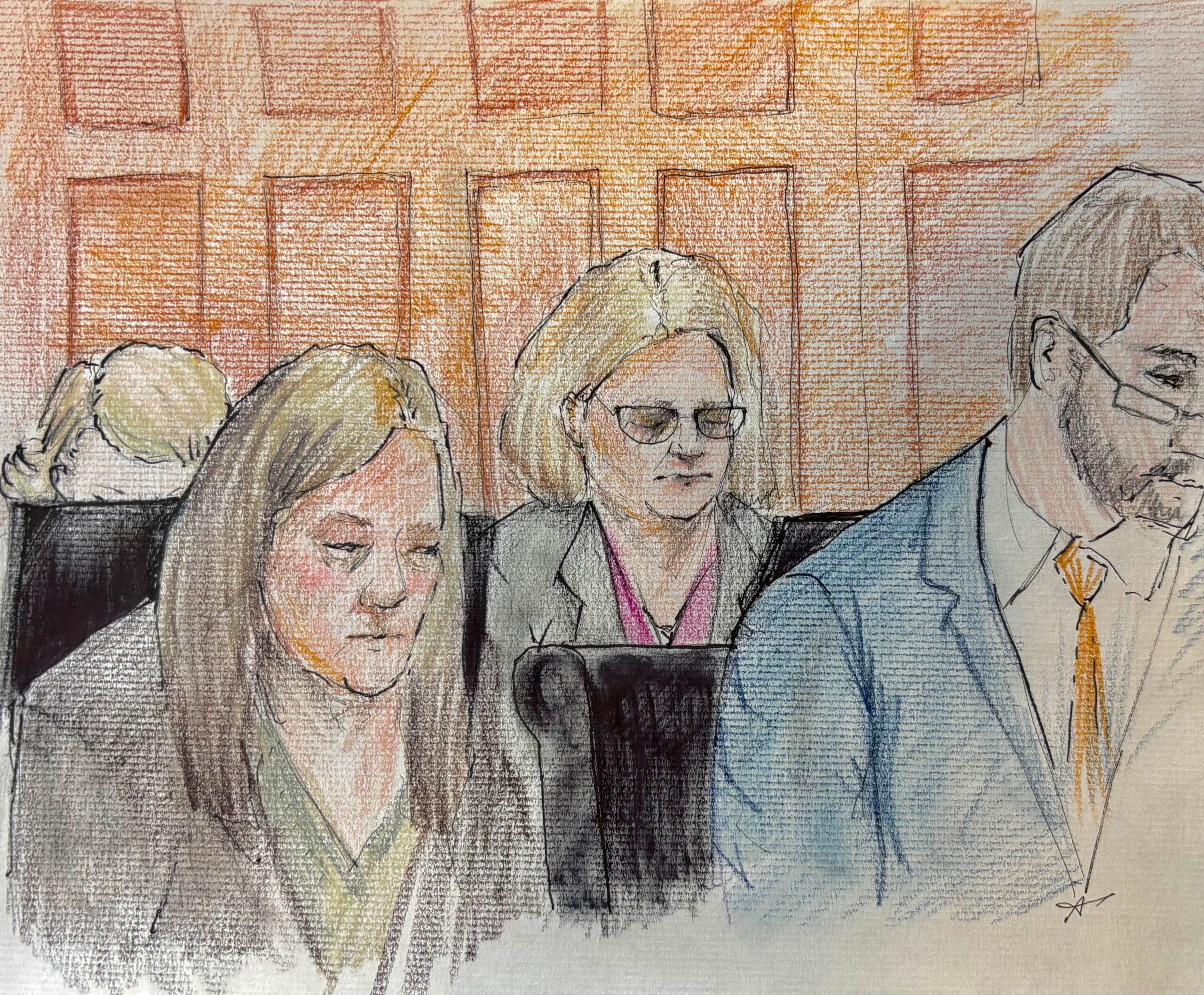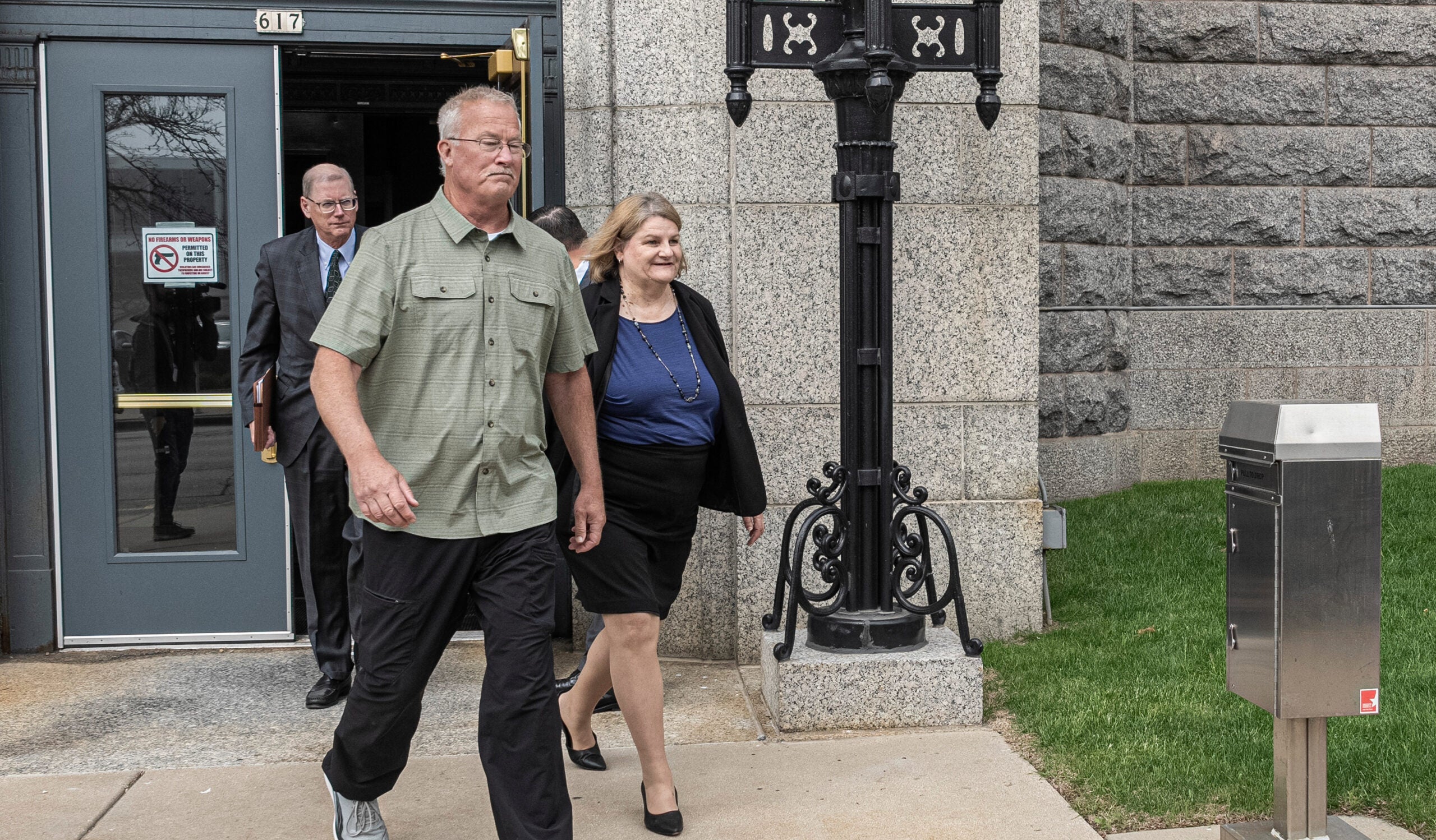
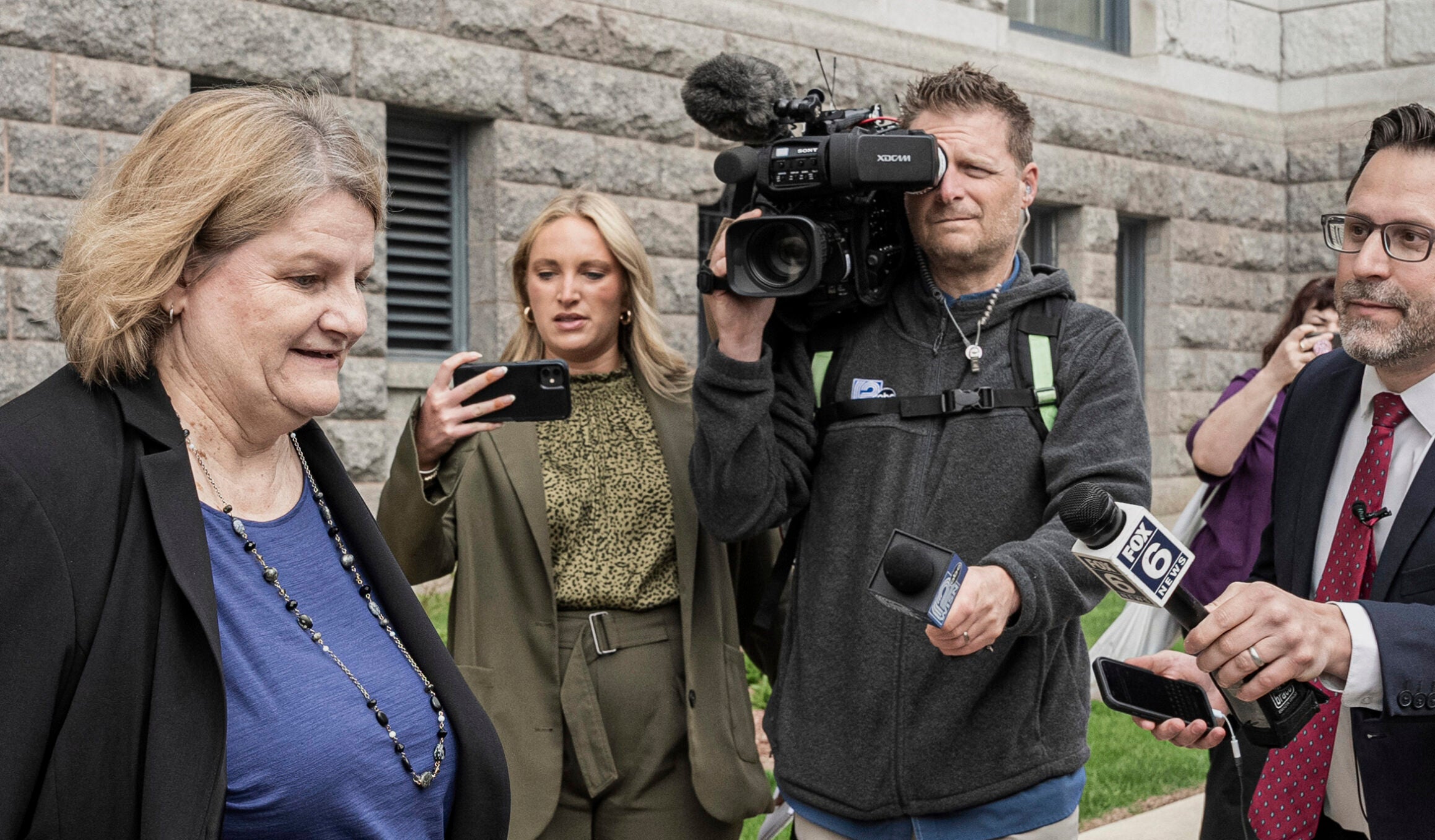
Judge Hannah Dugan is normally behind the bench in her Milwaukee County courtroom, deciding the outcome of cases.
But for the past week, she’s been on the other side of a courtroom — listening and taking notes at the federal courthouse, about a mile and a half from where she works in the county courthouse.
Now, it’s up to a jury of her fellow Wisconsinites to decide whether or not she’s guilty of obstructing or impeding a proceeding, a felony, and concealing an individual to prevent his discovery and arrest, a misdemeanor.
News with a little more humanity
WPR’s “Wisconsin Today” newsletter keeps you connected to the state you love without feeling overwhelmed. No paywall. No agenda. No corporate filter.
The charges stem from an April 18 incident in which Dugan directed a man named Eduardo Flores-Ruiz through a side door of her courtroom, and said his hearing would be rescheduled over Zoom. That’s after federal agents had showed up at the Milwaukee County courthouse to arrest Flores-Ruiz for being in the country illegally.
Flores-Ruiz had a hearing scheduled for 8:30 a.m. that morning in Dugan’s courtroom on misdeamnor domestic-battery charges.
The case against Dugan has attracted national attention, highlighting tension between the authority of a local judge and a federal immigration crackdown under President Donald Trump.
Prosecution and defense wrapped up their closing arguments just before 2 p.m. on Thursday. Earlier in the day, jurors heard from witnesses for the defense. Dugan did not take the stand to testify.
Is this case a referendum on immigration enforcement?
During her final pitch to the jury, Assistant U.S. Attorney Kelley Brown Watzka said Dugan had abused her power and undermined the “entire justice system.”
Reasonable people can disagree on immigration policy, but Dugan is not on trial for personal beliefs, Brown Waztka argued.
Instead, Brown Watzka said Dugan is on trial because she’s a judge who broke the law.
Brown Watzka quoted from testimony given by Dugan’s colleague Judge Kirstela Cervera earlier in the week: “Judges shouldn’t help defendants evade arrest.”
During the jury selection process, some of the men and women hearing Dugan’s case had expressed misgivings about federal immigration enforcement. But Brown Watzka told jurors those beliefs should not affect the outcome of Dugan’s case.
“What happens when someone with the highest duty to uphold the law decides it doesn’t apply to her?” Brown Watzka asked. “A courtroom is supposed to be a place of neutrality.”
Defense: Federal government trying to ‘crush’ Dugan
Defense attorney Jason Luczak started his closing argument by telling jurors the federal government has the power to “crush” people.
Luczak asserted the case was brought to make an example of Dugan and “besmirch” her reputation.
Luczak described Dugan as a judge doing her best to navigate shifting federal immigration policies.
He quoted from an email Dugan had sent to other judges before the April 18 incident. While discussing ICE arrests at courthouses, Dugan wrote, “We are in some uncharted waters.”
When she was handling cases in her courtroom on April 18, Dugan’s “heart and mind” were in the right place, Luczak said. He said there’s no evidence she acted with the intention of committing a crime.
“You think she’s gonna risk her career to help someone like that?” Luczak asked, referring to Flores-Ruiz.
In his closing argument, Luczak did not mention Trump by name. But he said the case against Dugan was “riddled with doubts,” and he seemed to question the motivation for filing charges against Dugan in the first place.
“Make no mistake. This went all the way up to the top,” Luczak said. “Like this went up to the highest levels of the government, OK? And they were concerned about this.”
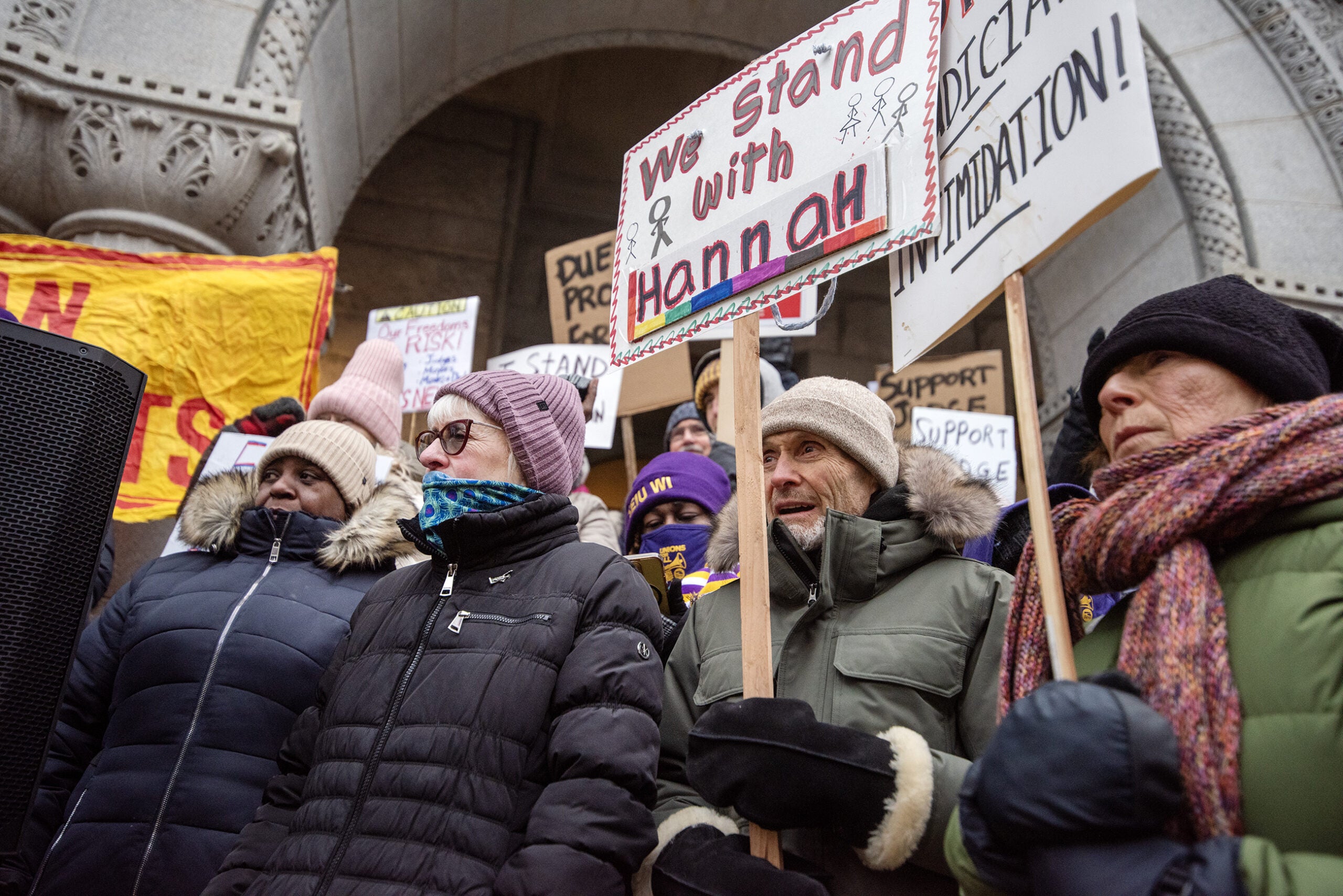
Defense asks for acquittal on both counts
In a motion Wednesday night, Dugan’s attorneys asked for her to be acquitted on both charges.
They say nothing she did was illegal — instead, they maintained everything she did was within her rights as a judge to manage her own courtroom.
For their part, federal prosecutors have sought to prove that Dugan acted “knowingly” and “corruptly” in an attempt to stop federal agents from carrying out an arrest.
Agents did catch up with Flores-Ruiz later in the morning on April 18. They arrested him outside the courthouse after chasing him on foot. Last month, he was deported back to Mexico.
Even though Flores-Ruiz was eventually arrested, that shouldn’t stop Dugan of being convicted, prosecutors told the jury.
Instead, Brown Watkza argued it’s enough to weigh whether Dugan took “affirmative, physical action” to try and keep Flores-Ruiz out of sight so that he couldn’t be arrested.
Prosecutors have drawn attention to the fact that agents were split up on April 18, after some of those agents went to the county chief judge’s office to show him their warrant for the arrest of Flores-Ruiz. That’s after Dugan directed the plainclothes agents to that office, after she confronted them in the courthouse hallway.
According to prosecutors, Dugan’s actions caused agents to lose their strength in numbers and made their plan to arrest Flores-Ruiz much more dangerous.
In contrast, Dugan’s attorneys emphasized that agents had multiple opportunities to arrest Flores-Ruiz, including inside the courthouse.
Flores-Ruiz and his attorney left through a side door that’s typically used by jurors. That jury door led into a short restricted hallway, which Flores-Ruiz and his attorney then followed into a public hallway, and down the building’s elevators before leaving the courthouse.
Did Dugan ‘conceal’ Flores-Ruiz?
Dugan’s attorneys say, despite the charges against her, Dugan’s actions do not meet the definitions of obstruction or concealment. The side door at the center of the case is 11 feet and 10 inches from the main doors in Dugan’s courtroom, which fed into the public hallway, defense attorneys told the jurors.
“The government’s concealment and obstruction charges both rest
entirely, then, on the immaterial distinction that (Flores-Ruiz) emerged into the public hallway less than twelve feet away from where agents expected him, at the same time and in view of two agents,” the defense wrote in its Wednesday night motion.
A team of six agents from several federal agencies, including Immigration and Customs Enforcement, showed up to arrest Flores-Ruiz at the courthouse on April 18. A team of FBI agents was also surveilling him that morning before the court was called into session.
Earlier this week, a federal agent testified that the surveillance and the arrest team were separate, although the two teams were in communication with each other.
Did Dugan’s actions show criminal intent? Or was she just a judge managing cases?
Prosecutors have cast Dugan’s actions on the morning on April 18 as highly unusual.
They described her moving quickly to call up Flores-Ruiz’s case out of its scheduled order, and played tape of Dugan telling his attorney to ask for a new hearing date off-the record.
To paint a picture of chaos and confusion, prosecutors called up Assistant District Attorney Melissa Buss, the prosecutor in the Flores-Ruiz case, who said she didn’t realize his case had been called on-the-record at all that morning. They also called up Brittany Ewing, who was then working as a victim-witness advocate in Milwaukee County.
During her testimony, Ewing sighed and said she had waited about an hour in the courtroom on April 18 alongside the victims Flores-Ruiz’s domestic violence case.
Ewing said she had been sitting tight for an update in the Flores-Ruiz hearing without realizing it had been rescheduled.
In contrast, Dugan’s offense attorneys have noted that judges have the ability to call cases in the order they see fit. They emphasized it’s normal for judges to reschedule hearings on the fly and to handle certain legal matters off the record.
Did Dugan direct Flores-Ruiz down courthouse stairs?
Throughout the trial, prosecutors have alleged Dugan was directing Flores-Ruiz to down some courthouse stairs after he left through the jury door. They say that would have provided an alternate route, allowing him to avoid detection.
Instead, Flores-Ruiz and his attorney ending up following the restricted hallway into a public hallway and going down the courthouse elevators.
But, even if Dugan was not directing Flores-Ruiz down the stairs, Brown Watzka said Dugan knowingly committed a crime once she started gesturing to the jury door.
“She provided an escape route for him out of her courtroom,” Brown Watzka said.
Prosecutors pointed to courtroom audio, in which Dugan spoke to her court reporter the morning of April 18, and said, “I’ll do it. I’ll get heat.”
Prosecutors also noted that, according to testimony from Cervera, Dugan spoke to her fellow judge just days after the incident. During that interaction, Cervera said Dugan told Cervera she was “in the doghouse” with the chief judge “because I tried to help that guy.”
“Those are the words of someone who understood she had done something wrong,” Brown Watzka said.
But, during his closing argument, Luczak suggested Cervera threw Dugan “under the bus” in order to avoid becoming a target of the federal investigation herself. He said some details in Cervera’s testimony don’t add up.
“You’re either a friend or enemy of the government,” Luczak said. “She became a friend of the government.”
Adelman gives instructions to jury
U.S. District Court Judge Lynn Adelman, the judge overseeing the case, gave his instructions to the jury Thursday afternoon.
Adelman warned the jury that they may not consider the fact that Dugan chose not to testify as evidence against her.
To prove the concealment charge against Adelman, jurors need to establish Dugan knew a federal warrant or another or federal process had been issued, and that she “harbored or concealed” Flores-Ruiz with the intention of preventing his discovery or arrest.
Adelman stated explicitly that a federal warrant includes an administrative warrant, known as an 1-200. That’s the type of warrant that federal agents brought to the Milwaukee County Courthouse on April 18.
“The actual harboring or concealing element requires some affirmative physical action by the defendant to hide, secrete or keep out of sight,” Adelman explained. “Mere failure to disclose the location of a fugitive is not concealing.”
To be convicted of the charge of impeding a proceeding, Dugan must have known that a proceeding was pending before a federal or department agency. She needs to have endeavored to influence, impede or obstruct that proceeding, and she must have done so “corruptly.”
Each charge needs to be proven beyond a reasonable doubt.
Could Dugan get prison time if she’s convicted?
Dugan has been a judge in Milwaukee County since 2016. She’s been suspended from from hearing cases since this spring due to the pending criminal case against her.
Taken together, the two charges carry a maximum penalty of up to six years in prison. But prison time would be very unlikely for a case like Dugan’s.
“She’s not going to jail over this,”University of Wisconsin Law Professor John Gross told WPR. “She has no criminal record.”
Editor’s note: WPR’s Anya van Wagtendonk contributed reporting.

Wisconsin Public Radio, © Copyright 2026, Board of Regents of the University of Wisconsin System and Wisconsin Educational Communications Board.