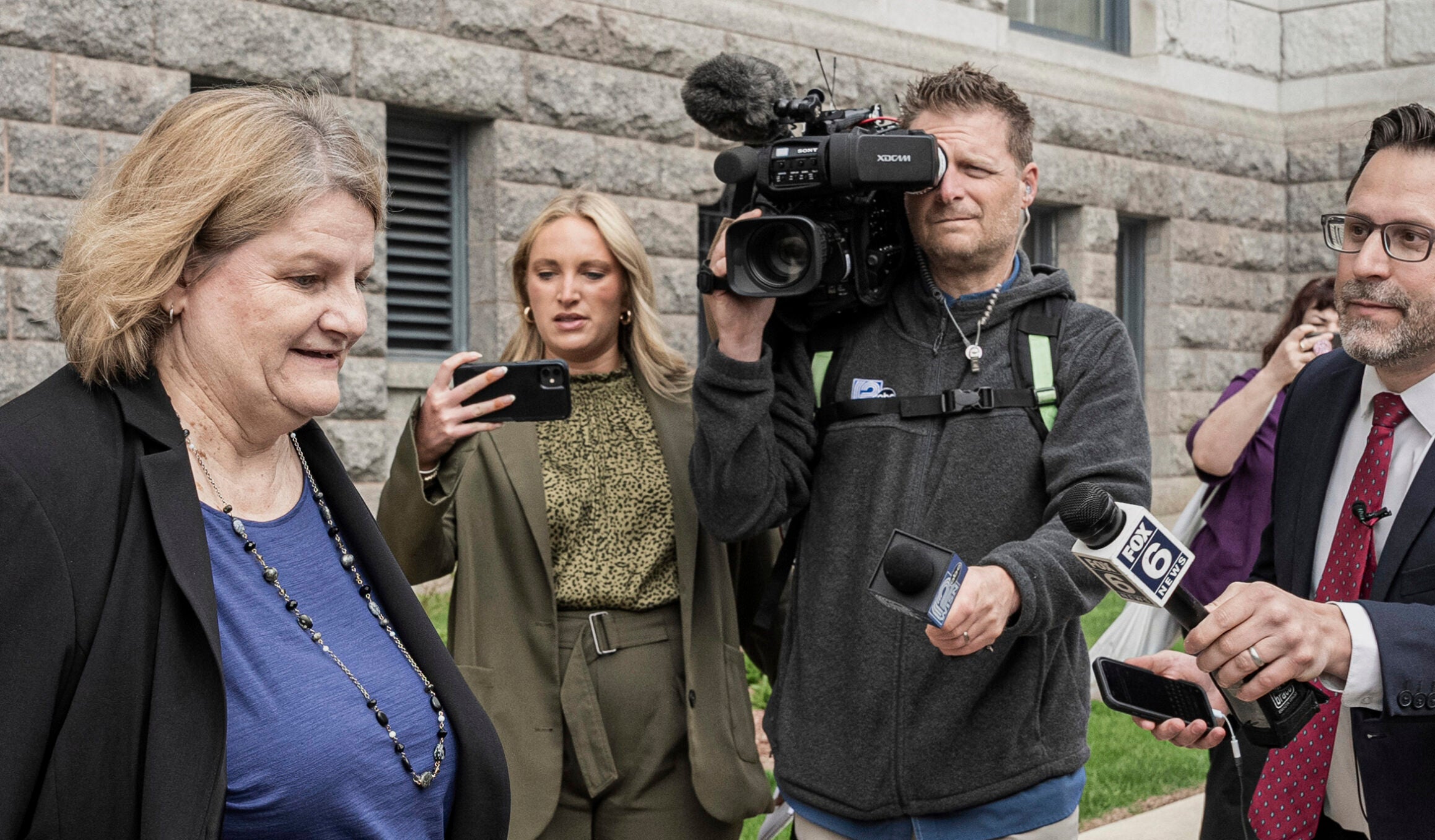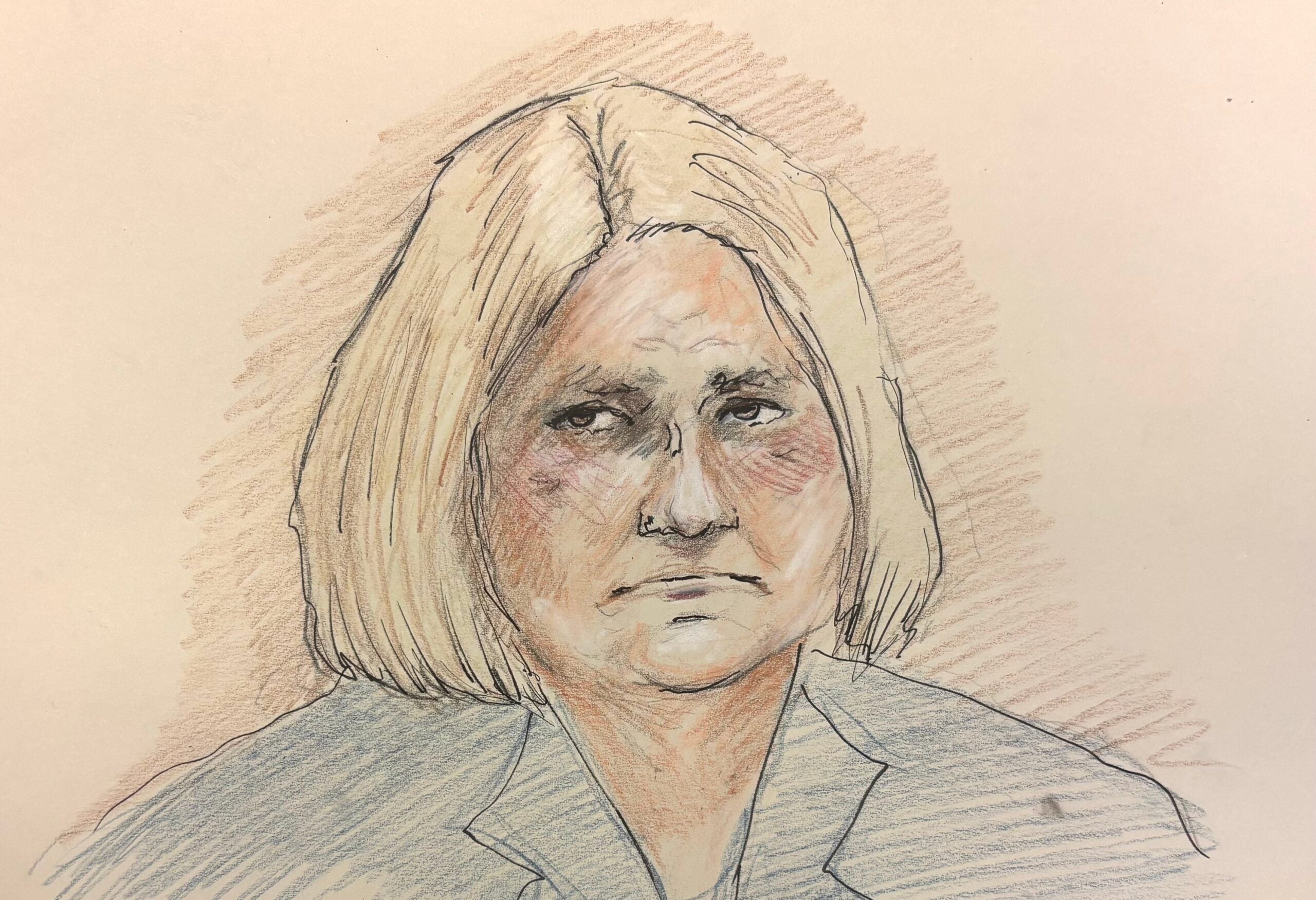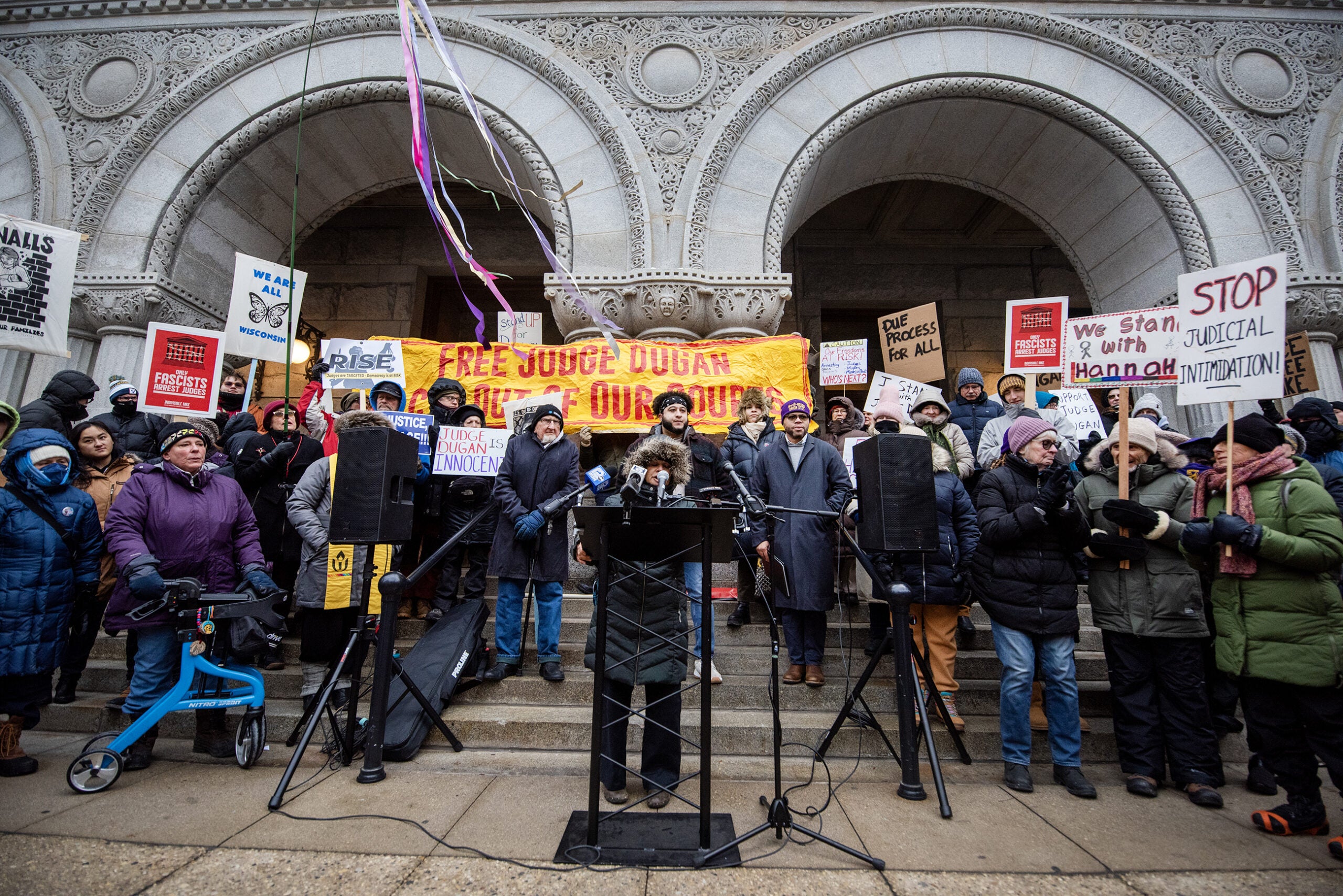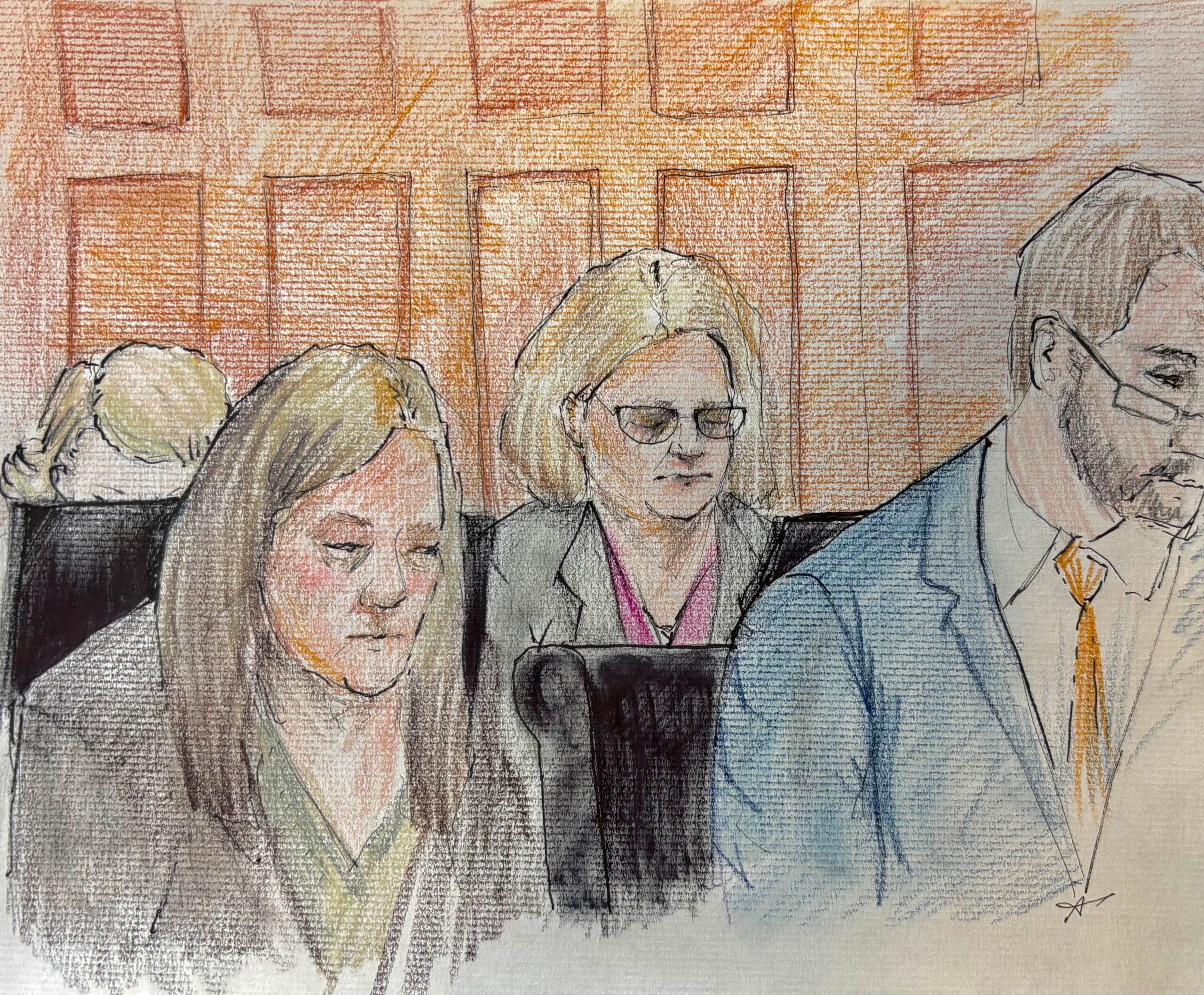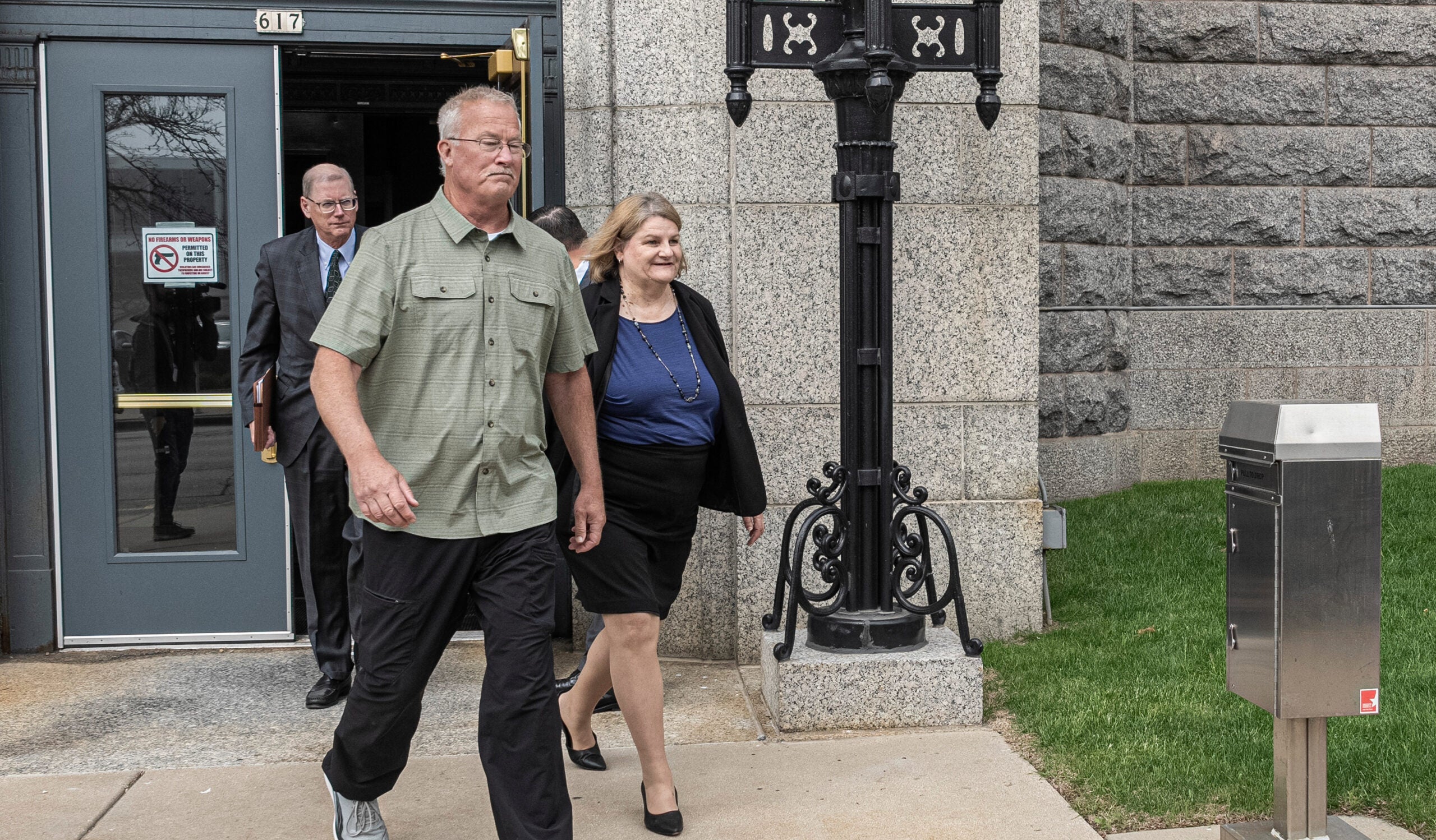
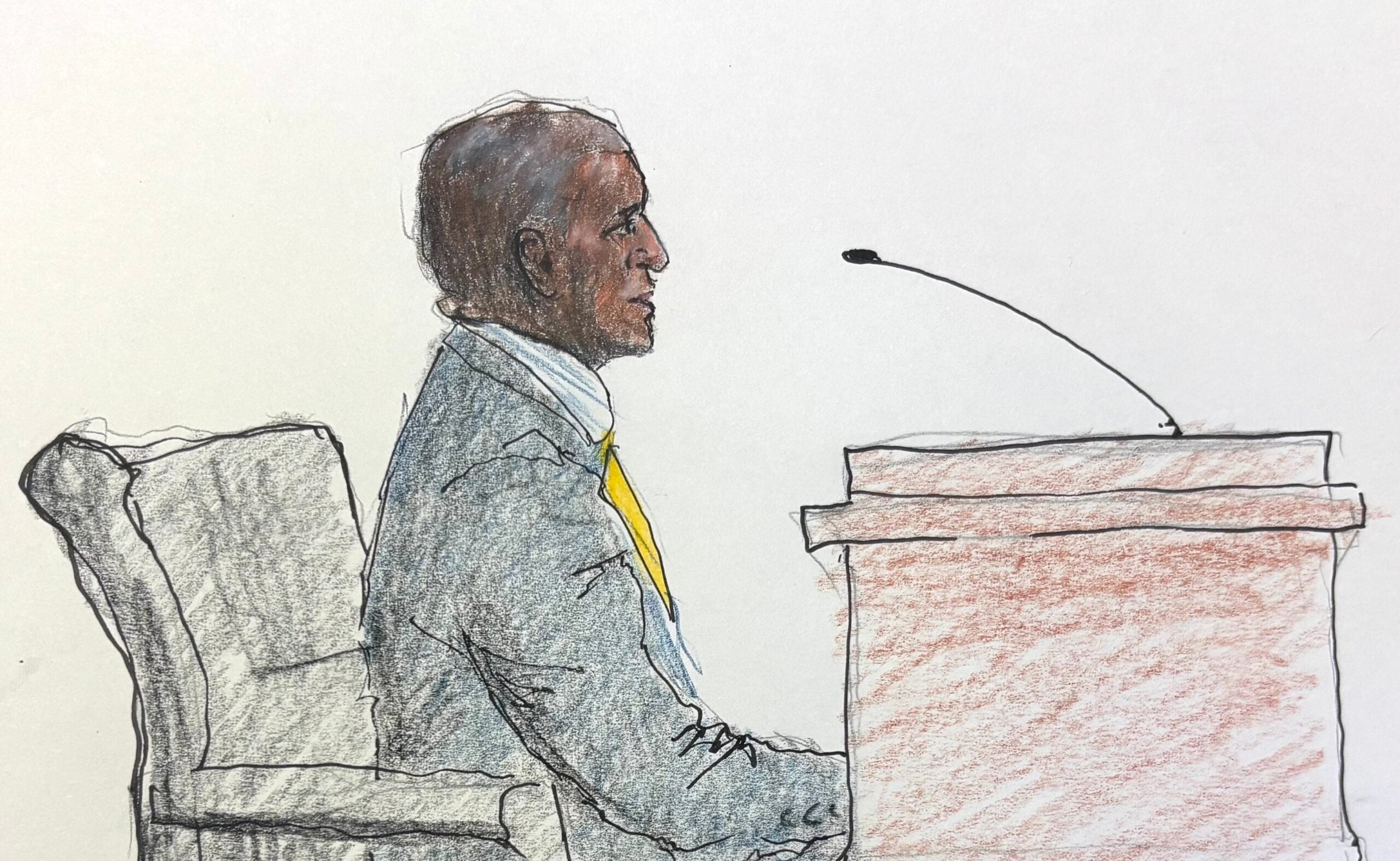
On the third day of the high-profile trial against Judge Hannah Dugan, jurors heard from a group of witnesses that included Dugan’s boss, her court clerk and the public defender who was in Dugan’s courtroom on the day that led to her arrest.
The prosecution finished calling its witnesses just before 3 p.m. on Wednesday. Thursday morning will begin with witnesses called by the defense.
U.S. District Court Judge Lynn Adelman, the judge overseeing the case, indicated the jury could hear closing arguments by Thursday afternoon.
News with a little more humanity
WPR’s “Wisconsin Today” newsletter keeps you connected to the state you love without feeling overwhelmed. No paywall. No agenda. No corporate filter.
Some of the key testimony Wednesday came from Milwaukee County Chief Judge Carl Ashely, who described a back-and-forth in the weeks before Dugan’s arrest, as Milwaukee County judges worked to figure out how they should respond when immigration agents show up at the courthouse.
Dugan, 66, faces charges of obstructing or impeding a proceeding and concealing an individual to prevent his discovery and arrest.
Federal prosecutors say Dugan helped a man evade immigration agents on April 18 after they showed up at the courthouse to arrest him.
The man, Eduardo Flores-Ruiz, had been scheduled to appear in Dugan’s courtroom that day on misdemeanor domestic violence charges.
Chief judge indicated ICE arrests are allowed in courthouse hallways
During testimony earlier this week, federal agents told jurors they notified court personnel of their plans to arrest Flores-Ruiz. The agents also said they told court personnel they planned to carry out the arrest in the courthouse hallway once Flores-Ruiz’s hearing had concluded.
Prosecutors showed jurors an email that Ashley sent to his colleagues on April 4, about two weeks before the incident that led to Dugan’s legal troubles.
That email came after two other ICE arrests at the courthouse earlier that spring. In the email, Ashley said he was gathering more information, but suggested that ICE arrests could likely be prohibited within private courtrooms.
Ashley also suggested that courthouse hallways may be a different story.
“I’m not sure we have the authority to intervene with what happens in the public hallway,” Ashley wrote.
Several Milwaukee County judges replied to the email chain, recommending a court-wide policy be developed.
Dugan was one of the judges that replied. In an April 8 email, Dugan said it would be great to have a written policy, at least in draft form, addressing ICE in the public safety building, courthouse and children’s court. Dugan suggested there should be a judges’ meeting about the issue.
Ashley did hold a Zoom meeting later in the month to get input from county judges as he worked on a draft policy. He said he didn’t recall Dugan being at that meeting because she had a scheduling conflict.
After the meeting, Ashley sent another draft of a courthouse policy to the county’s judges on April 10. Ashley said he was continuing to seek input on the policy from judges, “community partners” and ICE. At that point in time, Ashley said the pending policy was not binding.
Although Ashley indicated his understanding was that ICE arrests could not be prevented in courthouse hallways, he suggested concerns could arise if immigration agents attempted to arrest people inside courtrooms. He indicated his goal was to ensure that federal immigration actions did not interfere with the activities of a state-level court.
“I had great concerns about whether or not they could interfere with our state functions,” Ashley said while discussing the draft policy.
Ashley texted Dugan after incident
After speaking with federal agents over the phone about ICE arrests, Ashley sent Dugan a short text on April 18, asking her to call him.
“I wanted to find out from her perspective what occurred,” Ashley told jurors.
A few hours passed without a reply from Dugan. It was Good Friday, and Dugan later conveyed to Ashley that she had been in a church service and would get back to him later.
After hearing more about what may have transpired on April 18, Ashley said he texted Dugan again later that day. He recalled texting her, “Never mind. Have a good holiday.”
“I was concerned about what might have happened and just didn’t want to have to put her in the position to have to talk to me about it,” Ashley told the court.
Ashley sent an email to the county’s judges, informing them that ICE had showed up to the courthouse on April 18, and providing a brief summary of what had happened.
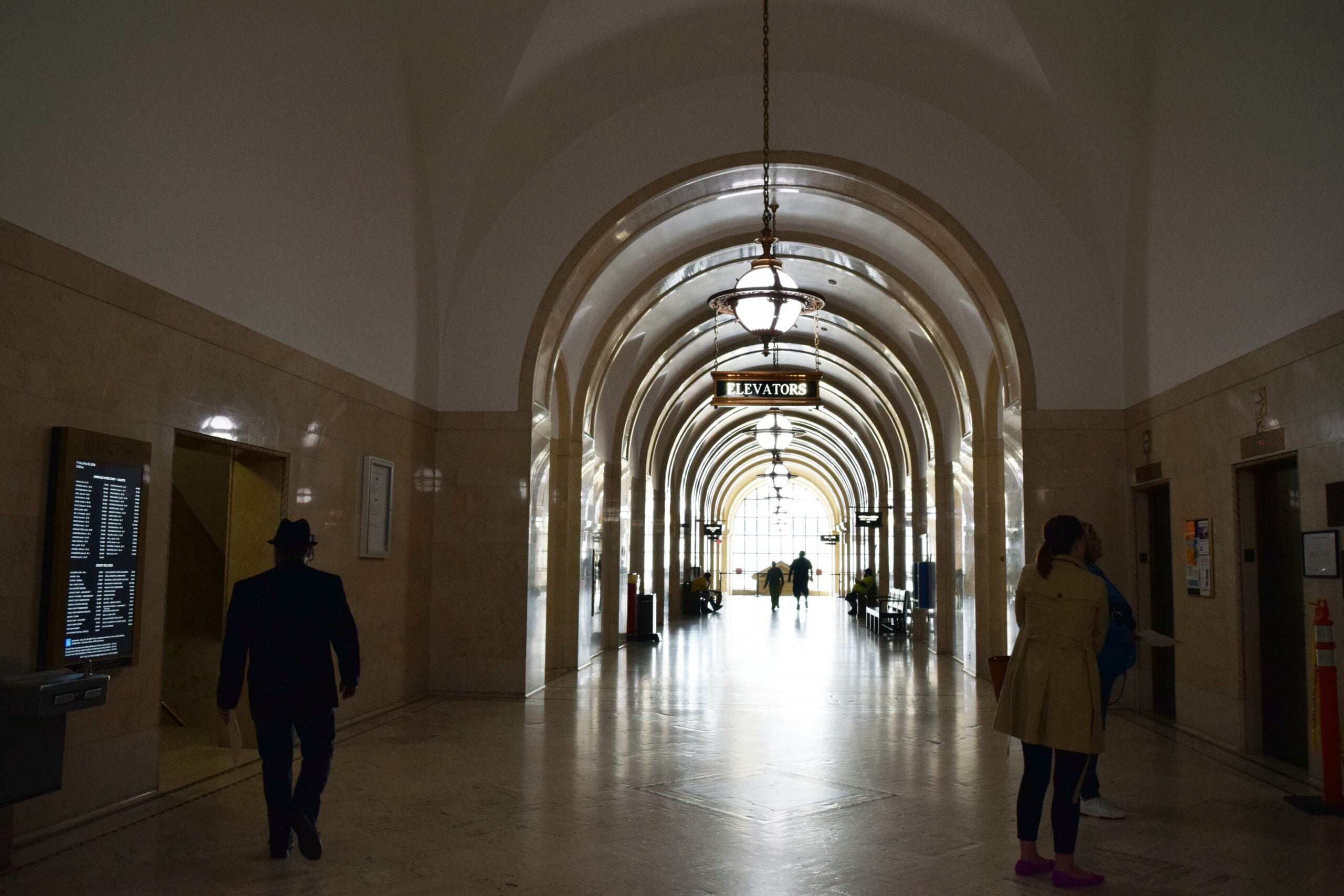
Dugan replied with just a few lines on April 21, saying she wanted to offer clarification about one point in the email. She noted that agents did not present their administrative warrant in the hallway of the courthouse’s sixth floor. Both Dugan’s courtroom and the chief judge’s office are on the sixth floor, and Dugan had confronted federal agents in the hallway outside her courtroom.
Agents have previously testified that they did not physically show their warrant to Dugan, although they did present that warrant later to the district court administrator, who sent a copy to Ashley.
Ashley raised alarms that ICE presence could have chilling effect on justice
During cross-examination, defense attorneys highlighted a press release that Ashley had sent earlier in April, raising alarms about ICE’s presence in the county courthouse.
In that release, Ashley had raised concerns about a “chilling effect on access to justice” and an “erosion of trust in the judicial system.”
Even before Dugan’s arrest, elected leaders in Milwaukee County had condemned the presence of ICE at courthouses. Now, Dugan’s case has a put a spotlight on the policy.
A President Joe Biden-era directive largely prohibited immigration arrests at courthouses, but President Donald Trump’s administration rescinded that policy.
Federal officials have argued that courthouses are a safe location for arrests because the people involved must go through courthouse metal detectors.
But advocates say the presence of immigration agents discourages immigrants from showing up to court, and makes immigrants fearful about coming forward as victims of or witnesses to crimes.
District court administrator testifies about setting up call with ICE agents
Jurors also heard Wednesday from District Court Administrator Stephanie Garbo, who works under Ashley.
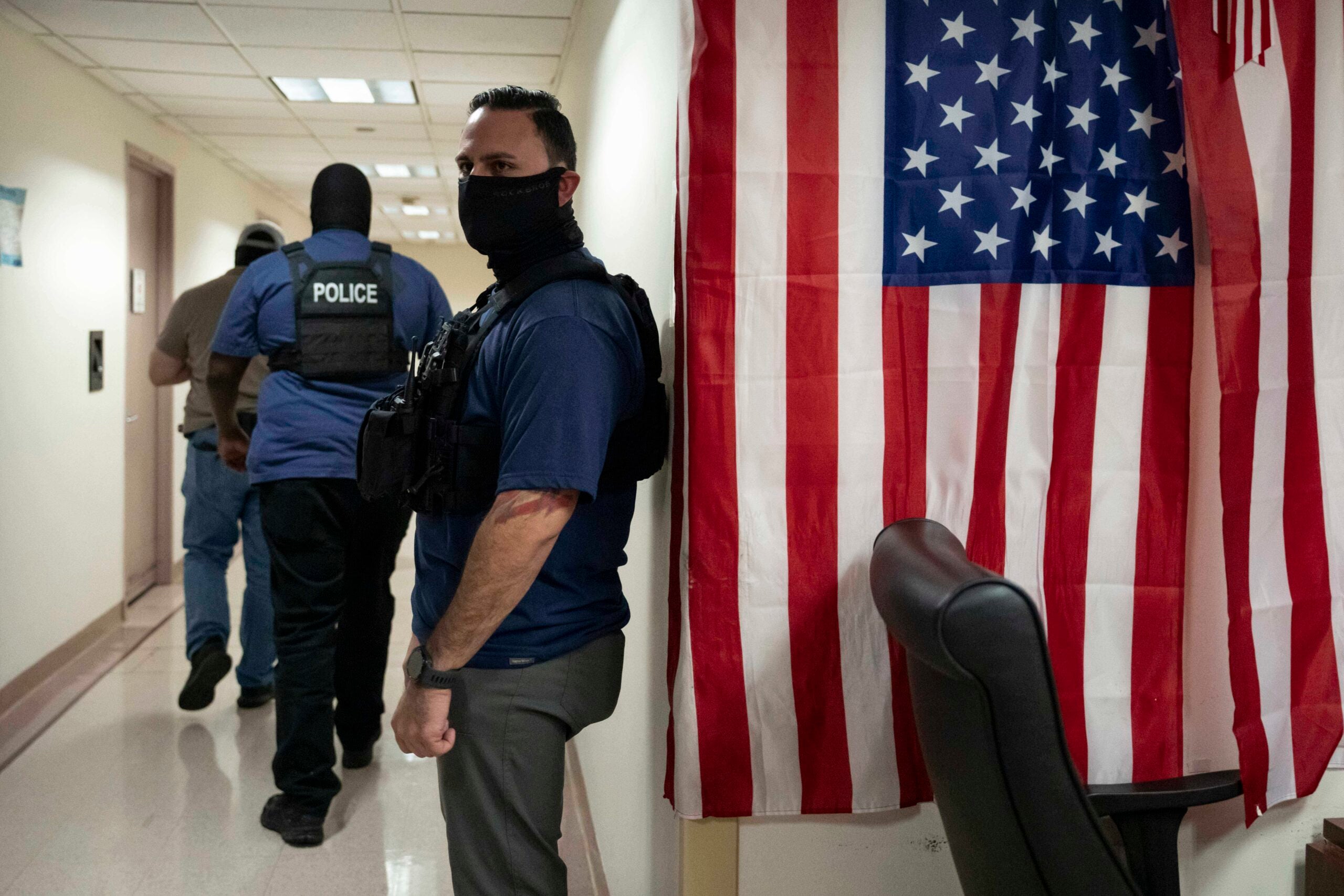
After Dugan directed the agents to the chief judge’s office on April 18, Garbo set up a phone call between a federal agent and Ashley, while another agent listened in. Ashely was not in the courthouse at the time so the call took place on speakerphone.
Garbo remembers looking at the agents’ warrant and making a copy so she could send a digital record of it to Ashley.
That call started in the lobby area of the chief judge’s office, but later moved to a more private conference room area, Garbo testified. Garbo said there was a discussion of a policy that would address ICE arrests in the Milwaukee County Courthouse, but Ashley made clear that policy was still in draft form.
Garbo said she remembered some discussion during the phone call about immigration arrests in the courthouse hallway, but she couldn’t recall whether Ashley said anything definitive about that.
After the call, Garbo said an agent asked her if they could arrest people in the building’s public hallways. Garbo recalled telling the agents, “To my knowledge, yes.”
In his testimony, Ashley described the tone of the phone call with agents as “very amicable.” Ashley recalled telling them he didn’t think he could stop an arrest in the public hallway.
Prosecutor recalls victims in Flores-Ruiz case showing up to court
The events under scrutiny include Dugan calling Flores-Ruiz’s case out of its scheduled order on April 18, and telling his public defender that his case would be rescheduled over Zoom.
Later on Wednesday morning, jurors heard from Assistant District Attorney Melissa Buss, who prosecuted Flores-Ruiz’s domestic battery case.
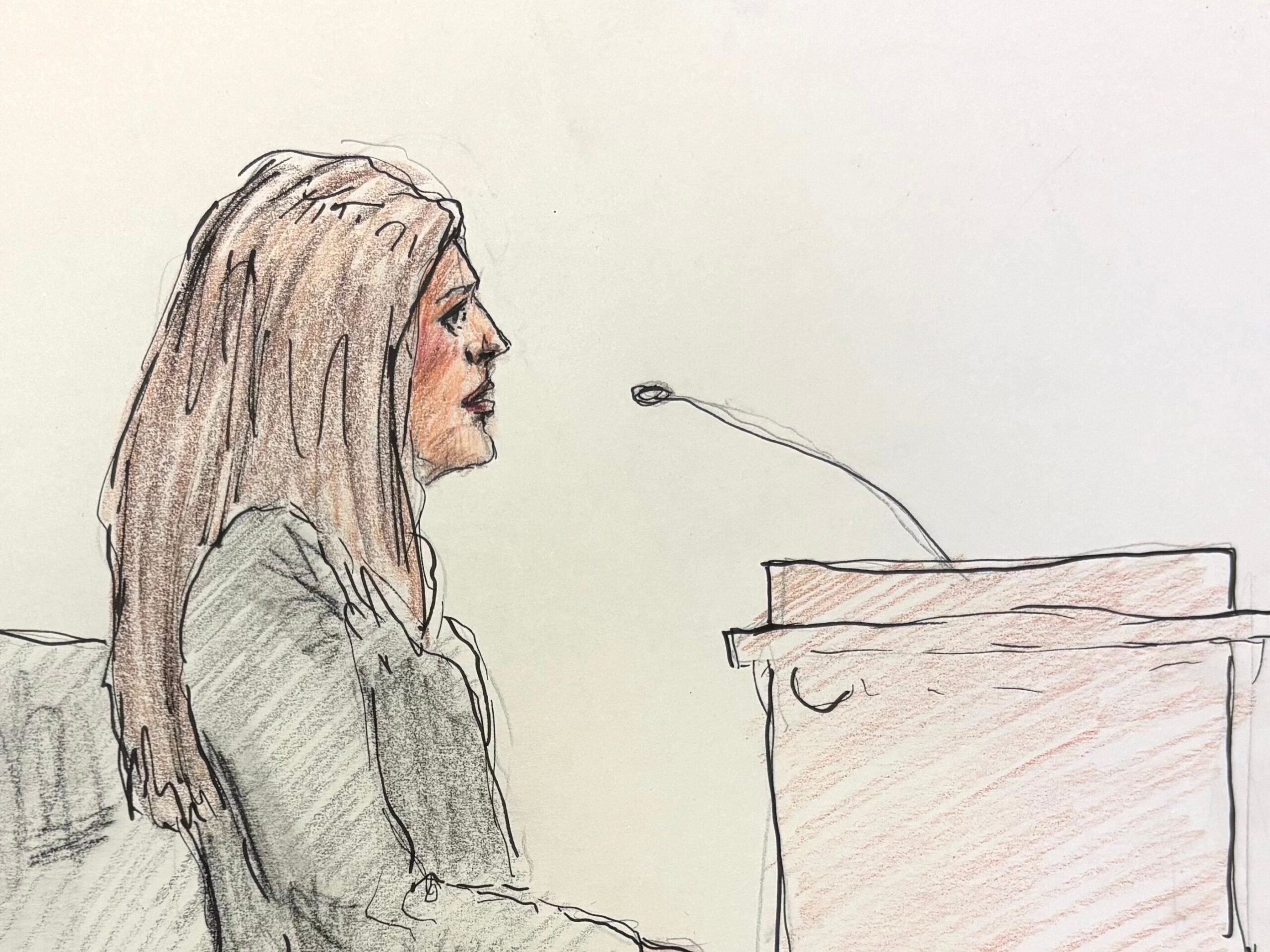
On the morning of April 18, Buss recalled that it was “unusual” to see Dugan standing near the courtroom’s jury door instead of behind the judge’s bench. That exit, typically used by jurors, was the door through which Dugan directed Flores-Ruiz and his attorney after ICE agents arrived at the courthouse.
Buss said Dugan did often deviate from a scheduled order when calling cases in her courtroom. Buss that typically depended on factors such as who was present in court that day. Buss described how the victims in Flores-Ruiz’s case had shown up to court on that day, flanked by the court’s victim-witness advocate.
Clerk testifies he called federal agent ‘fascist’
Another witness, Dugan’s court clerk Alan Freed, remembered feeling “upset and a little bit outraged” after learning from public defenders that ICE agents were at the courthouse.
Freed, a former civil rights attorney, recalled discussing the presence of those agents with Dugan.
Freed described going into the hallway and passing by a federal agent.
“I called him, ‘fascist,’” Freed told the jury.

Public defender: ‘My brain was spinning’
Later in the morning, the court heard from Mercedes de la Rosa, the public defender assigned to Flores-Ruiz’s criminal case.
De la Rosa recalls being concerned on the morning of April 18 after another public defender told her ICE was in the courthouse.
De la Rosa says she generally tries to avoid asking her clients about their immigration status, but added that she knew Flores-Ruiz was primarily a Spanish speaker.
Jurors listened to courtroom audio where Dugan tells de la Rosa, “Get a date off the record,” followed by, “Get your client out. Come back out and get a date.”
At the time of the incident that led to Dugan’s arrest, de la Rosa had been working at the Milwaukee division of the public defender’s office for less than a month.
Before that, de la Rosa had about three years of total legal experience as an employment attorney and as a public defender in Racine County.
De la Rosa told the jury that, in Racine County, she doesn’t ever recall hearing dates being called off the record. In Milwaukee County, however, calling matters off the record was “very common,” de la Rosa said.
De la Rosa recalled Dugan gesturing for her and Flores-Ruiz to leave through the jury door after Dugan’s courtroom was called into session on April 18.
“I remember being scared and freaked out,” de la Rosa. “It was unusual, so I was freaked out. I didn’t know what was going to be on the other side of the door.”
De la Rosa and her client ended up leaving through the jury door, which fed into a public hallway. On tape, Dugan’s court clerk and court reporter can be heard mentioning “stairs” and “down the stairs.” But, de la Rosa said, in her understanding, Dugan wasn’t ordering them go down the stairs.
Prosecutors have alleged that Dugan was directing Flores-Ruiz and his attorney down that stairwell, so that Flores-Ruiz could leave via a different route to evade arrest.
Dugan followed de la Rosa and Flores partly into the hallway, but de la Rosa testified she thought Dugan was trying to provide a “mentoring moment.”
De la Rosa knew Dugan through the Association for Women Lawyers. She said Dugan often helped out young female attorneys by giving them tips in private, away from the attention of the courtroom.
“My brain was spinning,” De la Rosa recalled about leaving the courtroom.
De la Rosa recalled she had just been trying to speak in two languages. Since it was Good Friday, de la Rosa had been fasting all morning.
De la Rosa left her bag and umbrella on the courthouse’s sixth floor, and she and Flores-Ruiz left through the elevators and went outside the building into the rain. Flores-Ruiz started running, and agents ended up arresting him near the courthouse.
Court reporter discusses courtroom audio
Wednesday’s final witness was Dugan’s court reporter Joan Butz.
Butz recalled saying “that pisses me off” after learning that ICE was in the courthouse.
Once again, prosecutors played audio from the courtroom on the morning of April 18, and they asked Butz about the context.
Butz testified that Dugan first brought up the concept of going down the stairs, which prompted Butz to reply “down the stairs.”
Butz said she replied that way, as a way to clarify what was being discussed.
Butz said she offered to show de la Rosa and Flores-Ruiz out, to make sure they left out the right door.
What would happen if the pair went out the “wrong” door,” Assistant U.S. Attorney Kelly Brown Watzka asked?
“They could meet the ICE people,” Butz answered.
After Butz offered to show the pair the door, Butz said that Dugan indicated she would do it instead.
That was when Dugan can be heard saying “I’ll do it. I’ll get the heat,” prosecutors said.

Wisconsin Public Radio, © Copyright 2026, Board of Regents of the University of Wisconsin System and Wisconsin Educational Communications Board.