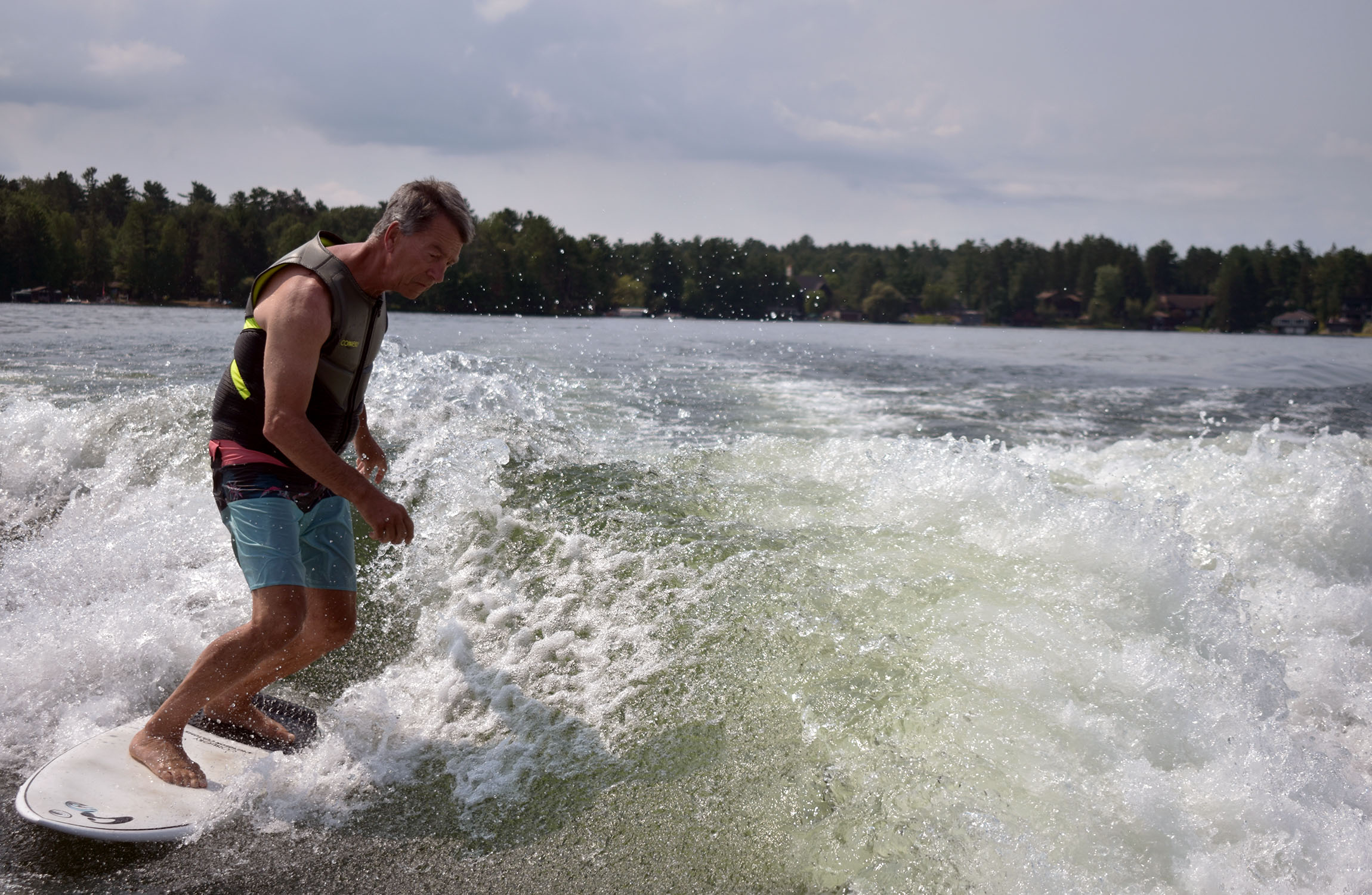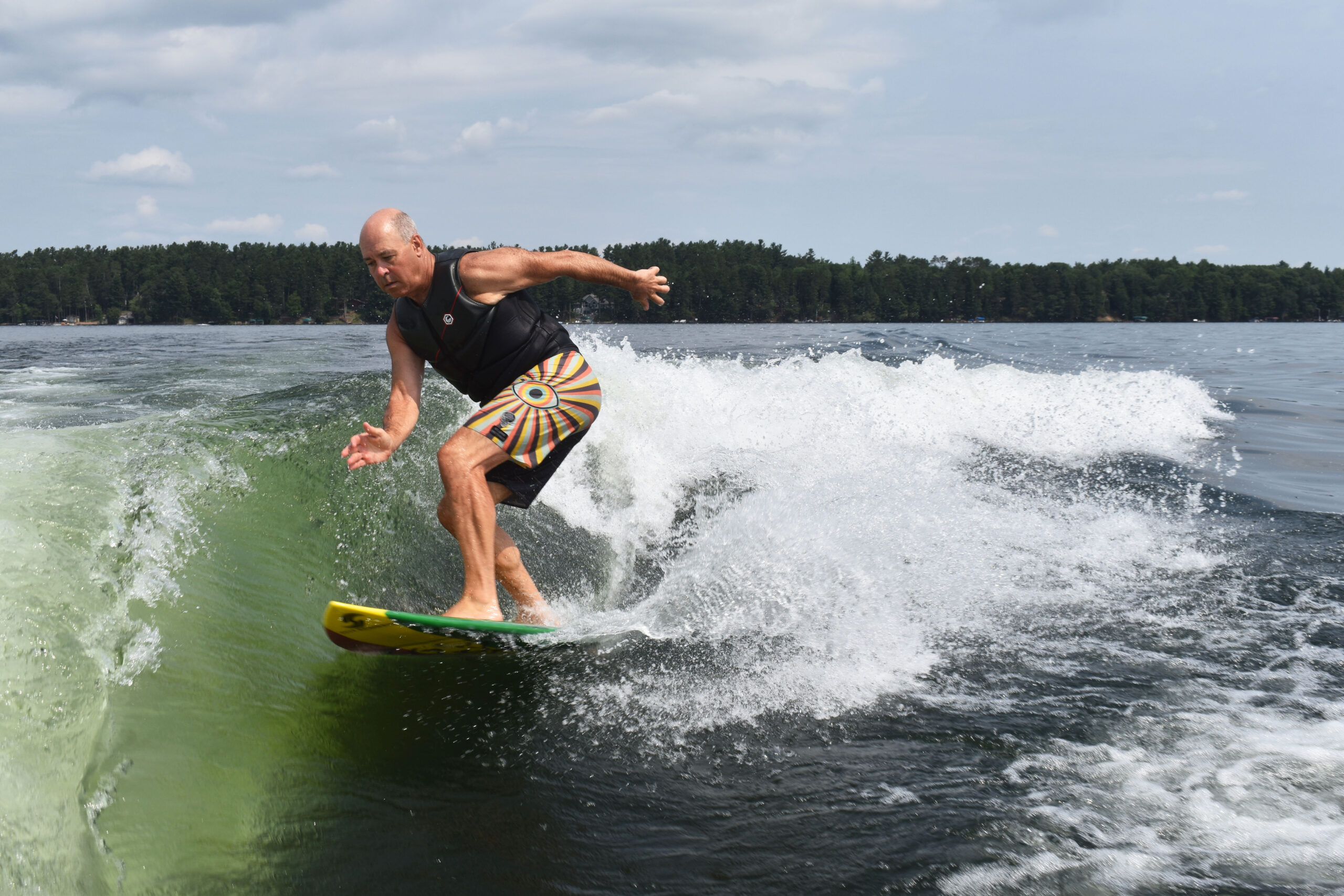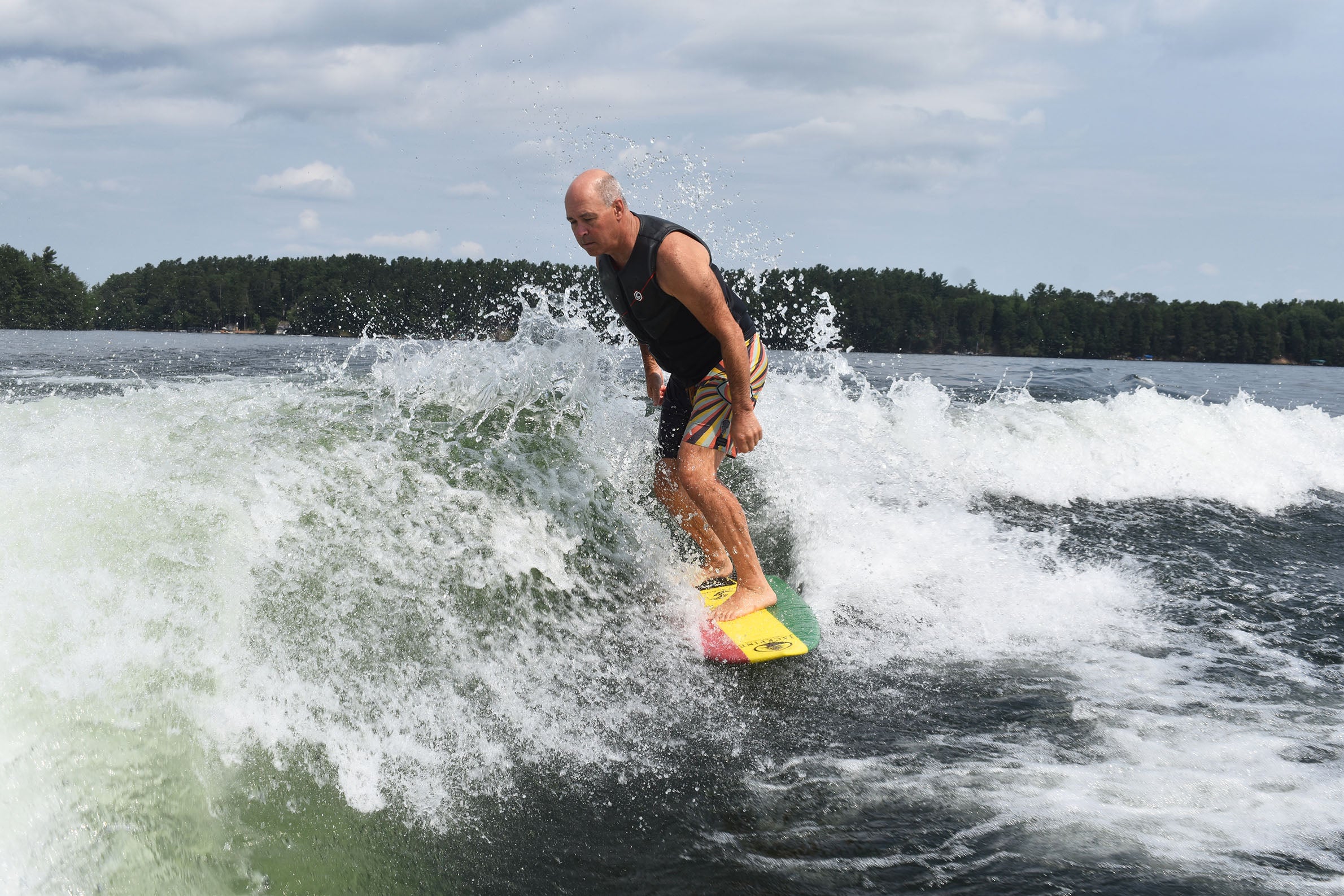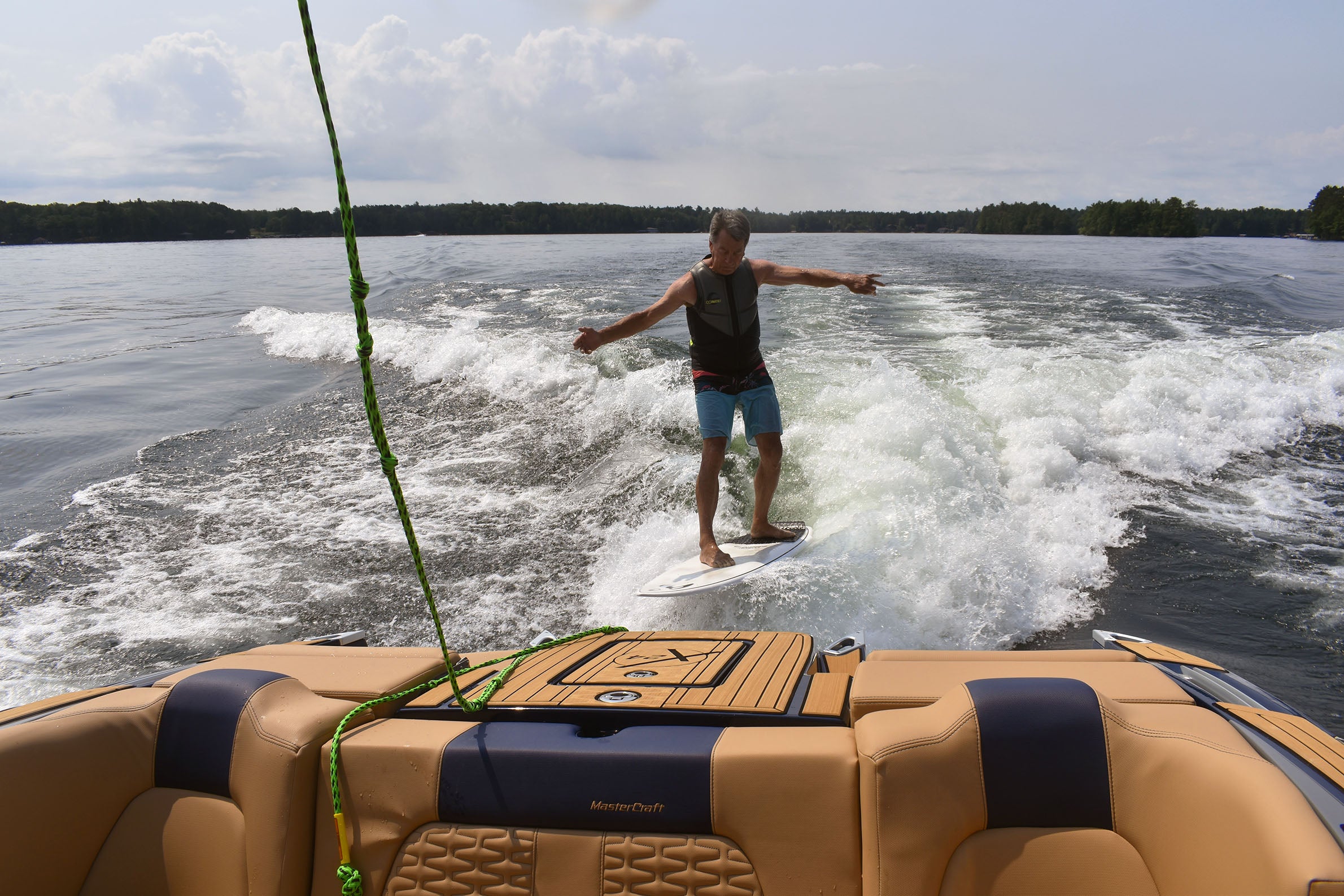
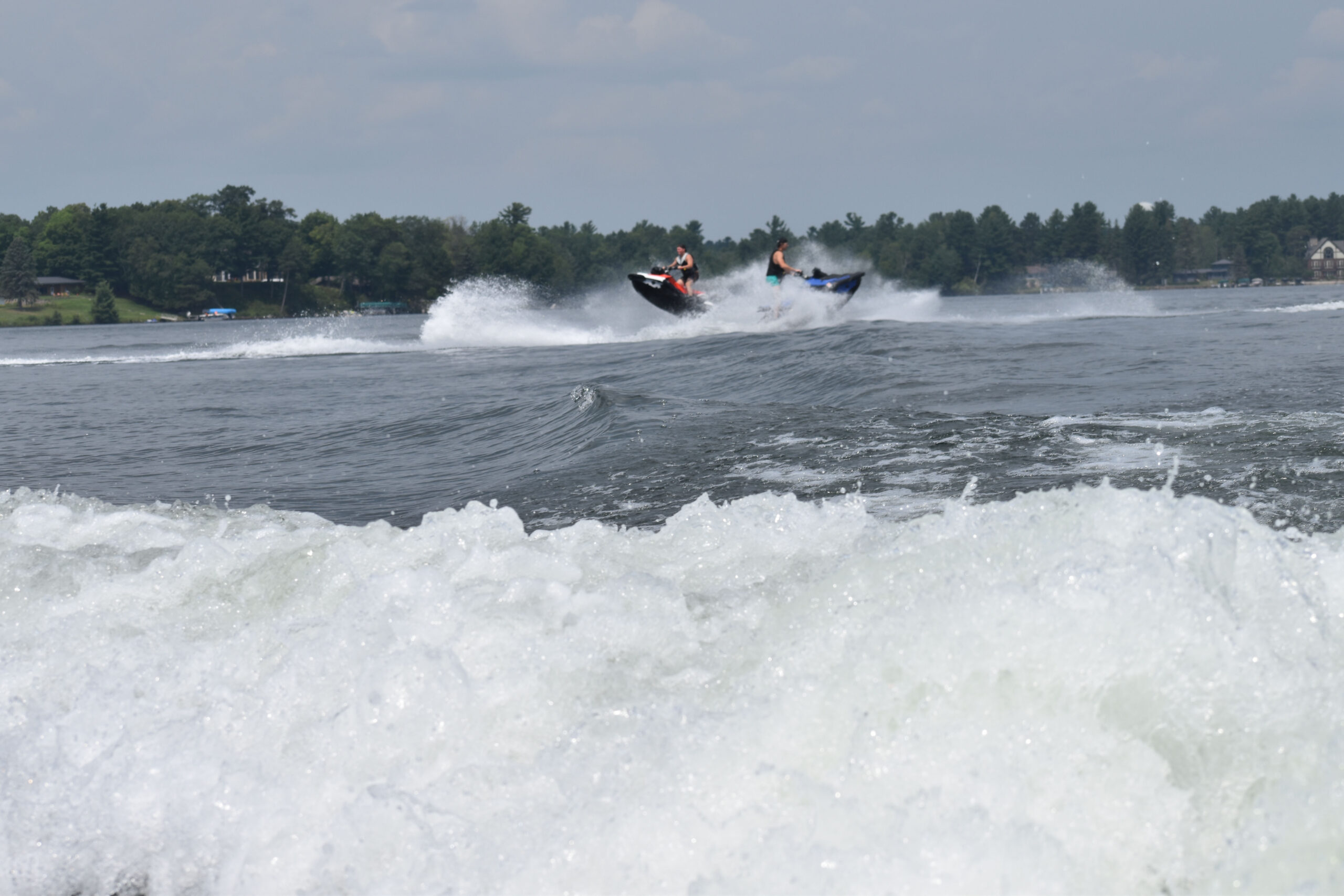
Wake boats have been making waves in Wisconsin lakes — and not just on the water.
Over the past few summers, tensions have been mounting around the use of wake boats, which are designed to generate big waves at slower speeds for water sports like wake surfing.
“We see a lot of conflict on lakes between people who canoe or swim or kayak and these wake boats,” reporter Danielle Kaeding told WPR’s “Wisconsin Today.” For the past two summers, she has been reporting on wake boats from WPR’s Superior bureau.
News with a little more humanity
WPR’s “Wisconsin Today” newsletter keeps you connected to the state you love without feeling overwhelmed. No paywall. No agenda. No corporate filter.
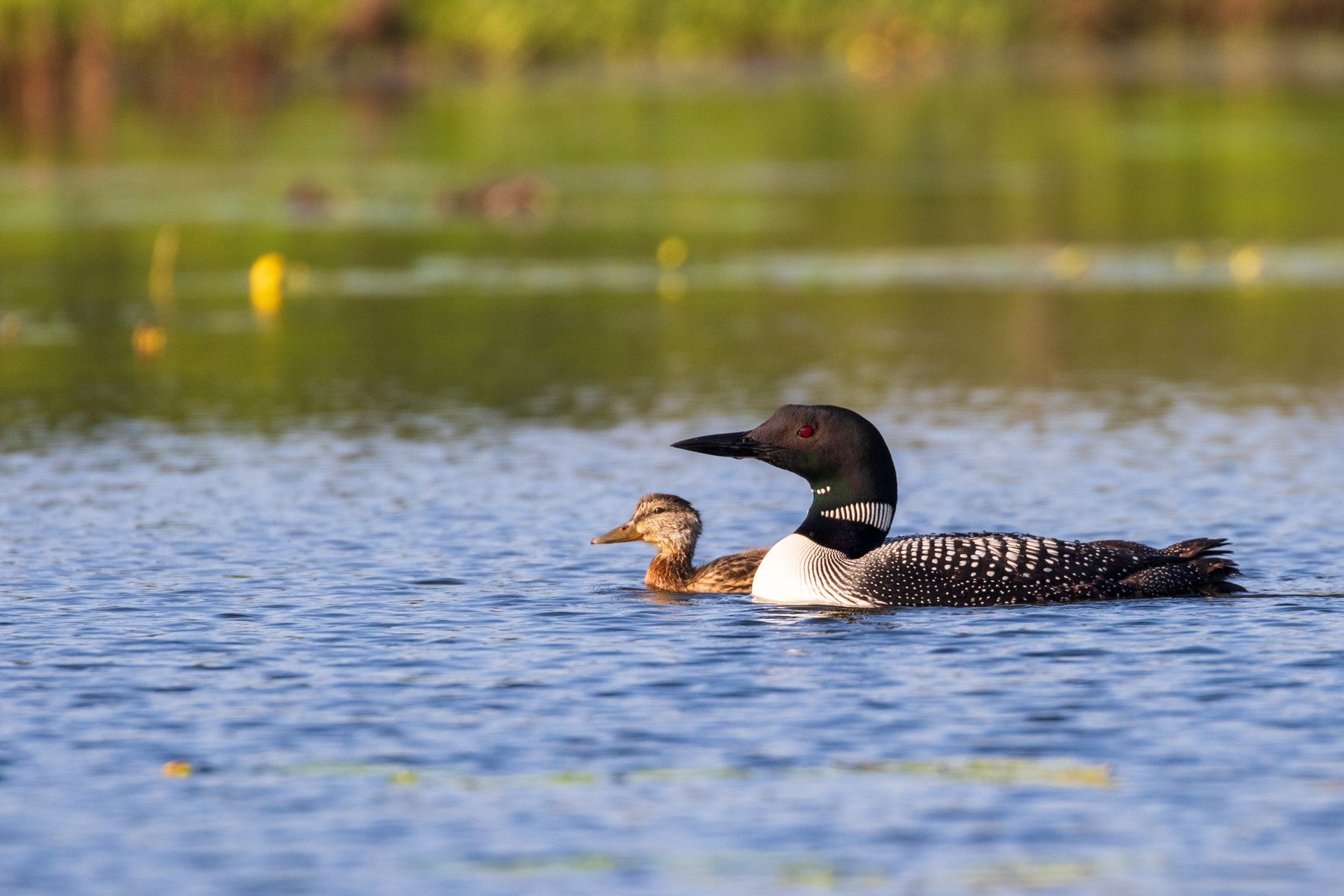
Opponents of the wake boats worry that they create unsafe water conditions for other lake users, disrupt fish and bird habitats, contribute to shoreline erosion and spread invasive aquatic species. Wake boat owners and enthusiasts say the backlash is unwarranted. They argue that wake boats are safe when used properly and no more harmful to the environment than other motorized watercraft.
While motorboats are prohibited from creating a wake within 100 feet of shore, wake boats themselves are largely unregulated at the state level, leaving it to individual towns and lake communities to enact local ordinances. The result is a patchwork of different regulations in lakes around the state.
At town meetings about regulating the boats or their wake-enhancing features, tensions run high. One resident of East Troy told the Wall Street Journal that he’s lost friends over raising his concerns that wake boats might be damaging fish beds in Lake Beulah.
And earlier this year, lakefront property owners from out of state filed a lawsuit against the Town of Scott in Burnett County over a local ordinance banning wake boats, claiming that their constitutional rights are being violated.
Environmental concerns about wake boats
Some residents and conservation advocates in Wisconsin are worried about a growing body of evidence that wake boats can harm lake ecosystems and wildlife. More than 80 organizations from around the state — including environmental advocacy groups, concerned property owners and fishing clubs — have banded together to form the Coalition to Protect Wisconsin’s Lakes.
“We’re representing in our coalition hundreds of thousands of people across the state who vote, and this is a big issue,” said Meleesa Johnson, executive director of the conservation group Wisconsin’s Green Fire and a founding member of the coalition. “Folks want to preserve their property. They want to preserve their lakes. They want to preserve fishing habitats.”
The biggest concerns cited by these groups have to do with damage to the lake bed, shoreline erosion and the ability for a wake boat’s ballast tanks to spread invasive aquatic species as they move from lake to lake.
There are also concerns that Wisconsin’s walleyes and muskies could be threatened, which would have ripple effects on the state’s multibillion-dollar fishing industry.
“From an economic impact analysis, we need to keep our lakes healthy and strong,” Johnson said. “Tourism is big, and we love these people coming to Wisconsin and spending dollars here.”
Last year, Wisconsin’s Green Fire released a report summarizing dozens of scientific studies about the environmental impacts of wake boats. Based on the findings, the organization recommended that wake boats operate at least 600 feet from the shore at a depth of 20 feet or more. The group has not called for an all-out ban on wake boats.
“People should be allowed to use our waterways per the public trust doctrine, but we also shouldn’t allow certain behaviors to disrupt those resources for everybody else,” Johnson said.
Wake boat owners feel singled out for scrutiny
Wake boats represent about 4 percent of all motorized boat sales in Wisconsin. Owners say they have been using these boats peacefully without fanfare for more than a decade, leaving some of them to wonder how they ended up at the center of such a heated debate.
“Why is this all of a sudden at the forefront of the world? What has happened?” said Cindy Leitner, president of the Wisconsin Watersports Coalition, a group that advocates for the use of wake boats.
Leitner lives on Big Cedar Lake in Washington County. She said that, to her knowledge, there have been no major accidents involving wake boats and that the Southeastern Wisconsin Regional Planning Commission’s most recent report on the aquatic management plan for the lake, published in June 2024, did not raise any red flags.
“If there’s damage being done, you would see that happening,” Leitner said. “The aquatic plant management plan would verify that the plants are being disturbed and terrible things are happening and the sky’s falling. And we’re just not hearing that or seeing that.”
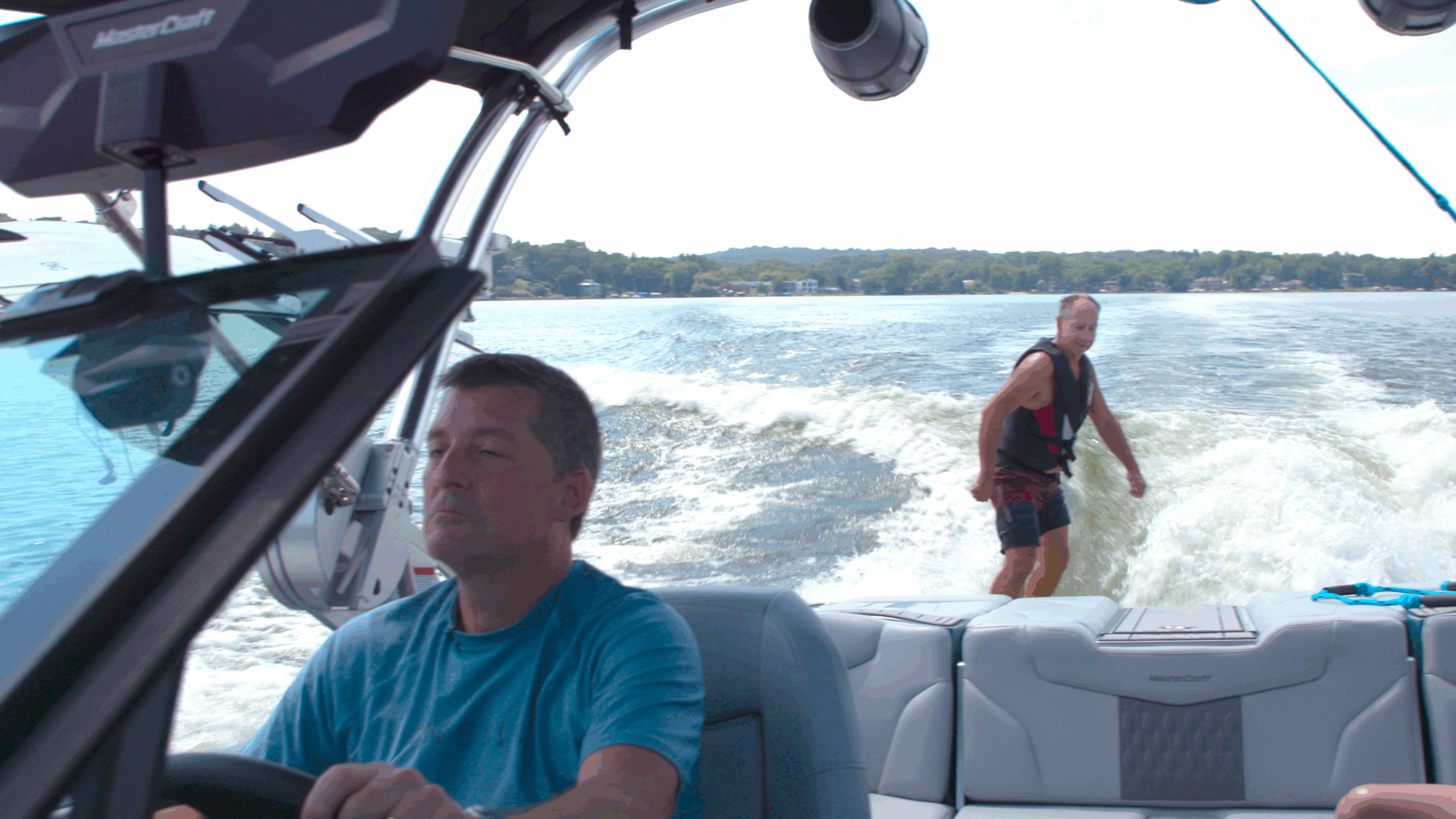
Now, more than 50 towns in Wisconsin have taken steps to pass ordinances banning or regulating wake-enhancing devices on boats. Wake boat owners say they are feeling singled out for scrutiny given all the other motorized boats allowed on Wisconsin lakes.
“People feel like they’re being persecuted,” Leitner said. “They bought these boats legally. They bought them to use them. They’re licensed in Wisconsin — it’s not like they’re taking an unlicensed thing into the state — and they feel they have no voice.”
Leitner said the Wisconsin Watersports Coalition favors “reasonable regulation.” However, this does not include depth restrictions since it is difficult to get an accurate measure of a lake’s depth, which is dynamic and can change frequently with the weather and other factors.
“It’s hard, it seems, to strike a balance that both groups can accept, whether they’re for using wake boats or against them,” Kaeding said. “There’s just a dispute over studies and whether they’re valid and whose research is better.”
Editor’s note: This story was updated Sept. 3 to correct the location of a park listed in a photo cutline. Marshall Park is in Madison. The story was also updated to change Meleesa Johnson’s title to executive director. This story was later updated Sept. 8 with the correct title of the Wisconsin Watersports Coalition.