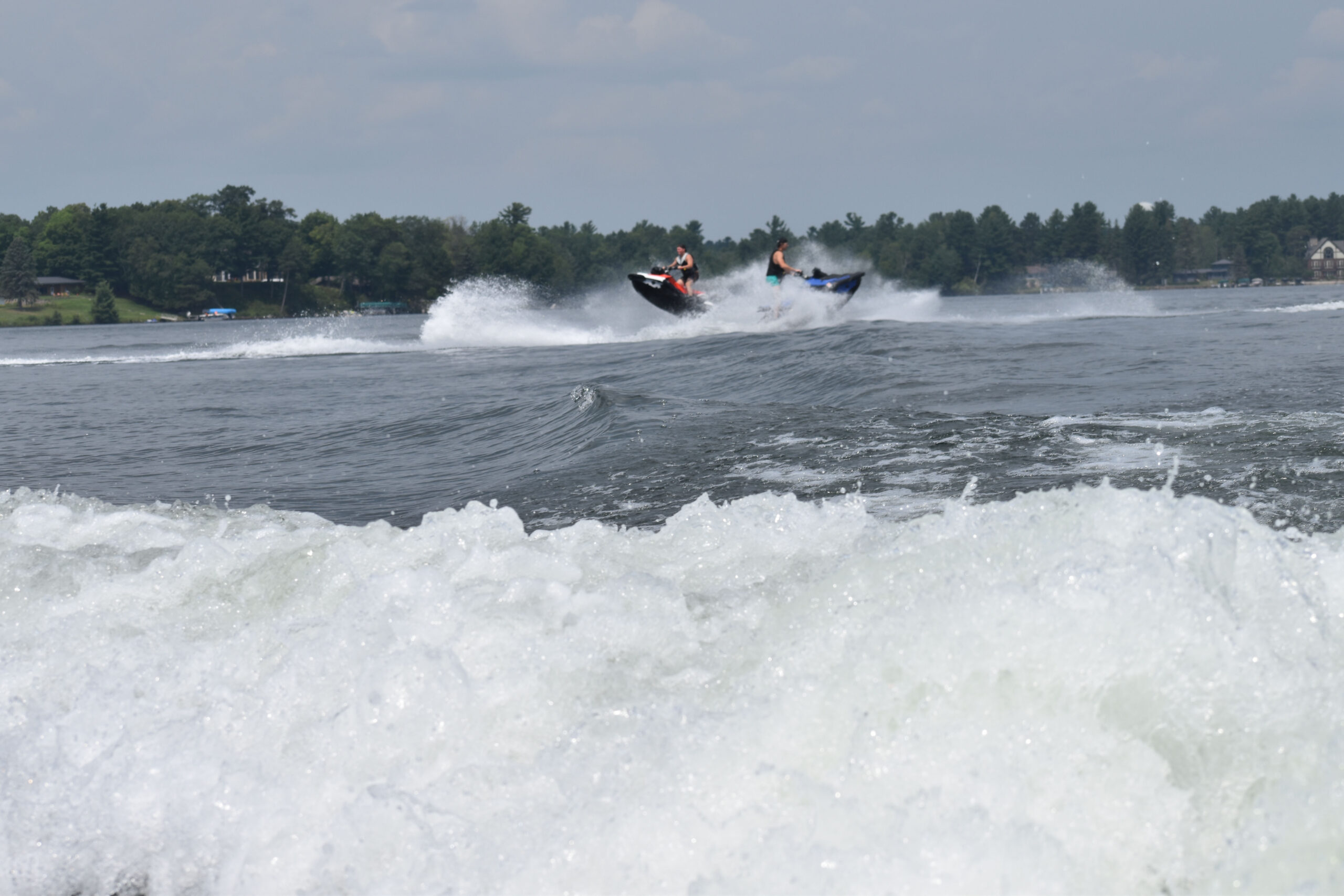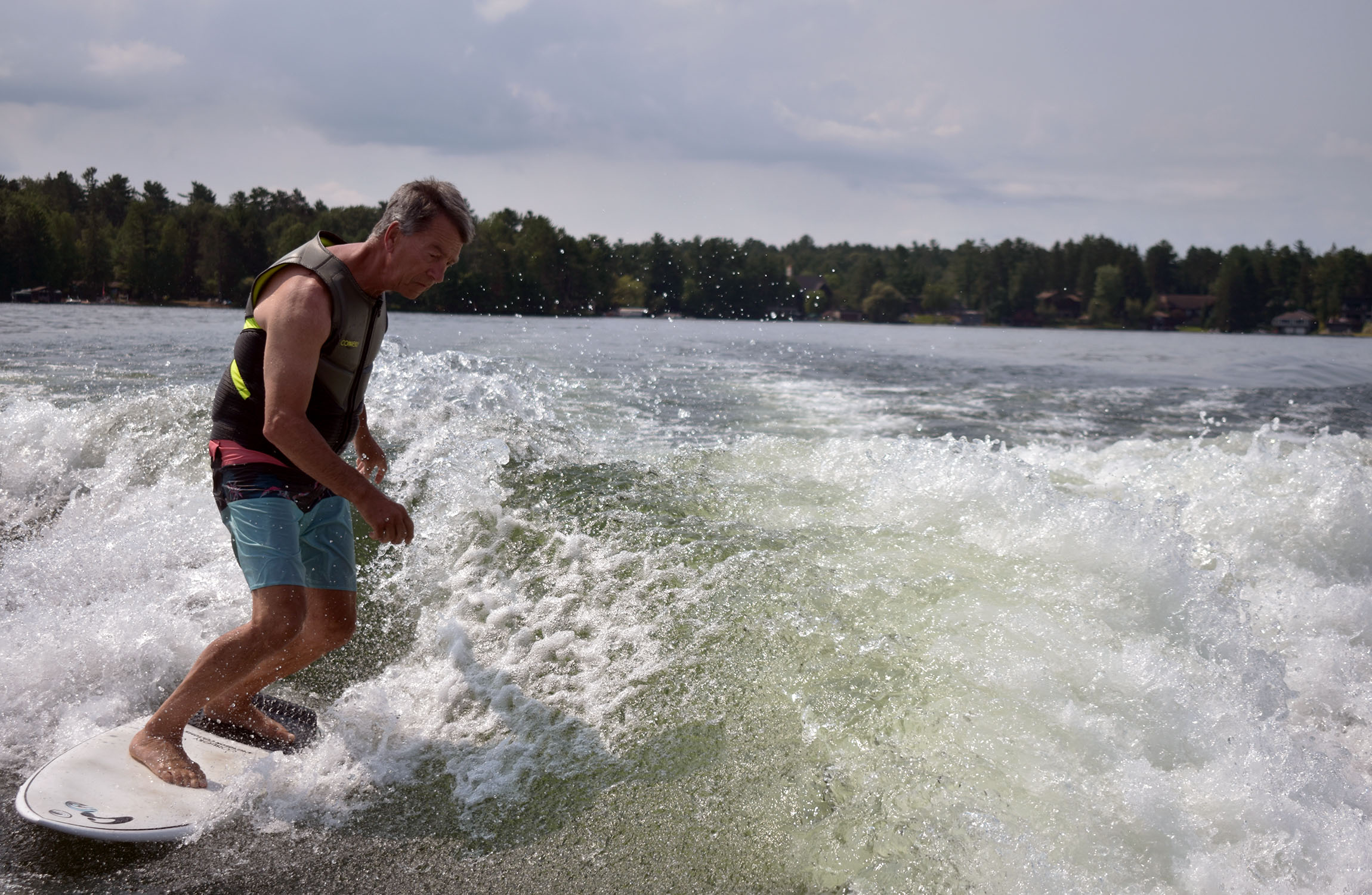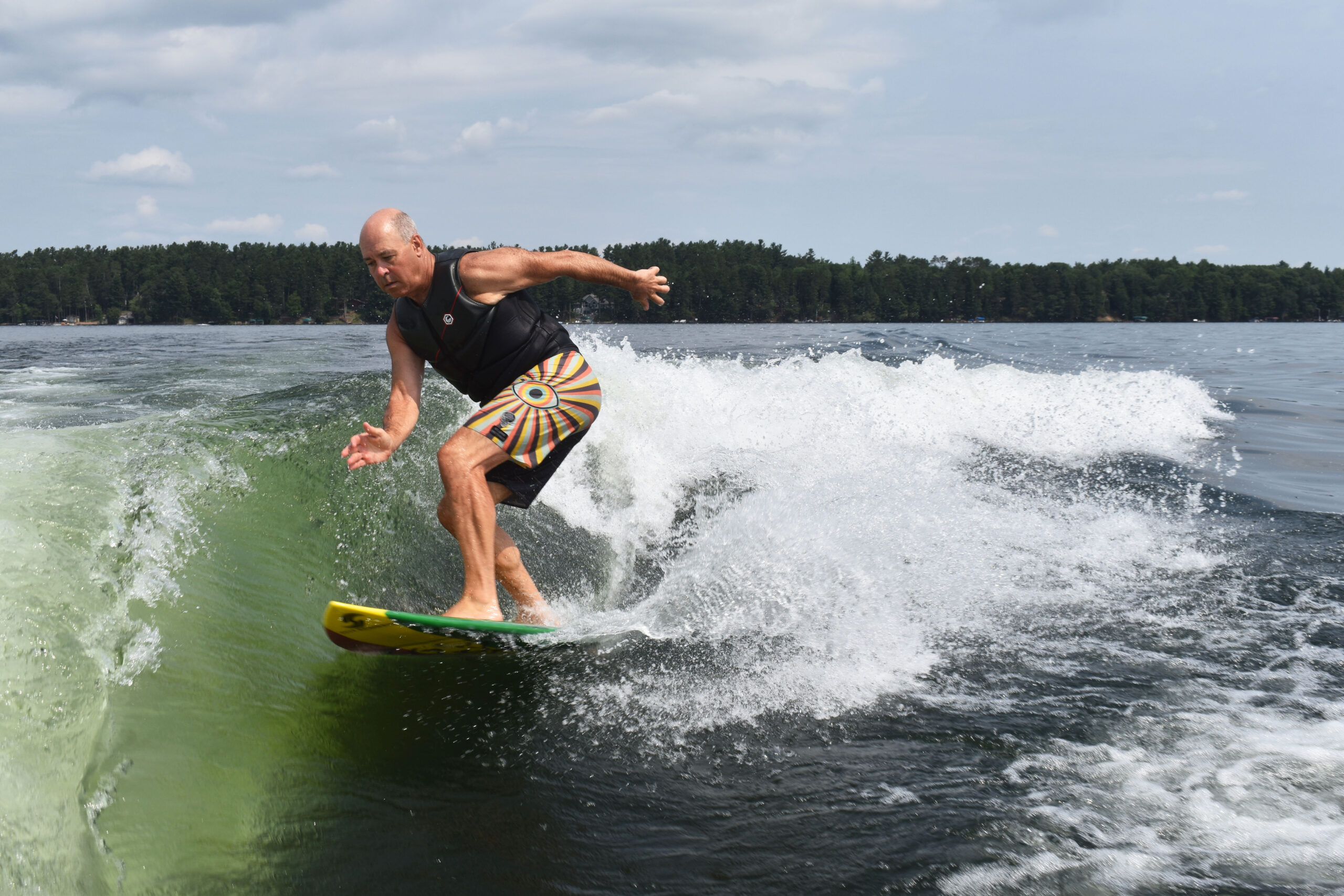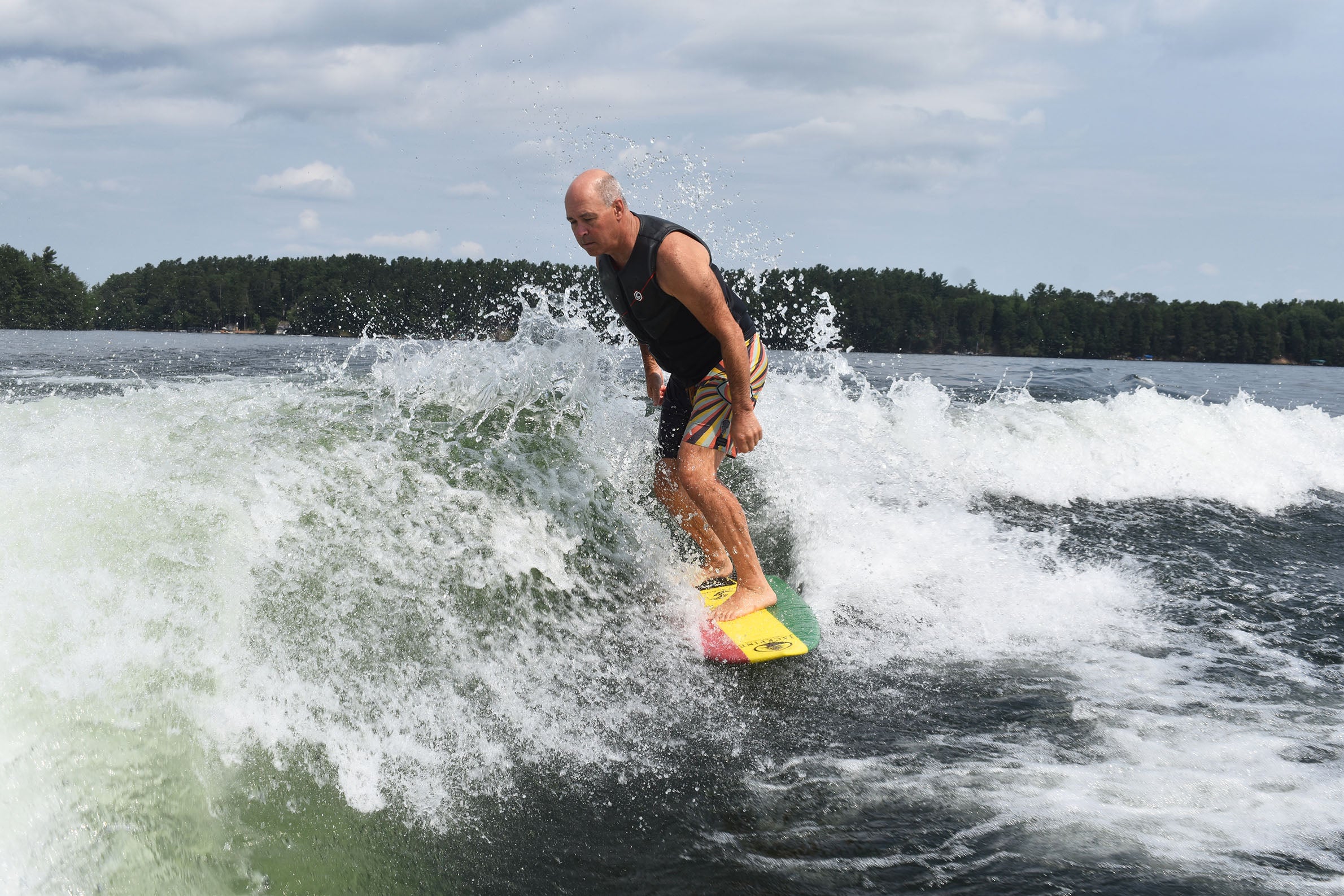

A new study on Lake Beulah in southeastern Wisconsin indicates that wake boats should operate in deeper waters and farther from the shore to reduce impacts to the lake bottom and shoreline.
The Lake Beulah Management District paid $21,000 for the three-phase study last year, which was conducted by the consulting service Terra Vigilis Environmental Services Group. The group studied the effects of wake boats, as well as water ski, jet and pontoon boats, on the 800-acre Lake Beulah in East Troy, which has a maximum depth of 58 feet.
The study concluded that typical recreational boats had no effect on the lake bottom at depths of 15 feet or more. Wake boats, which are used to create surfable waves, showed impacts at depths of 15, 21 and 25 feet. The group recommended wake boats should stay at least 500 feet from shore to reduce waves similar to those seen from traditional boats operating at faster speeds closer to the shore.
News with a little more humanity
WPR’s “Wisconsin Today” newsletter keeps you connected to the state you love without feeling overwhelmed. No paywall. No agenda. No corporate filter.
The findings “present good reinforcement for the idea that we need to place some restrictions on the operation of (wake) surf boats and that those restrictions are in order to protect our lakes from these boats,” said Pat Bergin, chair of the Lake Beulah Management District.
Advocates for wake boats and wake surfing argue the study hasn’t been peer-reviewed and reflects bias in its design, said Steve Radtke, a board member with the Wisconsin Watersports Coalition.
“They developed this study with a very defined criteria: make wake boats look bad,” Radtke said.
Radtke argued the study relies on videos rather than quantitative data to make sweeping conclusions about the impacts of wake boats.
“We see a video and we make the inference that there’s an impact,” Radtke said. “We don’t know that.”
Representatives with Terra Vigilis were not available to comment on the study.
Study used a submersible drone, underwater cameras
The group’s analysis used a submersible drone and underwater cameras to measure waves and impacts to the lake bottom. According to the study, Terra Vigilis found evidence that wake boats caused the loss of aquatic plants that are considered ideal habitat for fish at depths ranging from 15 to 25 feet.
The group also evaluated recreational powerboats operating at varying depths and speeds. They examined a modern wake boat in surf mode at 10.5 miles per hour and a water ski boat at faster planing speeds of 25 mph making multiple passes at three separate sites ranging from 15 to 25 feet deep. It repeated the test with a larger wake boat, pontoon boat, jet boat and water ski boat.
According to the study, wake boats stirred up sediments and plants at depths of 15 and 21 feet with some sediment movement observed at 25 feet. But other boats did not impact the lake bottom at depths of 15 feet or more.
Regarding shoreline impacts, the group captured video of waves near the shore as boats passed at 200 feet and 500 feet from the shoreline. At 200 feet from the shore, the study states waves from wake surf boats were twice as high and had four times the energy as other boats running at faster planing speeds.
Radtke argued the study failed to gather baseline data on the general health of the lake in order to understand any potential impacts, and said the study doesn’t compare apples to apples because it doesn’t evaluate other vessels operating at comparable speeds to wake boats for activities like waterskiing, tubing or kneeboarding.
Based on the findings, Bergin said he thinks restrictions are needed to keep the boats operating more than 500 feet from shore and at depths of 25 feet or more. He added the waves created by wake boats can pose risks for other lake users.
“The safety of other lake users should be a more important part of this debate,” Bergin said.
The Lake Beulah Management District on Tuesay will vote on a recommendation for the town of East Troy to create an ordinance restricting operation of wake boats. On Saturday, the town will hold a public hearing on wake surfing.
At least 67 towns have passed local ordinances to restrict operation of wake boats on roughly 350 lakes, according to the Last Wilderness Alliance. A coalition of 80 groups has been pushing for statewide regulation of wake boats that restricts their use to 700 feet from shore in waters at least 30 feet deep. Supporters of wake boats and wake surfing also back statewide regulation, but they argue for distance of 200 feet from shore.

Wisconsin Public Radio, © Copyright 2026, Board of Regents of the University of Wisconsin System and Wisconsin Educational Communications Board.