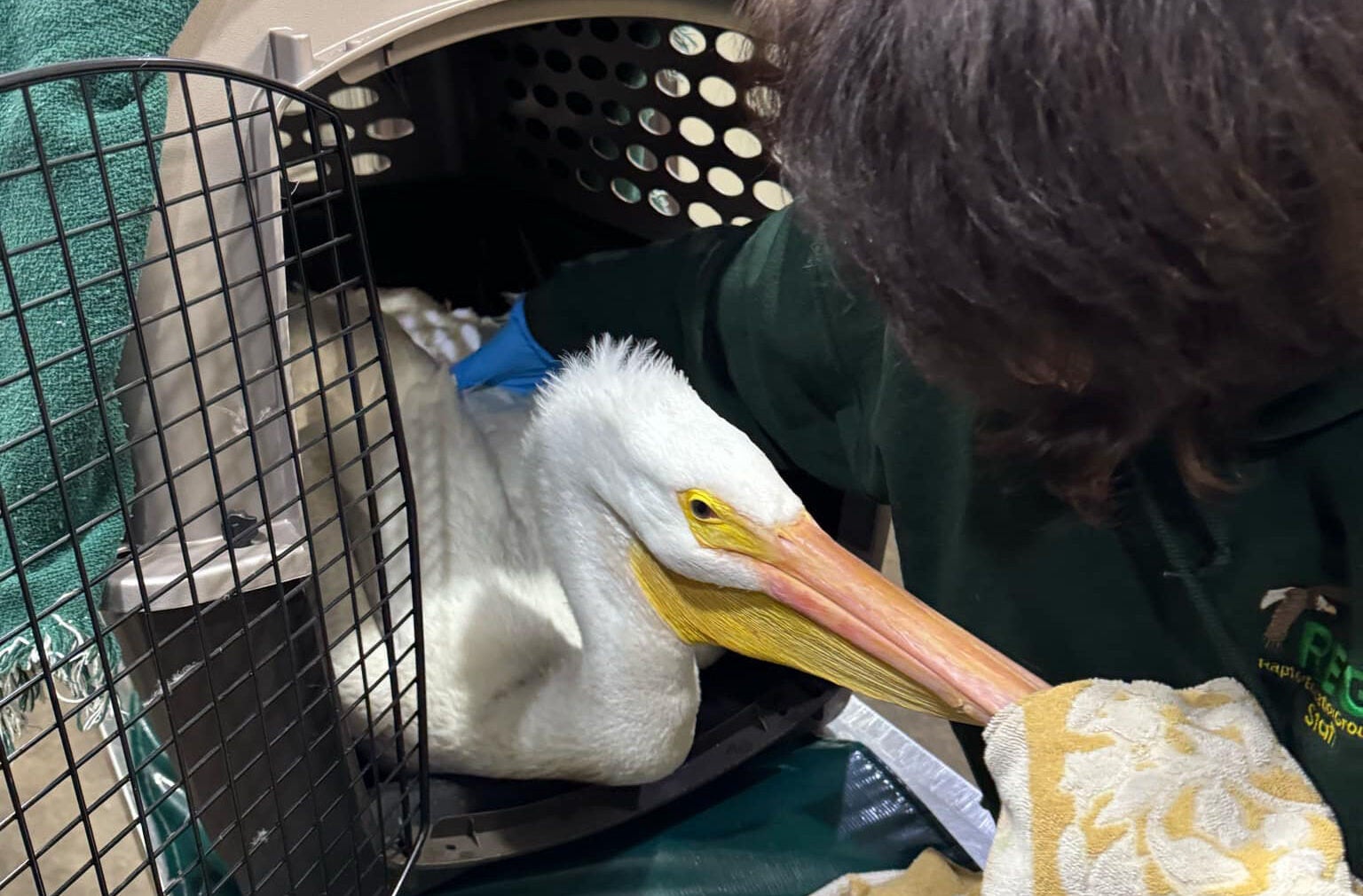
The founder of an avian rehabilitation facility in Antigo said it’s the worst year she’s ever seen for shootings of protected birds, including an American white pelican that’s currently undergoing treatment.
Founded in 1990, the Raptor Education Group Inc. in Antigo has admitted at least 23 protected birds this year when the facility normally sees fewer than five such cases annually, according to founder Marge Gibson.
The injured birds include an American white pelican that was captured in Ashland and turned over to the facility this month, as well as five pelicans from the Appleton and Neenah area during late summer and early fall. American white pelicans are protected under federal law, and it’s illegal to hunt or shoot them. The Wisconsin Department of Natural Resources is investigating the Ashland shooting.
News with a little more humanity
WPR’s “Wisconsin Today” newsletter keeps you connected to the state you love without feeling overwhelmed. No paywall. No agenda. No corporate filter.
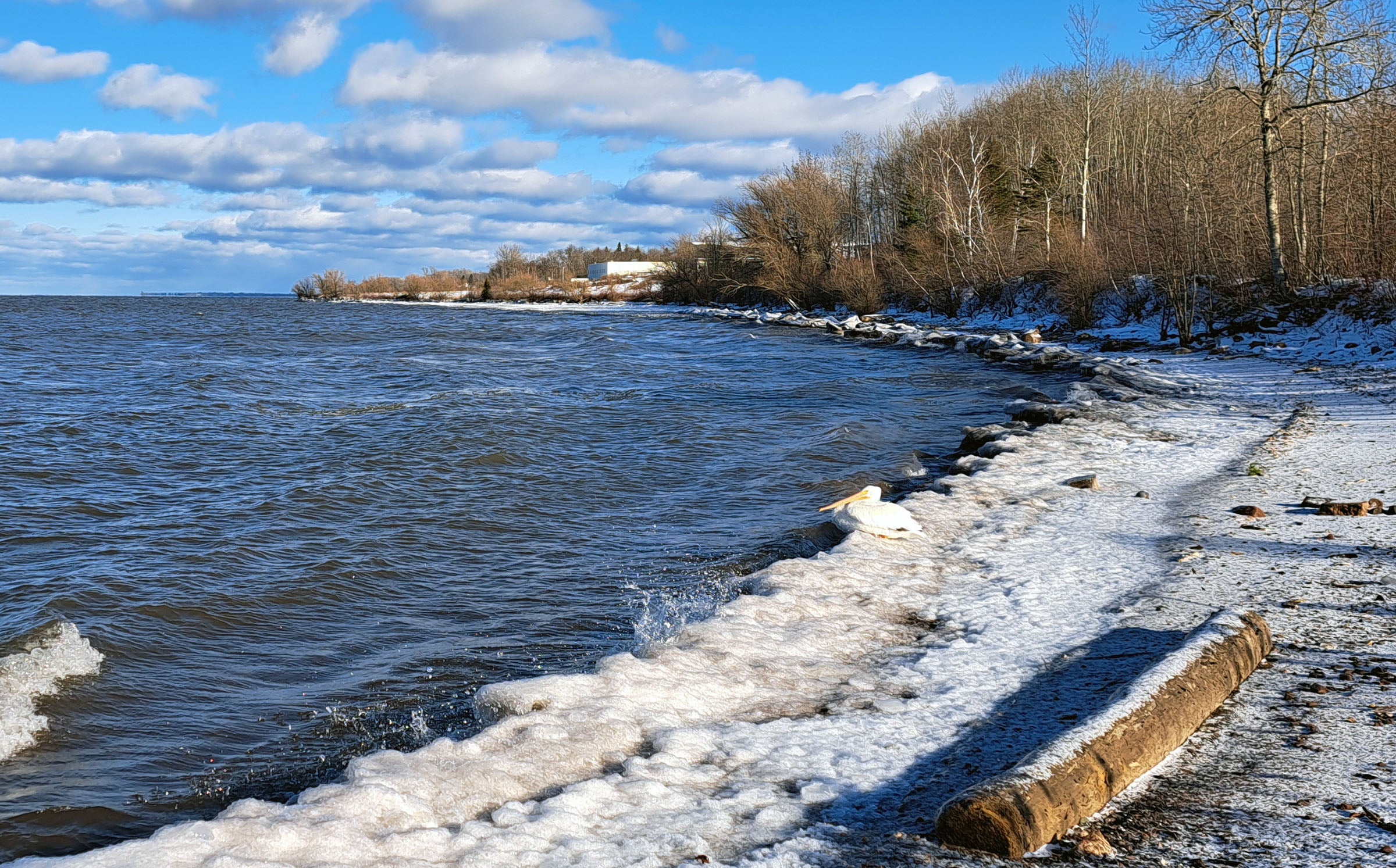
Earlier this month, DNR staff transported an American white pelican that had been captured Dec. 3 from the icy shoreline of Lake Superior’s Chequamegon Bay on the east side of Ashland.
“We X-rayed him and found (birdshot) in his body (and) in his neck. He had pellets that went through his beak, the bone and the keratin of his beak and his pouch,” Gibson said. “It would have been hard for him to eat even if he had felt like it, but he had also developed lead poisoning from the shot.”
Animal Wellness Action and the Center for a Humane Economy announced a $2,500 reward for information that leads to the arrest and prosecution of the person responsible for shooting the pelican captured in Ashland.
“(S)hootings of these migratory birds is deeply disturbing and a case of serial poaching,” Wayne Pacelle, president of Animal Wellness Action, said in a news release.
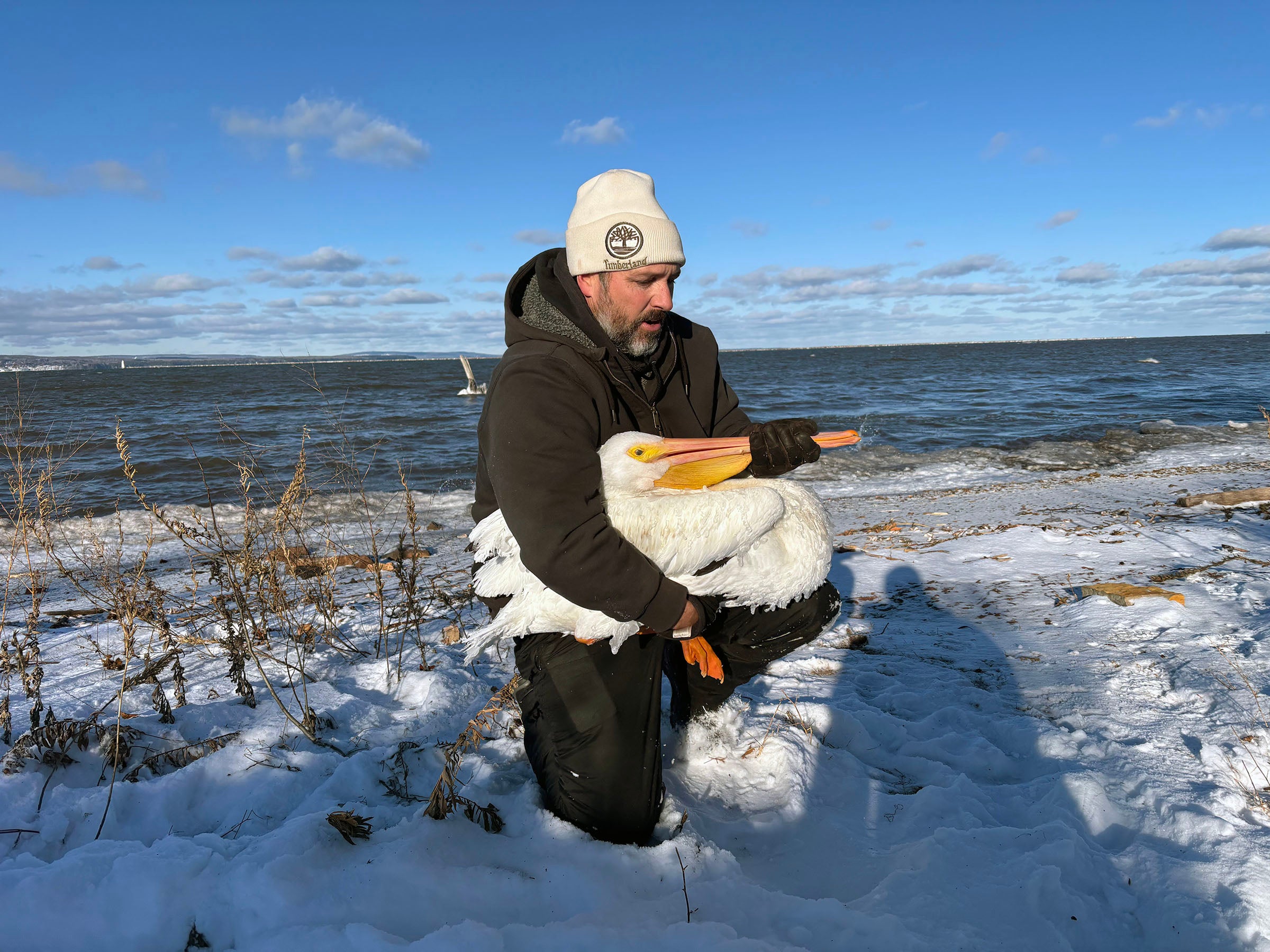
Ryan Brady, DNR conservation biologist, said Ashland residents had been following the pelican’s movements at Maslowski Beach this fall because the bird had separated from its flock and remained in the area long past migration.
Brady said the bird didn’t show any obvious signs of distress, but he began monitoring the pelican when the weather turned cold Thanksgiving weekend. On Dec. 3, he and a colleague captured the pelican with a long-handled net as it swam near the Ashland shoreline. At that time, he noticed the bird had ice on its feathers and had been unable to preen.
“If I had not captured it the day that I did, that night was frigid cold, and the bird was clearly beginning to decline compared to how it had been. It may not have made it,” Brady said.
Shootings of protected species are not uncommon, said Jack Luessman, DNR marine conservation warden. He declined to share details of the ongoing investigation, but he said most cases aren’t accidental. Luessman said the DNR has also received complaints about shootings of eagles or other raptors, but this is the first reported shooting of a pelican in the Ashland area in the last three years.
“There have been cases where individuals have shot pelicans in order to deter them from eating fish,” Luessman said.
Luessman said he hasn’t determined whether that was the case in Ashland or why the pelican was shot. He said violations for hunting, pursuing or shooting a protected species carries a penalty of $303.30.
As for the injured pelican, the bird is recuperating from its wounds and eating better, including live minnows and dead fish. The pelican has a missing wedge in its beak, and Gibson said the facility has spent anywhere from $320 to $1,800 per bottle on medication that’s used to treat lead poisoning. The bird will remain at the facility until it’s released in the spring.
The facility has admitted other protected birds this year that include a peregrine falcon, bald eagles and trumpeter swans. Gibson said birds have been shot in the mouth or abdomen, and most have either died or been euthanized due to their injuries. She said it’s been difficult on her staff, adding that three employees left this year.
“It makes me so frustrated because it feels like it’s coming from a place of anger,” Gibson said of the shootings.
She urged the public to share any information about the shootings with the DNR. People can make a confidential report to the agency’s tipline by calling or texting 1-800-847-9367 or submit a report online.

Wisconsin Public Radio, © Copyright 2026, Board of Regents of the University of Wisconsin System and Wisconsin Educational Communications Board.