A former state conservation warden has been ordered to pay a fine for killing a wolf at his northern Wisconsin home two years ago, according to the U.S. Fish and Wildlife Service.
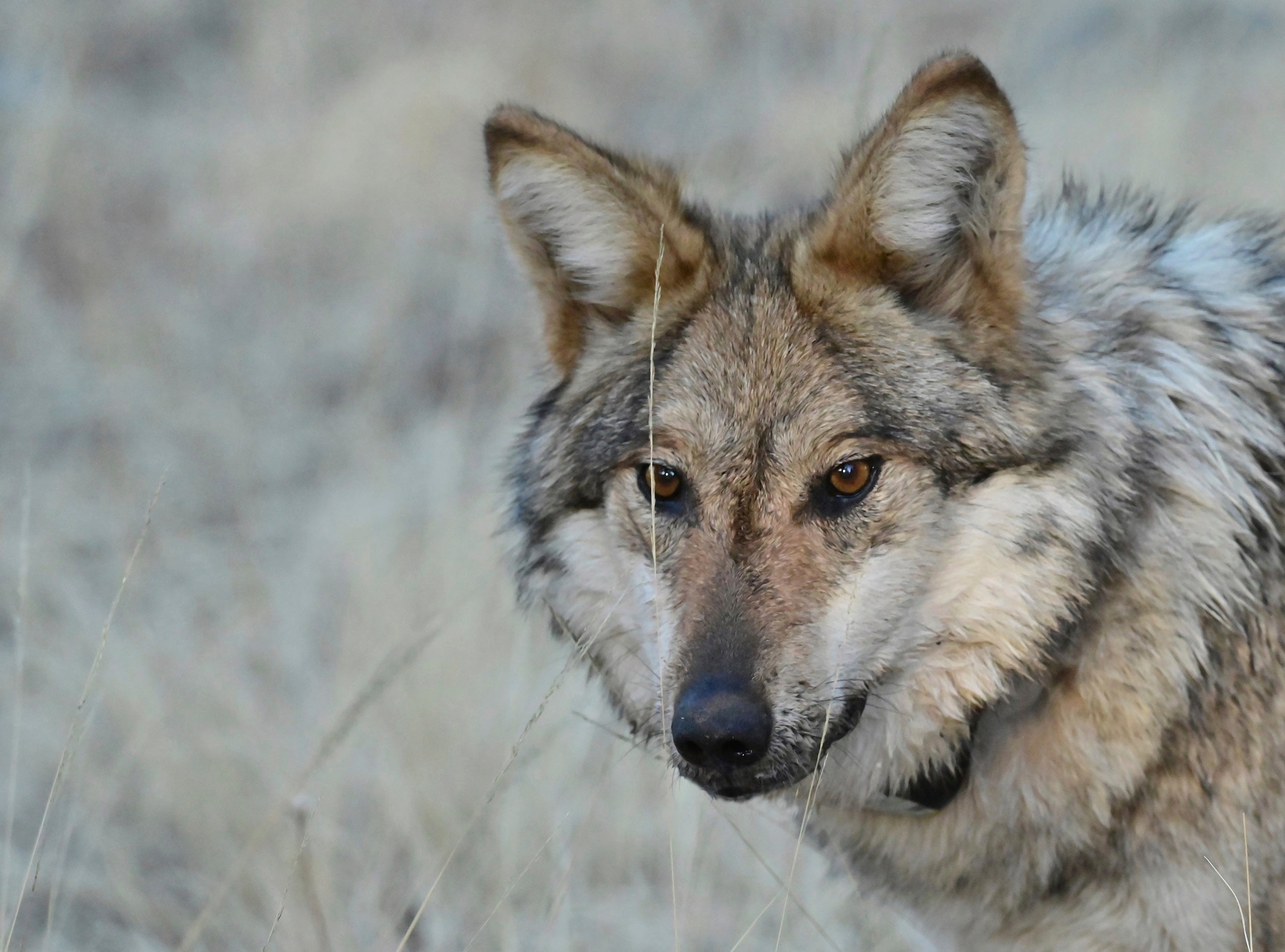
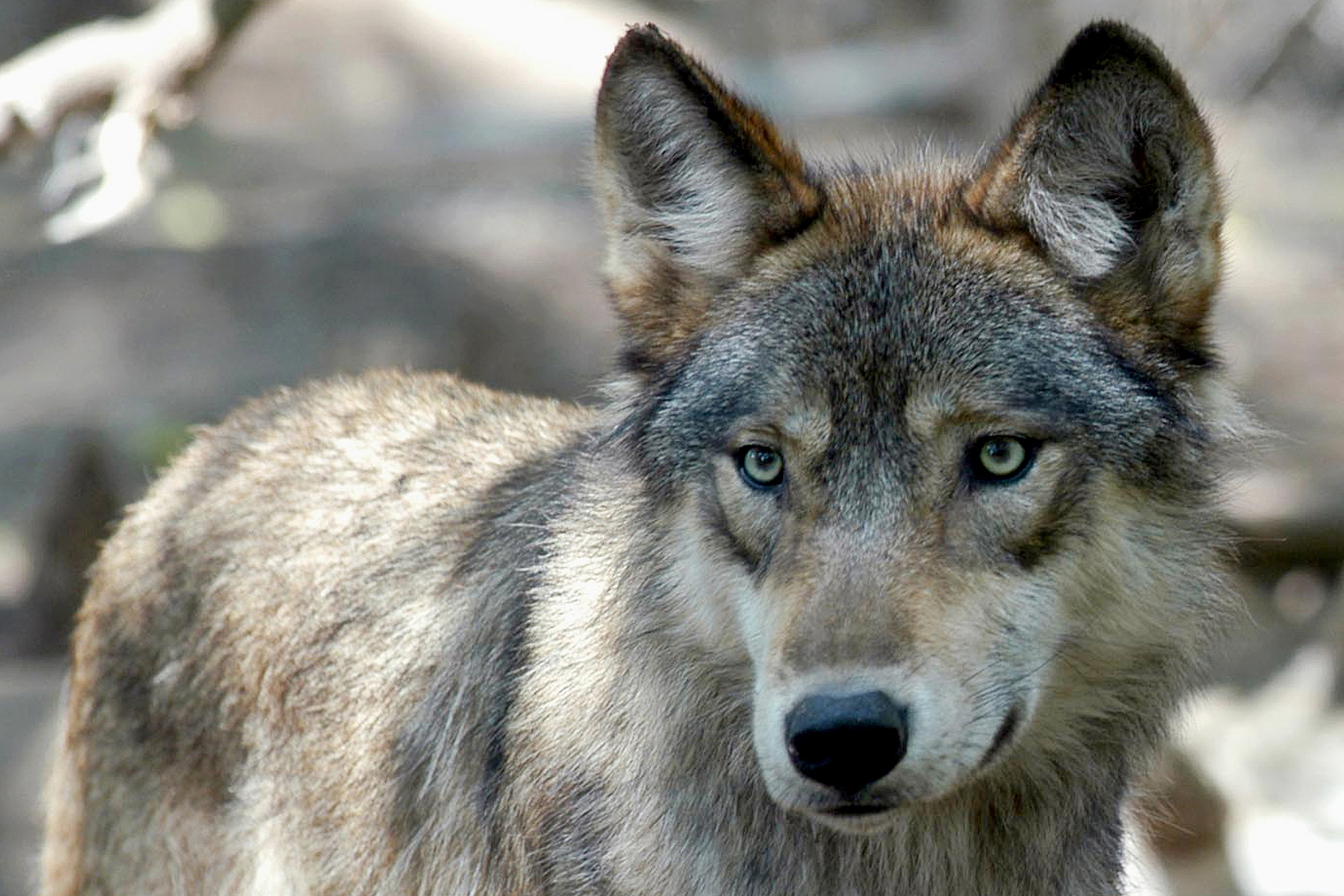
In 2023, Pat Quaintance of Bayfield reported to police that he’d killed the collared wolf during the early morning hours of Christmas Day. Quaintance is a hound hunter and former conservation warden with the Wisconsin Department of Natural Resources, as well as a past president of the Wisconsin Wildlife Federation.
The U.S. Fish and Wildlife Service investigated the killing. An agency spokesperson confirmed that Quaintance has paid more than $4,000 for an illegal take under the Endangered Species Act. The investigation has concluded, but the agency said the case is still open as it coordinates with the Red Cliff Band of Lake Superior Chippewa on transfer of the animal’s remains to the tribe.
News with a little more humanity
WPR’s “Wisconsin Today” newsletter keeps you connected to the state you love without feeling overwhelmed. No paywall. No agenda. No corporate filter.
When reached by phone Wednesday, Quaintance said the case “is over and done with” and declined to comment further before hanging up.
Paul Collins, Wisconsin state director of Animal Wellness Action, said he’s disappointed in the agency’s decision and doesn’t think a fine is an appropriate penalty since the gray wolf is listed as an endangered species.
“Any time federally protected or state protected species are killed, there should be some significant penalty other than just fines,” Collins said. “There should be jail time.”
A 2022 federal court ruling restored protections for the animal after it was delisted in 2021. The U.S. House of Representatives is set to vote Thursday on a bill that would remove federal protections for wolves nationwide.
It’s illegal to kill a wolf except when defending a human life while the animal is listed as an endangered species, according to the DNR. People who illegally kill an endangered species can face a maximum of one year in prison and up to a $100,000 fine. Organizations can face up to a $200,000 fine.
Less than a week before the incident, Quaintance told the state Senate’s sporting heritage committee that wolves were “getting bolder” and had come within 100 yards of his home, adding that they had followed a neighbor riding a four-wheeler. Two months earlier, he told the Natural Resources Board that he didn’t feel safe walking dogs on his property.
“What we want to do is see the wolves managed, and we want to see them managed in a proper way,” he told the board.
Quaintance has supported bringing the population down to 350 wolves in line with a goal set under an older version of the state’s wolf management plan. He’s previously been cited twice for trapping violations, but one charge was later dismissed.
This summer, Chris Vaughan, the group’s Wisconsin state director of Hunter Nation, organized a GoFundMe site to help Quaintance pay for his legal fees in the case and committed to matching funds raised for the first $5,000.
Vaughan did not respond to a request for comment.
In a short film about the slain wolf, Red Cliff Tribal Council Member Misty Nordin said the animal wasn’t just another predator.
“It’s not something that we can just be like, ‘Oh well, that was just another wolf that died.’ It’s not like that for us,” Nordin said. “That’s family.”
The most recent wolf monitoring report shows 12 wolves were killed illegally in Wisconsin from April 2024 through April of this year. Randy Johnson, the DNR’s large carnivore specialist, said illegal killings are unfortunately prevalent in the state. He pointed to a 2018 study that estimated nearly 10 percent of wolves are illegally killed. The state currently has around 1,200 wolves.
The state had two confirmed incidents of wolves classified as a threat to human health and safety in the most recent monitoring period, but the animals behaved in a “non-aggressive” manner in both incidents.
There have only been two fatal wolf attacks on humans across North America in the last 20 years. Researchers have documented at least 26 fatal wolf attacks worldwide from 2002 to 2020.
Johnson said Wisconsin has had no recorded wolf attacks on humans in modern times.
Editor’s note: The story was updated after the U.S. Fish and Wildlife Service provided the amount of financial penalties issued to Pat Quaintance.

Wisconsin Public Radio, © Copyright 2026, Board of Regents of the University of Wisconsin System and Wisconsin Educational Communications Board.