Madison residents are celebrating the release of one of their neighbors after weeks in rehab.
It just so happens, that neighbor is a goose.
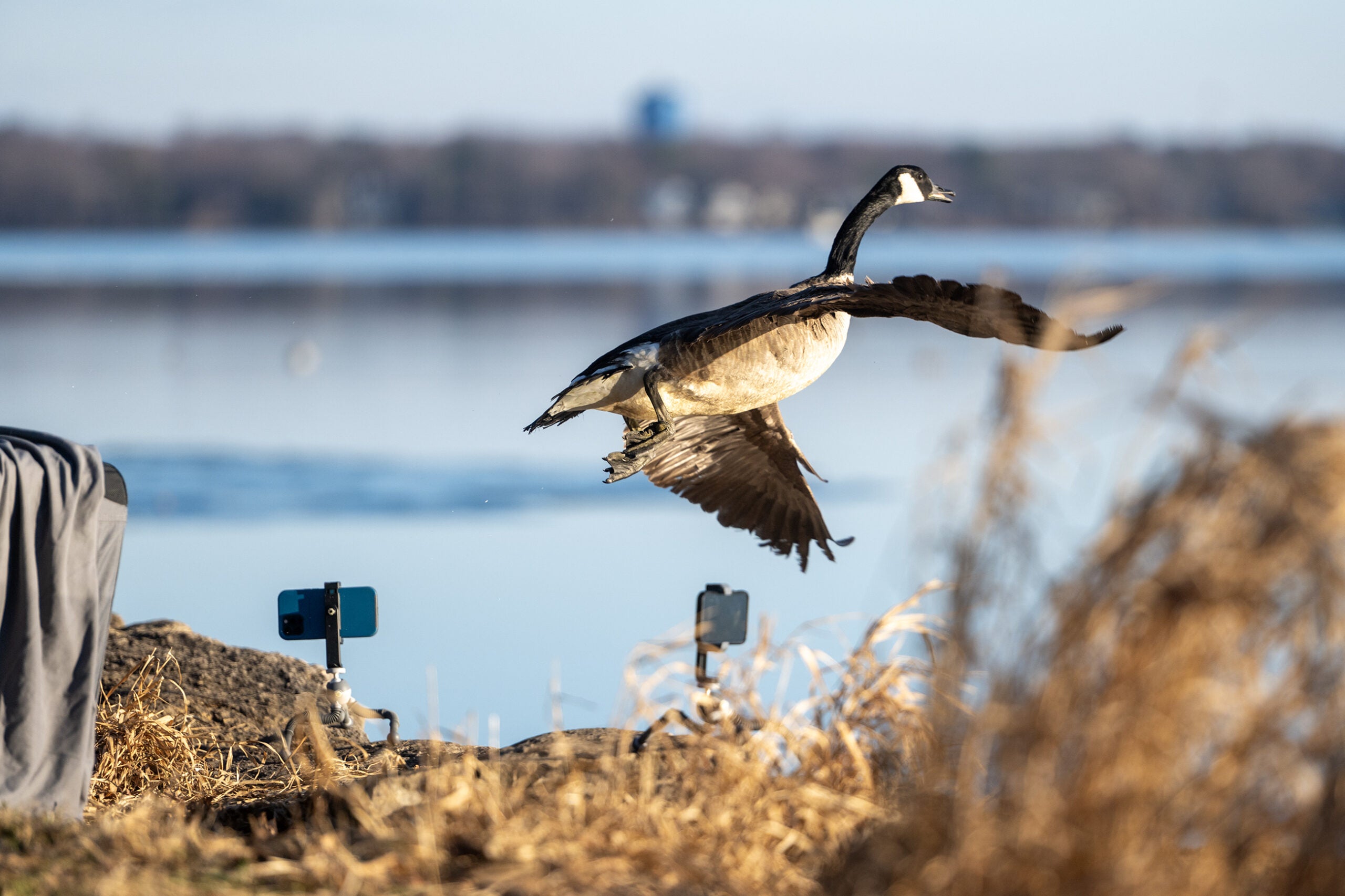
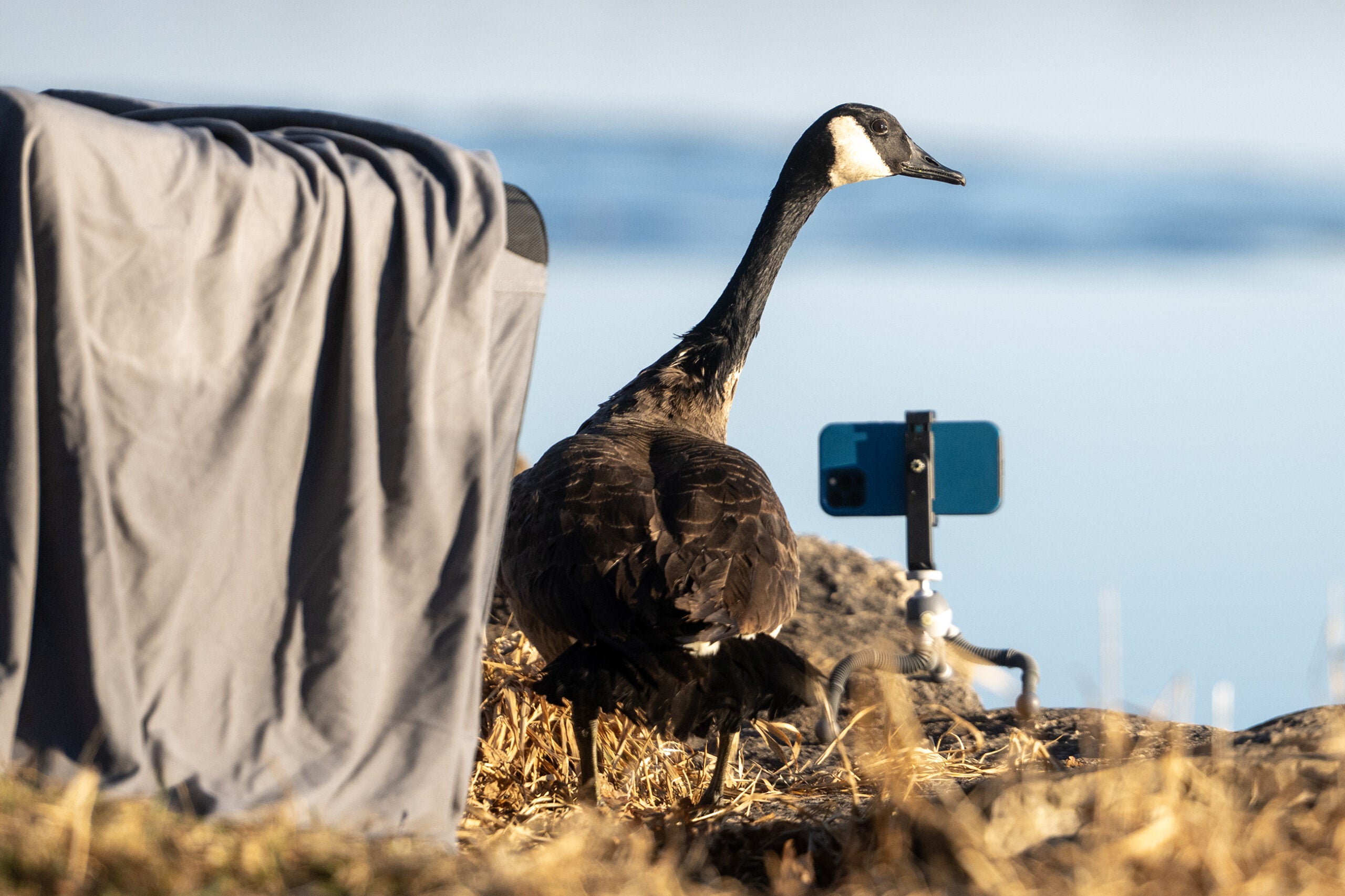
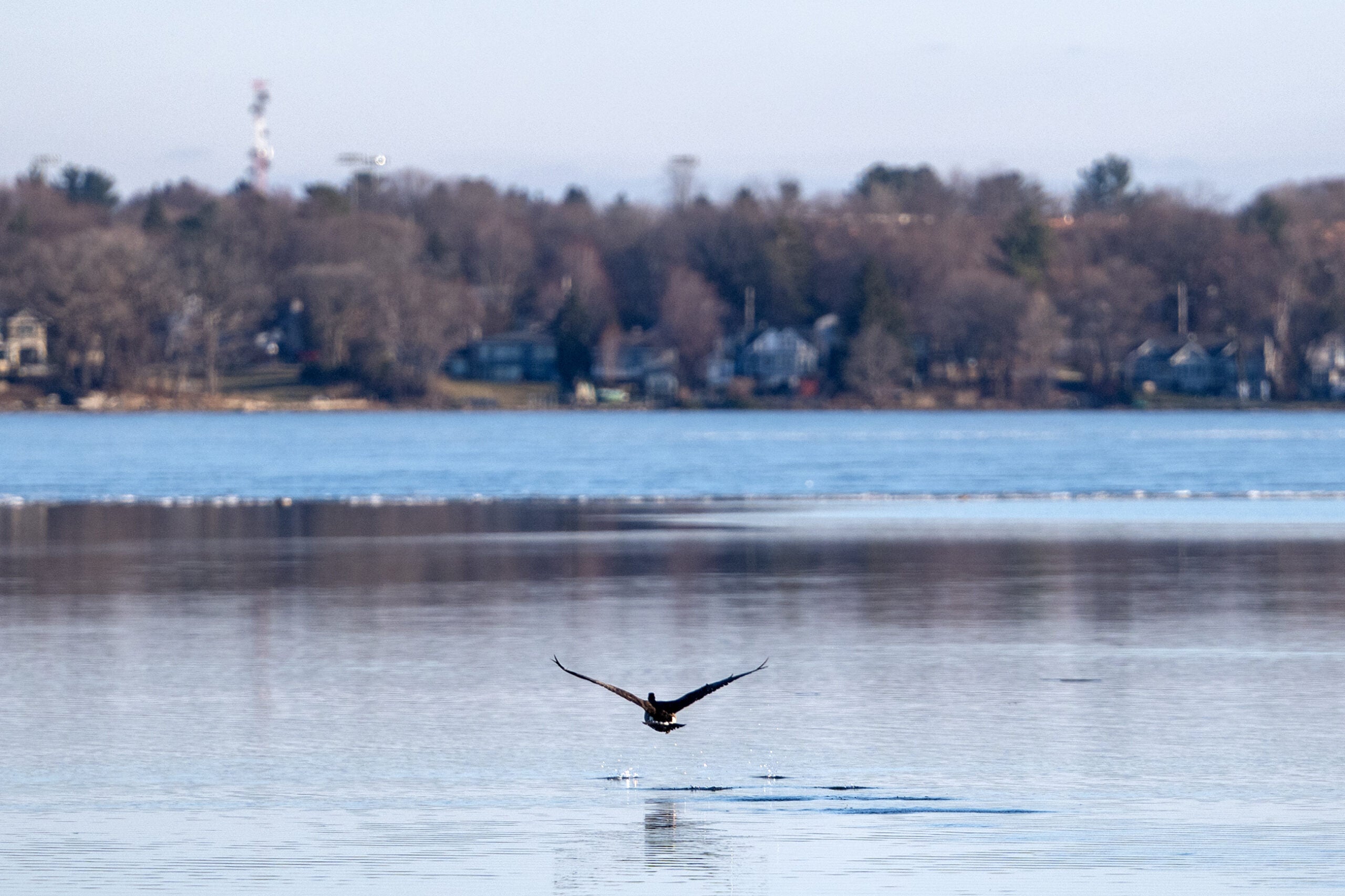
Last week, the goose flapped out of a cage to join other geese on Madison’s Lake Monona, near where that lake meets the Yahara River.
News with a little more humanity
WPR’s “Wisconsin Today” newsletter keeps you connected to the state you love without feeling overwhelmed. No paywall. No agenda. No corporate filter.
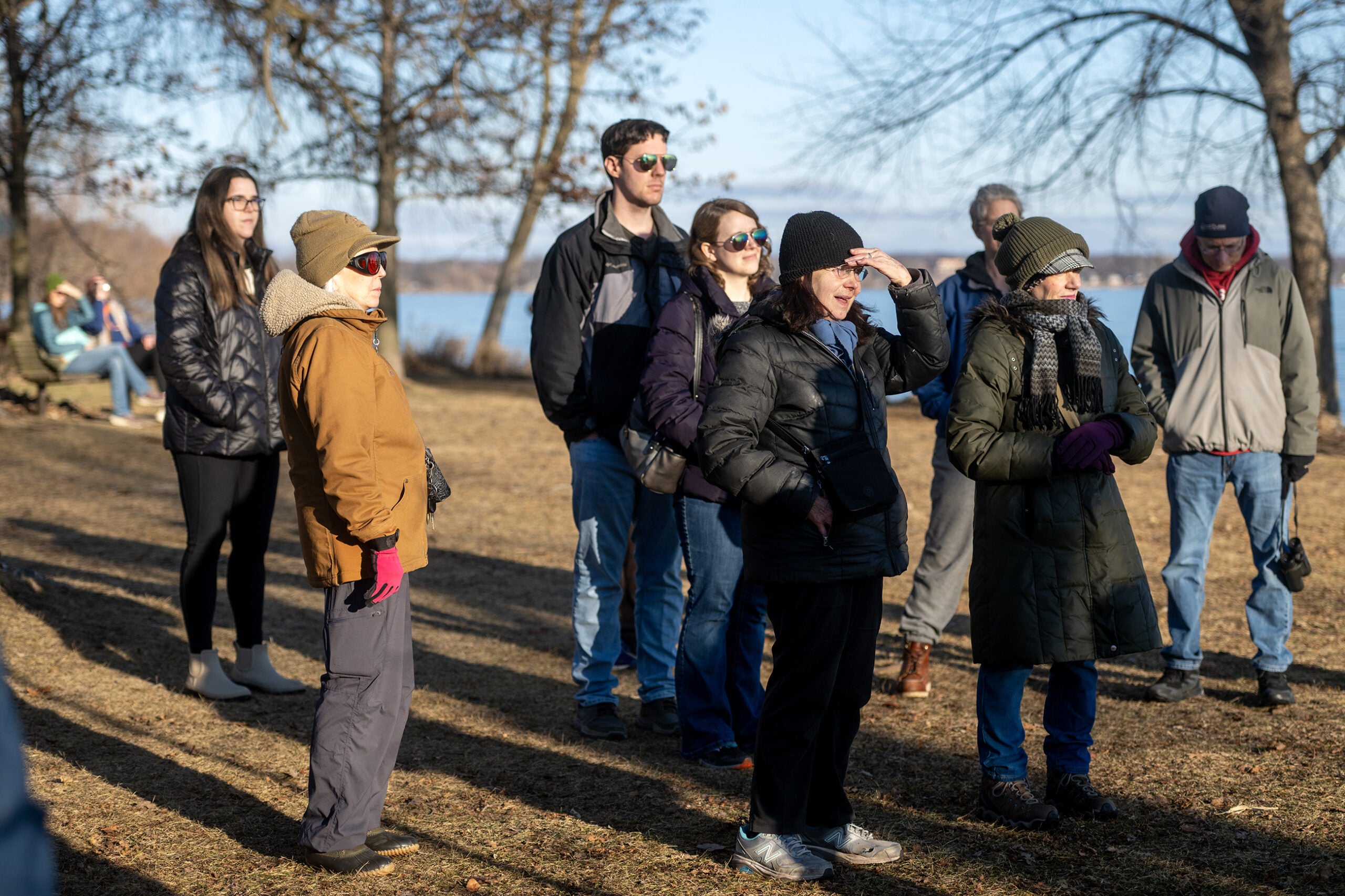
A group of onlookers clapped and cheered as the bird made its way over the partially-frozen water.
For residents of Madison’s near-east side, the goose’s soaring recovery comes after a time of shared distress.
Social media groups lit up in mid-December when members of the neighborhood known as Schenk-Atwood-Starkweather-Yahara — or SASY, for short — noticed a Canada goose wasn’t budging from an iced-over spot on the Yahara River.
The bird was tangled in frozen fishing line. It remained trapped on the ice for several days before it was rescued by Dylan Hughes, a SASY neighborhood resident.
Hughes volunteers as a licensed wildlife rehabilitator and he always keeps a net in his car. One day after work in mid-December, Hughes rushed over to the river and carefully captured the goose.
“Some people say, ‘It’s just a goose,’ but to me, it’s something that was suffering,” Hughes said. “I have a lot of empathy for wildlife that gets caught up in some human issues.”
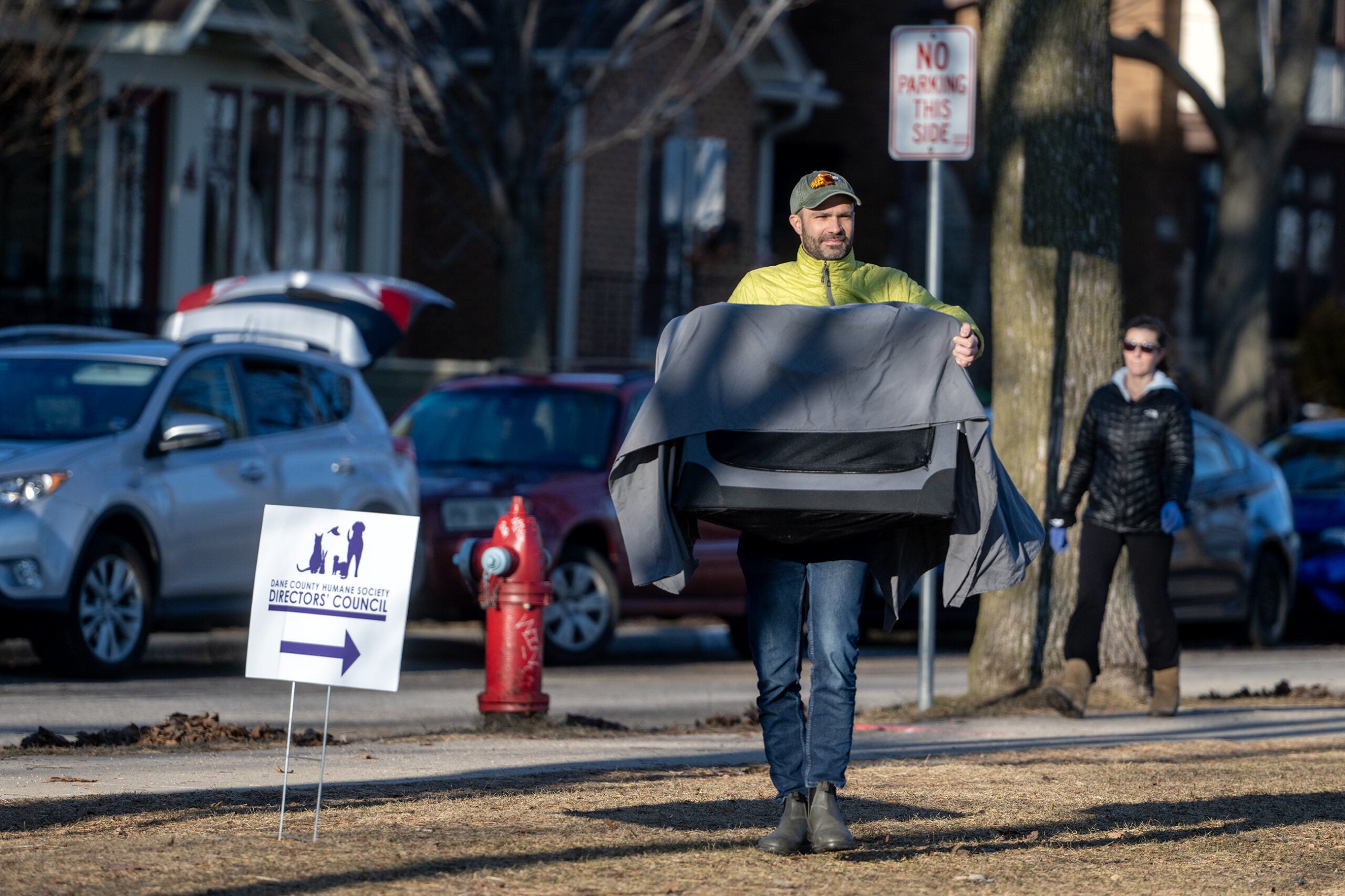
After that, the bird spent weeks recuperating at the Dane County Humane Society’s Wildlife Center. While caught in the fishing line, it wasn’t able to hold its neck up, and those neck muscles had atrophied. It also suffered a wound inside its mouth, because part of the wire had been wrapped around its tongue.
Thankfully, the goose tested negative for bird flu, and it had not been lead-poisoned.
It’s not clear whether the goose rescued from the Yahara River is a male or a female. To know for sure, wildlife workers would have to do invasive tests that aren’t medically necessary.
What is clear is that the bird is “a very sassy goose,” said Jackie Edmunds, a wildlife program manager with the Dane County Humane Society.
That may be fitting since it was the SASY neighborhood that took the goose under its wing.
While in rehab, the bird shared its living quarters with two other geese. One was shot in a hunting accident, and the other had a wing fracture from an unknown cause.
When humans approached that gaggle of three birds, the SASY neighborhood’s goose would honk and bob and its head up and down.
“He’d alert the other ones, like, ‘Oh, danger, danger,’ which is great,” Edmunds said. “He had a fun personality, a very scared-of-humans personality, which we love. That’s exactly how wild animals should be around humans out in the environment.”
Edmunds says fishermen can help protect wildlife by making sure they properly dispose of their fishing line.
She also suggests using lead-free tackle since lead is toxic to birds.
In the last 10 years, Edmunds said the Dane County Humane Society has dealt with 43 lead-poisoned geese. And she says, over that time period, the nonprofit has encountered roughly 30 Canada geese with fishing line injuries. Those injuries are a problem for many other types of birds, as well, including pelicans, herons and gulls.
Canada geese are considered a species of least concern, which means they’re plentiful in the wild.
Still, Edmunds believes we owe the birds respect, as fellow residents of Wisconsin’s waterways.
“If you’re walking by a gaggle of geese, does it make you smile?” Edmunds said. “Because it sure makes me smile every time I see a goose.”
Laura Agostini feels the same way. Agostini lives nearby, and she brought binoculars to Yahara Place Park on Friday so she could watch the bird’s release.
Agostini said she felt joy at seeing “an animal go home for a family reunion.”
She added, “Who wouldn’t want to continue living their life after getting out of the hospital?”

Wisconsin Public Radio, © Copyright 2026, Board of Regents of the University of Wisconsin System and Wisconsin Educational Communications Board.