A black bear attacked a 69-year-old woman in Barron County on Saturday, and state wildlife regulators are investigating the incident.
The Wisconsin Department of Natural Resources said investigators don’t know why the attack occurred around 2 p.m. Saturday near Comstock. The victim, Karen Frye, called 911 and was taken to a local hospital for treatment and later transferred to Regions Hospital in St. Paul. The DNR said in an update Monday evening that Frye is in stable condition.
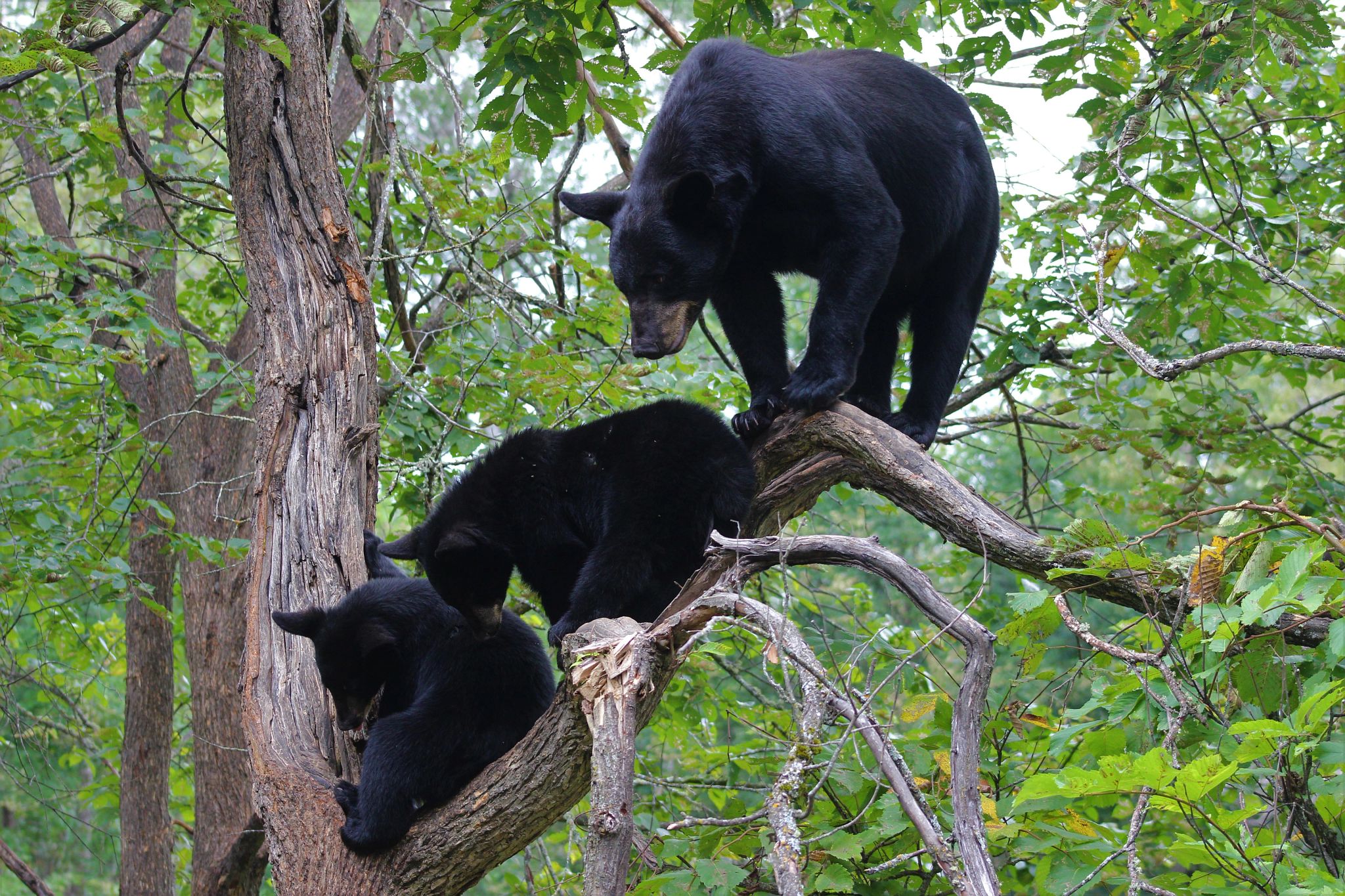
The DNR responded to the incident along with local authorities and the U.S. Department of Agriculture Wildlife Services. They found a cub in a tree, and state regulators say that indicates the attack involved the young bear and its mother.
News with a little more humanity
WPR’s “Wisconsin Today” newsletter keeps you connected to the state you love without feeling overwhelmed. No paywall. No agenda. No corporate filter.
State conservation wardens and federal staff tried to track the bear, but have not yet found it. The DNR said preliminary findings indicate the animal displayed a “series of aggressive behaviors” toward Frye, which is rare and raises the risk for repeated aggressive behavior.
Bear traps have been set and efforts are ongoing to capture and kill the mother bear. Neither the bear nor its cub had been captured Monday, but a male bear was caught and released. In a Monday news release, the agency said the priority is public safety with a goal to humanely euthanize the bear.
“Humane euthanasia is not always the standard practice in human/bear conflicts. Our actions in these types of situations are very carefully determined based upon the totality of the known evidence of each event,” Randy Johnson, DNR large carnivore specialist, said in a statement.
“Although we’re still working to piece together every element of what transpired in this incident, we know enough to warrant attempting to livetrap at the location of the incident and humanely euthanize this bear if captured,” Johnson continued.
If captured, the mother bear will be assessed and tested for rabies to determine whether injury or illness may have played a role in the incident, as well as risk of exposure to the victim. The cub will be relocated and released if captured.
The DNR works with staff at USDA Wildlife Services to address bear complaints, and around 500 to 600 complaints are made each year about problem bears. According to the DNR, up to 80 percent of complaints are resolved by methods that commonly include removing whatever attracted the animal, such as bird feeders or trash.
Jamie Nack is a senior wildlife outreach specialist with the University of Wisconsin-Madison’s Division of Extension. If people encounter a bear outdoors, she said they should talk to the bear or shout at the animal and raise their arms over their heads to look bigger.
“You really don’t want to be turning and running, but just kind of backing away slowly and again just giving them an escape route for them to just go ahead and leave,” Nack said.
The DNR said it’s very rare for black bears to attack and kill humans, but incidents have occurred in Wisconsin and nationwide. The agency said 15 people have been injured by black bears since 2013, including the incident this past weekend. No one has been killed by a wild black bear in the state’s recorded history, according to the DNR.
Conflicts between bears and people typically occur when the animals are defending their cubs or a food source, as well as when they’re injured by hunters.
If people encounter bears, the DNR has advised individuals to stay calm and not approach them. Bears typically avoid humans, but they can become a public health and safety concern if they get used to being around people. Individuals can reduce conflicts by bringing in bird feeders and pet food, keeping garbage cans secure or indoors and cleaning grills.
“If those things are not working and (people) have a bear that they believe is being abnormally bold and really lingering around, then they can call the USDA Wildlife Services,” Nack said. “Those folks will come out and do an investigation and look at mitigation or abatement techniques, which at times can involve live-trapping that bear and relocating it.”
People can contact USDA Widlife Services by calling 1-800-228-1368 in northern Wisconsin and 1-800-433-0663 in southern Wisconsin.
Last year, the state said it received 580 nuisance complaints of bears targeting bird feeders and trash compared to 480 complaints in 2023. Around half of those encounters took place in far northern Wisconsin.
Hunters killed about 4,300 bears in 2024, and the agency approved increasing the quota for this year’s harvest to 4,075 bears.
Wisconsin has roughly 24,000 bears. The state’s bear population is almost three times the number of bears seen in 1989.

Wisconsin Public Radio, © Copyright 2026, Board of Regents of the University of Wisconsin System and Wisconsin Educational Communications Board.