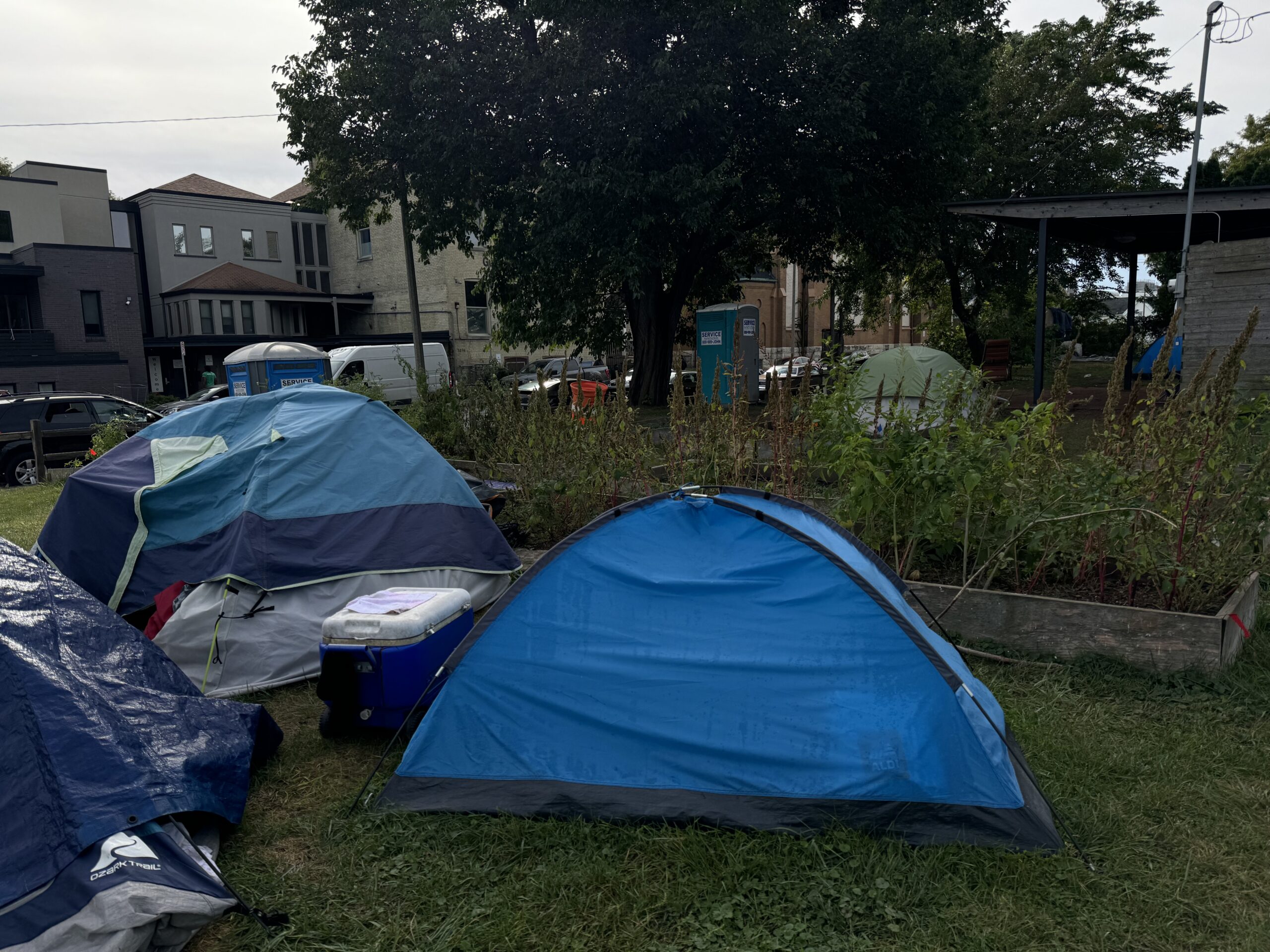

Wisconsin’s homeless shelters face new uncertainty as recent moves from the Trump administration are throwing into question permanent housing funding for people experiencing — or at risk of experiencing — homelessness.
Last month, the federal Department of Housing and Urban Development announced a plan to put a stringent cap on a stream of federal funding offered through the Continuum of Care Program. Organizations had been able to use this program’s funds for long-term, permanent housing for people who are homeless — either by offering shelter directly or by offering support like rent assistance.
Previously, organizations that received this money could use 90 percent of their allotted funding to provide permanent housing. The new proposed cap would limit that figure to only 30 percent, forcing shelters to sharply curtail long-term housing support. Instead, HUD would move most funds to support temporary, transitional housing, with some work or service requirements.
News with a little more humanity
WPR’s “Wisconsin Today” newsletter keeps you connected to the state you love without feeling overwhelmed. No paywall. No agenda. No corporate filter.
The new conditions would also allow HUD to deny funding for organizations that acknowledge the existence of nonbinary or transgender people.
The proposed funding change would take effect as soon as January.
Wisconsin has joined more than 20 states in suing the Trump administration over the changes, with the suit calling new stipulations on the funding “unlawful and unconstitutional.” Gov. Tony Evers alleged the changes could force thousands of Wisconsin residents into homelessness.
HUD temporarily pulled back its plan on Monday, hours before a court hearing on two lawsuits challenging the changes. A spokesperson with HUD told Politico it will reissue the funding notice, “as quickly as possible with technical corrections.”
The agency said it wants to make money available to grantees with measurable results, but that it was still committed to making “long overdue reforms to its homelessness assistance programs.”
Wendy Weckler is the Executive Director of Hope House of Milwaukee. She told WPR that Hope House has supported more than 200 adults and 350 children this year with Continuum of Care Program funds.
“There’s a real concern that people aren’t going to be able to pay their rents,” Weckler said. “They are going to end up homeless again. There won’t be the capacity in the shelter system to support them.”
Weckler said individual programs that use Continuum of Care funding have a range of start dates throughout the year, meaning that different programs would be forced to transition to temporary housing throughout the year.
“The chaos all of this is causing makes it so hard for agencies to plan for the future,” Weckler said. “I don’t have any numbers to put in my 2026 budget, and that’s next month.”
New restrictions signal priority shift in approach to addressing homelessness
For decades, HUD followed a philosophy of addressing homelessness called the Housing First model. This approach prioritizes getting people without a place to stay sheltered first, then addressing issues like substance abuse and mental illness.
HUD research in 2023 found this approach offers more housing stability for people who are homeless, in addition to reducing other costs by shortening stays in hospitals, nursing homes, substance abuse programs and prisons.
In a press release after announcing the funding change, the department claimed the differing approach, “restores accountability to homelessness programs and promotes self-sufficiency among vulnerable Americans.”
David Nelson is a public health researcher and chair of the board of directors of the Milwaukee Coalition on Housing & Homelessness. He told WPR’s “Wisconsin Today” Milwaukee has been successful in cutting rates of homelessness in the metro using a Housing First approach.
“When you have stable housing, you can more likely have better health care access, access to education, community connections and (improved) economic status,” Nelson said.
Critics of Housing First approaches have argued the philosophy is ineffective. A HUD policy expert told NPR this approach has failed to address rising death rates for people who are homeless and become addicted to methamphetamine or fentanyl.
Nelson argues that previous administrations haven’t implemented policies expansive enough to completely end homelessness.
“We don’t have enough mental health providers. We don’t have enough places for people with serious mental illness to go, as well as treatment centers for people to thrive,” Nelson said.