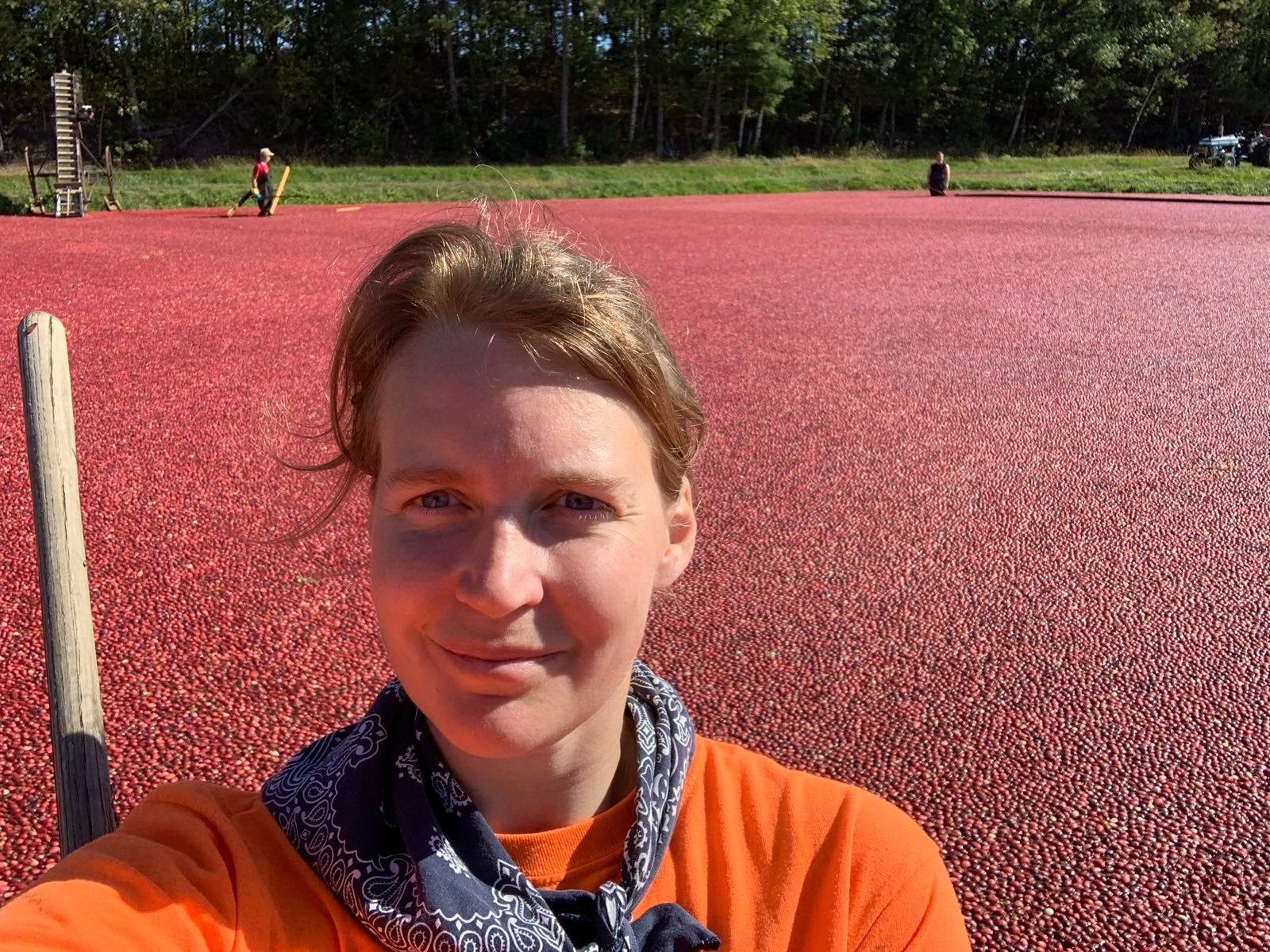
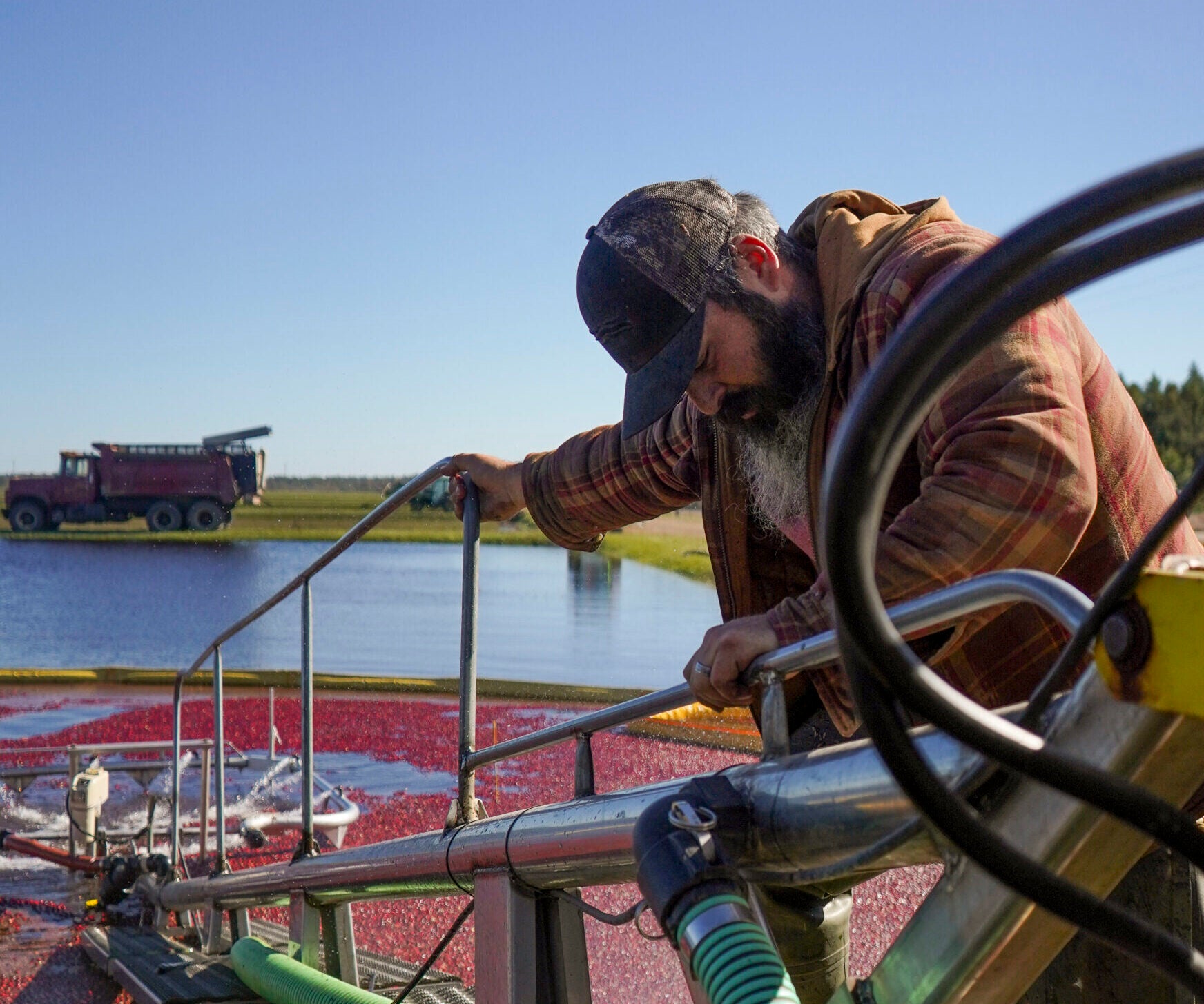
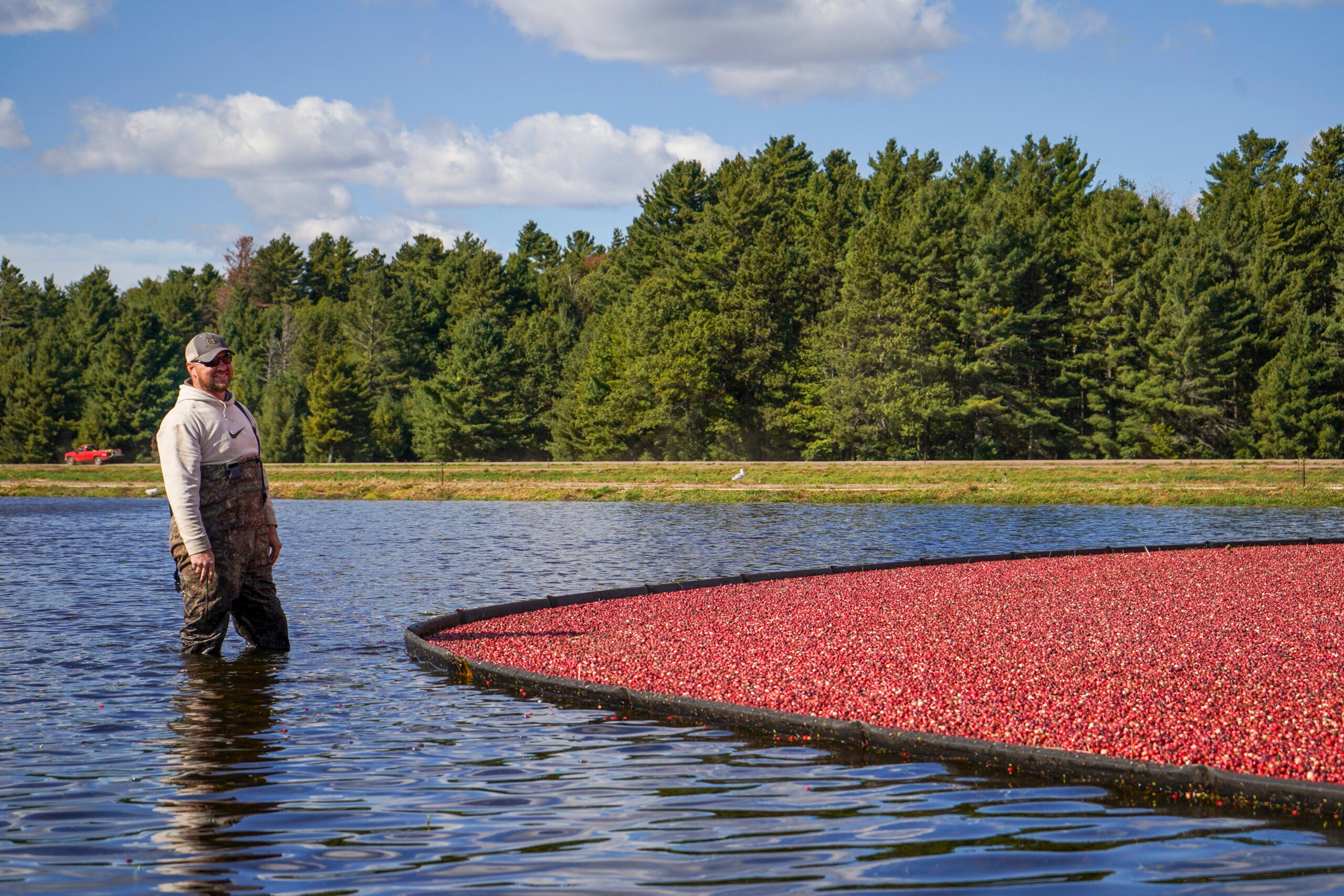
The familiar sight of ruby-red cranberries floating on flooded marshes is a hallmark of autumn in Wisconsin, where growers are now in the thick of harvest.
Cranberries are Wisconsin’s state fruit and a cornerstone of the state’s agricultural economy. Wisconsin produces about 60 percent of the nation’s cranberries, according to the Wisconsin State Cranberry Growers Association. University of Wisconsin figures show the industry contributes roughly $1 billion annually to the state’s economy. Much of that production takes place in central and northern Wisconsin, where sandy soils, wetlands and generations of farming knowledge converge to make the region ideal for cranberry cultivation.
In a conversation on WPR’s “Morning Edition,” Grant Holley, executive director of the growers association, said the crop’s roots run deep.
News with a little more humanity
WPR’s “Wisconsin Today” newsletter keeps you connected to the state you love without feeling overwhelmed. No paywall. No agenda. No corporate filter.
“Cranberries and cranberry farming were here before Wisconsin was Wisconsin,” Holley said. “Even before Wisconsin was fully a state within our country, there were people here growing and commercially raising cranberries.”
That history continues to shape communities throughout the region, where cranberry marshes not only provide employment but also help preserve wetlands. Marshes are carefully engineered to recycle water for flooding, irrigation and frost protection. During drought years, reservoirs allow growers to sustain crops without tapping municipal supplies. And when flooding occurs, growers often play a role in protecting surrounding communities by diverting water from storm systems.
The 2025 harvest has been complicated by weather conditions, Holley said. Hybrids that usually ripen in stages have matured at the same time this year, forcing farmers to work longer hours to bring in fruit before it spoils. For some family farms, that means weeks of nonstop labor.
Despite the pressures of weather and workforce shortages, the industry continues to thrive. Wisconsin’s cranberries are exported around the world, finding their way into juices, sauces, baked goods and holiday tables from Europe to Asia. Demand remains steady, bolstered by cranberries’ reputation as a healthy, antioxidant-rich fruit.
Holley said the resilience of the crop itself offers perspective.
“Even with odd years, cranberries will survive because they’ve been here for so long,” he said.
The following interview was edited for brevity and clarity.
Shereen Siewert: Cranberries have been a part of Wisconsin’s landscape for a long time. How do you see the history of this crop connecting to the people who first grew and used it here?
Grant Holley: It’s so ingrained into the culture, especially here in middle Wisconsin as well as up to the north, all the way to the Great Lakes. Everywhere you look, you see elements of the cranberry culture because it’s had 150, 175 years to be able to take root.
SS: Harvesting takes a lot of people. What challenges do growers face in finding workers?
GH: Newer technology is making things a little easier on growers because new systems are designed in ways that allow us to do more with fewer people. And people are one of our most difficult resources. Many growers keep the work within the family and in those cases the families are working the entire year. Their lives center on the cranberries themselves.
It’s important to note that there isn’t just a single species of cranberry, but we now have hybrids that help growers stagger when the berries will be ready for harvest. In theory, when Mother Nature is good to us, we usually begin harvesting at the beginning of September and go all the way to deer season. When that happens, you don’t need extra equipment or extra people. You can focus on the various marshes you have and maybe three or four people can get the job done. But in a year like this, with warmer temperatures and the long, wet summer we had, a lot of our hybrids are coming due at the same time. That makes for some long hours for growers who are trying to pull all the cranberries in while they can.
SS: Cranberries do need very specific conditions to grow. How are changes in the weather affecting the industry overall?
GH: Going back to the history of the state, people were farming cranberries here even before there was a Wisconsin. We have accounts from ancestors of today’s farmers who tried to change the land for the crops they were bringing with them. But Wisconsin is filled with wetlands, and the land is incredibly stubborn. Those ancestors finally gave up trying to grow other things and went with what they found here. Because cranberries originated here, there are environmental factors that help keep them going strong, like the fungus in the ground, the root systems and bacteria, even the insects. They’re all friends of cranberries because they’re native.
SS: Harvest is tied so closely to water. How do growers manage water use while they’re also working to protect wetlands and natural resources?
GH: Within cranberry marshes we have about a 10 to 1 ratio when it comes to support land compared to growing land. If we have 11 acres of growing land, 10 of those are completely unfarmed and only one is being farmed. That means that when we do pull water, we aren’t pulling significant water from one single source. Many of our marshes have made their own water sources just in case we actually go through a drought.
In some other states that experienced significant drought last year, their only option was not to harvest. On the other side of things, when you see a lot of flooding as we have in Wisconsin this year, those same marshes can use their water to save local townships and keep flooding from happening in some areas. Growers have been working with their water for decades. They know how to move that water, which helps everyone.
If you have an idea about something in central Wisconsin you think we should talk about on “Morning Edition,” send it to us at central@wpr.org.