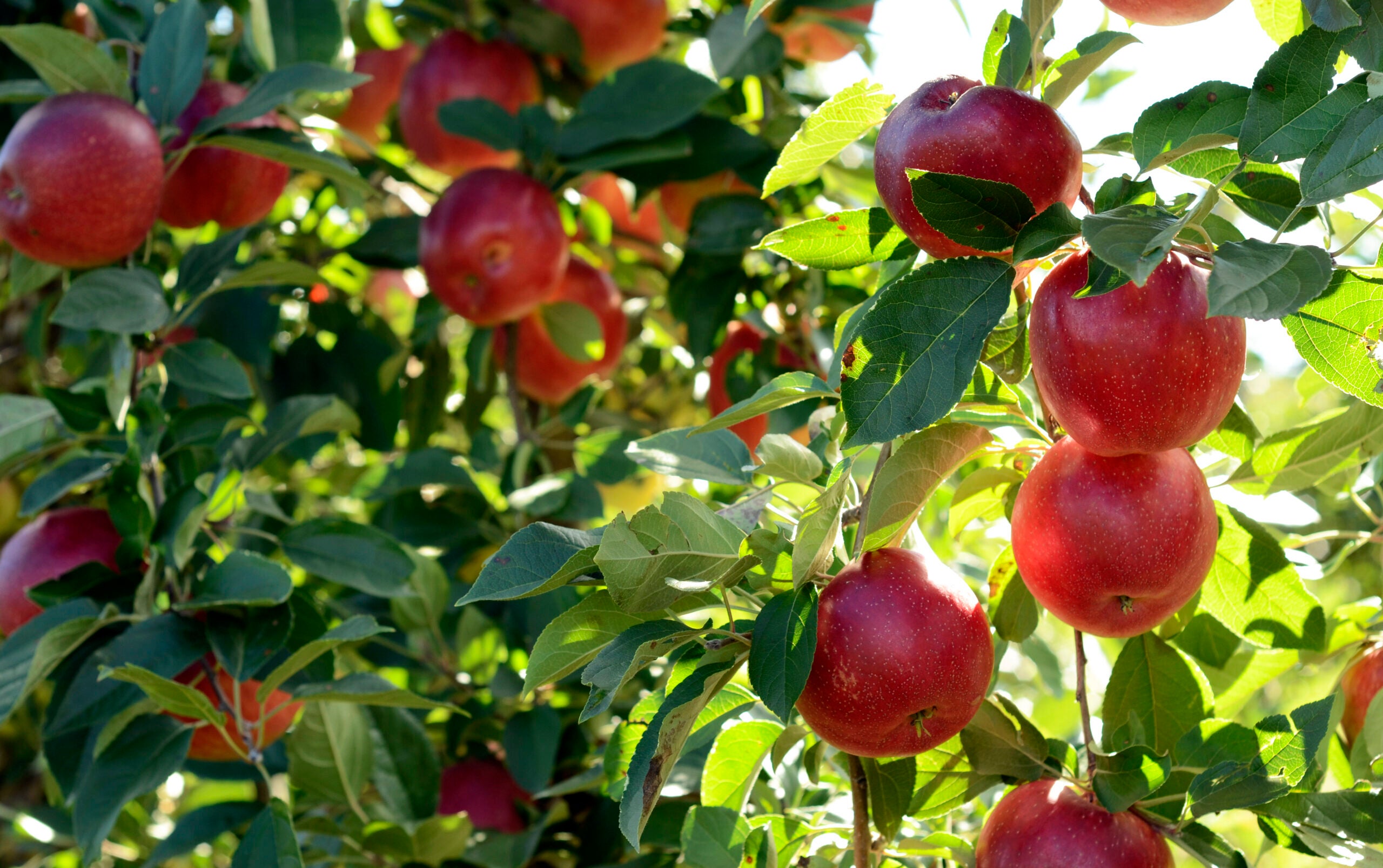
It’s been a hot and humid summer, with heavy rainfall and damaging flooding. But as the temperatures cool and fall creeps in, Wisconsin’s apple crop is ready to ripen.
Allen Teach of Sunrise Orchards in Gays Mills said it’s been an excellent year for his crop in the western part of the state. The lack of a late spring frost helped the trees get started, and while it’s been hot and humid, Teach said it hasn’t been out of the ordinary.
“We here at Gays Mills have avoided any of the big, massive rains that we’re kind of famous for here and it’s been nearly an ideal growing season,” Teach said. “We had a big push of colder air here, which has really helped the apple crop get nice and red.”
News with a little more humanity
WPR’s “Wisconsin Today” newsletter keeps you connected to the state you love without feeling overwhelmed. No paywall. No agenda. No corporate filter.
Labor Day weekend typically kicks off apple-picking season — and Teach said his orchard is ready for pickers to harvest a variety of apples including Rave, Zestar, Premier Honeycrisp and pie apples like Paula Red and Dudley.
Brandon Leverenz at Alpine Ridge Orchards in Brooklyn south of Madison said heavy rains in central Wisconsin led to an increase in apple scab — a fungal disease that can cause leaf loss and reduce yield.
That experience is one shared by other producers across the state, said Amaya Atucha, a professor and chair of the department of plant and agroecosystem sciences at the University of Wisconsin-Madison.
“Being moist and having free water and high temperature is ideal for some diseases … that we see on fruit trees and obviously on apple trees,” Atucha said.
But she didn’t expect a substantial reduction in the state’s apple crop due to these diseases — partly because growers are equipped to handle them.
“They have some pretty good knowledge about how to deal with these diseases, because they’re not new,” she said.
Atucha also pointed to issues such as root rot at orchards that saw standing water during heavy rain events.
“Saturated soils are the worst for plants, and especially for fruit trees,” Atucha said. “They’re very sensitive to what people refer to as ‘wet feet.’ They don’t like to have wet feet. They want to be moist and nice, but they don’t want to be saturated.”
Very hot, low humidity days can also lead to issues with apples. It’s something Leverenz is keeping an eye on.
“Later in the season, when (apples) start to color up, any of the dark apples, Honeycrisp included, when it gets up to the 90s, can get a little sunburn, and then obviously that fruit is no good,” Leverenz said.
Atucha said growers have some tools available for sunburnt apples, including nets to provide shade and products that act as sunscreens. Those tactics are more common out west where hot, dry weather is typical, but she said more Wisconsin growers are having to rethink how they manage their crop as warmer summers become the norm.
All in all, Leverenz said it’s been a good growing season and expected a strong picking season.
“We expect a lot of foot traffic and hopefully some good, good apple picking,” he said.

Wisconsin Public Radio, © Copyright 2026, Board of Regents of the University of Wisconsin System and Wisconsin Educational Communications Board.