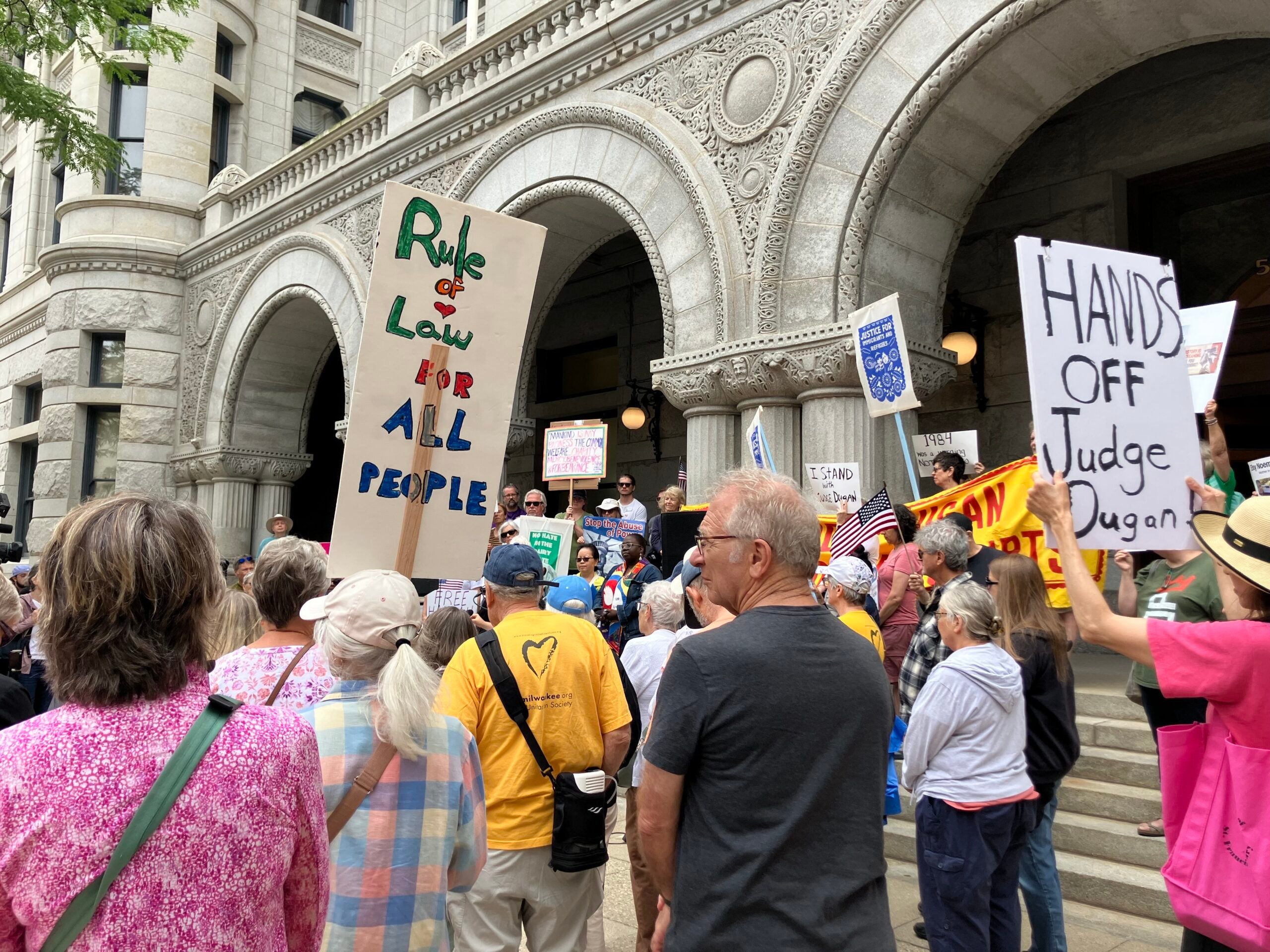
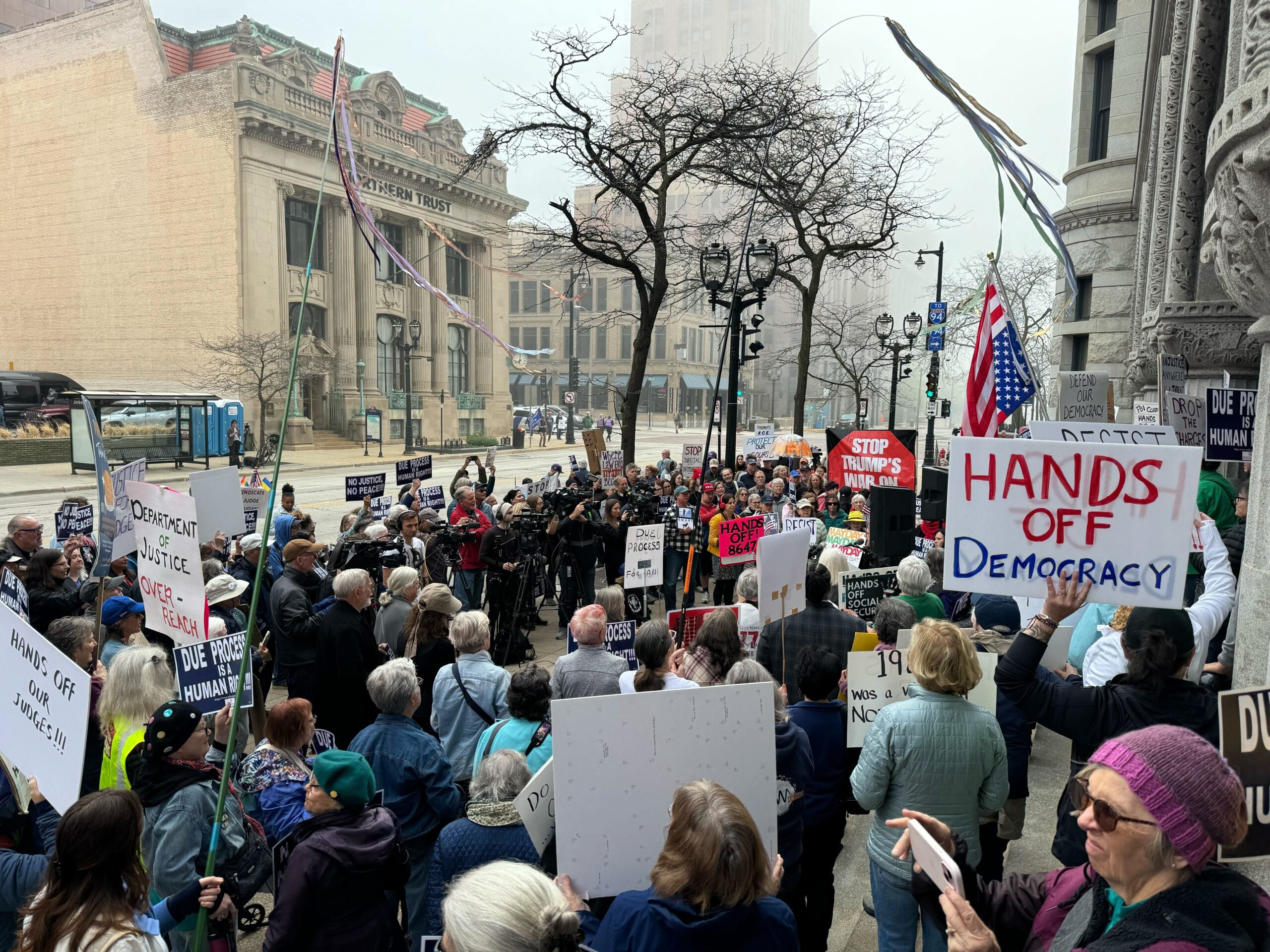
When can a judge be prosecuted?
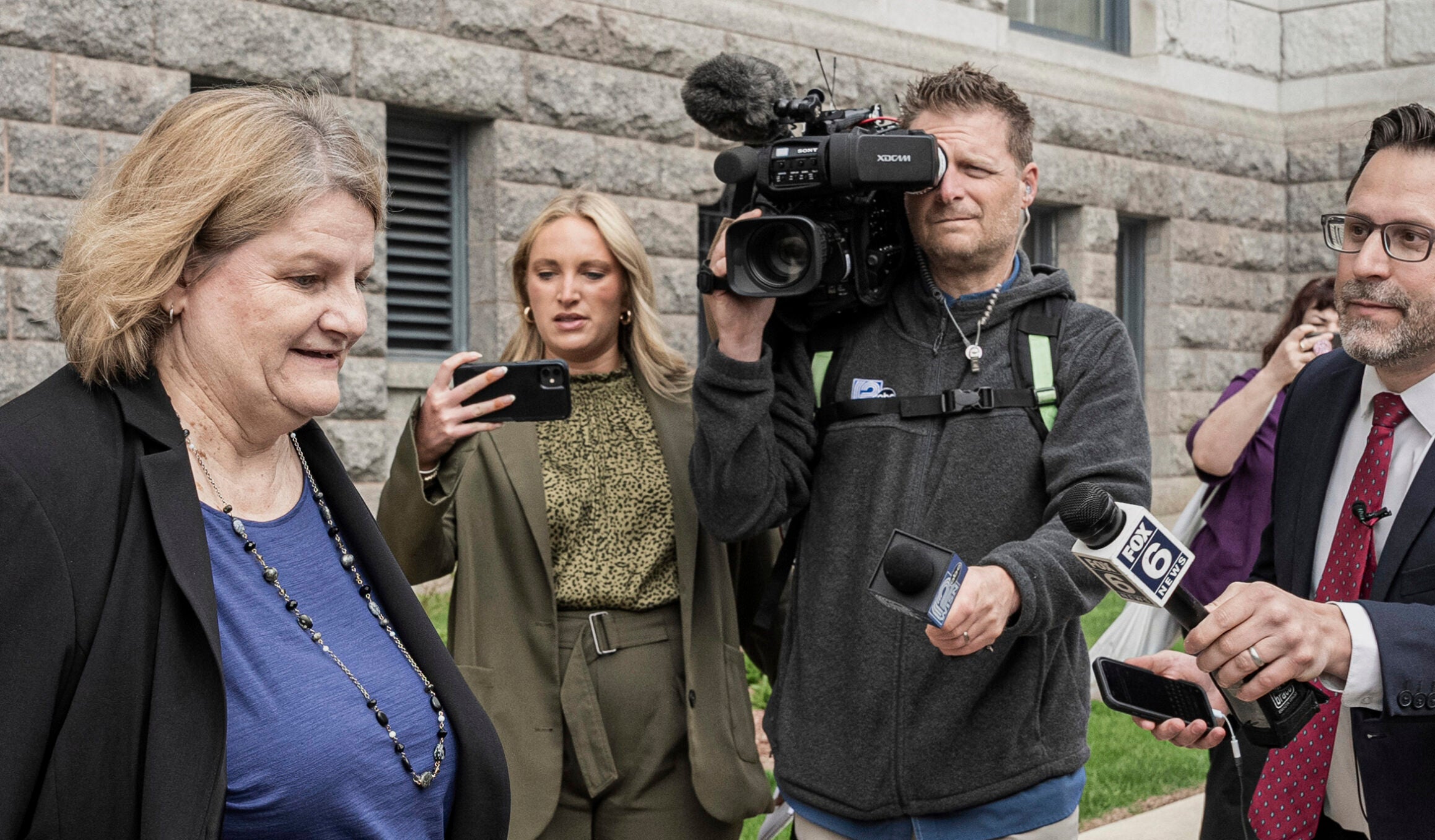
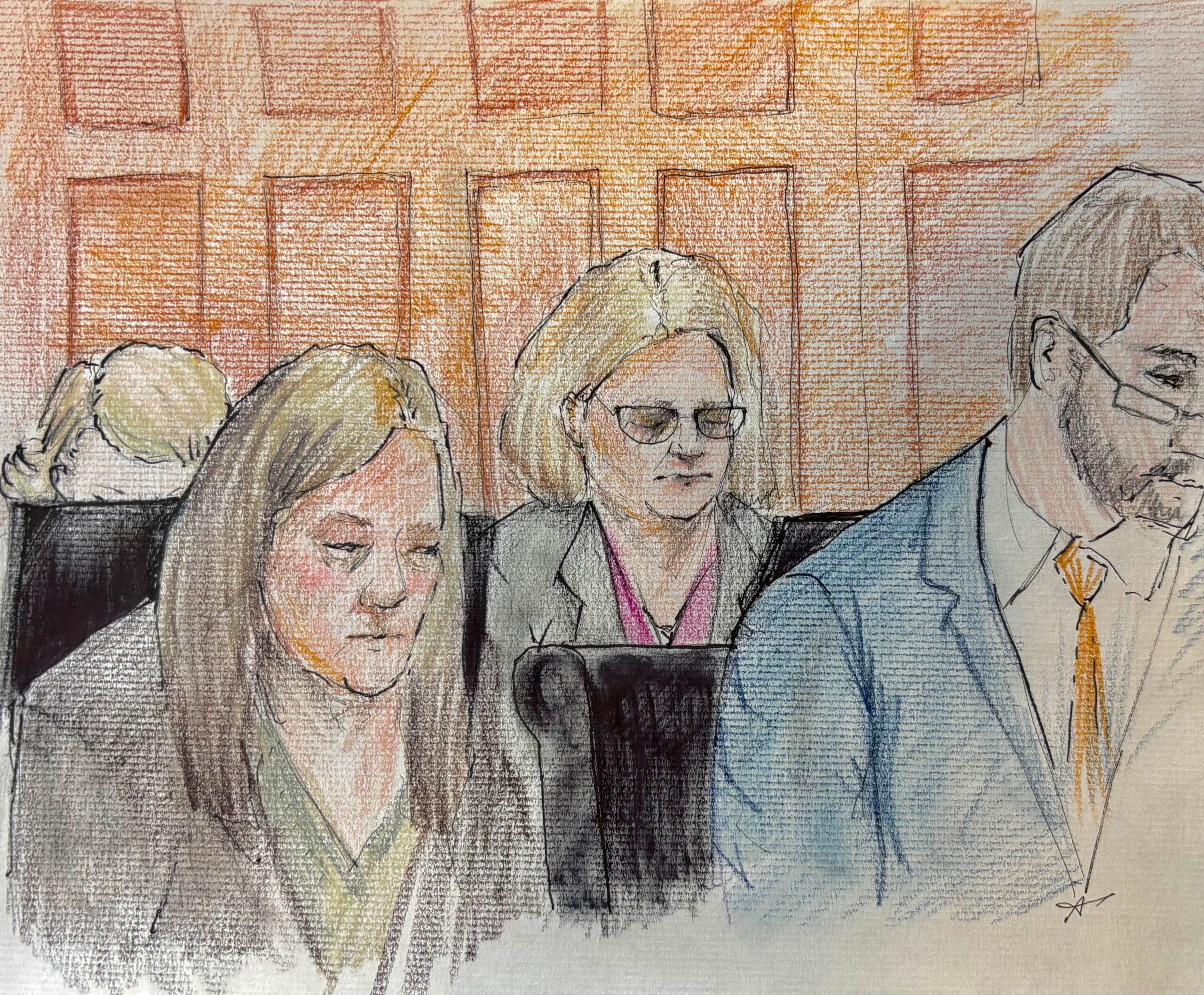
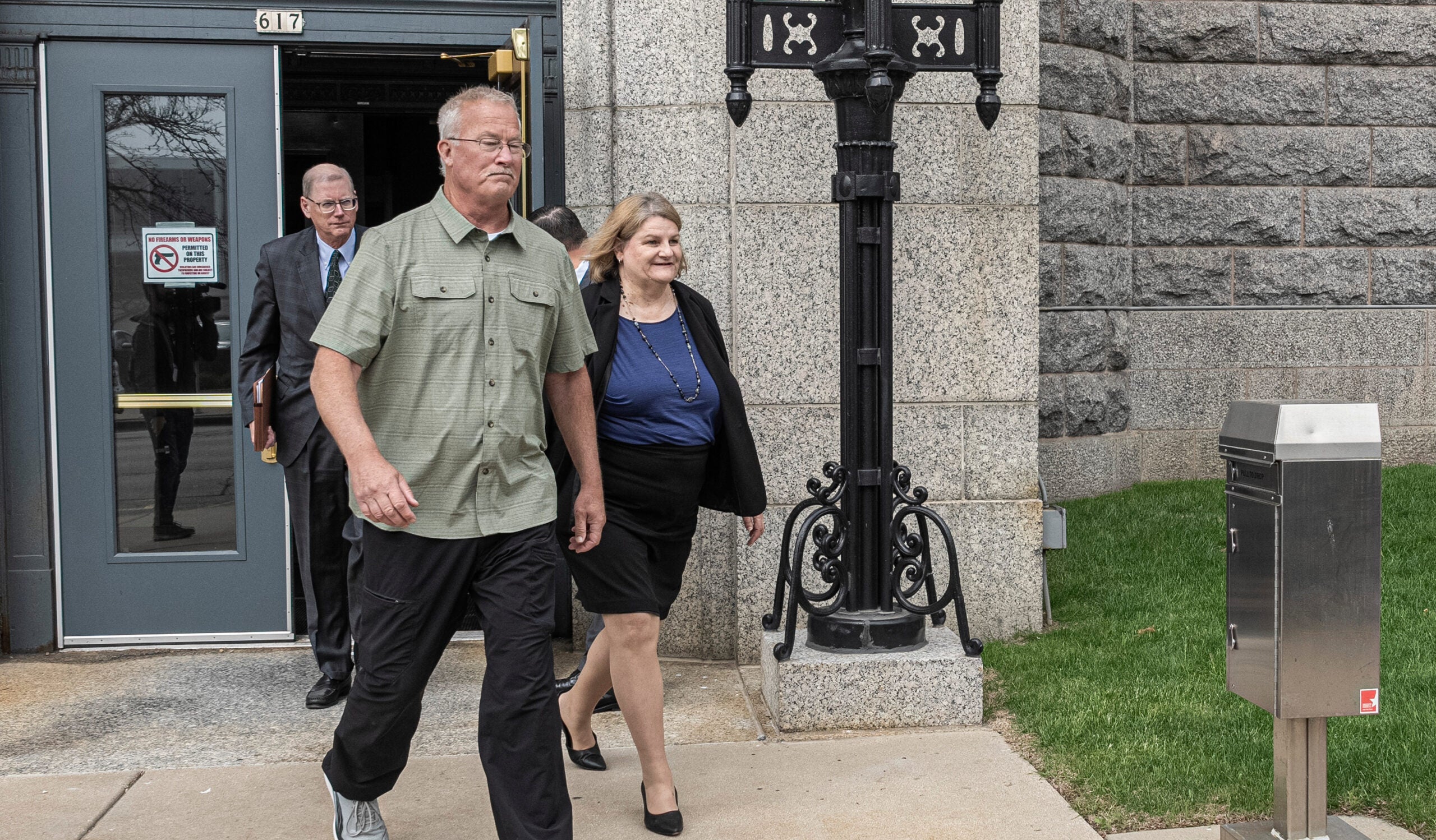
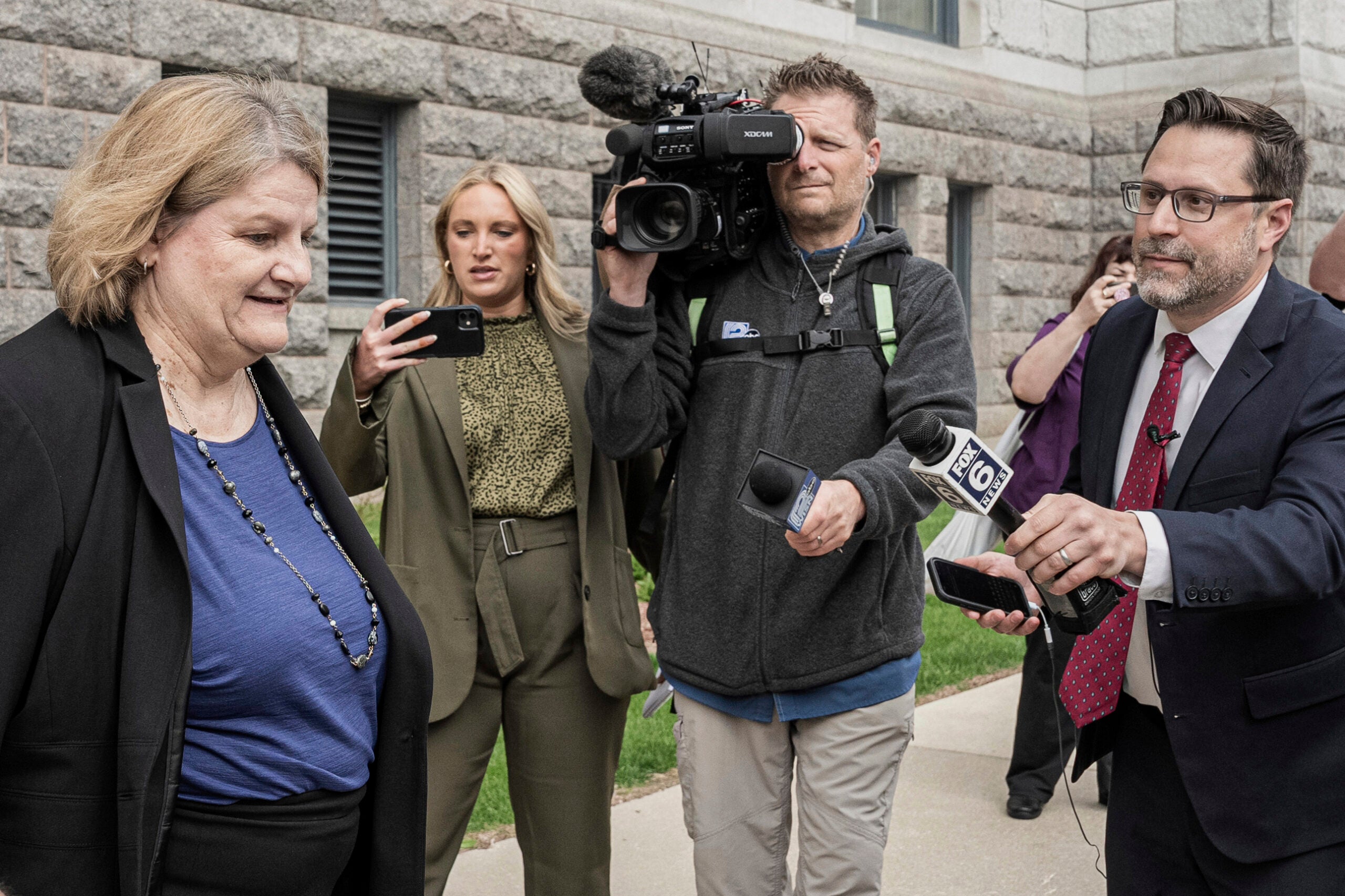
That question is front and center as lawyers spar over whether the case against Milwaukee County Judge Hannah Dugan should be allowed to proceed.
Dugan faces obstruction-related charges after federal prosecutors say she helped a man evade U.S. Immigration and Customs Enforcement, or ICE.
News with a little more humanity
WPR’s “Wisconsin Today” newsletter keeps you connected to the state you love without feeling overwhelmed. No paywall. No agenda. No corporate filter.
The man had been scheduled to appear in Dugan’s courtroom on misdemeanor charges in April, when federal agents showed up with an administrative arrant to arrest him for being in the country illegally.
According to prosecutors with the U.S. Department of Justice, Dugan became “visibly upset” about the presence of ICE agents, so she led the man through a side door of her courtroom in an attempt to help him avoid the officers.
U.S. District Judge Lynn Adelman is weighing a motion from Dugan’s attorneys, who say the federal charges against her should be dismissed. They’ve argued Dugan is being targeted just for doing her job. And they’ve said that the principle of judicial immunity protects Dugan from being prosecuted for “official acts,” including the ability of a judge to run her own courtroom.
In a filing this week, however, federal prosecutors pushed back against those arguments, calling the defense’s arguments “amorphous.”
Earlier this month, U.S. Magistrate Judge Nancy Joseph sided with prosecutors by recommending that Adelman deny Dugan’s motion to toss the case. In her recommendation, Joseph rejected the defense’s understanding of judicial immunity, and said that questions about whether Dugan broke the law should be decided via trial.
In a brief filed Tuesday, federal prosecutors called Joseph’s conclusions “well-reasoned” and accused Dugan’s attorneys of using “ad hoc carveouts” to try and scrap the charges against their client.
In their arguments, prosecutors once again asserted that Dugan broke the law. They contended that, while judicial immunity protects judges from civil liability, it doesn’t protect judges who are accused of criminal violations.
“She was not just doing ‘her job’ when she added extraneous activities to her legitimate actions as a state judge to defeat the enforcement of federal immigration law,” prosecutors said.
Prosecutors say Dugan waited until many of the agents had left her courtroom before leading the man, named Eduardo Flores-Ruiz, and his attorney out of a side door often used by jurors. At the time, Dugan told Flores-Ruiz and his attorney she would reschedule his hearing, so it could happen over Zoom at a later date, court documents say.
“The evidence will show that her actions included pausing an unrelated case, leaving her courtroom, disrupting proceedings in a colleague’s courtroom, clearing agents out of the public hallway, quickly returning to her courtroom, directing E.F.R.’s attorney to ‘take your client out and come back and get a date’ and then to go through the jury door and ‘down he stairs,’ stating she would take ‘the heat’ for her actions,” prosecutors wrote in their latest filing.
Dugan’s legal team has argued that Dugan’s actions, including rescheduling a hearing to another date, were a routine part of a judge’s job.
“Federal law enforcement agents and prosecutors can dislike, dispute, or disagree
with those decisions and acts, no question,” Dugan’s attorneys wrote in a filing submitted Wednesday. “But they cannot prosecute a state judge for doing
as Judge Dugan did here. Her acts were judicial, official, and nothing more or worse.”
Dugan’s attorneys have also accused federal prosecutors of exceeding their power, by interfering with the authority of a state-level judge.
But U.S. attorneys have countered those arguments, saying that Dugan had no right to interfere with federal proceedings.
“Endeavoring to obstruct an unrelated proceeding before a different
sovereign—in a public space where federal agents had every right to enforce
federal law—is not ‘a function normally performed by a [state court] judge,”‘ prosecutors wrote this week.
What happens next in the case?
If Adelman does reject the motion to dismiss, it’s not yet clear how long it could take the case to unfold. A trial date hasn’t been set. And a ruling from the U.S. district court could eventually be appealed.

Wisconsin Public Radio, © Copyright 2026, Board of Regents of the University of Wisconsin System and Wisconsin Educational Communications Board.