
The legal back-and-forth is continuing over whether charges should be dismissed against a Milwaukee County judge who’s accused of helping a man evade immigration enforcement.
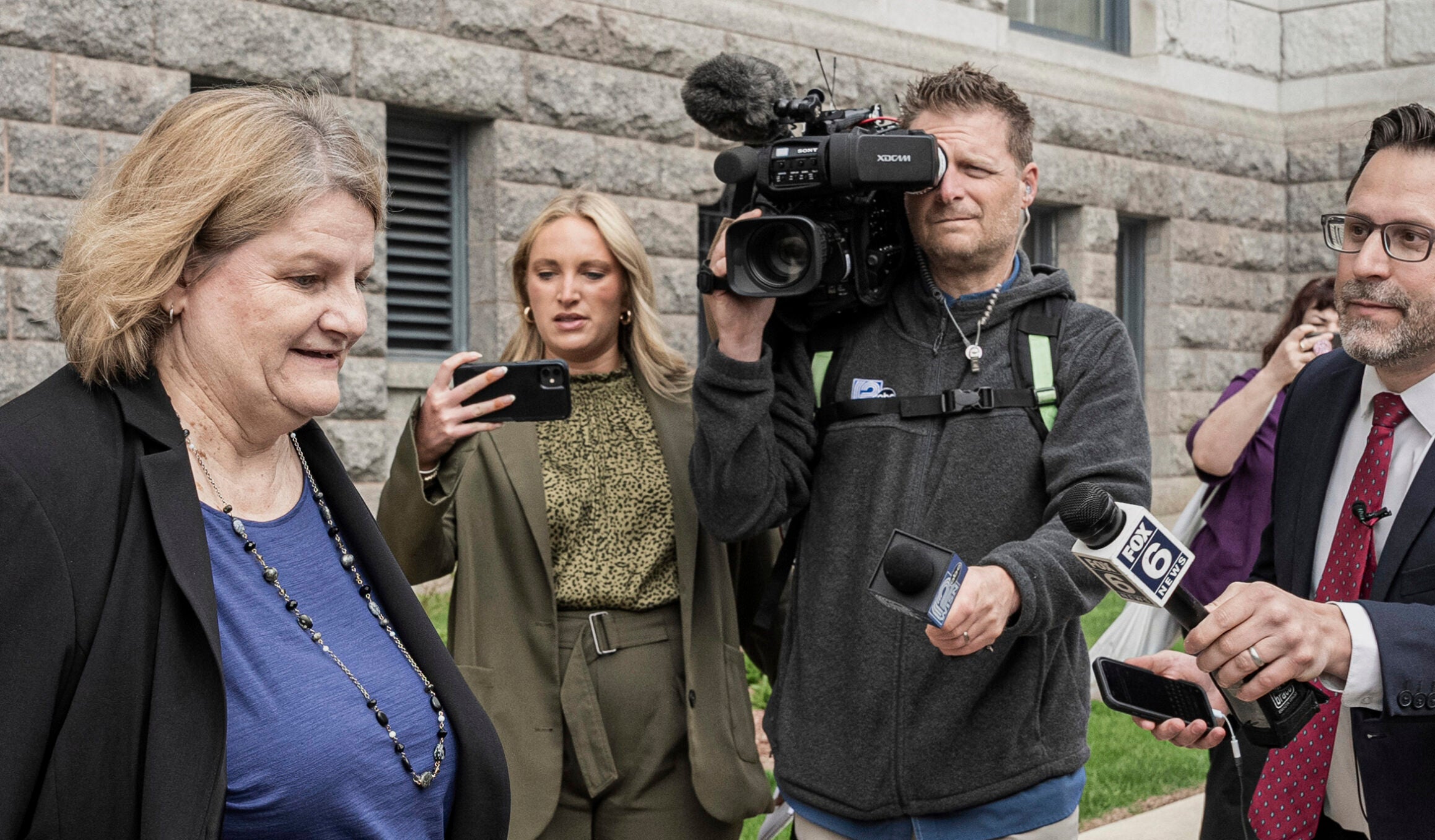
Attorneys for Circuit Court Judge Hannah Dugan responded Tuesday to a federal magistrate’s recent recommendation that the case be allowed to proceed.
That recommendation from U.S. Magistrate Judge Nancy Joseph is not binding. It’s up to U.S. District Judge Lynn Adelman to decide whether to grant a motion from Dugan’s attorneys asking for the charges against her to be scrapped.
News with a little more humanity
WPR’s “Wisconsin Today” newsletter keeps you connected to the state you love without feeling overwhelmed. No paywall. No agenda. No corporate filter.
Attorneys for Dugan have argued that the principle of judicial immunity protects Dugan from being prosecuted for official acts she undertakes as a judge. They’ve also accused federal prosecutors of trampling on state power by interfering with the authority of a state-level judge.
In their latest legal brief, Dugan’s legal team argues that Joseph, the federal magistrate, erred in her recommendation against dismissing the case.
“This is a federal criminal prosecution of a state judge for doing her job; not in the way that some federal agents preferred, true, but her job all the same,” Dugan’s attorneys wrote in Tuesday’s legal brief.
In her recommendation, Joseph drew a distinction between civil and criminal liability for judges. She wrote that, while judges are protected from being sued over decisions they make from the bench, they aren’t immune from being prosecuted for actions related to their judicial duties, if prosecutors allege those actions violated criminal law.
Dugan’s attorneys objected to that interpretation in their filing.
“In fact from the start, American law has prevented such prosecutions on principled grounds,” Dugan’s lawyers wrote. “Immunity is not restricted to the civil sphere; it protects against criminal liability for most official acts.”
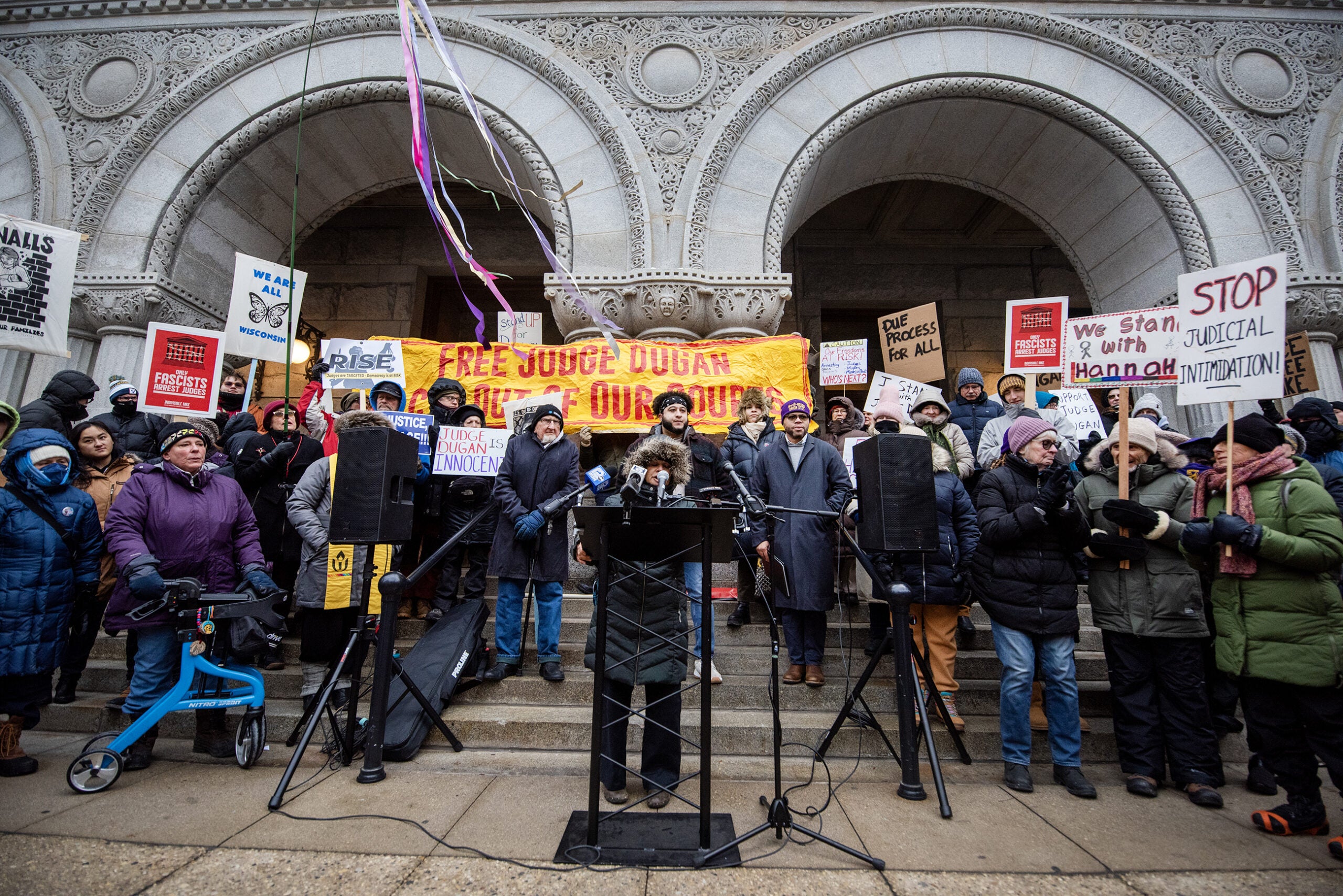
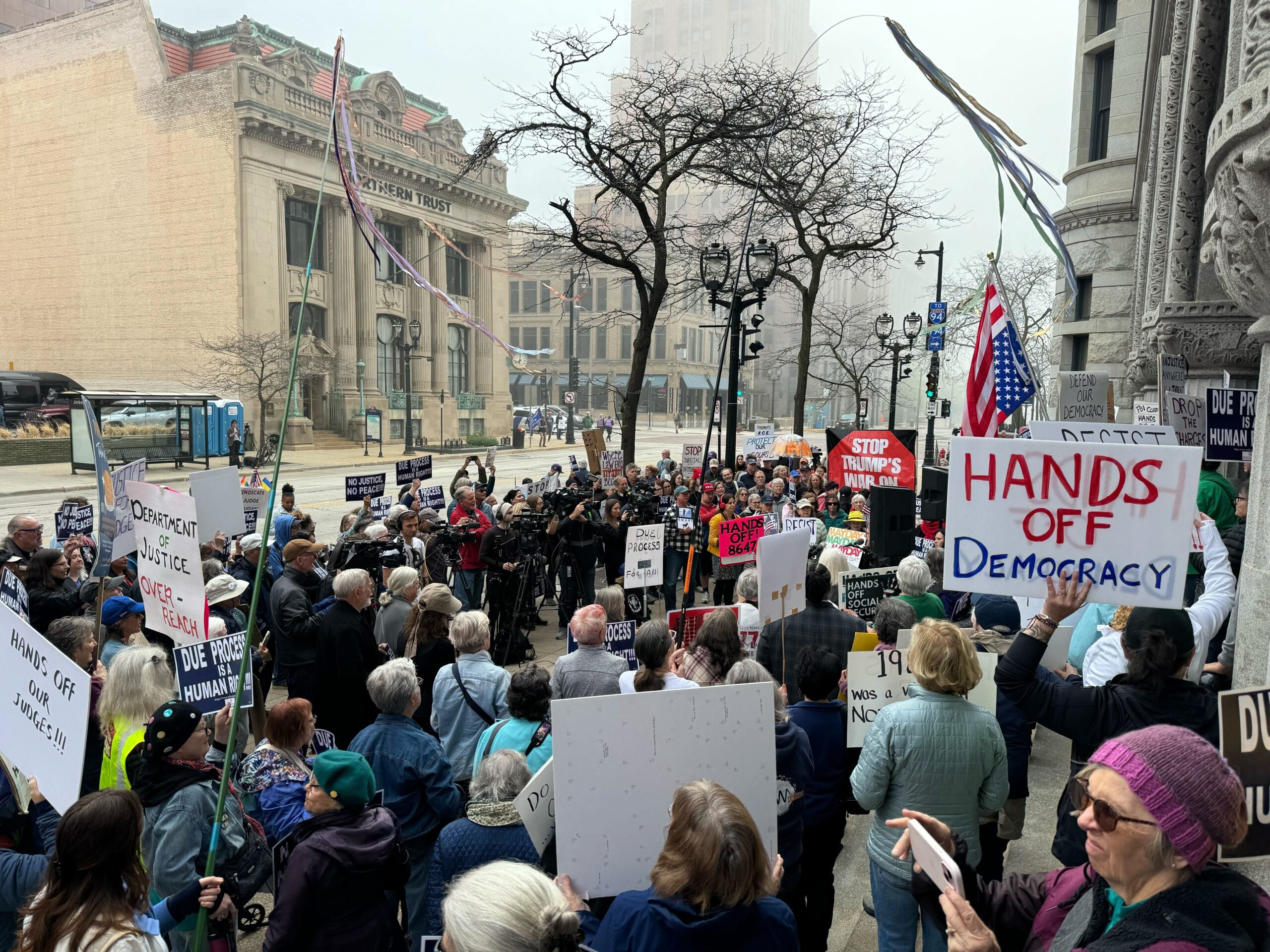
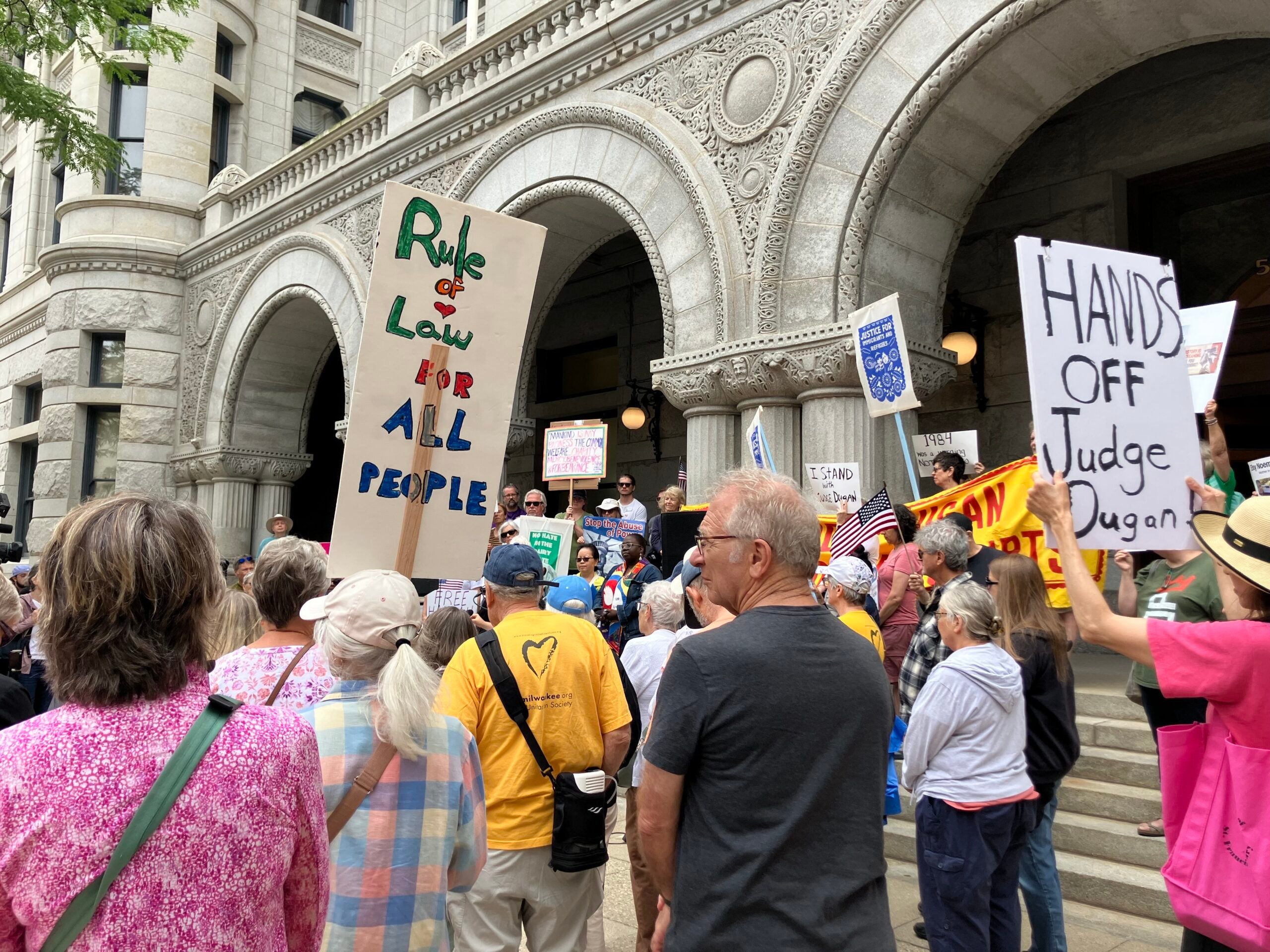
Dugan’s supporters have accused President Donald Trump’s administration of trying to intimidate a local judge. Dugan’s attorneys echoed some of those concerns in their most recent filing.
“Yet the reasons for judicial immunity are stronger, if anything, in its original
criminal application,” her attorneys wrote. “The risk that a judge will be arrested, shackled, and jailed for carrying out the duties of his or her office, and the in terrorem (intimidating) effect that necessarily would have on that judge and others, is a much greater threat to the judicial task and role than civil cases.”
What led to Dugan’s legal battle?
Dugan’s legal trouble began on April 18 when Immigration and Customs Enforcement arrived at the Milwaukee County courthouse with an administrative warrant to arrest a man who was in the country illegally, according to a criminal complaint.
The man had been scheduled to appear in Dugan’s courtroom on misdemeanor charges, but prosecutors say Dugan helped him avoid ICE by leading him and his attorney out a side door of the courtroom. At the time, Dugan told the man’s attorney that his court appearance would be rescheduled so it could happen remotely at a later date, according to court documents.
Federal agents later arrested the man outside the building after chasing him on foot.
According to Dugan’s attorneys, judicial immunity doesn’t protect judges from being prosecuted for misdeeds unrelated to their judicial office. In other words, crimes like murder, tax evasion or drunk driving can still be prosecuted even if a judge does them. And her attorneys argued that judicial immunity doesn’t extend to some specific crimes that stem from a judge’s official position — like when judges accept bribes, use their position for sexual coercion or violate the rights of defendants.
But, they said, Dugan is not being accused of any of those offenses. Instead, her attorneys say she’s being prosecuted for making routine decisions in the course of running her own courtroom.
“(Can the federal government tell her) no, you cannot usher a person out a second door so that he re-enters the same hallway a few feet from the doors agents expected him to use; and no, you cannot allow a party in a
pending case to make future court appearances by Zoom?” Dugan’s attorneys asked. “Can the federal government insist that a state judge answer federal criminal charges if she does any or all of those things?”
Federal prosecutors have argued that judicial immunity doesn’t mean judges can’t be prosecuted for breaking the law. They’ll file a formal response to the latest briefing from Dugan’s attorneys by the end of this month.
After that, Adelman will decide whether to deny or grant the motion to dismiss the two charges against Dugan. She’s been indicted on charges of obstructing or impeding a proceeding and concealing an individual to prevent his discovery and arrest.
A trial date has not been set, and it’s not yet clear how long the case could take to be resolved if it’s allowed to proceed.
Dugan is not currently hearing cases in Milwaukee County. The Wisconsin Supreme Court suspended her in April, citing the pending criminal case against her.

Wisconsin Public Radio, © Copyright 2026, Board of Regents of the University of Wisconsin System and Wisconsin Educational Communications Board.