Picture this: You wake up one day and the world is empty. There’s a hazy blue coloring to everything. You try to piece together what your life was like before, but all you can remember are fragments of old horror movies you’ve watched.
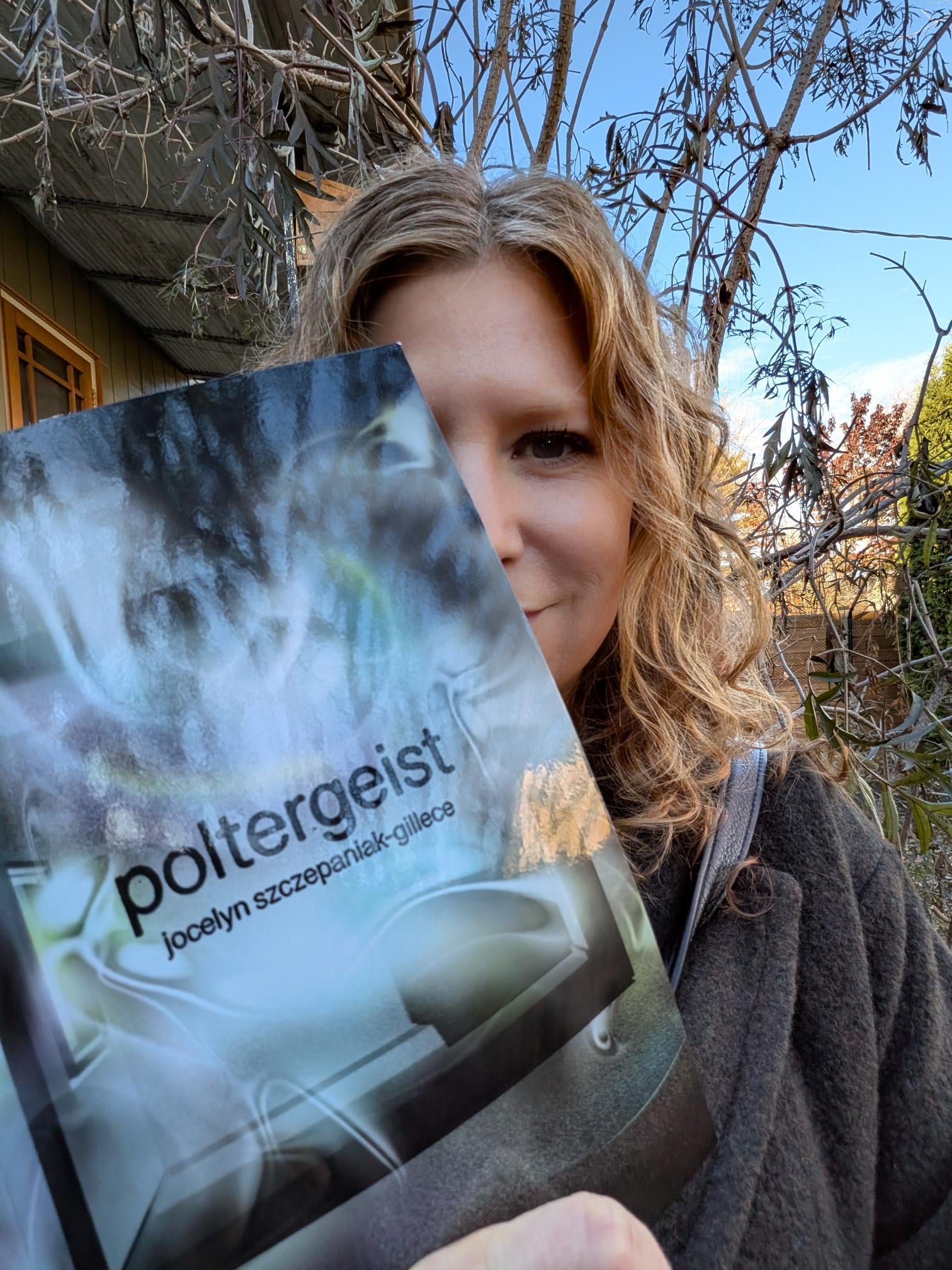
That is the premise of “Poltergeist,” the debut novel from Jocelyn Szczepaniak-Gillece, a film professor at the University of Wisconsin-Milwaukee.
“I personally really love novels that are cinematic in scope, that give you a lot of description, that give you a lot of scene-setting where you can really feel where you are — you feel immersed just like you are in a film,” Szczepaniak-Gillece told WPR’s “Wisconsin Today.” “That definitely is something that I wanted to create, and a kind of atmosphere that I wanted to provide.”
News with a little more humanity
WPR’s “Wisconsin Today” newsletter keeps you connected to the state you love without feeling overwhelmed. No paywall. No agenda. No corporate filter.
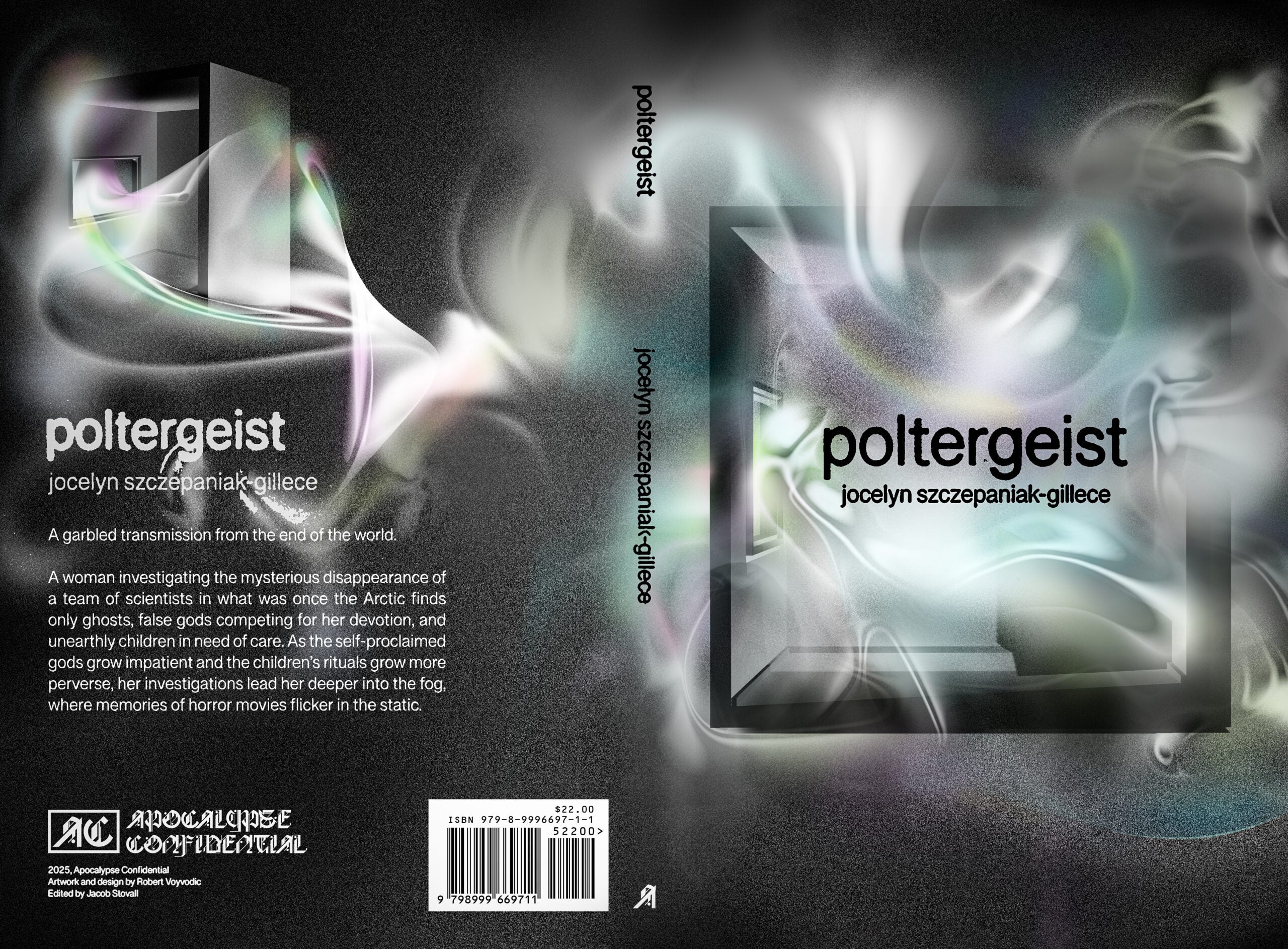
“Poltergeist,” published by Apocalypse Confidential in December, is about an unnamed woman who finds herself alone in an apocalyptic wasteland. The novel is filled with easter eggs for fans of classic horror films like “The Thing” and “The Changeling” — and, of course, the 1982 movie “Poltergeist.”
Szczepaniak-Gillece talked with “Wisconsin Today” about the world of “weird horror,” being inspired by Wisconsin winters and how she brought her deep knowledge of horror films to the page.
The following interview has been edited for brevity and clarity.
Rob Ferrett: For years, you’ve been our go-to movie person at WPR. Coming from that film background, what made you want to tackle a novel?
Jocelyn Szczepaniak-Gillece: I’m really interested in storytelling in general, whether that’s visual or whether that’s written. Books are almost as much a love for me as the movies. One of the things that I’ve been really interested in as I’ve gone deeper into my career as a film historian is how we can bridge this gap between the visual and the written. Movies, as far as I understand them, have kind of infected our subconscious. They’re a part of our history. They’re a part of who we are. And so I was really interested in thinking about how to combine that subconscious level of film with telling a story in a novel form.
RF: Now here’s a surprisingly tricky question: asking about the plot. As a reader, we come in and we don’t know what the heck is going on — that emerges very slowly. So when somebody asks what your book is about, what do you tell them without spoiling the discoveries you make along the way?
JS-G: I like to say that it’s about a single figure — an unnamed woman — who doesn’t know who she is, she doesn’t know where she is, and she finds herself completely alone at what seems to be the end of the world. That’s the general approach that I will give people. But I also want them to understand that it’s about a lot more than that. It’s about: Who are we if there’s nobody else to think about ourselves in concert with? What is somebody’s identity if they’re all alone? And if all of humanity has disappeared, what, then, does being a human being mean at all?
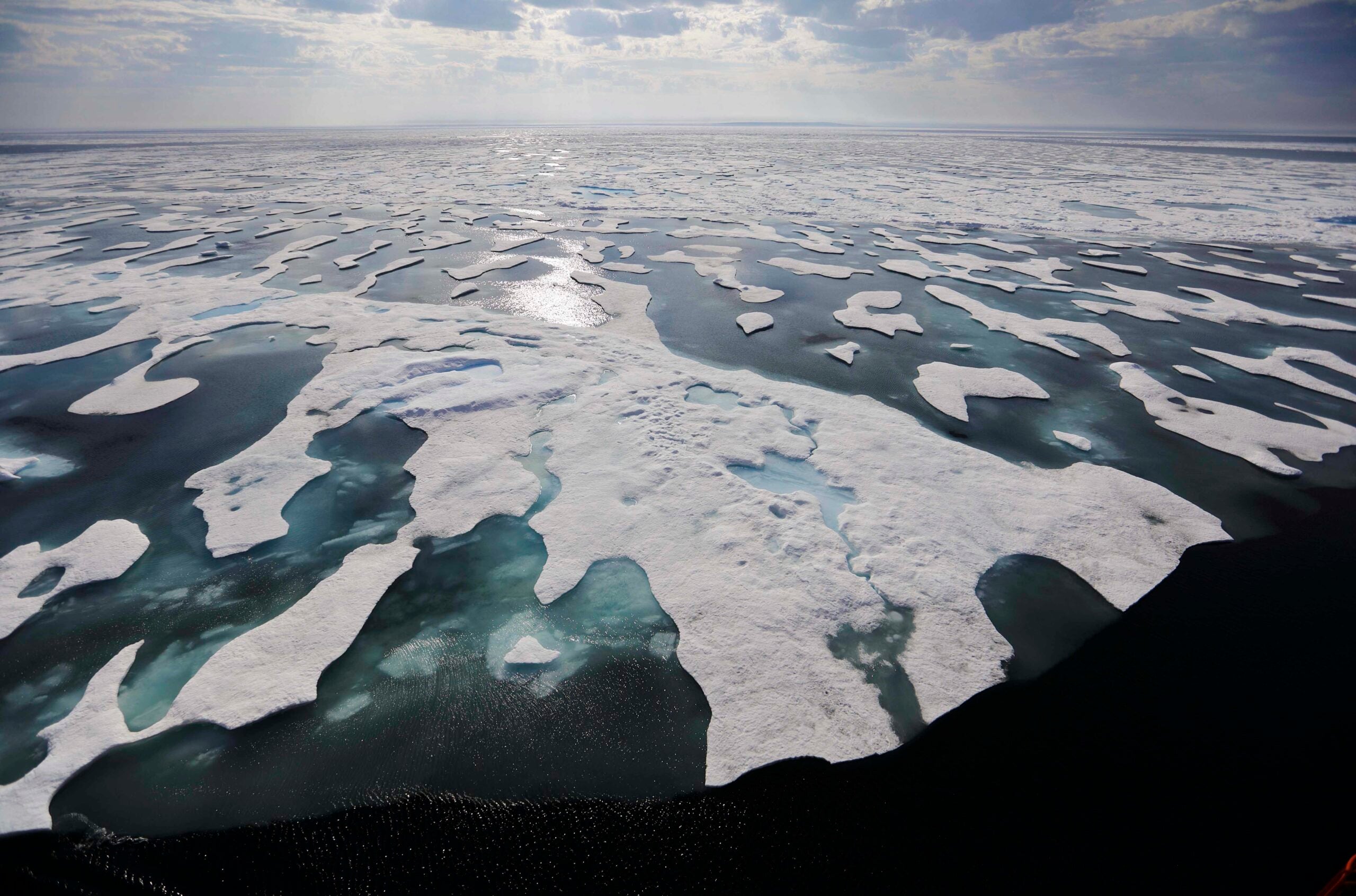
The book originally came to me partially from a dream image … of this Arctic outpost in an Arctic that is no longer the Arctic — an Arctic that has melted. And that dream image was so provocative to me when I woke up that it was something that kind of guided the rest of the story for me.
RF: The day we’re talking, we’ve had a lot of snow. It’s a warm day. There’s mist. Things are melting. If you’re going to film your book, today would be a good day. Did the Wisconsin landscape help flesh out that image that started in a dream?
JS-G: The Wisconsin landscape has so much to do with this book. It doesn’t take place in Wisconsin — it takes place in an Arctic that has melted. But I’m not originally from Wisconsin, I’m from the mid Atlantic, so when I moved here, I had to get used to these massive snowstorms that are just, like, apocalyptic when they happen.
Over the years, that became something that I loved about the state, but it’s also been something that I’ve seen start to go away a little bit. It was just, I think, two winters ago that we basically had no snow cover whatsoever.
That feeling of the snow disappearing, and that beauty of the ice evaporating and eroding, that brings up a kind of melancholy. That melancholy affected this book, too. It made me think about what I wanted the environmental collapse that’s at the center of the book to really be about. That feeling of the cold that makes you feel very alone, but it also kind of makes you feel alive a little bit — what happens when that starts to dissipate?
RF: This book is definitely in conversation with horror movies. How did you approach bringing those movies into the story?
JS-G: Yeah, so this is also in keeping with my point that movies have kind of infected us. They are in our subconscious. They’re in our dreams. We have completely integrated them into who we are, at least in this country. I would say that they’re deeply a part of the American consciousness. So in order to experiment with that … I wanted to give a sense of the character having these movies come up in her subconscious. I tried really hard never to name the film in the book. The goal was that they would also ring some distant bells in the reader’s head. So as you read the description of the film, you might begin to realize, “Oh, that’s ‘The Texas Chainsaw Massacre.’ Oh, that’s ‘The Changeling.’” And they would start to bubble up in your head, much as they’re bubbling up in the protagonist’s head. The idea was to create this structure of film as subconscious material.
RF: You’ve described this as a work of “weird horror,” which is kind of a subgenre of horror. What do we mean when we say “weird horror”?
JS-G: There are a lot of debates as to what weird horror means today, but the way that I think about it is: it’s horror that does not explain itself. Some very strange things happen. You’re never going to get the author telling you exactly what it all means. It’s not going to get all tied up, and hopefully it’s going to leave you with a feeling of deep uncanniness, that things are just not quite right.
Weird horror is really appealing for people who don’t see how the world is entirely legible or explainable anymore, and that’s why it’s an appealing subgenre for me.
Boswell Book Company in Milwaukee is holding an author event with Jocelyn Szczepaniak-Gillece on Feb. 5 at 6:30 p.m. The event is free and open to the public.