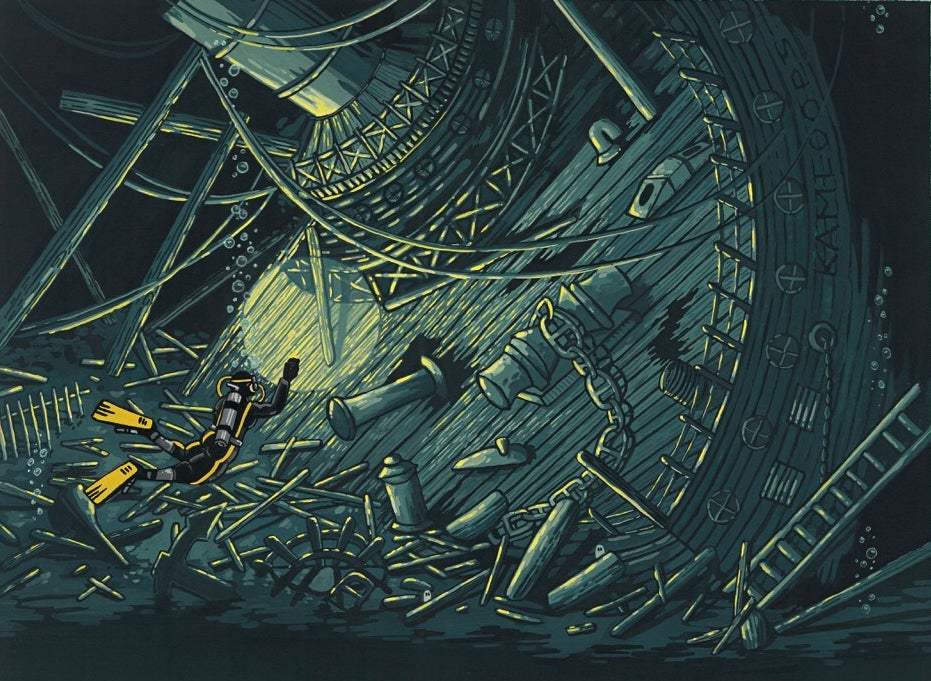
Hidden shipwrecks. Eerie spillways. Abandoned quarries.
These are a few topics of this year’s Spooky Lake Month, an annual video series from Sauk City-based artist and educator Geo Rutherford.
Each day in October, Rutherford shares a new video about the history and science behind spooky lakes and other “haunted hydrology” for more than 2 million followers of her account @geodesaurus on TikTok and Instagram. This year, the series is in its sixth season.
News with a little more humanity
WPR’s “Wisconsin Today” newsletter keeps you connected to the state you love without feeling overwhelmed. No paywall. No agenda. No corporate filter.
“At the end of this season, it’ll be 166 videos about spooky, wet, morbid things of the world,” Rutherford told WPR’s “Wisconsin Today.”
And fans know that every Spooky Lake Month ends with a video about one of Rutherford’s favorite Wisconsin haunts: Lake Superior, which she calls the “it girl for disasters” in part because of the way dead bodies tend to sink to the bottom and stay preserved. This year, she is planning to release her first video about the wreck of the SS Edmund Fitzgerald just ahead of its 50th anniversary.
What makes a lake, or any other body of water, “spooky” by Rutherford’s standards has nothing to do with supernatural phenomena or urban legend — it’s about the strangeness of the natural world.
“I don’t actually talk about ghosts or ghouls or conspiracy theories or true crime,” she said. “I’m interested in environmental disasters. I’m interested in science. I’m interested in history.”
While Rutherford has found a lot of joy and success making educational videos about history and limnology, she said the recent onslaught of AI-generated videos has been “creeping up” on her job. For her, each video takes up to eight hours to research, film and edit.
“It’s a little depressing sometimes to be working really hard on making educational content and then to have these videos that are produced artificially surpassing you,” Rutherford said.
“It seems like people still appreciate the handmade educational videos,” she added. “And I have a lot of peers that are doing similar content that I am, where it’s educational and fun. We’re all working hard to try to make sure the internet is not just full of pranks and dance videos and AI.”
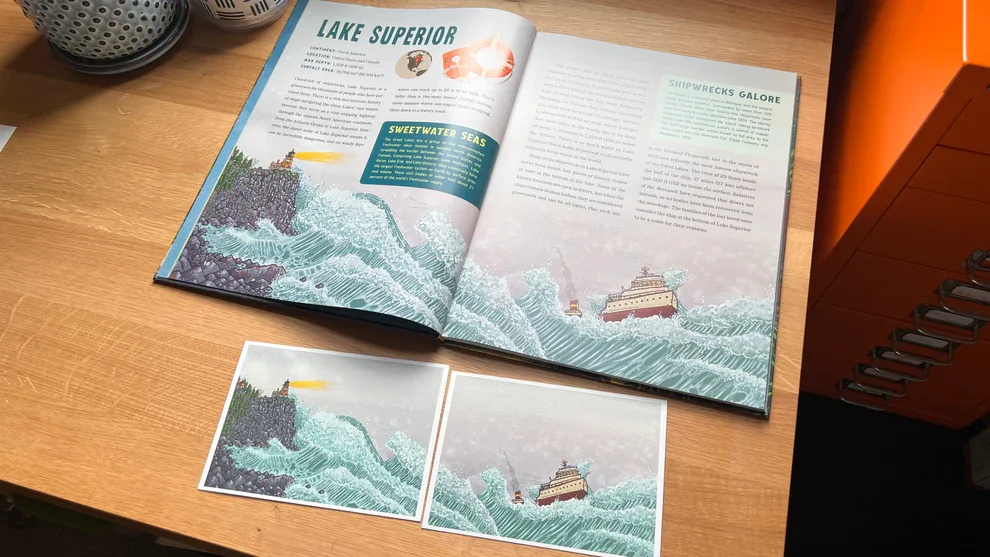
In addition to creating videos, Rutherford is the author and illustrator of the bestselling book “Spooky Lakes: 25 Strange and Mysterious Lakes that Dot Our Planet.” Last month, she released a coloring book featuring 10 lakes not included in the original book, including the Salton Sea in California and the Don Juan Pond in Antarctica.
Rutherford hopes the videos and books can inspire “budding limnologists” and others who want to learn more about the strange and mysterious world around them.
Spooky Lake Month is “about the fear that we universally have of the unknown — the things that we truly cannot understand,” she said. “To me, what makes lakes special is that every lake has a secret, and you just don’t know what that secret is.”
Rutherford sent “Wisconsin Today” a list of her top 5 “haunted hydrology” facts from Wisconsin. It has been lightly edited.
1. Death’s Door
I’d heard stories about Death’s Door long before I ever moved to Wisconsin. It’s a narrow, rocky strait at the tip of the Door Peninsula, where warm water from Green Bay collides with the cold depths of Lake Michigan, creating unpredictable currents that have swallowed ships whole for centuries. The name comes from Indigenous stories and early explorers’ accounts of the deadly waters here, and honestly, it’s easy to see why they called it that.

2. The Christmas Tree Ship
This is one of the eeriest shipwrecks I’ve ever read about from the Great Lakes. The Rouse Simmons, also known as the Christmas Tree Ship, went down in a blizzard off Two Rivers in 1912 while delivering evergreens to Chicago for the holidays. Some of those trees later washed ashore, still bound in twine, like ghostly gifts that never made it home.
3. Quagga mussels
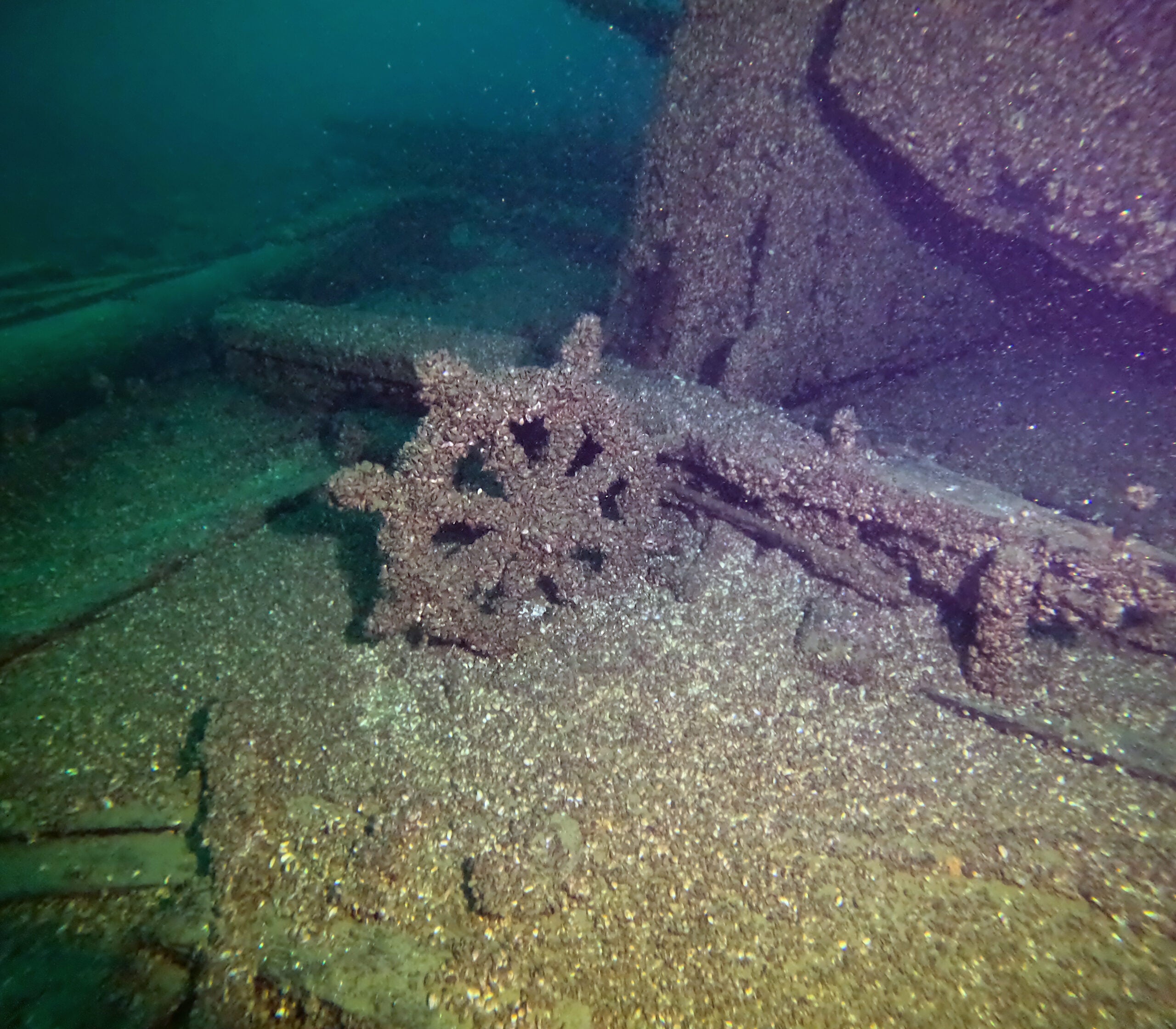
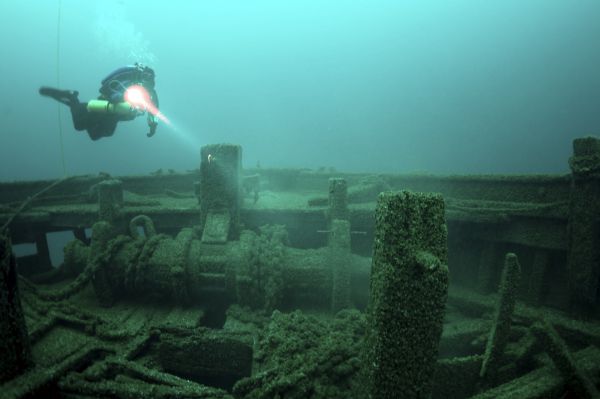
If you want a real Great Lakes horror story, forget sea monsters. It’s the quagga mussels. They’ve carpeted the lake floor in razor-sharp shells and filtered out nearly all the plankton, turning the water unnaturally clear and letting sunlight fuel toxic algal blooms. A perfect example of how something tiny can quietly wreck an entire ecosystem.
4. Fish Lake
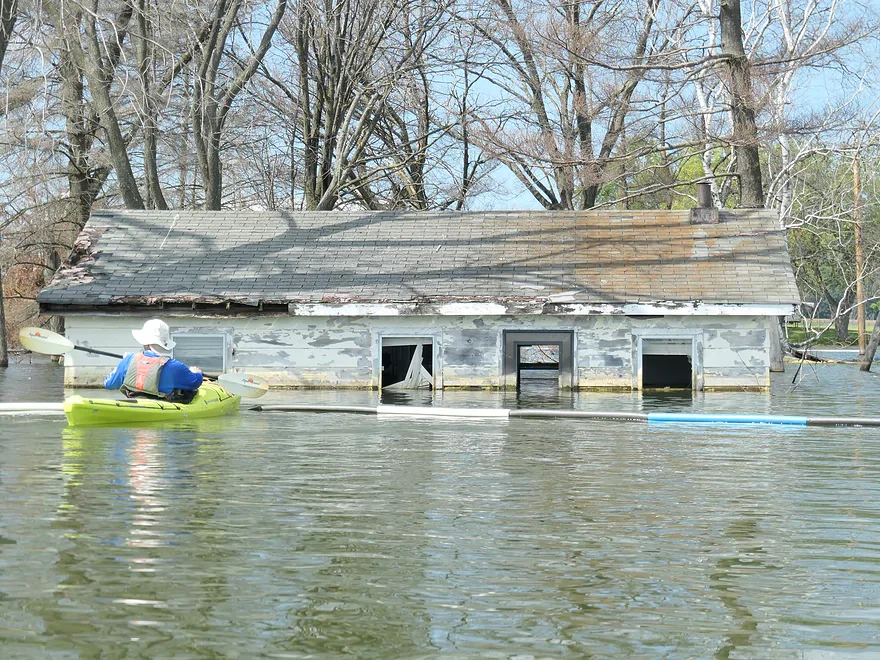
I started doing Spooky Lakes long before I ever lived on Fish Lake. Who would’ve guessed I’d end up on a spooky lake myself? It’s a glacial pothole with no natural outlet, so the water just keeps rising — slowly swallowing the road that once separated it from Mud Lake and leaving three half-submerged houses behind. Their rooftops and windows still poke out of the water and you can see the crockpots in the kitchen and couches under the water in the living rooms. It’s honestly one of my favorite places to kayak. I love it.
5. Sevona shipwreck
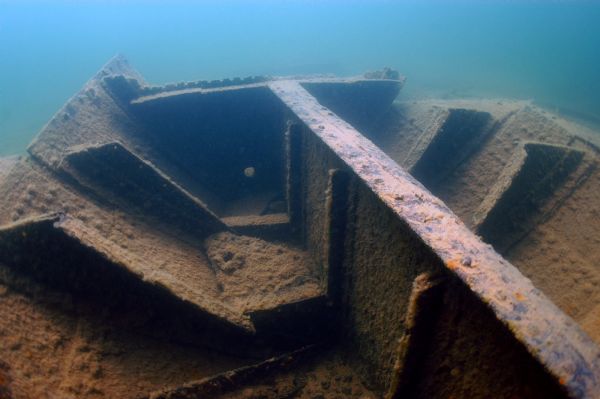
Lake Superior has more than 350 shipwrecks and 10,000 lives lost in her cold, unforgiving waters. One that’s always stuck with me is the SS Sevona, a steel freighter that went down in the Apostle Islands in 1905. It broke apart on the reef during a brutal storm, and seven of the 16 crew members were lost to the freezing waves. Remember, Superior doesn’t give up her dead.
Rutherford is giving an artist talk at the Museum of Wisconsin Art in West Bend on Nov. 1. More information about the event is available on the museum’s website.
Editor’s note: This story was updated to correct the date of the museum event.