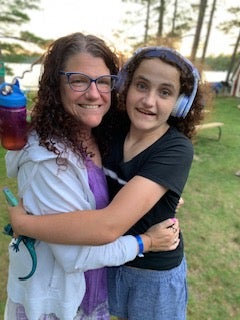
For more than 20 years Kristin Voss had been a caregiver and never knew it.
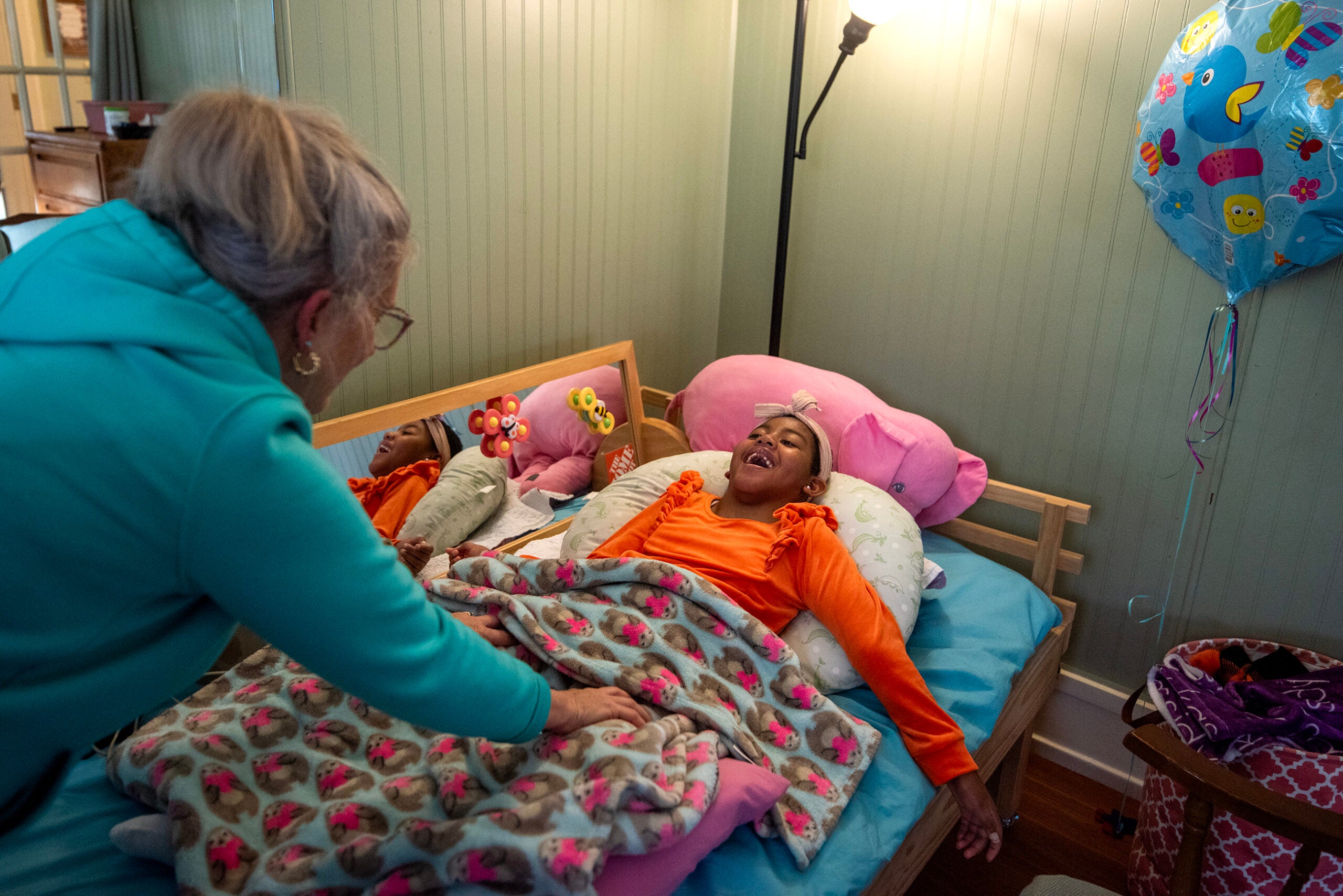
Her daughter, Nicole, has Autism, epilepsy and intellectual disabilities. Voss thought that, even after retiring early from teaching and caring for her daughter full time, she was just being a mother.
Then she met Kristin Litzelman, who studies family caregiving at the University of Wisconsin-Madison. Litzelman said that specialized work — feeding, bathing, preparing medication for a loved one — is often overlooked in society.
News with a little more humanity
WPR’s “Wisconsin Today” newsletter keeps you connected to the state you love without feeling overwhelmed. No paywall. No agenda. No corporate filter.
“(Litzelman) started talking about all this research and all these opportunities and programs and federal government stuff. And I started tearing up and said, ‘You research me? There’s actually people researching me?’” Voss told WPR’s “Wisconsin Today.”
Voss started to realize that many caregivers with dual roles don’t identify that way. Even though 1 in 5 Wisconsinites is a family caregiver.
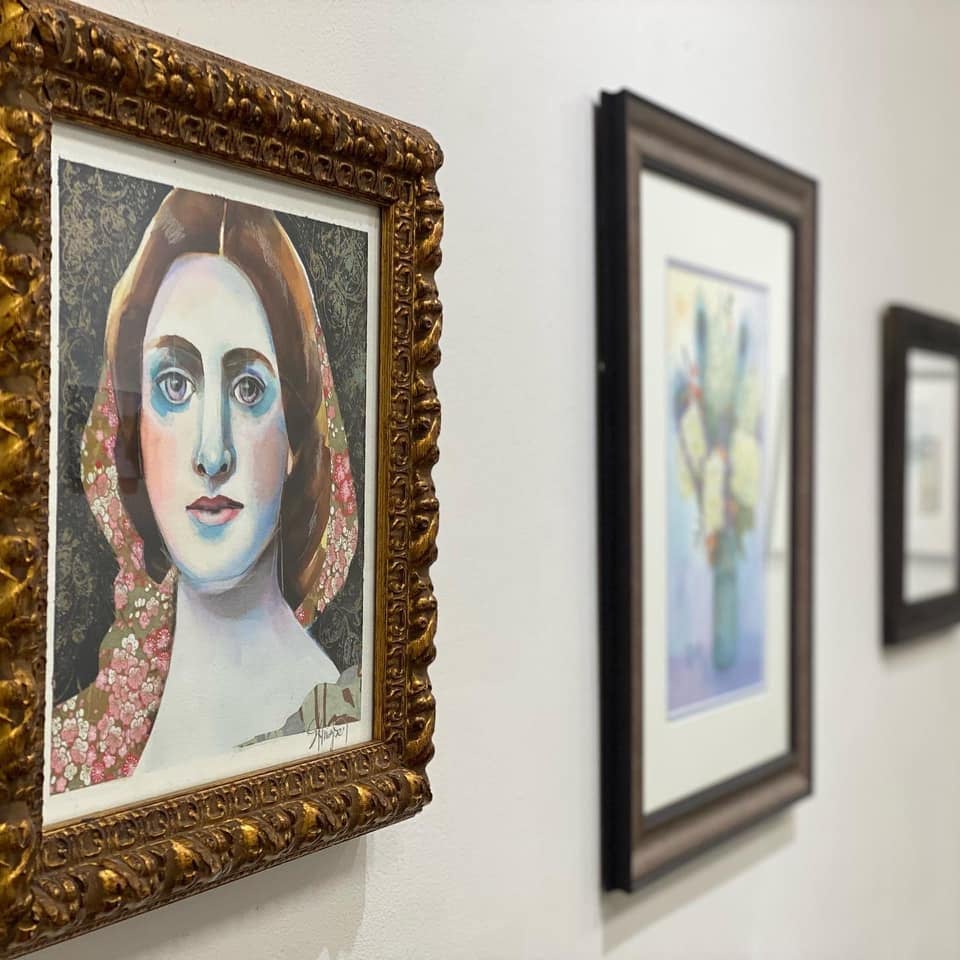
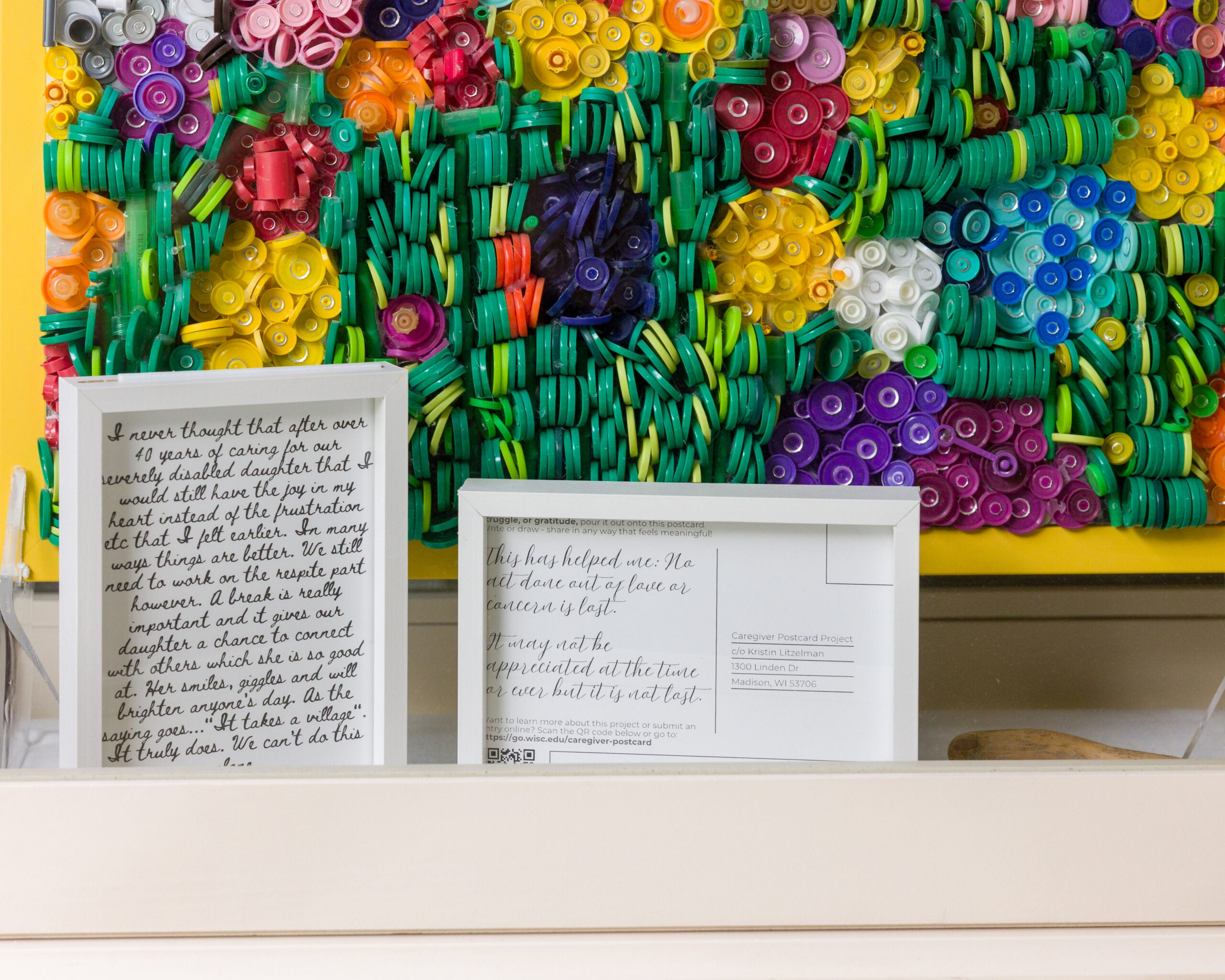
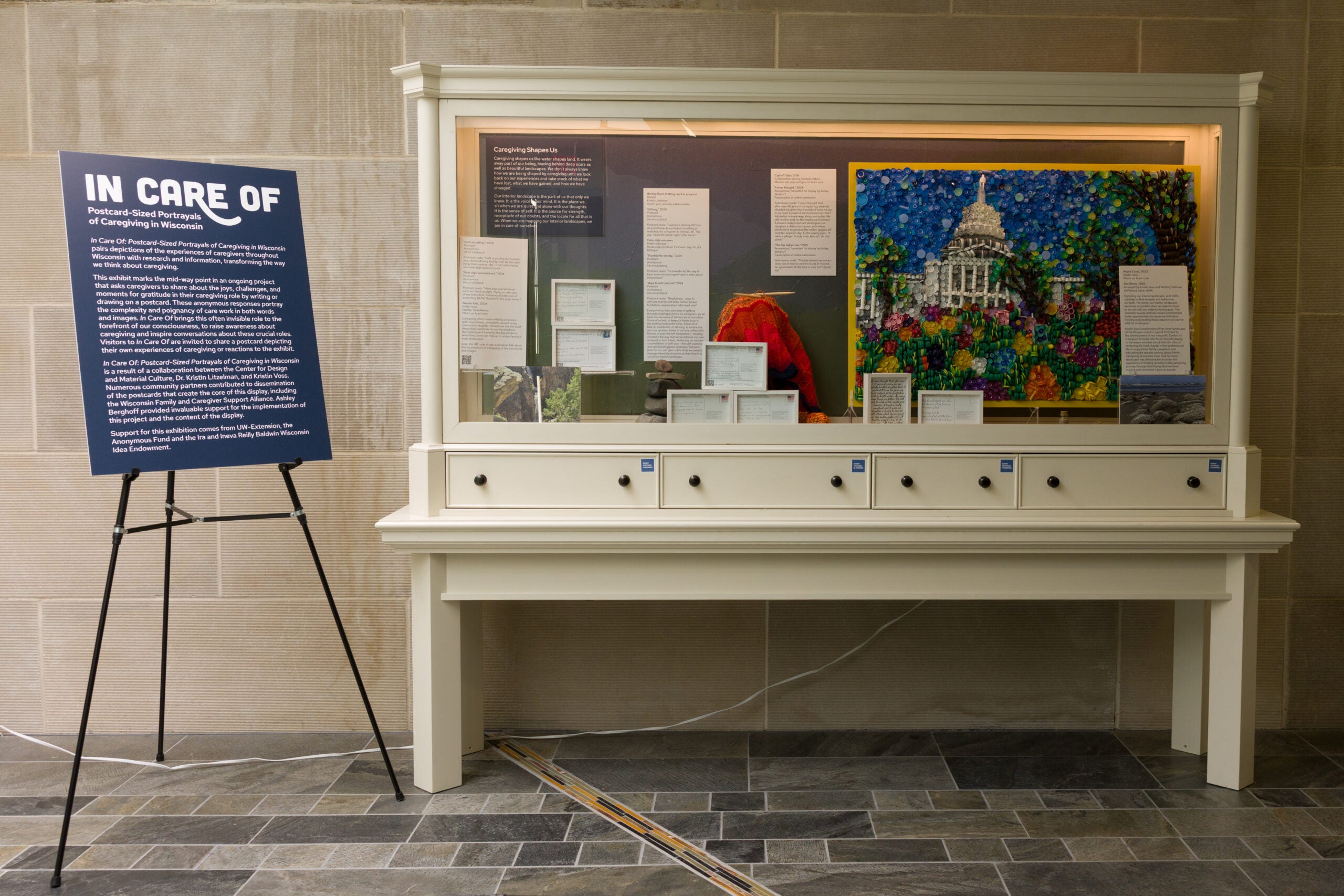
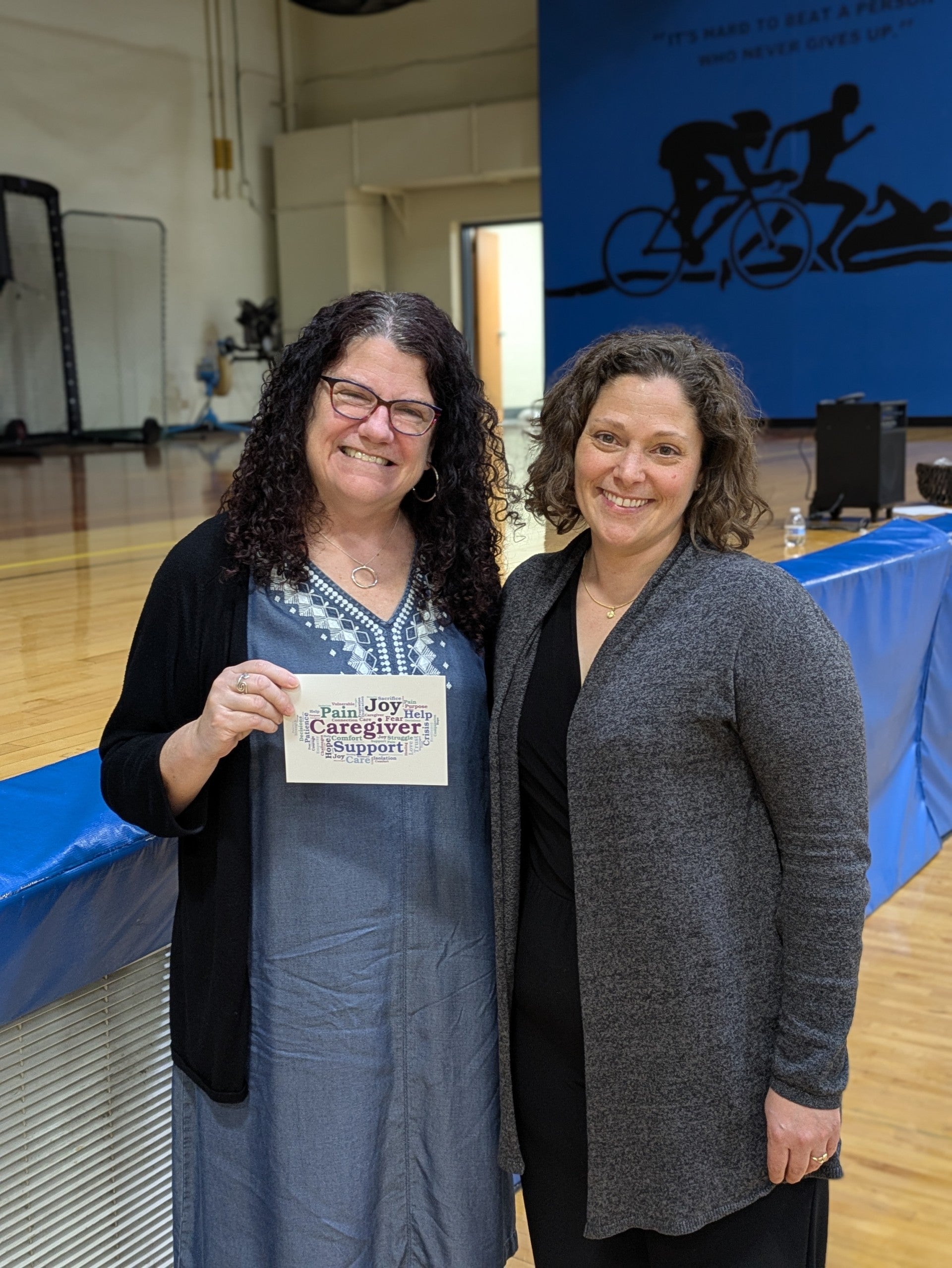
Last year Voss and Litzelman came together to highlight and share the voices of this group of people. They asked caregivers to submit postcards expressing moments of joy and difficulty as they care for loved ones. Their project is now an online exhibit called “In Care Of,” and it features more than 40 responses that capture a range of emotions.
Litzelman, an associate professor of human development and family studies at UW-Madison, said there are thousands of research papers on family caregiving. But few people outside of academia talk about it. She said they’re hoping to take the project around the state as a traveling exhibit.
Voss and Litzelman spoke to WPR’s “Wisconsin Today.”
The conversation has been edited for brevity and clarity.
Kate Archer Kent: Kristin Voss, you’re a caregiver yourself and you’re launching a nonprofit supporting caregivers called the Center for Caregiving Serenity. What stuck out to you in this “In Care Of” prompt and the responses?
Kristin Voss: The fact that Kristin Litzelman wanted to capture both positive and negative, which I think is really important because oftentimes as a family caregiver I get a lot of sympathy, borderline pity.
(My daughter) Nicole is tough, but she’s also given me so many lessons. It’s a fun ride sometimes and it’s a tough ride sometimes.
KAK: Kristin Litzelman, you’ve talked about how caregivers often feel invisible, even though so many people are in these roles. Why do caregivers feel like they’re working in the shadows?
Kristin Litzelman: It’s not something that we tend to talk about and I don’t have a great answer for why. Maybe it’s a cultural thing where we want to be strong and we want to do it on our own. Maybe it is that we like to present a strong face to the world.
Sometimes I compare it to when we take on a new parenting role. We welcome a baby into our household and we talk about it. We talk about, “Oh gosh, I didn’t sleep last night,” or, “My baby has colic,” and other people share their experience with us. They’ve been through it, they empathize with it and we get that beautiful sense of community.
We don’t do that with family caregiving. We don’t get that collective care that comes from other people saying, “Yeah, I’ve been there. It’s really hard. Here’s what worked for me.”
The flip side is also true and that’s one of the things that we saw through this exhibition: We bring this conversation directly into a shared space and let people see it, the conversations about caregiving start to flow. And it creates this opportunity for that collective care, for that coming together and that collective compassion and empathy because there are so many people who are in that circumstance.
KV: When the role is oftentimes connected to other identities, like being Nicole’s mom, it’s really hard for me to then identify as a family caregiver. So I didn’t until she was an adult and she was no longer in the school system. I had to look at how that was impacting my life.
It happened to be at a time that I met Kristin and started understanding that there was this whole world of people trying to understand family caregivers, trying to support them.
KAK: Kristin Litzelman, are there different challenges and experiences in family caregiving?
KL: There are as many different types of caregiving experiences as there are caregivers. Some common ones are people who are caring for someone with dementia or cancer, or someone with a developmental or intellectual disability. But the range of caregiving is really broad. Sometimes it’s an older adult that just needs help because they can’t quite do everything on their own and sometimes it’s a much more intensive care experience.
But once we get to that point where people are experiencing stress, there’s a lot of universality. The stress of caregiving has impacts on people’s physical and mental well being. It has impacts on their immune functioning. It has impacts on their ability to feel satisfied in life.
When we think about what we do to support caregivers, there’s a lot of things that don’t have anything to do with the specific health condition that they’re caring for or the particular role that they’re in, but are really about setting the stage for resilience.
For instance, making sure that they get enough rest and time to themselves, making sure that they have the financial and social resources to get the help that they need.
KAK: Kristin Voss, how has this project changed you?
KV: First and foremost, professionally. I’m a retired high school social studies teacher and I retired early for many reasons, but one of the primary ones was that there wasn’t consistent care for Nicole once she turned 21.
That led to some resentment and that was one of the things that I had to work through when I was figuring out what my next stage was going to be.
I pivoted to recognizing that there is a space for celebrating family caregiving. Educating family caregivers and advocating for them. I’m especially motivated to advocate for family caregivers of people across the lifespan. In the work that I’ve done with Kristin and then being invited into the Wisconsin Family and Caregiver Support Alliance, I’ve seen that there’s a lot of stuff that is for someone who is taking care of a person with Alzheimer’s or dementia, and that’s great.
There’s a lot of folks that are caring for spouses, neighbors, siblings, or, in my case, an adult child, that aren’t aware of these resources. And so I really think this postcard project has given me an opportunity to say, “Hey, we need to make sure that we’re talking about caregiving across the lifespan.”