Gun violence is again dominating the news cycle after the fatal shooting of prominent conservative political activist Charlie Kirk on a college campus in Utah and a high school shooting in Colorado, both on Wednesday.
This year, there have been at least 100 incidents of gunfire on school grounds, resulting in 32 deaths and dozens of injuries, according to Everytown for Gun Safety.
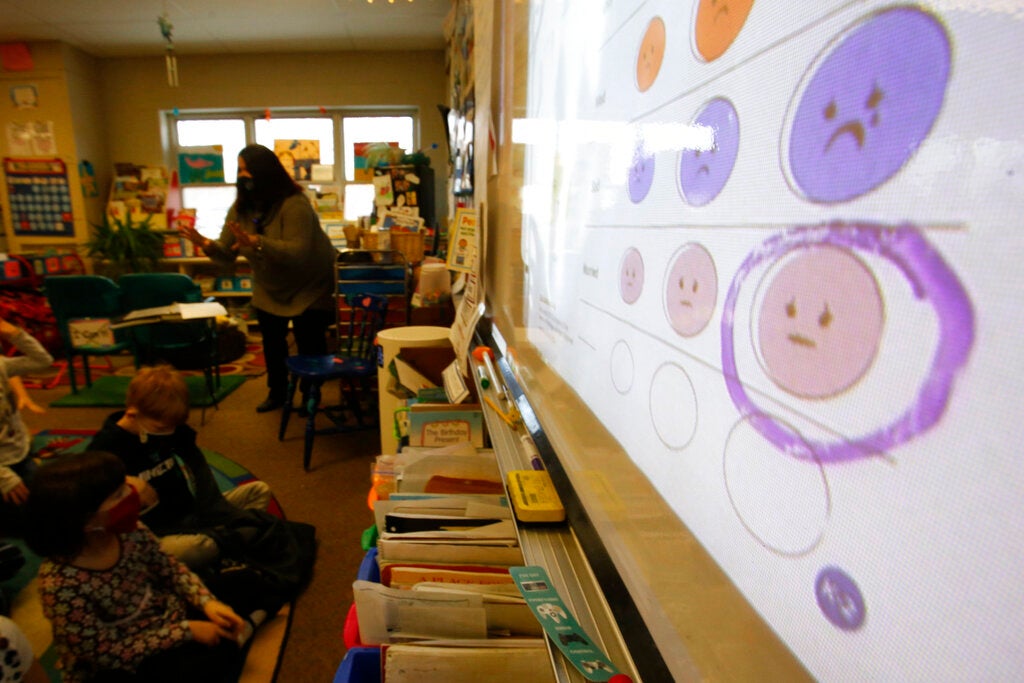
When difficult stories like these grab headlines, it can bring about feelings of sadness, fear and even hopelessness, especially among children and teens, said Travis Wright, a professor of counseling psychology at the University of Wisconsin-Madison.
News with a little more humanity
WPR’s “Wisconsin Today” newsletter keeps you connected to the state you love without feeling overwhelmed. No paywall. No agenda. No corporate filter.
Wright joined WPR’s “Wisconsin Today” to talk about taking care of children’s mental health in the aftermath of gun violence and finding healthy coping strategies for people of all ages.
The following has been edited for brevity and clarity.
Kate Archer Kent: There’s graphic video of the fatal shooting of Charlie Kirk all over social media. The images, the commentary, can be really upsetting, especially for young people. How can parents and teachers talk about this with kids?
Travis Wright: First, I would say we really need to be very vigilant about limiting children’s exposure to media and social media right now. The images are re-traumatizing. They’re disturbing. And it really makes it hard for children to get regulated and anchored, and to feel safe again if they’re being overwhelmed by those images. So this would be a great time for a social media diet.
Beyond that, I think we really want to first check our own feelings and make sure that we are grounding ourselves and that we are in a place to listen and be responsive to our children’s needs. We don’t want to inadvertently place our fears on them. Many times, adults and kids are concerned about different things, even if we’re responding to the same event.
KAK: How do you feel about asking your child, “What have your friends said about this?”
TW: I think that’s a great question. We should really try to avoid asking “yes” or “no” questions, because the goal is to open up the conversation and create the space for kids to talk. Sometimes kids are trying to figure out what they think, and what is really shaping their opinion is what their friends have said. And so that question — gathering information about “What are you hearing? How are other folks around you thinking about this?” — can be a great way to start the conversation. It helps the kids feel less on the spot. And then maybe the follow-up to that initial question is, “So how are you making sense of all of this?”
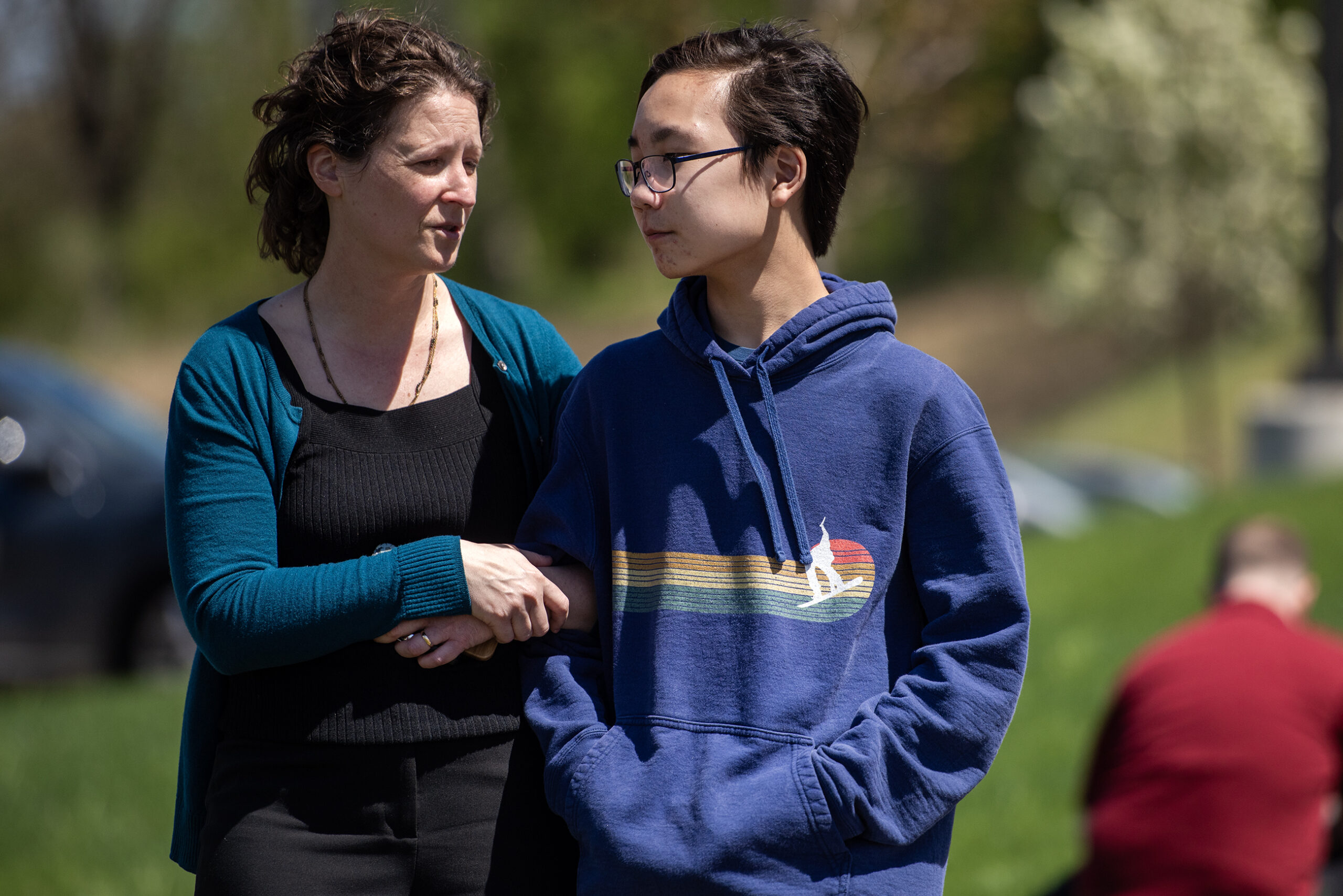
KAK: Our older teens may start to ask very direct questions like, “Am I really safe? How am I protected?” And those answers require some digging and some vigilance, I would imagine. How do you address this with older teens?
TW: We are living in a world and in a moment where we can never promise someone that they’re going to be safe. We live in Mount Horeb, and so our children were in the schools in Mount Horeb when the shooting happened. So for us, when our kids say, “Am I safe?” we can no longer say, “We live in a small town in Wisconsin. Bad things aren’t going to happen here.” What’s much more important is that kids can trust us as people who are there for them. I think being direct and honest and saying, “We can never guarantee that we’re going to be safe every time we get in the car, every time we get on a plane, anytime we leave our house. There is always a risk that something can happen. What’s really important is that we do everything we can to keep ourselves safe. So we have a plan: This is what we will do if something happens.”
I think that older children especially are able to understand that much of the violence that we’re experiencing in the world now is actually because of hate and mistrust, and people are afraid. People feel devalued, dehumanized, and that is giving rise to much of the violence that we’re experiencing, this polarization. One of the things that we talk about in our family, and one of the ways I talk about this with my students, is saying, “How can we play a role in recasting this culture? How can we help to make sure that people feel safer, valued, respected?” When people feel those things, they’re much less likely to participate in violence.
KAK: Can you talk about what trauma is and the different responses to it? How can we recognize it and respond to it?
TW: When we think about trauma, there are two types of responses: There’s the physiological response and the psychological response. And the two criteria for something to actually be trauma (are) that it leads us to feel helpless or hopeless, and it overwhelms our capacity to cope. If we wonder if we are going to survive this, or if we want to survive this, that actually creates these physiological responses in our body that are hardwired. And those responses are fighting, fleeing or freezing. So we fight back, we run away, we shut down.
If you are watching your child, or you’re noticing yourself, you’re having reactions that can be understood through those lenses: Are you irritable? Are you flicking off? Are you running away or avoiding things? Are you procrastinating? Are you zoning out and daydreaming? Those responses are real clues that you are traumatized. And when you’re traumatized, your body has some hardwired ways to respond. You feel hypervigilant, you’re more distracted, you have a harder time sleeping, you’re more likely to engage in conflict.
The way that we respond to those physiological shifts is to try to re-regulate that stress response system, so we have to soothe ourselves. We have to be really mindful about de-escalating. Deep breaths, exercise, sleep, meditation — anything that we can use to calm our nervous system really helps us return to that baseline where we’re viewing the world as a safe place and we’re not feeling constantly under threat. But psychologically, those wounds can last much longer.