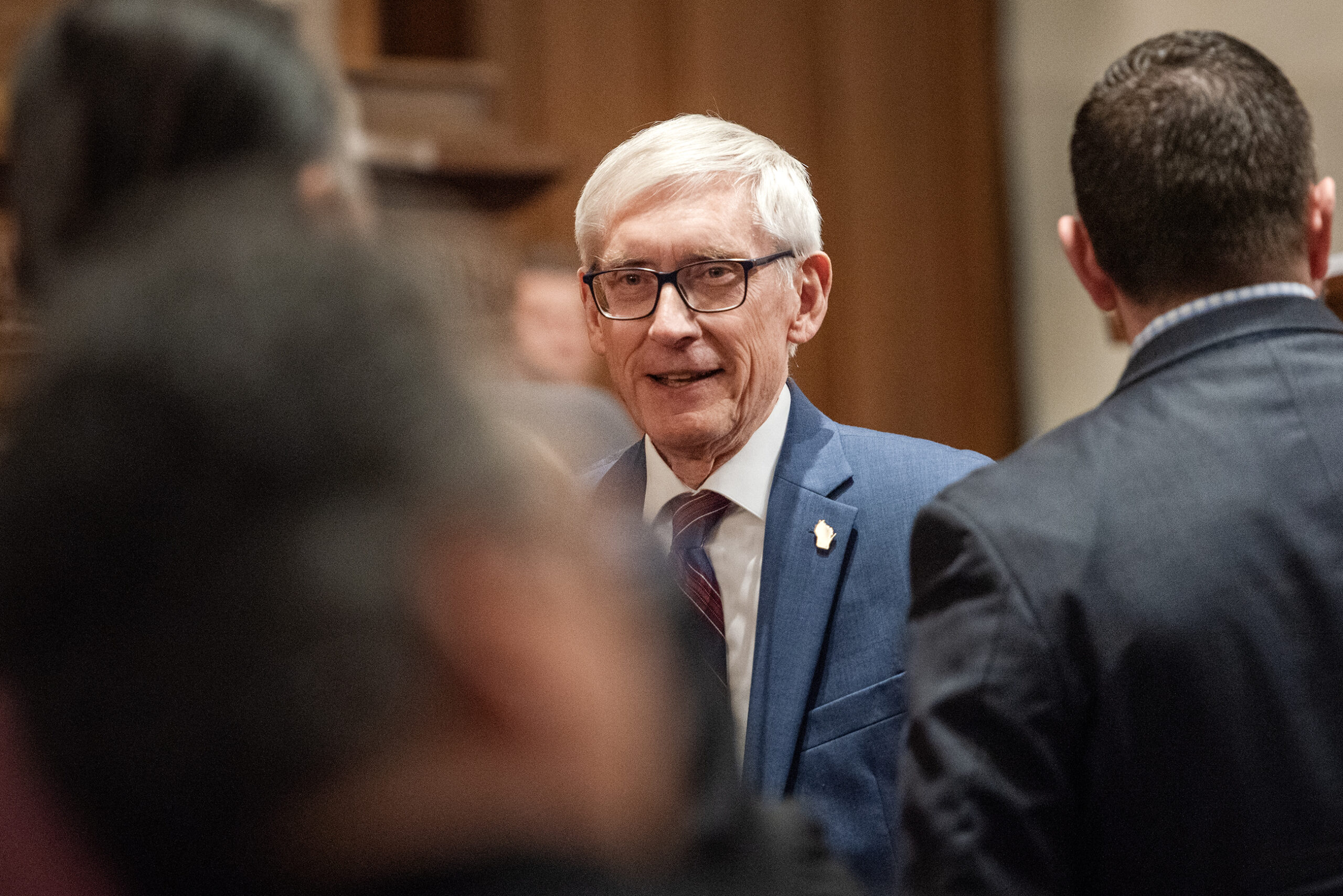
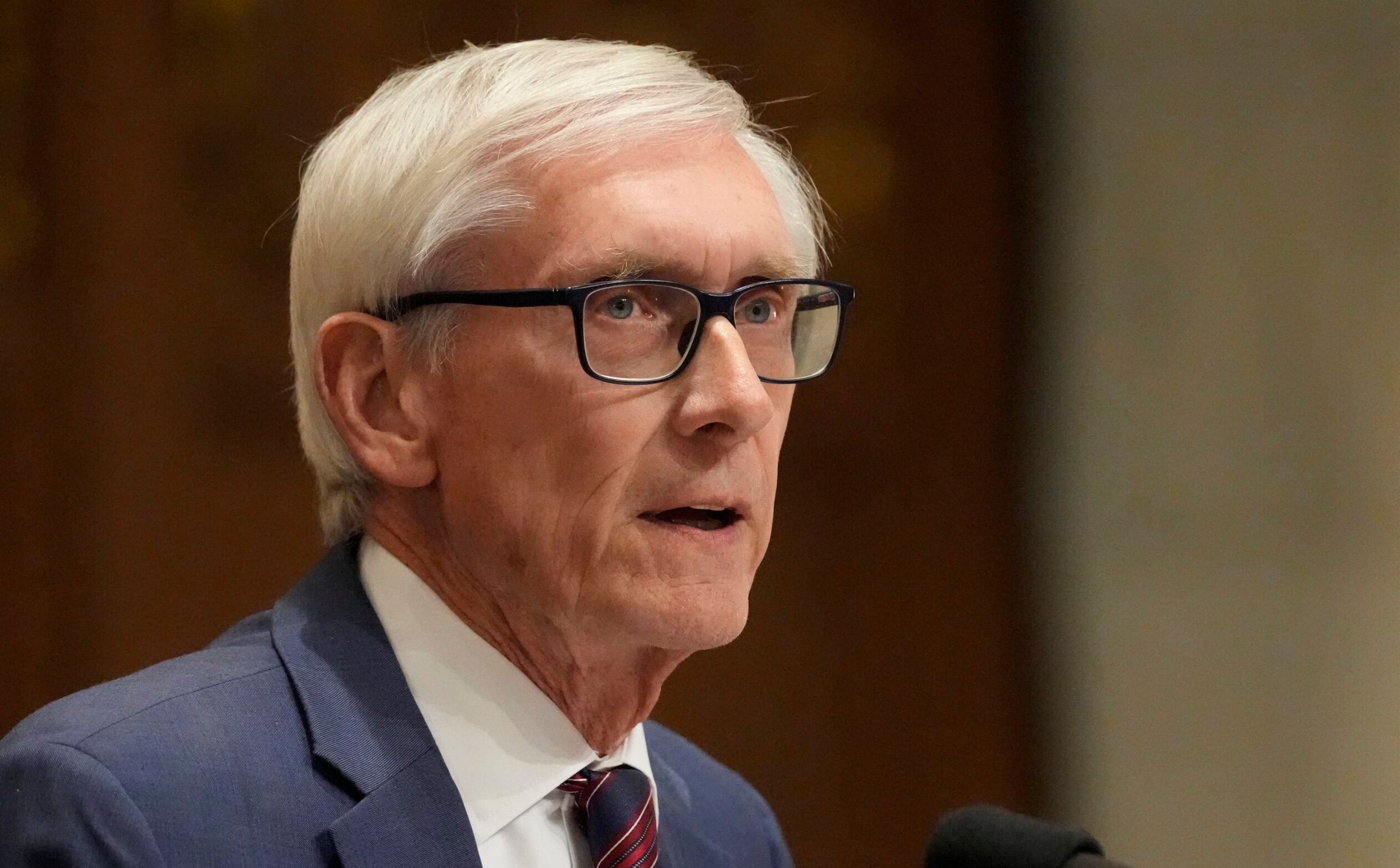
Gov. Tony Evers says Wisconsin’s $4 billion budget surplus can boost funding for public schools while easing property taxes throughout the state, which went up by an average of nearly 8 percent in 2025.
Evers hopes to secure $1.3 billion in property tax relief for Wisconsinites during the current legislative session. Republicans insist much of the surplus is one-time money and the state can’t afford the relief.
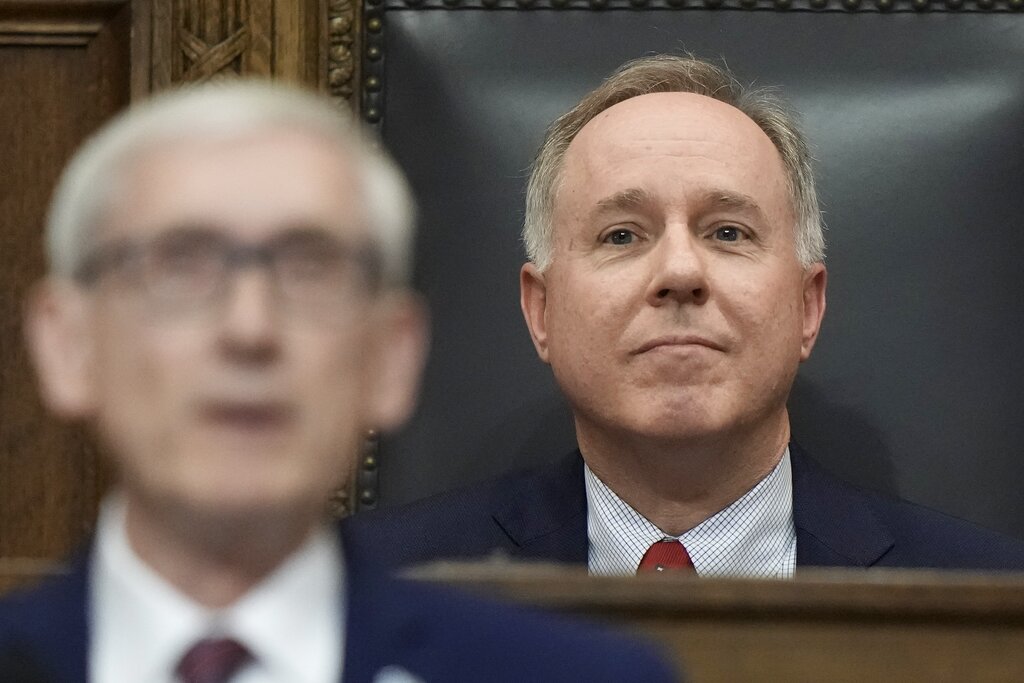
“School districts — I know it’s hard, but sometimes when there’s not additional revenue, you’ve got to tighten your belt,” said Senate President Mary Felzkowski in an interview with WPR’s “Wisconsin Today.”
News with a little more humanity
WPR’s “Wisconsin Today” newsletter keeps you connected to the state you love without feeling overwhelmed. No paywall. No agenda. No corporate filter.
But Evers said there doesn’t have to be a trade-off.
“The idea that somehow you have to tighten your belt — well, that’s what they’ve been doing for several decades, and that’s a problem,” Evers said. “We have the resources available.”
Evers said he’s open to negotiating a 400-year per-pupil funding increase he enacted in the last state budget if the Republican-led Legislature is willing to cooperate with him on his legislative agenda.
The governor also talked with “Wisconsin Today” about his hopes for a deal on addressing PFAS contamination, the state’s data center boom and preparing for federal immigration enforcement in Wisconsin.
Kate Archer Kent: Lawmakers are looking to adjourn their session sometime in March — where do you find the most consensus in that timeframe with the Republican-led Legislature?
Gov. Tony Evers: There’s some really big things to do in my proposal: have them consider $1.3 billion in property tax relief, lowering out-of-pocket costs for working families, making sure that we’re going to have enough money for Food Share, fully funding the Knowles-Nelson stewardship, and also get PFAS (funding) out of the Legislature and into into a better place.
Whether that can all be done by the end of March — probably, if they work five days a week. But if that’s not the case, they can hang around for a while. The elections aren’t until next November. That’s a long period of time.
KAK: Senate President Mary Felzkowski joined us on the show last week. In response to your request for that $1.3 billion in property tax relief for Wisconsinites, she suggested that Wisconsin doesn’t have the money and that schools will need to tighten their belts to decrease property taxes in their communities. How do you view that trade-off?
TE: I like Sen. Felzkowski a lot. She’s a really smart person, but she also knows that over the last decades, our schools have been essentially underfunded, primarily because of Republicans. We have over $4 billion excess money in our checking account, and we believe $1.3 billion will help our schools be in a better place and also lower property taxes. So it can be done.
KAK: Felzkowski and fellow legislative Republicans are also calling for the end to your partial veto during the previous state budget that extended a temporary per-pupil school funding increase by 400 years. Are you open to negotiating this centuries-long expansion of additional revenue limit authority for districts?
TE: I’m not interested if they’re going to go home in March and not do anything.
KAK: But if you get some things done here, might there be movement to renegotiate that?
TE: I guess it’s always a possibility. My main concern is our public schools and making sure that we don’t continue this every year: struggling schools and property taxes going up. So I’m concerned about those two things. If that 400-year thing is part of the discussion, I will discuss it, but that’s not going to just disappear. If it’s going to disappear, we’re going to have to get something done.
KAK: You’ve seen a lot of pushback on data center projects and communities around the state. They’re worried about the cost to local residents. They’re worried about the cost to the environment. What is the best way to protect Wisconsinites against these risks?
TE: We have to make sure that those are accurate assertions. You know, for example, the plant in Racine County, they are not using water from Lake Michigan. They may get the initial part of it from them, but they recirculate that water to make it continually usable as a cooling agent. They will use water just like anybody else. They’re going to have bathrooms for their employees. They’re going to have other water issues, but it’s not going to be done specifically to Lake Michigan and use it up and just keep taking.
That’s just an example. People have to listen to each other, work together, make sure that the environment is taken care of, and make sure that the municipality is getting a good deal. And you know, there’s nothing wrong with getting a good deal, getting a good environmental approach, and also getting good-paying jobs. I think it can be done. Now what people have to do is listen and work together.
KAK: You and Republicans have had this long stalemate over how to deal with PFAS contamination. It sounds like there is a deal in the works. How close is it?
TE: I think it’s very close. I hope to be able to sign a bill, or see a bill that I can sign in the very near future. We’ve talked to people that are involved, and I think they are going in the right direction.
KAK: Will the state spills law still have teeth to protect the environment after this PFAS deal is done?
TE: Yes, the spills law will still be as important in the future as it is now.
KAK: I want to turn to immigration and ICE. Have you been in touch with Minnesota Gov. Tim Walz about the massive ICE presence in Minnesota?
TE: Yeah, we’ve talked and texted a couple times, and I stand with him. Obviously, it’s a horrible situation that Minnesota is going through, and in particular that part of the state. But yes, he’s doing the best he can to make sure people are protesting reasonably and lawfully.
And it’s not a good situation, that’s for sure. You just have to watch TV and you understand how it’s tearing apart that state, and certainly the Minneapolis-St. Paul area. So we’ve got to get that done. That has to change, and hopefully it’ll change soon.
KAK: We saw Wisconsin’s lieutenant governor, Sarah Rodriguez, proposing banning federal immigration enforcement activity around Wisconsin, courthouses, schools, day cares and other areas. How is your administration preparing?
TE: We’re doing that by not pontificating during a campaign. We’re actually calling people all across the state of Wisconsin: local leaders, local nonprofits, people who work with the Hispanic population, our tribal nations and others. … We are working together to make sure we’re prepared if something happens here and that’s how we’re doing it. Local leaders are asking us to do what we’re doing, which is bringing them together and preparing.