The president of the Wisconsin State Senate says making health care more affordable is a priority for Senate Republicans before this legislative session wraps up in March.
That goal echoes statements from Gov. Tony Evers on Monday, who said at a press conference his legislative agenda for his final year in office is centered around “addressing rising costs” for Wisconsinites.
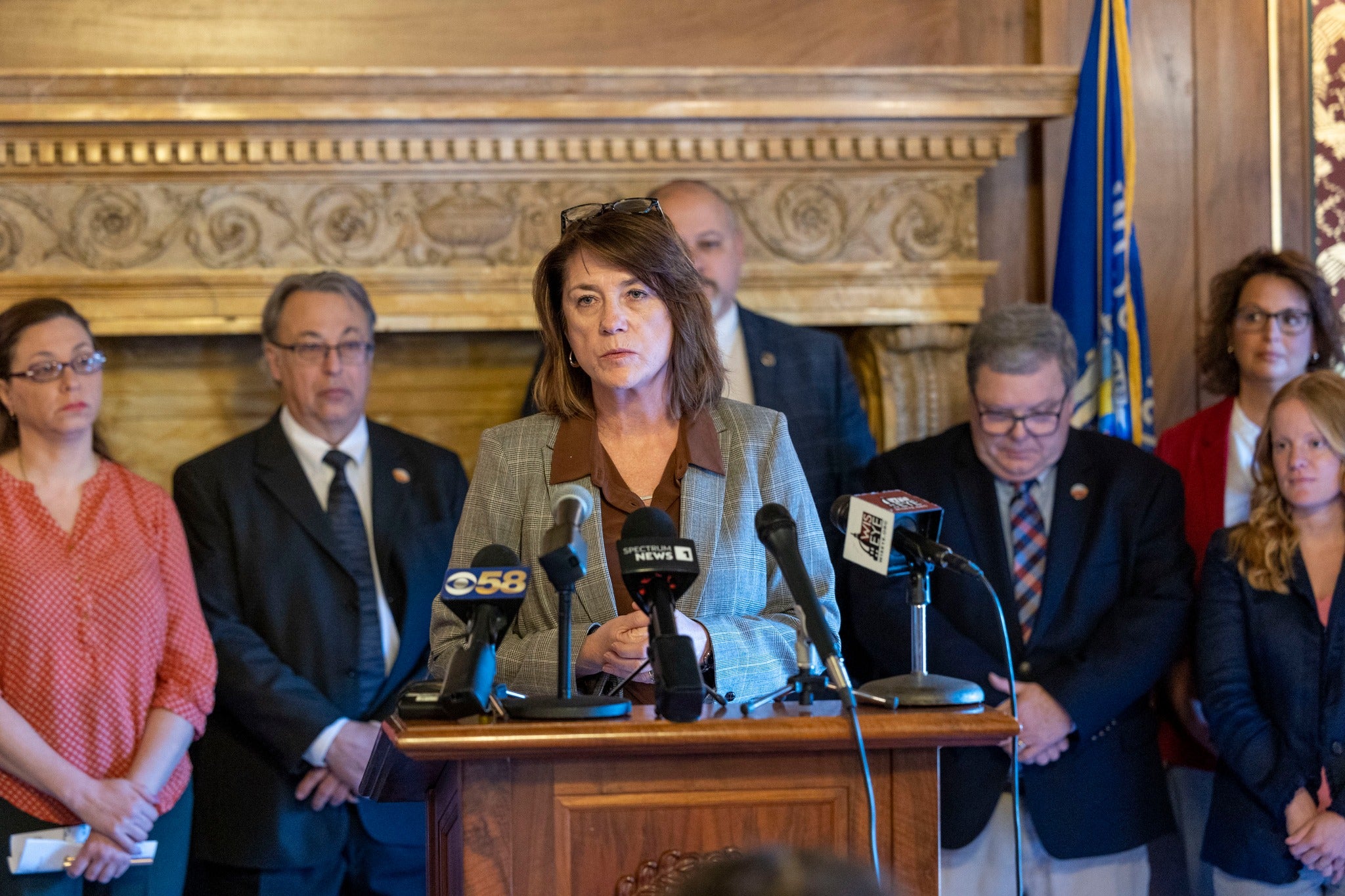
Senate President Mary Felzkowski, who represents the 12th district in northern Wisconsin, authored multiple bills related to health care costs during this session. One aims to address cost transparency in health care.
News with a little more humanity
WPR’s “Wisconsin Today” newsletter keeps you connected to the state you love without feeling overwhelmed. No paywall. No agenda. No corporate filter.
Felzkowski told WPR’s “Wisconsin Today” her bill would better enforce existing federal rules around how hospitals inform patients about the cost of procedures and health services. She wants Wisconsin law to have “more teeth” to make up for what she sees as the Center for Medicare and Medicaid Services’ failure to enforce those rules.
The bill would allow the Wisconsin Department of Health Services to take action and impose penalties against hospitals found not following federal transparency rules.
“The hospitals have fought us on this,” Felzkowski said. “They do not want that transparency, which is a little telling.”
A representative for the Wisconsin Hospital Association said at a legislative hearing that they oppose the “regulatory complexity” and “unlimited fines” on Wisconsin hospitals, “when robust federal regulation and enforcement already exists.” They also claimed no Wisconsin hospital had been fined for not following those federal rules since they were put in place.
During his press conference, Gov. Evers focused on insurance companies instead of hospitals. He called on the Legislature to pass laws that would audit insurance companies for denying claims at high rates, crack down on prior authorizations and expand the health care services that insurance companies are required to cover.
“Medical costs and bills, especially when they aren’t covered by insurance, are straining household budgets,” Evers said. “Let’s make sure Wisconsinites’ insurance will cover more health care services and procedures with no delays, no hassles and no questions asked.”
Lowering prescription drug prices is a goal for both Evers and Felzkowski. Evers said he wants to pass elements of his “Less for Rx” plan that lawmakers struck from the 2025-27 budget, like imposing a $35 cap on insulin for all Wisconsinites.
“I know there’s bipartisan support for tackling prescription drug prices and price gouging,” Evers said. “I’ll work with any legislator who wants to get this done.”
But Felzkowski said the governor’s proposals aren’t broad enough.
“There’s a whole spectrum of people that can’t afford their prescription drugs,” Felzkowski said.
The Senate president is instead proposing a bill that would reform pharmacy benefit manager practices, expanding on reforms that Evers signed into law in 2021.
The legislation would require pharmacy benefit managers — the “middle-men” that negotiate drug prices for insurers and employers — to allow patients to use any licensed pharmacy in the state without facing penalties. It also requires the companies to pay pharmacists a minimum dispensing fee and cut down on long delays for reimbursement to pharmacies.
“Sweeping reforms, like this pharmacy benefit manager bill, have actually shown in other states to lower costs as well as helping protect independent pharmacies,” Felzkowski said. “It’s a win-win situation that’s being ignored by our governor.”
Evers also urged lawmakers to expand Medicaid coverage for new mothers from 60 days to 12 months. Felzkowski agrees.
“The Assembly needs to pass it,” Felzkowski said. “We’ve passed it in the Senate (during) two sessions with great bipartisan support, and it has stalled in the Assembly. So the Assembly Republican caucus just needs to put enough pressure on leadership to get it done.”