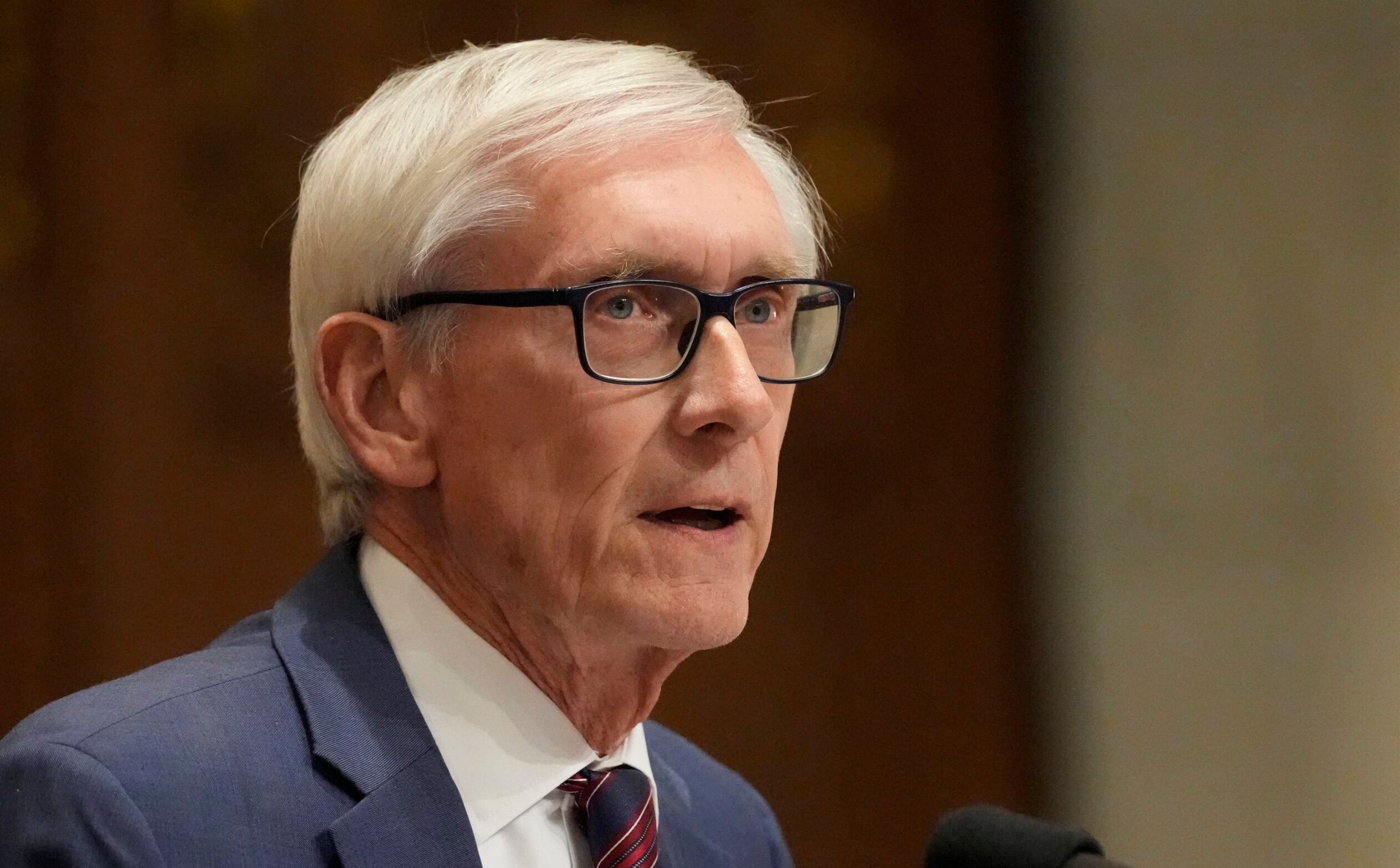
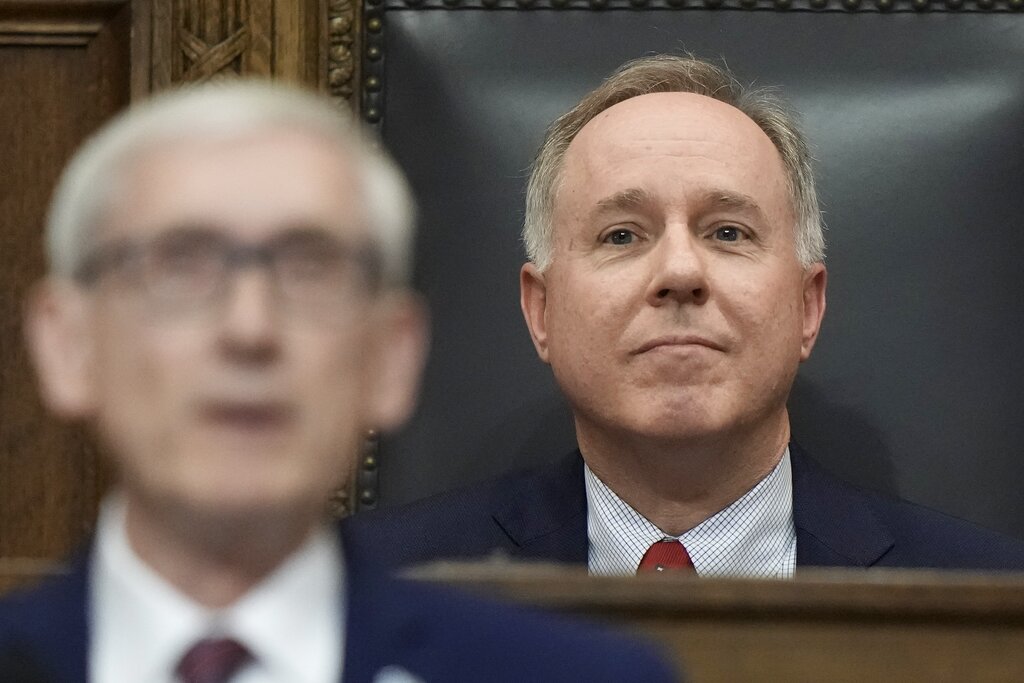
Hours after Gov. Tony Evers unveiled his priorities for his final year in office, Republicans — who control the Legislature — effectively rejected one of his biggest asks.
Evers revived his proposal to spend $1.3 billion on property tax relief. His plan includes incentives for local communities to freeze tax increases, an expansion of tax credits for veterans and putting state money toward reducing school levies.
On Tuesday morning, Assembly Republicans said no — for the second time.
News with a little more humanity
WPR’s “Wisconsin Today” newsletter keeps you connected to the state you love without feeling overwhelmed. No paywall. No agenda. No corporate filter.
Assembly Speaker Robin Vos, R-Rochester, said Evers’ proposal was too narrowly tailored on some groups, rather than offering broad tax relief.
And Vos argued that Evers and his so-called 400-year veto is to blame.
That’s a reference to a way that Evers used his partial veto pen when finalizing the state budget in 2023, which transformed two years of increased per pupil school spending into four centuries’ worth. The move increased local revenue limits, which opened the door for local school boards to raise property taxes without going to referendum.
“One of the things that has to happen is we need Gov. Evers to admit he made a mistake,” said Vos. “We can’t just keep putting more water into a bucket full of holes. We need to fill the holes and then make sure that the bucket has the ability to deliver the relief.”
Evers has roundly rejected that analysis. When announcing his agenda, Evers pointed out that local communities had been voting to increase their own taxes for years, in the interest of improving local schools.
“Before that 400-year veto, we were going to referendum all the time, so they (Republicans) can use that as an excuse if they want to,” Evers told reporters Monday. “Let’s just get this done. I don’t believe that it has anything to do with it.”
Evers has argued that the solution to the hundreds of individual referendums that communities have voted on in recent years is to increase K-12 funding from the state.
“Wisconsinites were going to referendum (for) increasing numbers of years, long before I became governor,” he said. “And the question would be, why? Because of a decade of Republicans consistently failing to meaningfully invest in our kids.”
But Vos said that any negotiations on property taxes would require revisiting that veto.
“It has to be part of the discussion,” he said. “It seems to me like the first thing you should do is agree that there is a problem that needs to be fixed. And then we address, how do we take care of the one that’s already been created?”
Republicans had previously rejected Evers’ request for property tax relief in last year’s budget negotiations.
On Tuesday, Vos said that nixing that ask allowed them to expand funding for special education, which had been one of Evers’ central demands during negotiations and ended up a cornerstone of the final bipartisan budget deal.
According to the Wisconsin Policy Forum, property tax bills are the highest they’ve been since 2018. The report said three factors have contributed to those bills: the increase in per-student spending, the passage of referendums and stagnant state aid.

Wisconsin Public Radio, © Copyright 2026, Board of Regents of the University of Wisconsin System and Wisconsin Educational Communications Board.