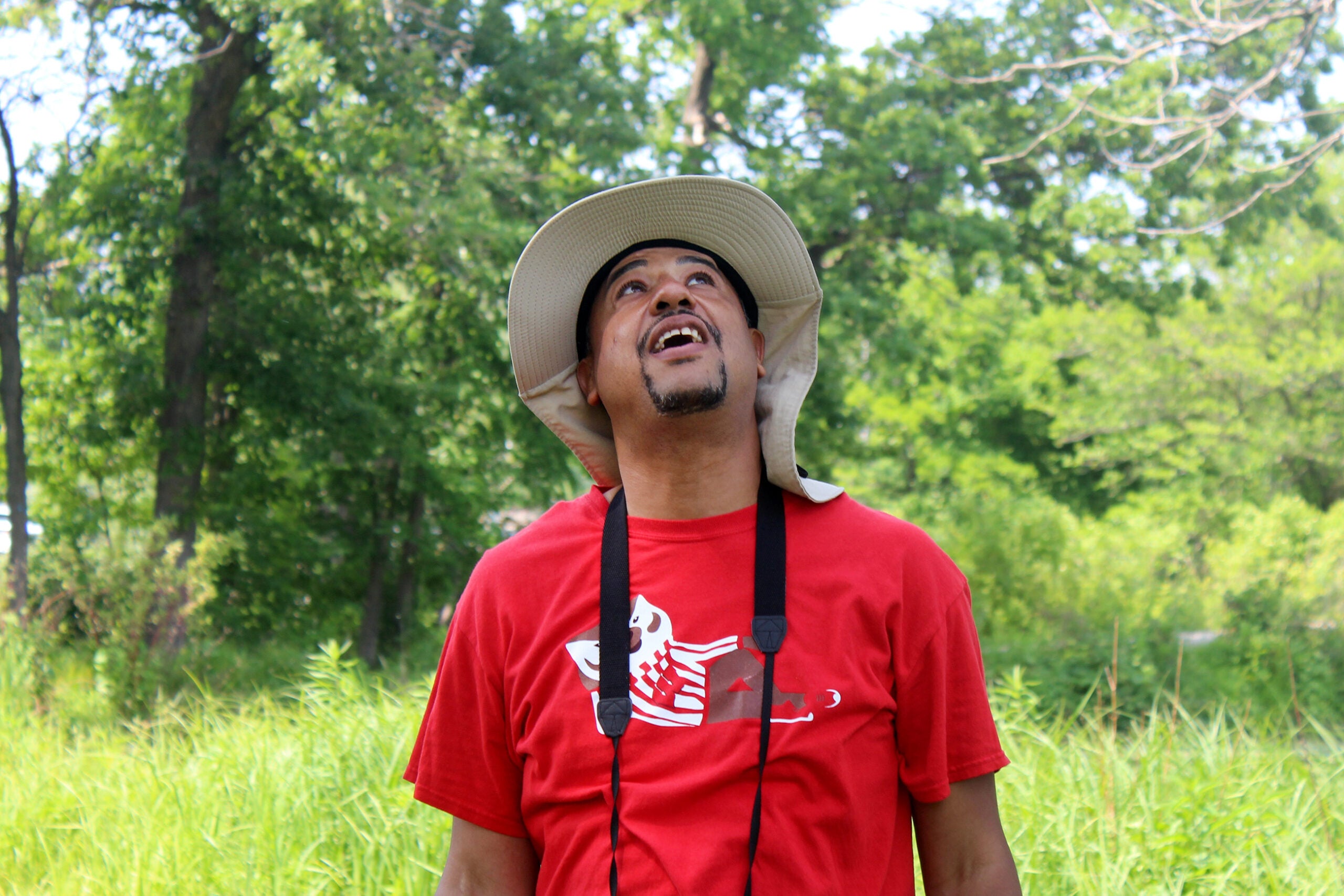
Dexter Patterson has always loved birds. But for a long time, he felt out of place at bird-watching events.
“I was always the only person of color,” he said.
The stereotype of a bird-watcher is someone white, retired, dressed in head-to-toe khaki. Patterson, who is Black, sometimes struggled to find his place in the community.
News with a little more humanity
WPR’s “Wisconsin Today” newsletter keeps you connected to the state you love without feeling overwhelmed. No paywall. No agenda. No corporate filter.
“I love birds so much,” he said. “But you never really feel welcome when you don’t see people like you attending events, and definitely didn’t see people like myself leading them.”
So in 2021, he cofounded the BIPOC Birding Club of Wisconsin. He wanted to create a space for the BIPOC community, which stands for Black, Indigenous and people of color, to explore the outdoors through birding. The club also welcomes anyone who doesn’t identify as BIPOC but shares the values of diversity and access in outdoor recreation.
“I call it ‘bird joy,’ and I feel like that’s my mission, is to spread as much of that bird joy to as many people as possible in my community,” he said.

The club hosts events to promote outdoor experience and birding activities, with a focus on being inclusive and family-friendly. Previous experience with birding isn’t a requirement to participate. Survey data shows a spike in interest in birding in recent years, and Patterson and the club are intent on helping convert that interest into a lifelong hobby of birding — even for people who only recently learned the difference between a common grackle and an American crow.
“I think that’s really important for new birders, to get around other folks and be able to ask questions and get more comfortable because it can be a little intimidating,” Patterson said.
Stationary birding is an accessible way to join the hobby
In June, the club gathered in Tenney Park in Madison. It’s an urban park in the middle of the city, but it’s rich with nature from Lake Mendota, ponds and marshy areas in between.
The event focused on “stationary birding.” Instead of hiking through the woods to find and identify birds, the birders set up lawn chairs and blankets and waited for the birds to come to them.
It’s all about accessibility, Patterson said. Part of making the hobby open to everyone is being conscious of the fact that different people have different physical needs and comfort levels. The club chose this park because it’s on a major bus line, has paved pathways and plenty of parking and bathrooms.
Accessibility in birding is on Patterson’s mind on his social media, too. He’s amassed a following of nearly 20,000 people on Instagram as WiscoBirder, where he takes people along on birding adventures.
“I get messages all the time from people like … ‘I’m bedridden. I can’t get out. I don’t have good legs like you anymore. My eyes don’t work like you anymore. My ears don’t work like you,’” he said. “I started responding, ‘Thanks for joining me.’ That’s my thing.”
‘You can’t unhear them’
Jasmine Banks joined the club after hearing Patterson’s enthusiasm and passion on a podcast.
‘I had never been birding before,” she said. ‘It wasn’t anything that I had seen somebody that looked like me do.” she said. “And because of that … a bird was just a bird.”
But now, she’s hooked. In the mornings, she sits outside her home near the Yahara River in Madison with her dog and uses an app that can identify birds based on their song. Her favorite is the red-winged blackbird, the first bird she ever identified on her own.
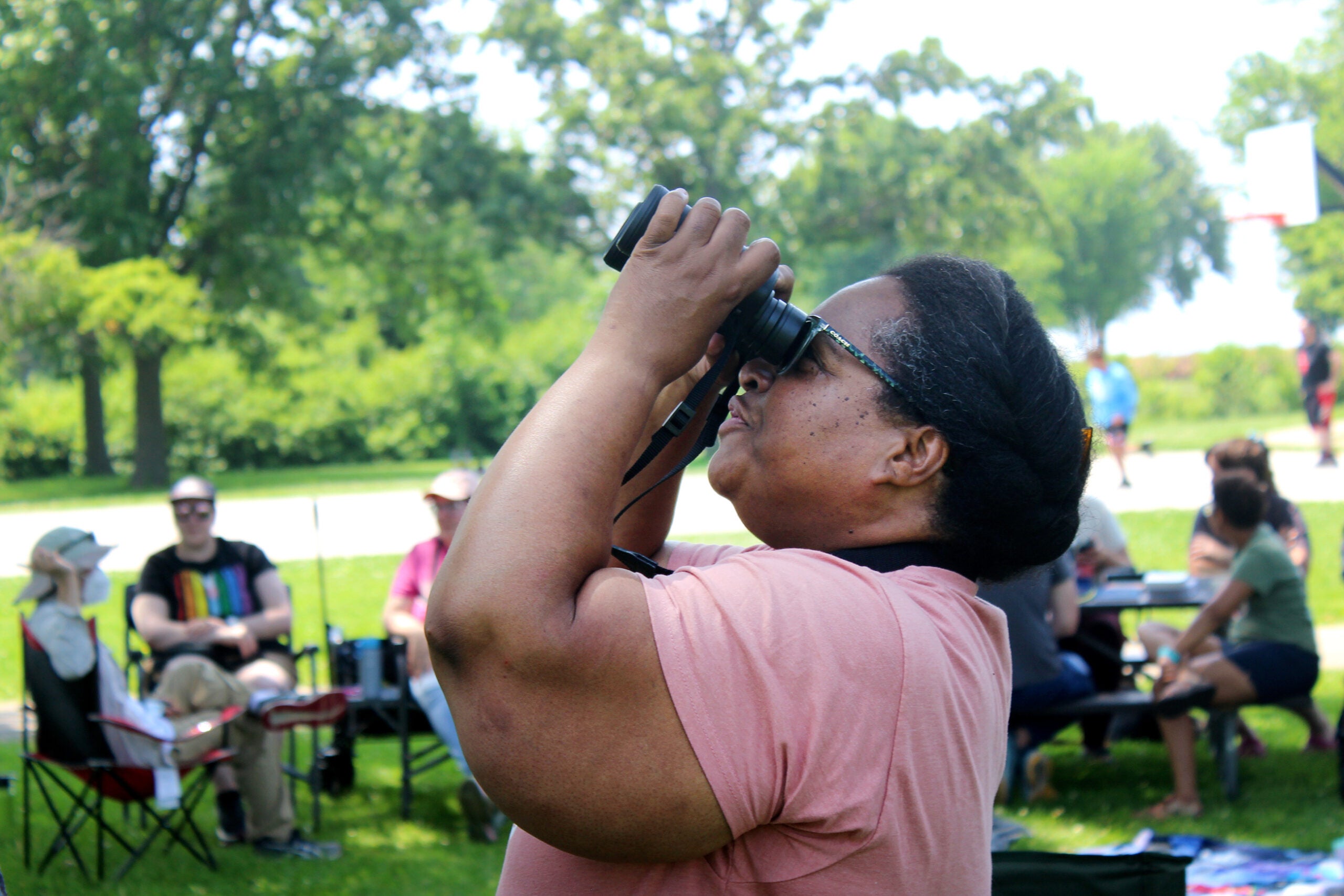
She said the practice of birding, which she first started doing during the pandemic, has changed the way she perceives the world around her.
“Once you start to hear and pay attention to birds, you can’t unhear them,” she said.
At the Tenney Park event, she set up a group of chairs with her sister and young niece. They say it’s not just the birds or the time spent outdoors that keeps them coming back, but also the sense of community.
Her advice to the bird-curious who have never been to an outing? “Just do it.”
Banks is part of a wave of new birders. Data from the U.S. Fish and Wildlife Service shows birding is a growing hobby across the country. A 2024 report showed 37 percent of the population had either taken a trip 1 mile from home to observe birds or had closely observed or tried to identify birds around the home. That’s up 19 percentage points from the same report in 2019.
In just 2 hours, stationary birders count 26 species
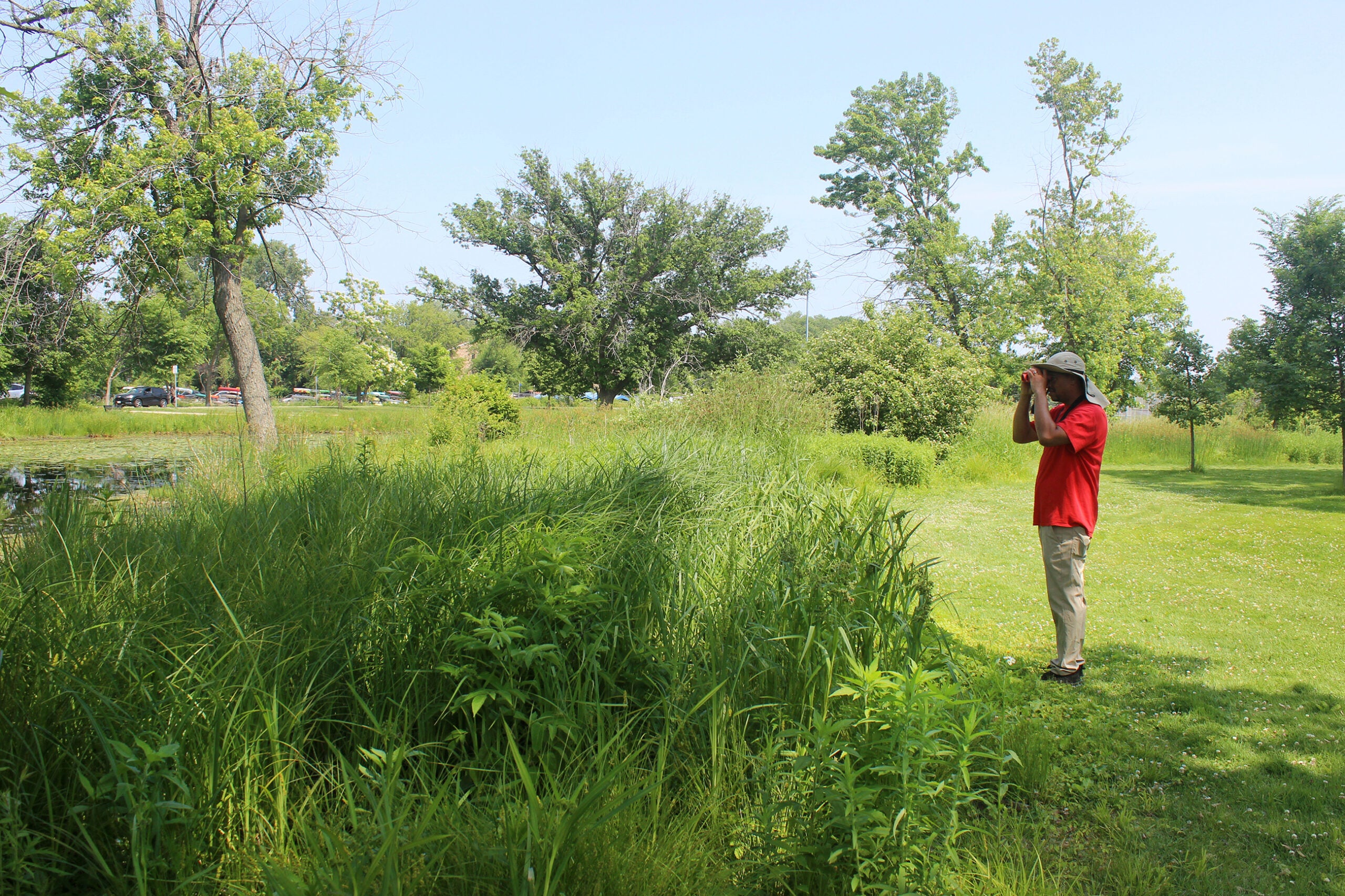
As Patterson made the rounds chatting with everyone at the event, he was, as he describes it, “easily distracted by birds,” interrupting conversation with shouts of “CARDINAL!,” “ORIOLE!,” or “KING BIRD!”
Each time he spotted a new species, he added it to a list of everything they’d seen at the 2-hour event — 26 species in all, including the yellow warbler, the redstart, cedar waxwings, green heron, blue heron, American robin and red-winged blackbirds.
From the bluffs over the Mississippi River to the shores of the Great Lakes and in between, there are a lot of places in Wisconsin where you can go birding, Patterson said, and many are worth a dedicated trip. But “bird joy” is also available at your nearest park.
WPR reporters are making pit stops across the state to explore some of the people, places and things that make Wisconsin summers special. See all the stops and plan your own road trip at wpr.org/roadtrip.

Wisconsin Public Radio, © Copyright 2026, Board of Regents of the University of Wisconsin System and Wisconsin Educational Communications Board.