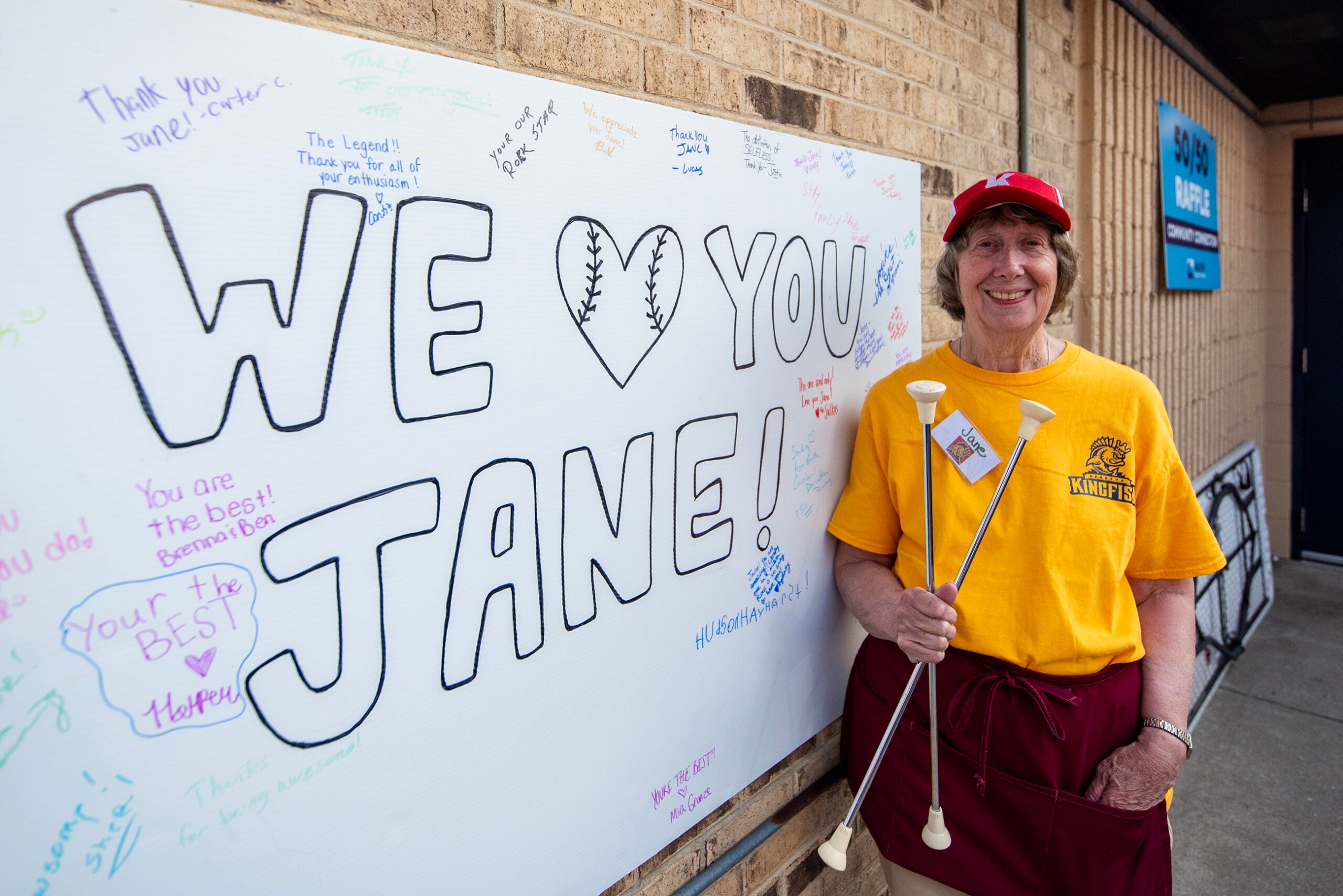
Jane Snediker started twirling when she was in sixth grade.
That was over 60 years ago. She spun her baton in parades and at competitions in the New York area, where she grew up. Her biggest moment was a performance on the 45-yard line at the bygone Shea Stadium, during a halftime show for the New York Jets.
And today Snediker, 75, jokes that she stays ready to perform.
News with a little more humanity
WPR’s “Wisconsin Today” newsletter keeps you connected to the state you love without feeling overwhelmed. No paywall. No agenda. No corporate filter.
“I usually keep a baton in my car at all times,” Snediker said. “You never know when you have to have a parade or something.”
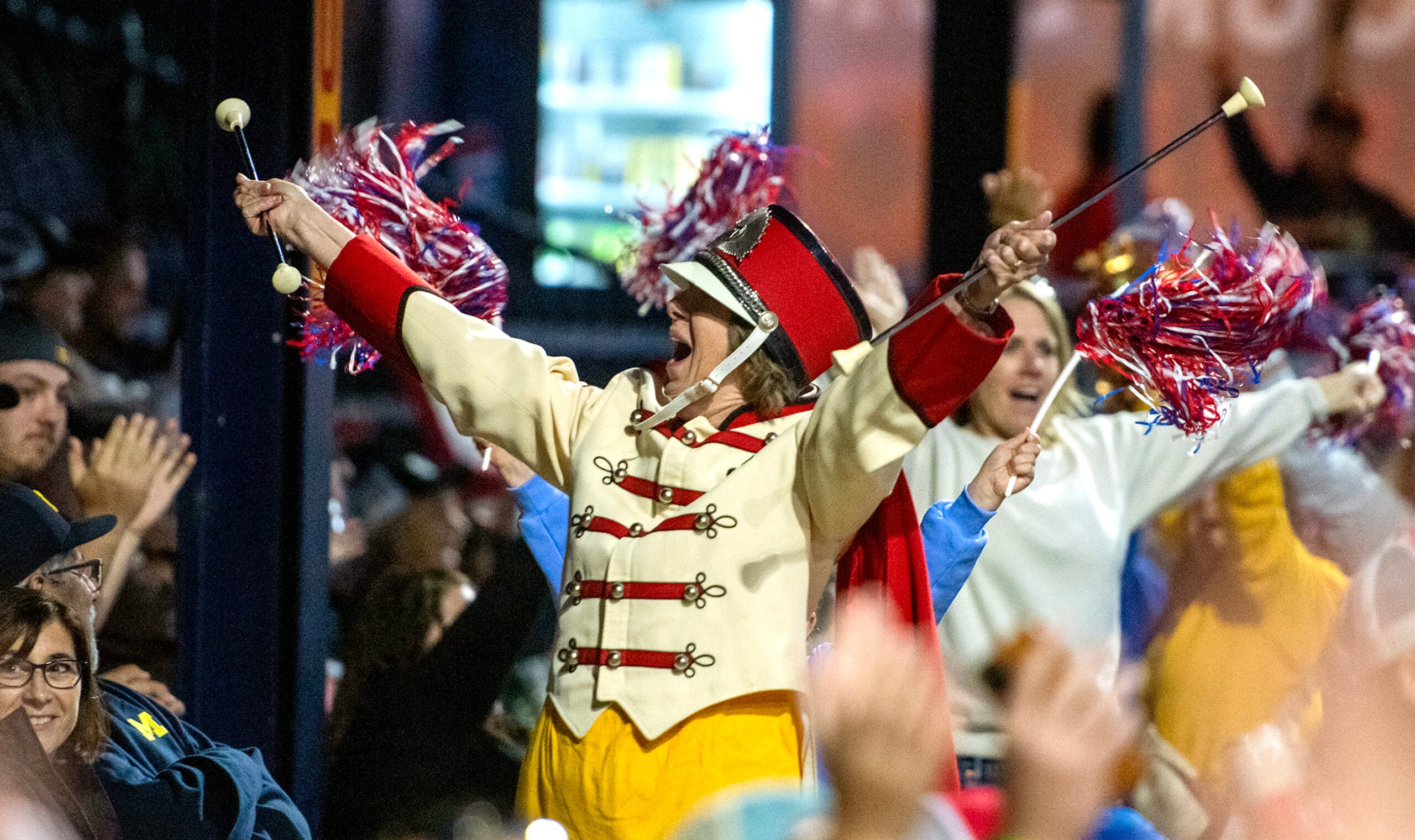
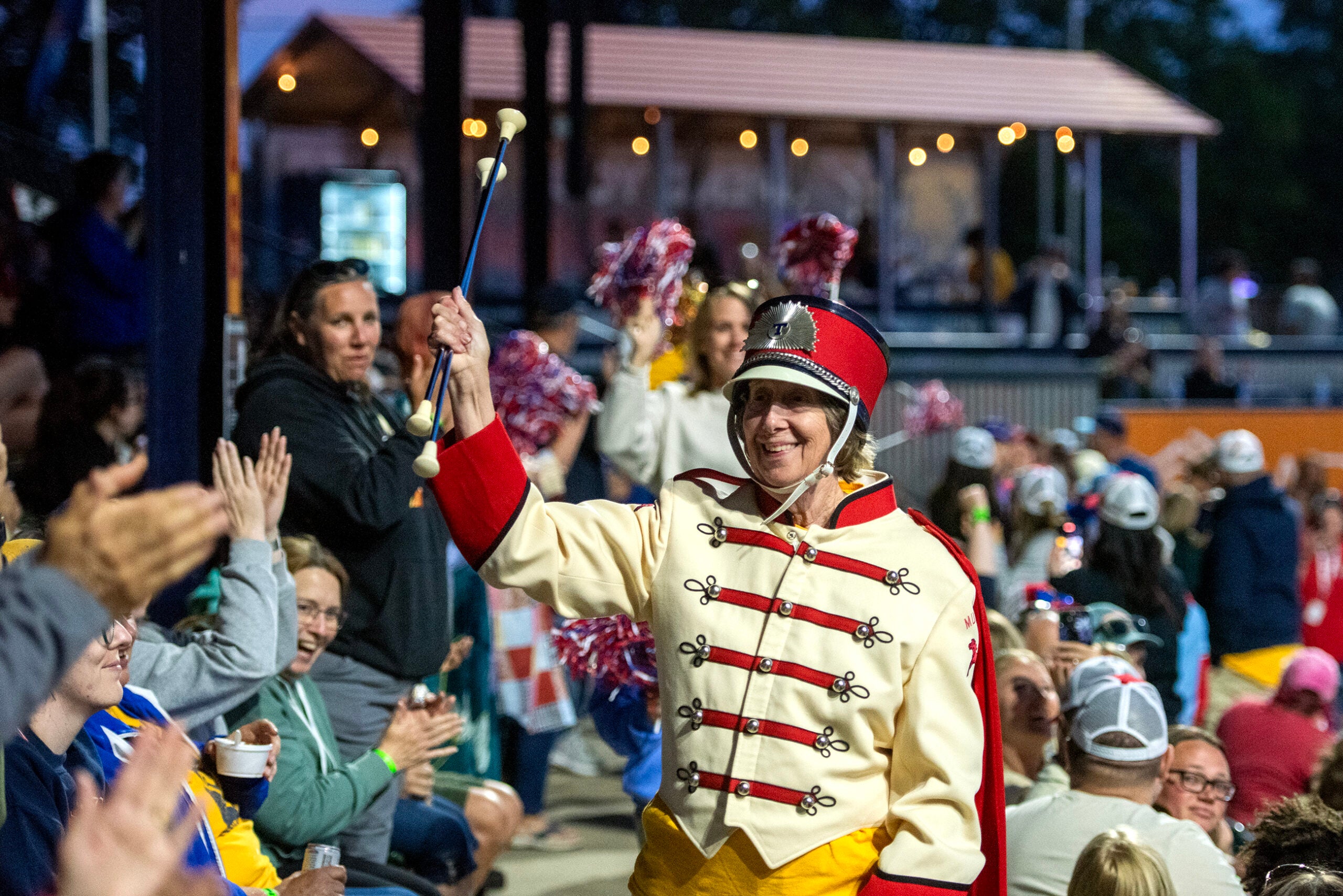
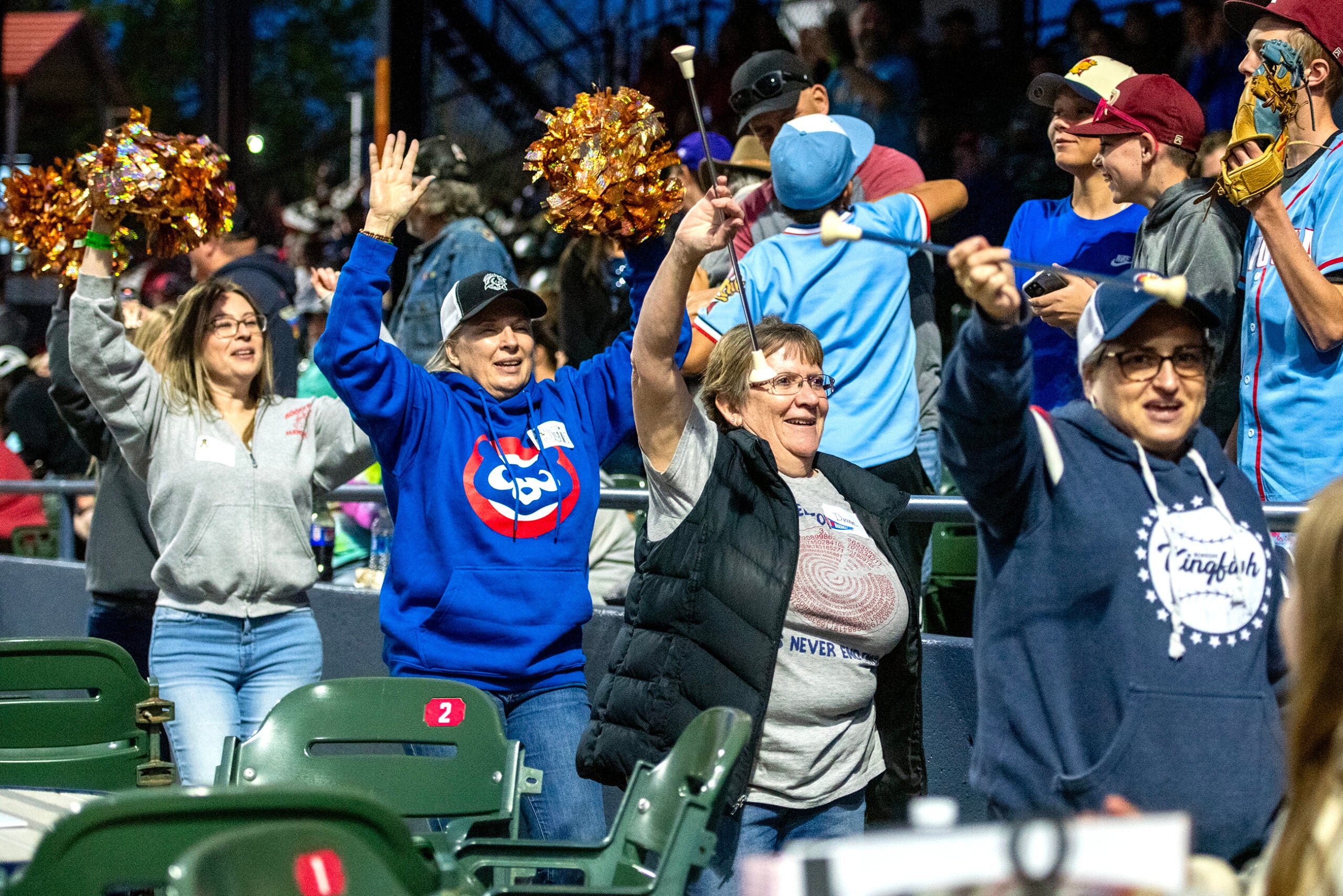
To fans of Northwoods League baseball, Snediker is “Twirling Jane,” a fixture at Kenosha Kingfish games. She spins and tosses her baton to the tune of “Y.M.C.A.” by the Village People at every home game, often after the seventh inning.
She’s also a “host mom” for the team, offering housing and food for collegiate players who spend the summer sharpening their skills with the Kingfish. And she works for the team at the games, directing fans to concessions and helping with special events.
The Kingfish play at Kenosha’s Historic Simmons Field — so named for the long and colorful history of its baseball diamond. The park opened in 1920. It has been home to a number of teams, including the Kenosha Comets of the All-American Girls Professional Baseball League, the 1940s and ’50s organization that inspired the film “A League of Their Own.”
It’s been the Kingfish’s home since 2014. For many years, now-contested NCAA rules have forbidden college players from being paid to play baseball in any form. That means the players who come to Kenosha for the summer cannot accept a paycheck from the team — or even room and board for the months of June, July and August while playing for crowds of thousands of paying fans. They often rely on hosts like Snediker to offer them a place to stay and food to eat.
Snediker said it’s hard to estimate just how many players and interns for the Kingfish have stayed at her home for the summer over the past three decades. Some years she’ll have just one or two — other seasons, she hosts six players.
Outside of the ballpark, she’s spent her entire life mentoring and counseling school children in Kenosha. In 2013, she retired from her job of 42 years as a teacher and counselor for the Kenosha Unified School District. She still works as a substitute teacher for the district.
When asked how long she plans to work at the ballpark, she’s quick to respond.
“Probably until I can’t walk,” Snediker said. “Or maybe (they’ll) just be having me in a wheelchair twirling … you know, (as long as) my hands still work.”

A love of the game and care for young players made Snediker a host mom
Snediker was born in Chicago but moved from home to home often when she was growing up, living in Iowa, New York and Minnesota. When the family lived on Long Island, her dad would drive her 40 minutes to watch the New York Mets play.
That’s when she fell in love with the game of baseball.
She moved to Kenosha for a teaching job in 1971. Snediker first went to a game at Simmons Field when the stadium was the home of the Kenosha Twins, the former Single-A Midwest League affiliate of the Minnesota Twins. Her son used to fetch foul balls for the team.
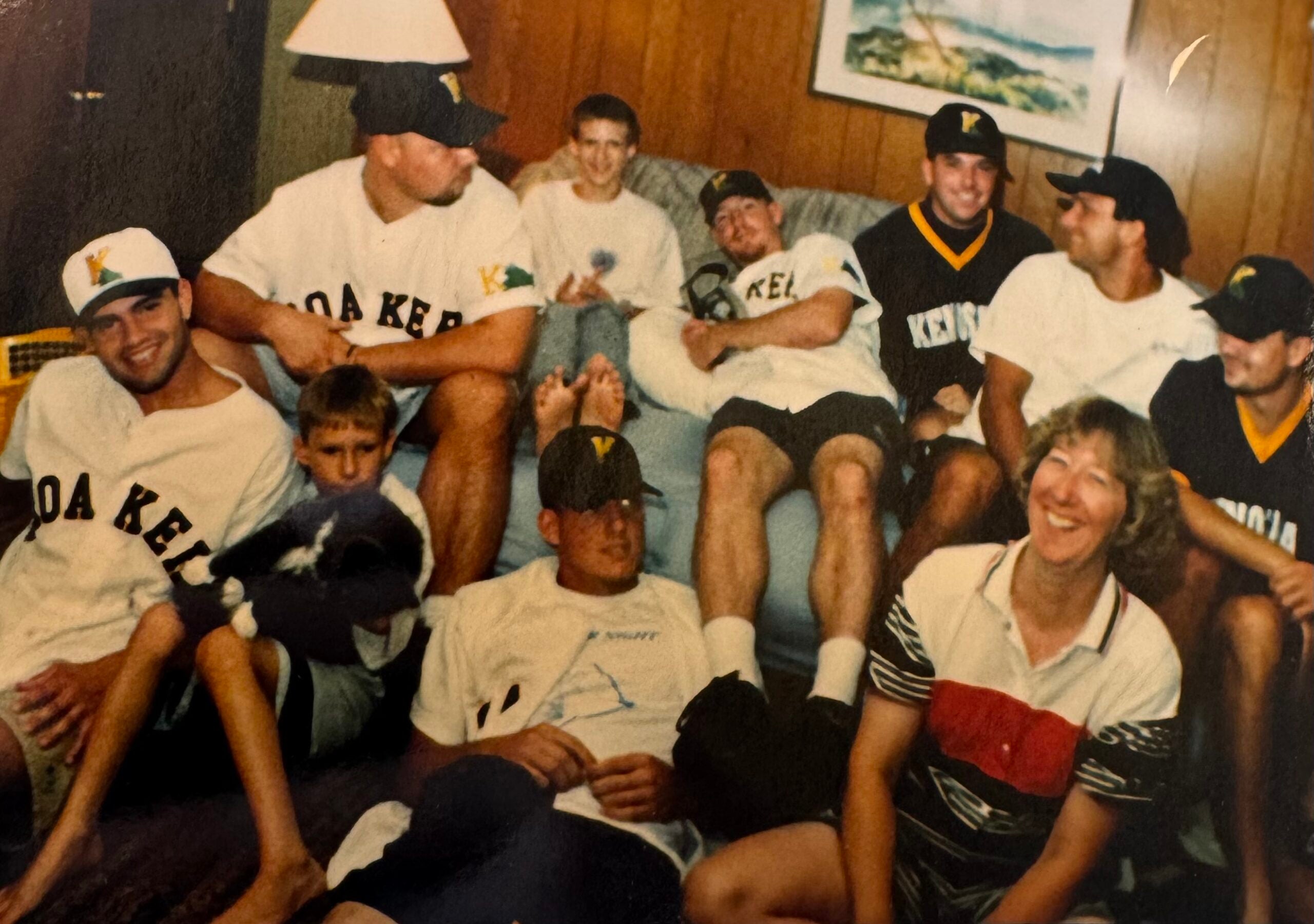
Her other son was the mascot for the Kenosha Kroakers, a former Northwoods League team that played at the ballpark in the 1990s.
Snediker decided to be a host mom shortly after the death of her husband in 1992.
“I learned that some of the players needed housing, and I live a mile away (from the stadium),” she said. “My husband had died and I had two sons, and I thought, well, maybe that would be good for the kids and I can help out the team.”
Snediker had six college baseball players living at her home during the summer of 1995. One player took over the family room, while other players moved into her son’s bedrooms or slept in the basement.
“It was fun because if I would look on the field, sometimes my house was all in the field,” Snediker said, ticking off players she was hosting. “I had an outfielder, I had a first baseman.”
Every player who stays with Snediker fills out a survey before they move in — favorite foods, summer goals, places to visit, when their birthday is. She’s been known to put up signs or make them wear a birthday hat. And she always makes sure the fridge is stocked with protein bars and energy drinks.
“Costco and I became friends,” Snediker said.
She has rules for her players as well, including a few unique ones during the 1995 season.
“Don’t throw the bat or get thrown out of the game,” Snediker said. “And maybe if they got a home run, they could get the showers first.”
Last year, Robby Porco, a 6-foot-8 right-handed pitcher for West Virginia University, stayed at Snediker’s home when he played for the Kingfish. Porco, a native of Warrington, Pennsylvania, had never been to Wisconsin or the Midwest before last summer.
He arrived at Snediker’s home shortly after 10 p.m. Five minutes later, Snediker came home with a car full of groceries from Piggly Wiggly.
“She’s like, ‘Help me carry these groceries,’” Porco said. “And I was like, OK, sounds good to me.”
“Then she made me dinner,” he added. “It was great.”
Porco said Snediker cooked him breakfast every morning and would have warm cookies waiting for him after a win. Sometimes his teammates would come over to spend the morning at the house.
Snediker was his first host family. They still keep in touch even a year later.
“She was everything I could have asked for as a host mom for the summer,” Porco said.
‘Sitting still is not for me’
Snediker tends to arrive at the ballpark hours before first pitch, not because she has to, but because she wants to. During a game on Father’s Day, she helps fans with special wristbands for food and drinks before the game.
Some kids who had her as a teacher or a counselor come to the games or even work for the team during the summer.
“I like connecting with people,” Snediker said. “Sitting still is not for me.”
Around 80 college baseball players cleat up for the Kingfish every summer, according to Ryne Gorlaski, the general manager of the club.
“We have kids from Japan, Canada and then kids from Kenosha,” Gorlaski said.
Goralski will sometimes call Snediker with a last-minute request to help host a player.
“I always call her if I’m in a pinch, just because she lives right down the road and I know she’s going to be super welcoming,” Goralski said. “Every single kid who stayed there has always had great things to say about Jane, and remembers Jane and considers her family.”
“I do have the Grand Central Station sign at my house,” Snediker jokingly said.
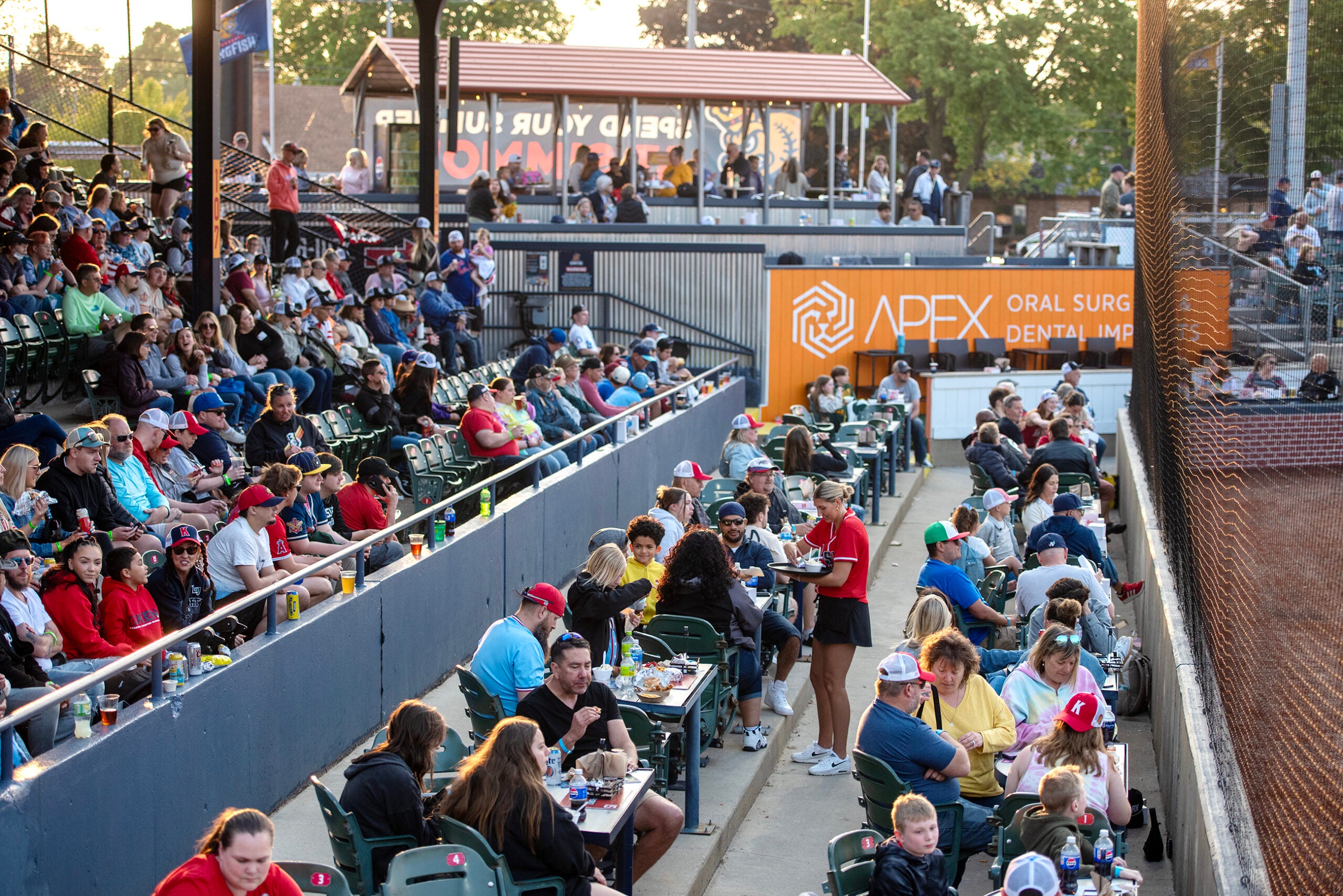
There are around 20 host families in Kenosha every summer. Eva Hoey, another Kenosha resident, is one of them.
“Being a host family isn’t always easy,” Hoey said. “There’s a lot of wet towels. There’s a lot of wet bathrooms that the rugs never dry.”
Hoey has hosted around 30 baseball players at her home over the years. She loves it.
“You have to be a different kind of person to do it,” Hoey said. “You have to be accepting. You have to let things go.”
Team’s bobblehead night honors Twirling Jane’s contributions
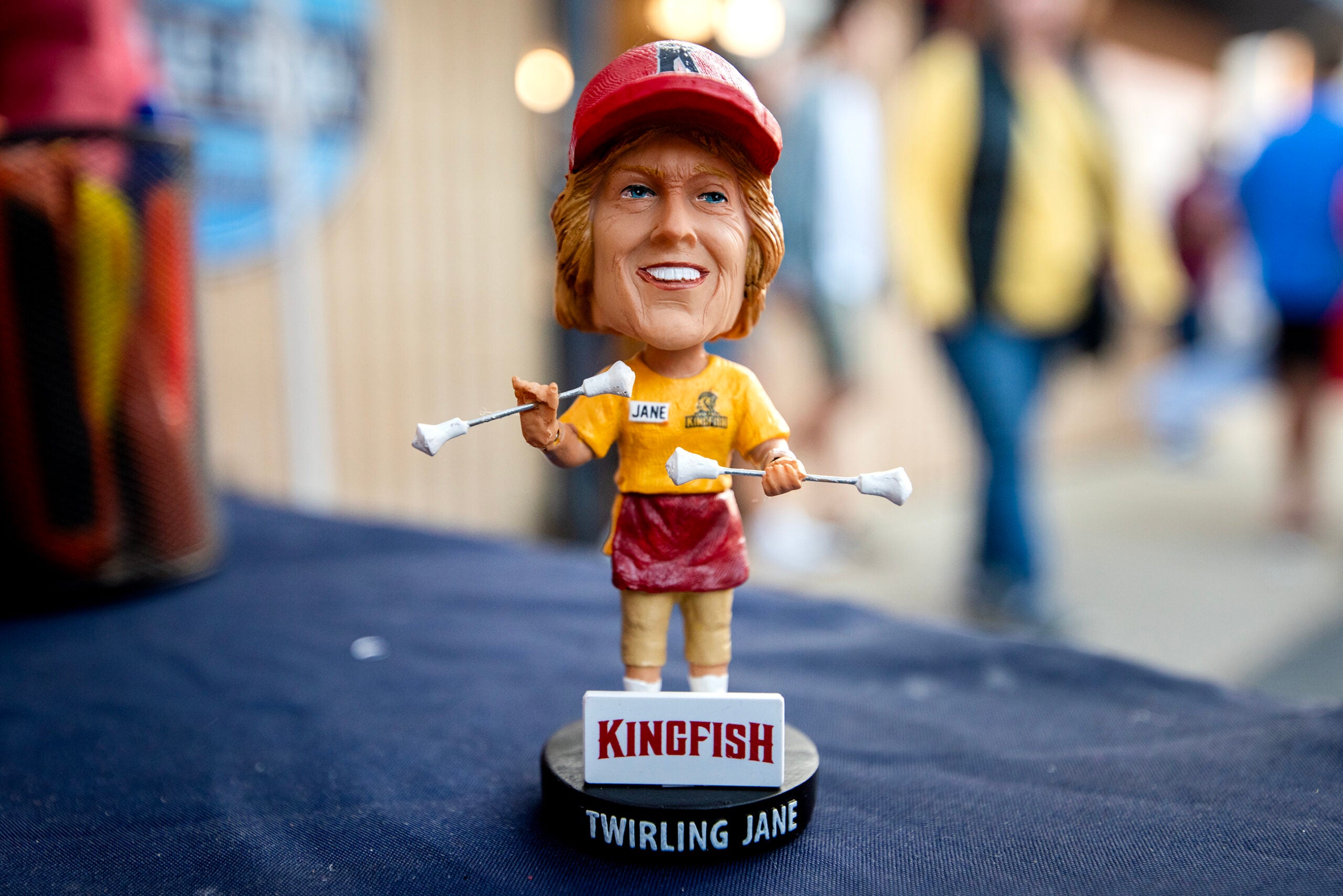
The team decided before the 2025 season to honor Snediker with her own bobblehead. The bobblehead displays her name tag and includes her signature batons, which move when you touch them.
“We just thought this would be a cool way to commemorate Jane and how much she’s given to Kenosha baseball,” Goralski said.
Before the special night, Snediker said fans came up to her at the team store, or even at the dentist’s office and bank, to tell her how excited they were to grab her bobblehead.
Did she perform her twirling routine during the game? Of course she did.
“It was a big honor,” she said.
“I was glad it didn’t rain,” she added. “The Kingfish won, and there was a lot of fun going on here.”

Editor’s note: This story has been corrected to reflect that the All-American Girls Professional Baseball League played in the 1940s and ’50s.
WPR reporters are making pit stops across the state to explore some of the people, places and things that make Wisconsin summers special. See all the stops and plan your own roadtrip at wpr.org/roadtrip.

Wisconsin Public Radio, © Copyright 2026, Board of Regents of the University of Wisconsin System and Wisconsin Educational Communications Board.