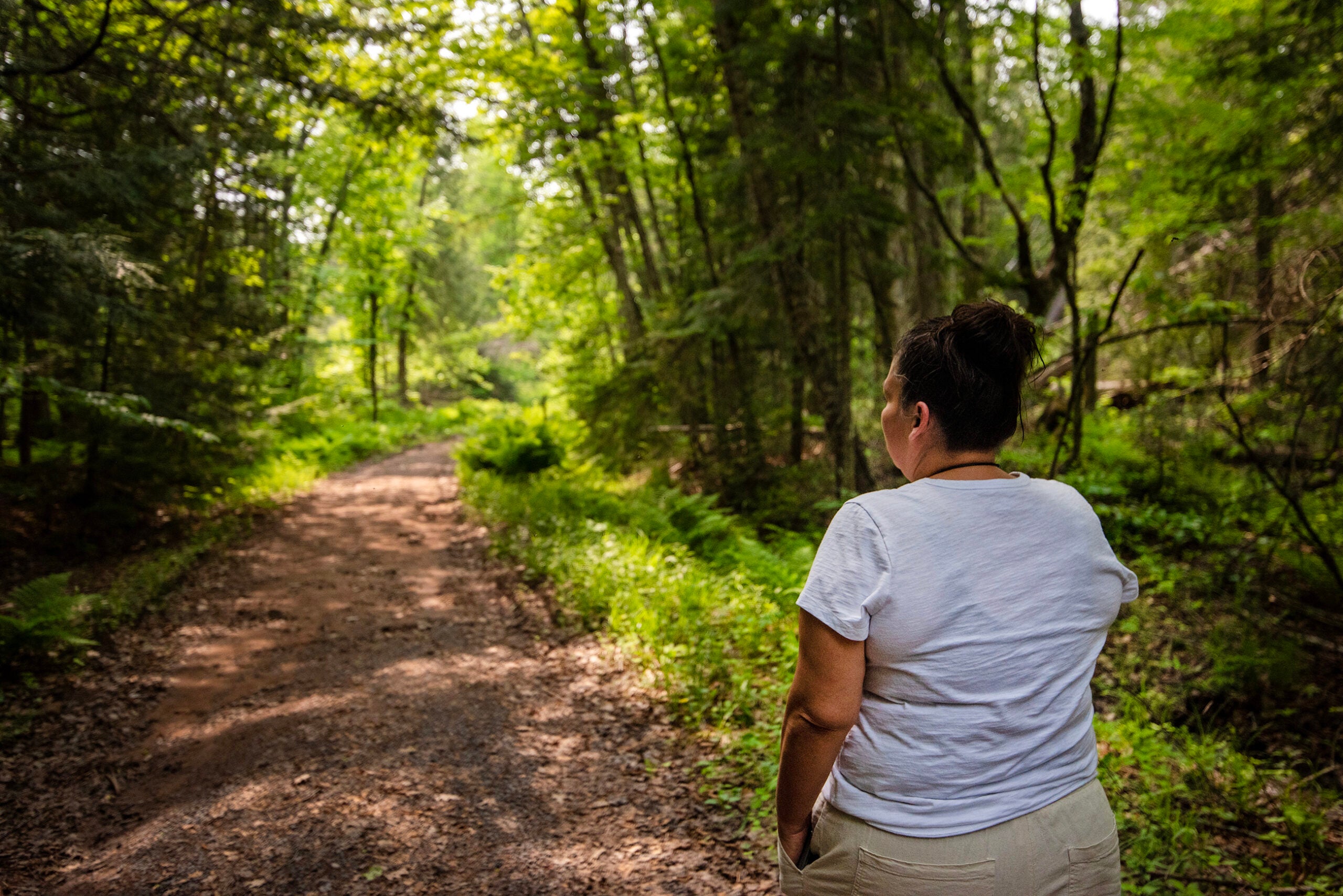
For Shogaabawiikwe Misty Nordin, the land that would become Frog Bay Tribal National Park was more than just a stretch of a nearby beach. It’s where she went to swim and fish during childhood summers. It was where she filled an ice cream pail of blueberries for her grandma.
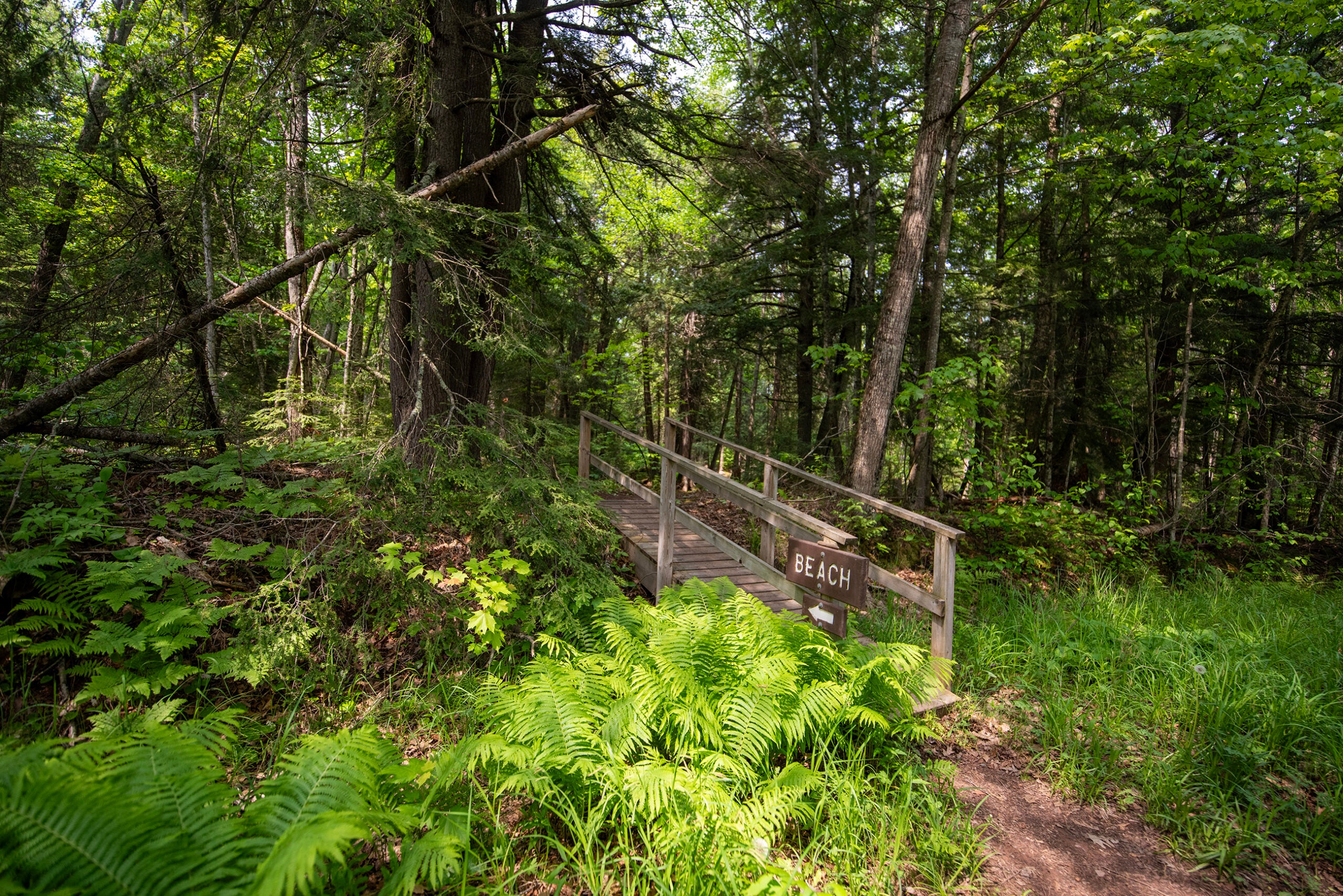
She knows the sights and sounds of the trail that leads down to the Lake Superior shoreline — and the smells. Toward the end of the trail to the beach in the park, she noted a single big, fragrant white pine tree.
“In the summertime,” she said, the sweet smell of the tree’s terpenes “just hits you like a wall.”
News with a little more humanity
WPR’s “Wisconsin Today” newsletter keeps you connected to the state you love without feeling overwhelmed. No paywall. No agenda. No corporate filter.
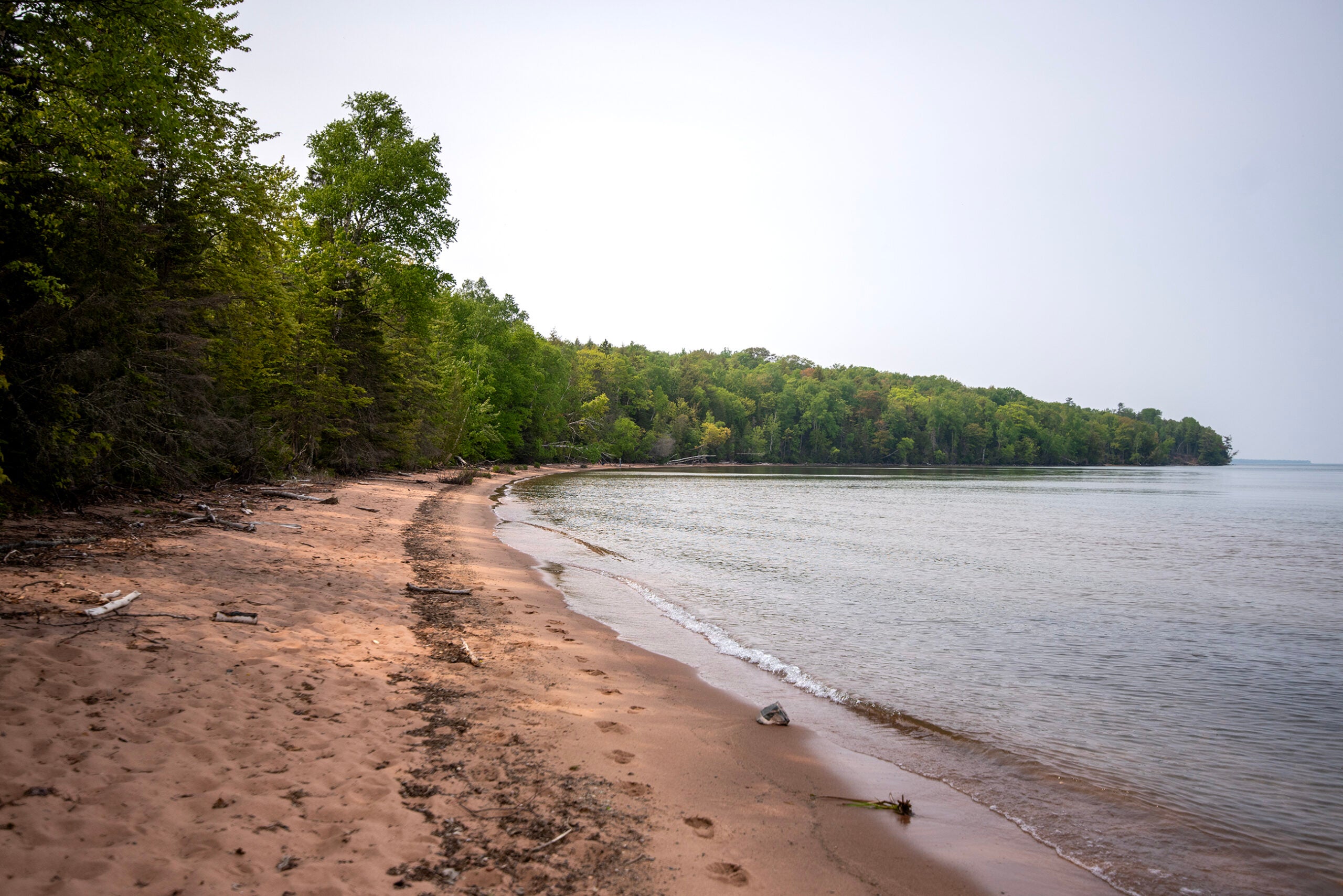
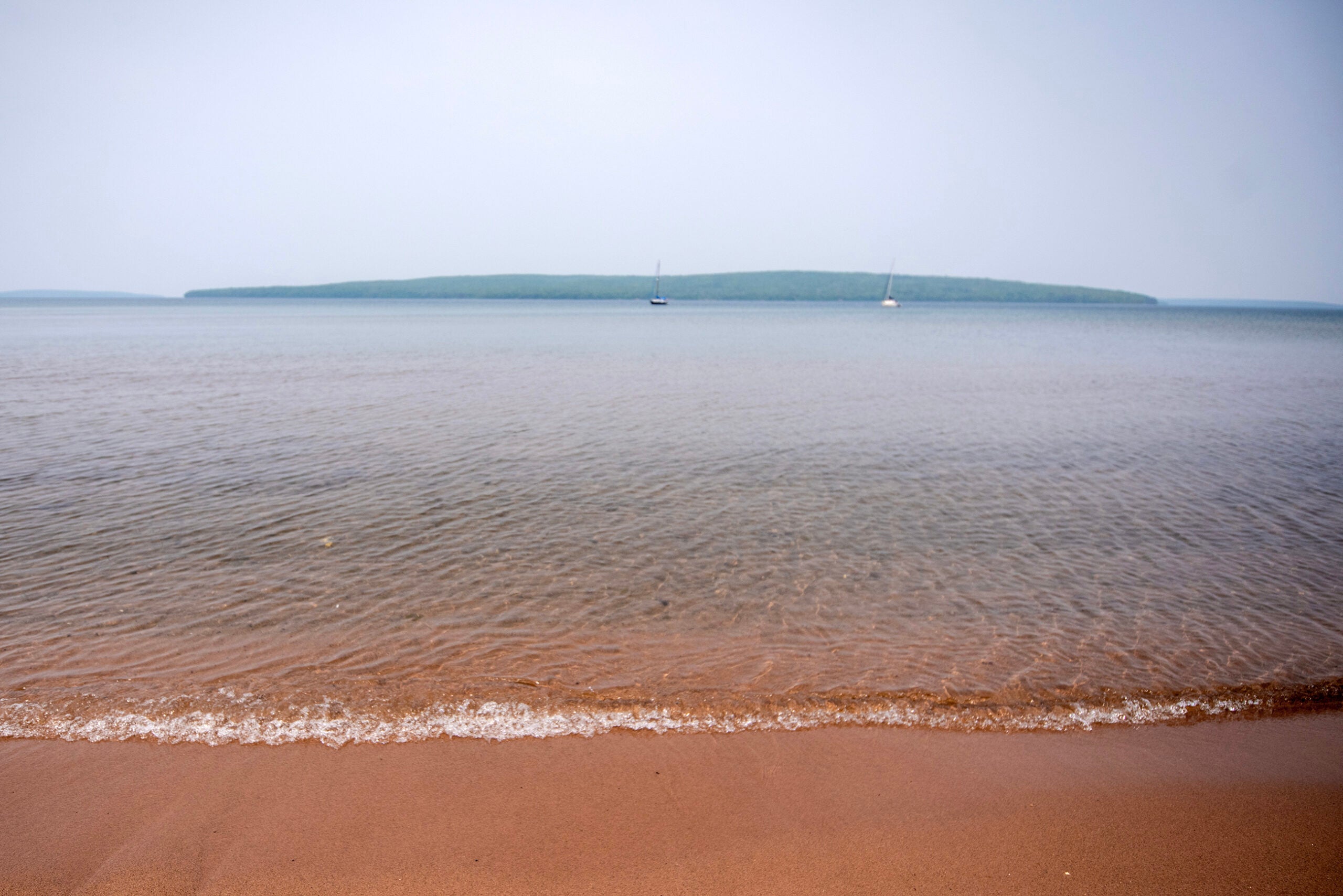
When the park opened in 2012, it was the first tribal national park in the U.S. — an area of hundreds of acres owned by the tribe and designated for preservation. It includes nearly a mile of undeveloped shoreline along the great lake, as well as hiking trails and a nearby nature preserve.
Nordin’s grandfather, Red Cliff tribal elder Leo H. LaFernier Sr., was part of the tribe’s work to reacquire the land that would make the park, which sits near the northern tip of Wisconsin’s Bayfield Peninsula.
“It’s home to me,” Nordin said. “There are so many medicines down here — plants that we’ve harvested for hundreds and hundreds of years.”
Nordin is a member of the Red Cliff tribe and a teacher at the Bayfield Ojibwe language immersion program. She grew up less than a mile from the stretch of beach that is now central to the park. It’s where she hiked and swam. Her grandmother used the wild blueberries she picked there to make blueberry pies for the family.
“Our neighbor used to come down here and set nets for fishing,” Nordin said. Using an Ojibwe term for a group of Indigenous peoples from the Great Lakes region, she continued: “It provides us with so much that we need as Anishinaabe: our foods, our medicines, our connection to all that was created.”
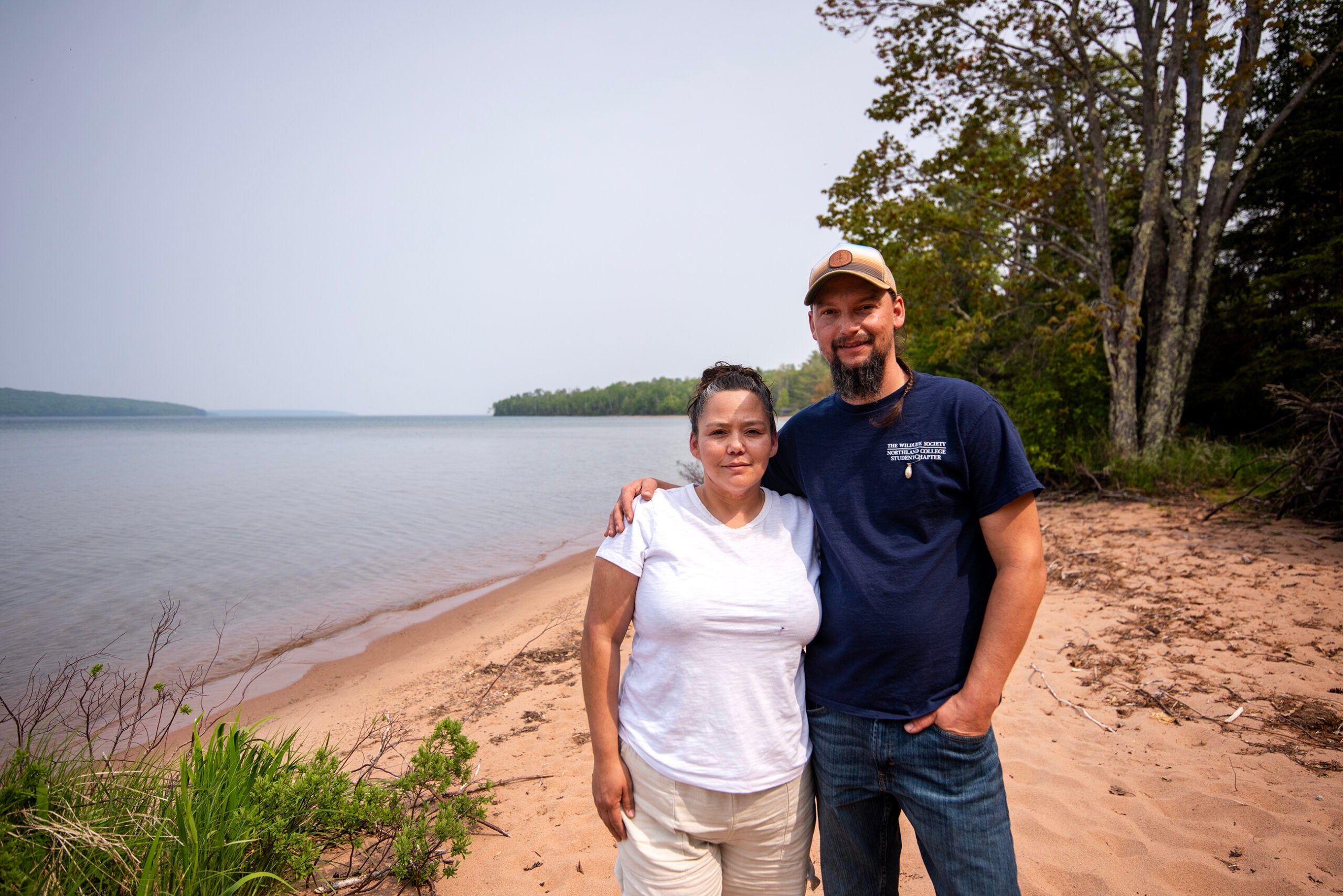

Today, the 175-acre park is open to both tribal and nontribal visitors alike. The park is free to visit, but the tribe does accept donations from visitors to fund the park.
It has three trails for visitors to navigate. Two of the trails, each less than 1 mile in length, lead to the shore of Lake Superior. A more challenging mile-long ravine trail cuts north through the forest and crosses 20 wooden bridges.
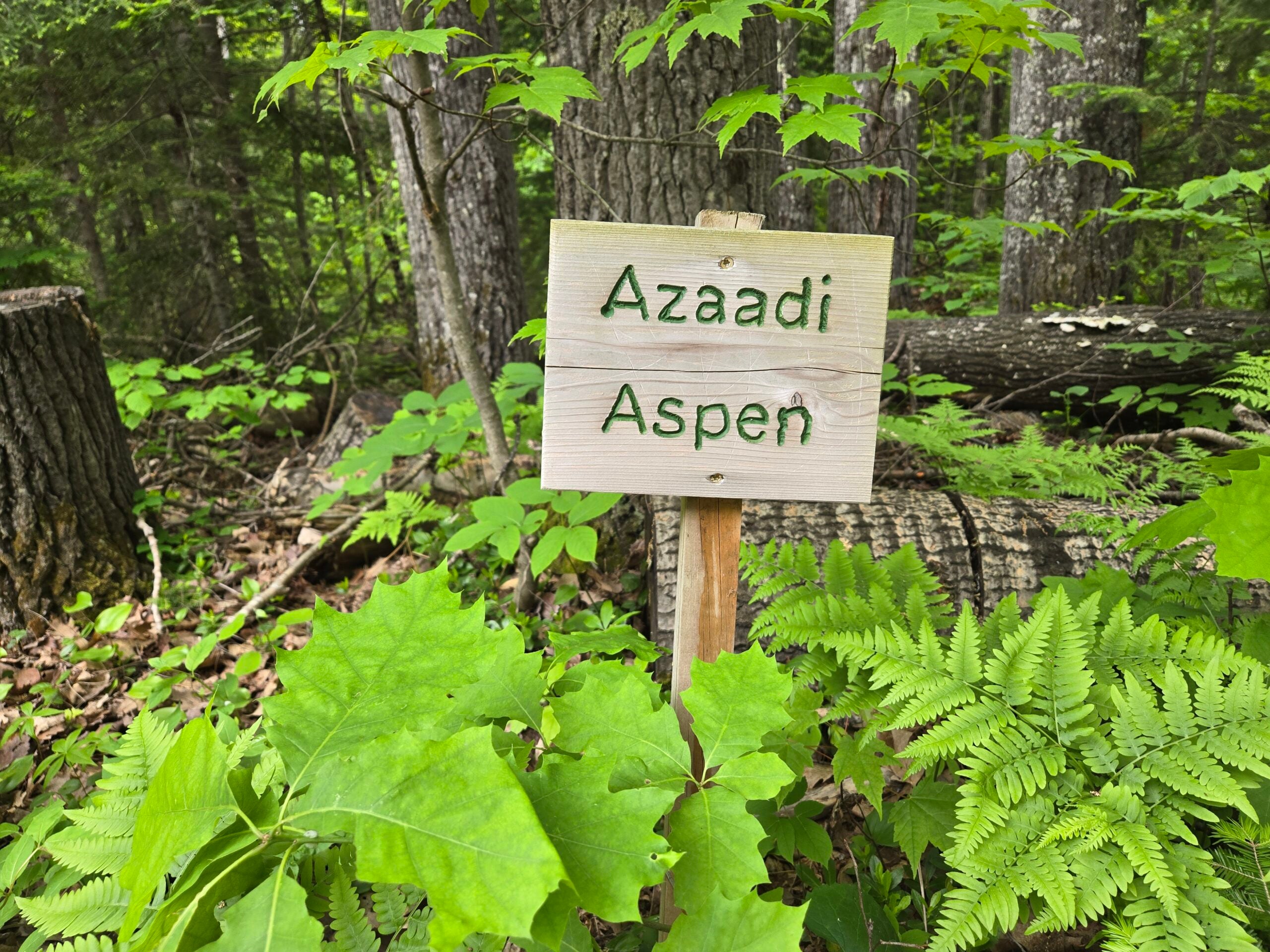
The ravine trail is dotted with signs denoting trees, plants and animals in the area in two languages — English and Ojibwe.
“It’s a part of a language reclamation and revitalization effort,” Nordin said. “Part of that is having signage around so that our tribal members have access to that. The more they see it, the more likely that they’re going to be to use it. And then share that with nontribal members and our visitors into the park.”
Frog Bay park preserves nature unique to Wisconsin
Frog Bay Tribal National Park and a nearby 300-acre conservation management area are meant to preserve the environment in a mostly undisturbed state.
The hundreds of acres here contain endangered wetlands and a freshwater estuary — a partially enclosed body of water with streams that flow into it.
The park is also home to large tracts of boreal forest. Boreal forests are dominated by conifers like pine and spruce trees, and they are adapted to cold northern winters. But forests like these are rare in Wisconsin, according to the Department of Natural Resources, as logging and shoreline development have limited the ecosystem to just a few areas in the state.
“I would estimate some of these trees are upwards of 200 years old,” said Giiwed Gwan Gaabo Ron Nordin Jr., a wildlife technician with the Red Cliff Tribe and husband of Shogaabawiikwe Misty Nordin. “Some of these white pines probably are pushing older than that.”
He said the dense forest is a great habitat for species like the American marten, the only endangered mammal in Wisconsin. The weasel-like critters have been found on 11 of the 22 nearby Apostle Islands. That includes Oak Island, which sits directly across from the beach in Frog Bay Tribal National Park.
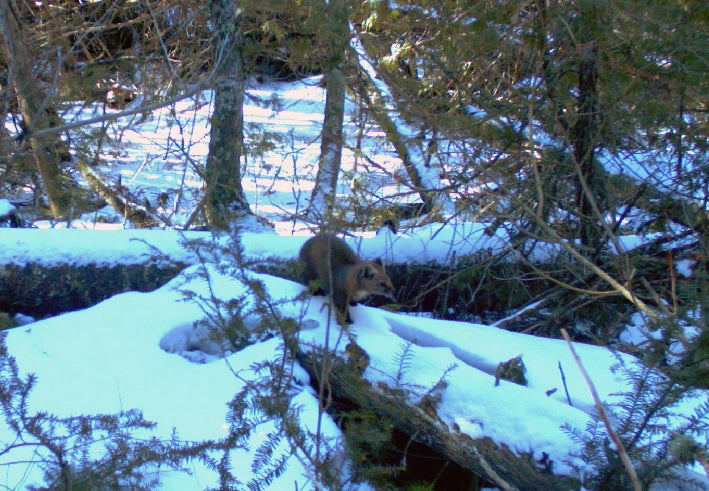
In fact, Giiwed Gwan Gaabo Ron Nordin Jr. said wildlife specialists with the tribe are likely going to increase efforts to track the martens. Tribal wildlife specialists have yet to see one within Frog Bay.
“It is possible that they’re here right now and we just haven’t seen them,” he said. “We’re probably going to beef up our surveillance on martens in these spots, just to see if they have crossed the ice in the past years, which I expect they have. We just haven’t looked for them here yet.”
Creating tribal national park is a step for the tribe to reclaim lost land
Frog Bay Tribal National Park is one step the tribe has made toward reclaiming land that once belonged to them.
Today the Red Cliff reservation spans more than 15,000 acres. Less than two decades ago, the tribe held the rights to around half that much land.
Between 2012 and 2020, the tribe purchased more than 1,000 acres from Bayfield County and private property owners. At the time, the tribe had identified 2,000 additional acres it sought to buy back for conservation, recreation or cultural preservation purposes.
The Red Cliff Tribe’s move to create a tribal national park has inspired other tribes to follow suit. A tribal national park in the North Dakota Badlands was established last September. The Ioway Tribal National Park opened in 2020 on the border between Kansas and Nebraska.
Frog Bay Tribal National Park has even been the site of an archaeological dig in 2018, with a combination of academics, archaeologists and tribal members connecting what they found at the dig with traditions that have lasted for thousands of years.
Shogaabawiikwe Misty Nordin said that conserving land near the Red Cliff reservation through a tribal national park offered a chance to heal relationships — both with local property owners and for nontribal members.
“Some people don’t have experience with tribal members or people of Native American descent, and so there’s a lot of misconceptions and misunderstandings that come with that,” she said. “I think this is an amazing opportunity to showcase who we really are and to mend those relationships and maybe bridge those gaps.”
Shogaabawiikwe Misty Nordin said that this park is ultimately a piece of her grandfather’s legacy.
“That’s embedded in us and who we are. That’s part of our teachings,” she said. “We don’t just look out for ourselves. We’re always looking seven generations ahead and we’re always looking seven generations behind.”


Wisconsin Public Radio, © Copyright 2026, Board of Regents of the University of Wisconsin System and Wisconsin Educational Communications Board.