
There’s a new path to weight loss — the GLP-1 pill.
According to KFF, a national health policy group, about 1 in 8 adults take GLP injections for weight loss, diabetes or another condition, which can lower blood sugar and suppress appetite. They sell by their brand names like Ozempic and Wegovy.
“Initially it came in as an injection (because) an oral semaglutide will never get absorbed, ” said Dr. Srividya Kidambi on WPR’s “Morning Edition.”
News with a little more humanity
WPR’s “Wisconsin Today” newsletter keeps you connected to the state you love without feeling overwhelmed. No paywall. No agenda. No corporate filter.
At the Medical College of Wisconsin, Kidambi oversees the medical weight loss and bariatric surgery program. She said that patients with Type-2 diabetes or obesity are showing an increased interest in GLPs because friends and family are getting healthy results using the products.
“These synthetic versions are designed to last much longer in our body than the hormone that our gut releases after meals,” she said.
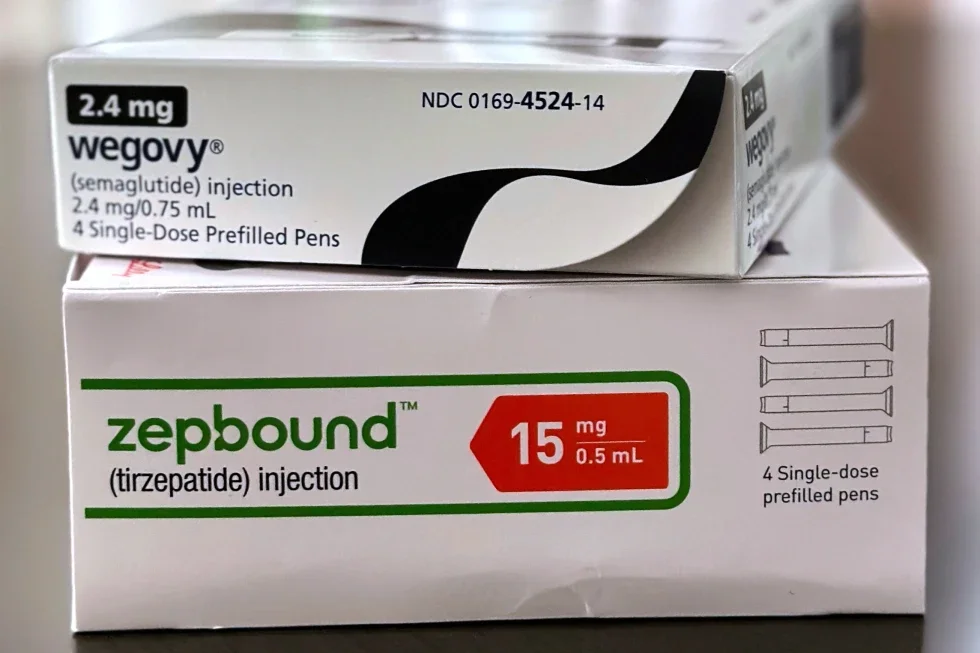
Now, patients are asking Kidambi about the GLP-1 pill, an oral version of Wegovy, created by global health care company Novo Nordisk.
Last month, the U.S. Food and Drug Administration approved the oral medication. And this year, competitor Eli Lilly is slated for approval.
“Both are GLP-1, but Eli Lilly’s is a different type,” she said. “ It’s not a peptide, it’s a small molecule.”
Kidambi said the pill version attaches semaglutide to a molecule called SNAC (Salcaprozate sodium). That then creates its own absorption system, which changes the PH in the stomach to stay fuller longer.
“It has to be taken in a fasting state in the morning with less than or equal to four ounces of water,” she said. “Extra water might push the pill out of the stomach and absorption doesn’t occur.”
According to Harvard Health, the most common GLP side effects are nausea, vomiting, diarrhea and constipation. But for those who experience rapid weight loss, sunken eyes and sagging around the neck and jaw may develop as well.
Despite that, Kidambi described the drugs as a game changer for reducing obesity in America as it can also influence more positive eating habits for families.
“Taking the medication might change the way they eat or buy groceries,” she said. “That might also give children the benefit of eating healthy.”
Due to increased demand surrounding GLP products, supply shortages have been an on- and off-again issue since 2022, according to the FDA. Kidambi said that’s led her patients to go months without their weekly GLP injection.
She said that while most supply problems have been resolved, insurance coverage is the greatest barrier in the GLP market for patients facing obesity.
GLP products face insurance coverage barriers
In Wisconsin, about 1.6 million adults are living with obesity, according to the American Diabetes Association, and more than 400,000 people are living with diabetes.
Kidambi said diabetic patients are more likely to get approved for GLP medication because the disease is recognized as a health condition by Medicare.
“It’s not so clear for patients who have obesity,” she said. “Some insurances cover it and some don’t.”
Kidambi said that those patients may only get approved if they have cardiovascular disease or obstructive sleep apnea.
For a GLP injection, that means paying $1,000 per month without insurance. As for the new pill, prices are significantly lower at about $299 per month. Kidambi is hopeful that this means prices will continue to decline.
Meanwhile, the GLP-1 market is estimated to grow from $62 billion this year to more than $157 billion by 2035, according to GlobeNewswire.
As far as whether the pill will replace injections, Kidambi doesn’t think so.
“Both have their own role,” she said. “Oral medication has to be taken a very specific way and that might be a hindrance for some people compared to taking weekly injections.”

Wisconsin Public Radio, © Copyright 2026, Board of Regents of the University of Wisconsin System and Wisconsin Educational Communications Board.