When fresh snowfall blankets the northwoods of Wisconsin, Licia Kuckkahn Johnson walks among nature in search of footprints.
Wolves, turkeys, squirrels, rabbits are the most active this time of year, she said on WPR’s “Morning Edition.”
Johnson looks for clues like fur, feathers and scratchings to interpret what’s happening in the natural world. She then sends her findings back to the Wisconsin Department of Natural Resources on a monthly basis.
News with a little more humanity
WPR’s “Wisconsin Today” newsletter keeps you connected to the state you love without feeling overwhelmed. No paywall. No agenda. No corporate filter.
“Counting toes, measuring size, how far apart are the tracks, scat left behind,” she said.
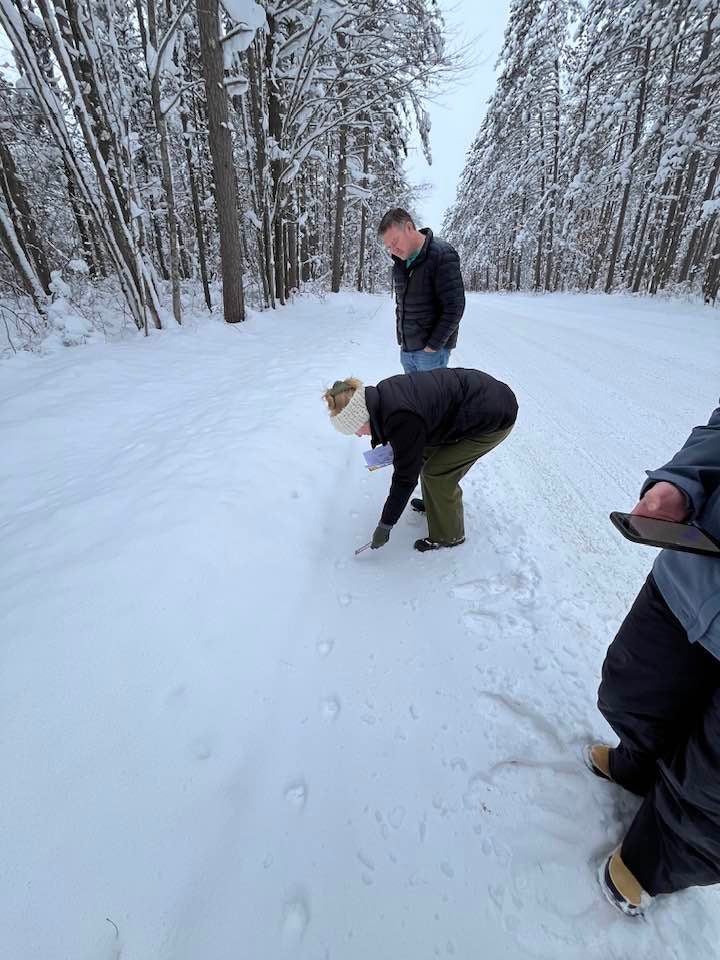
Johnson is the leading educator and naturalist for Lakeland Discovery Center in Manitowish Waters. During the winter months, she teaches kids how to identify and track animal prints.
She credited her mom, a member of the Lac du Flambeau Band of Lake Superior Chippewa, with understanding that animals have a story to tell.
“We’re reading the land like my ancestors and family,” she said. “Movement patterns — a lot of survival depends on living off these animals.”
Wisconsin is home to more than 660 native vertebrates, according to the state department of Natural Resources. Depending on their size and movement, Johnson has four footprint categories; walkers (wolves), hoppers (rabbits), bounders (fishers), and waddlers (bears).
Wolf vs. dog
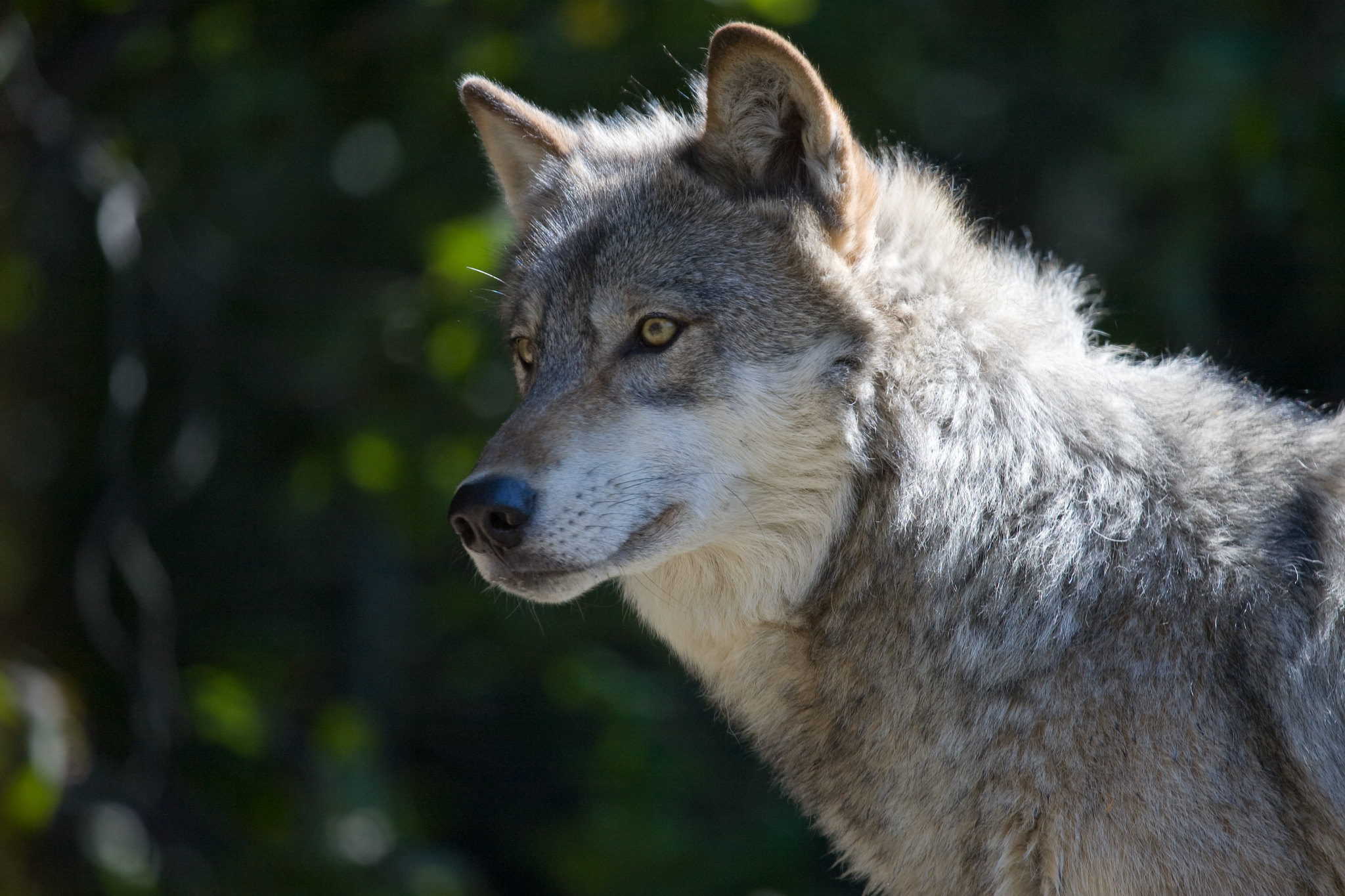
Johnsons said that when February begins, so does the mating season for walkers like coyotes and wolves. When tracking wolves, she looks for 4½-inch prints along the side of back roads.
While wolves and domestic dog prints can be mistaken for each other, there are significant differences.
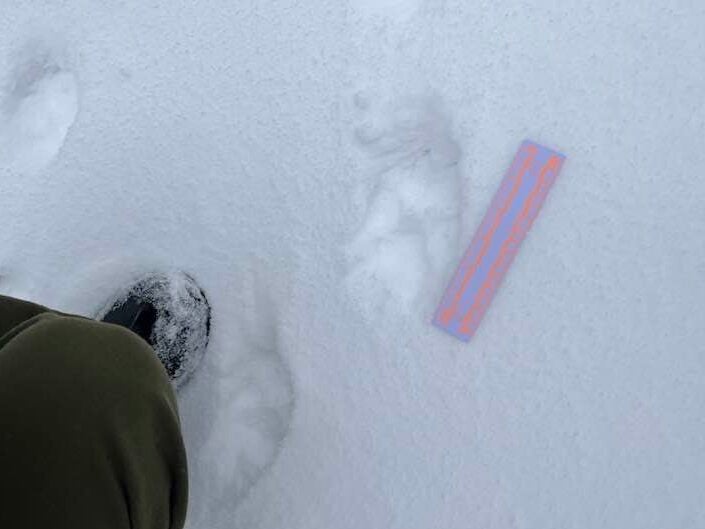
“Wolf tracks go pretty much in a straight line,” she said. “Domestic dogs wander all over.”
Wolf toes are also closer together than dog toes, she said.
To confirm whether it’s a dog or wolf, Johnson uses her finger to draw around the snow print. A diamond means wolf; a circle means dog.
Squirrels vs. rabbits
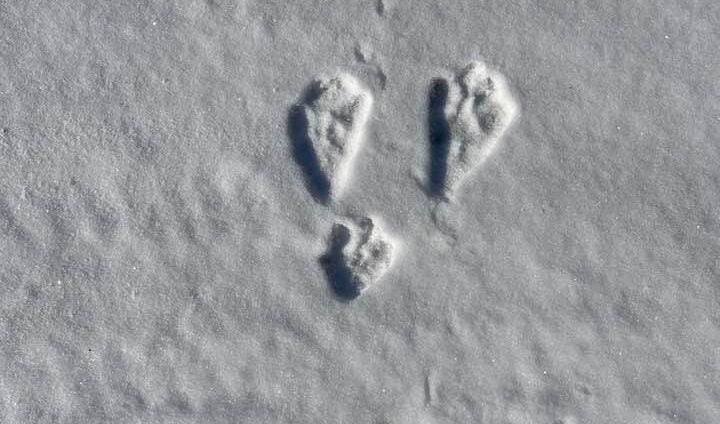
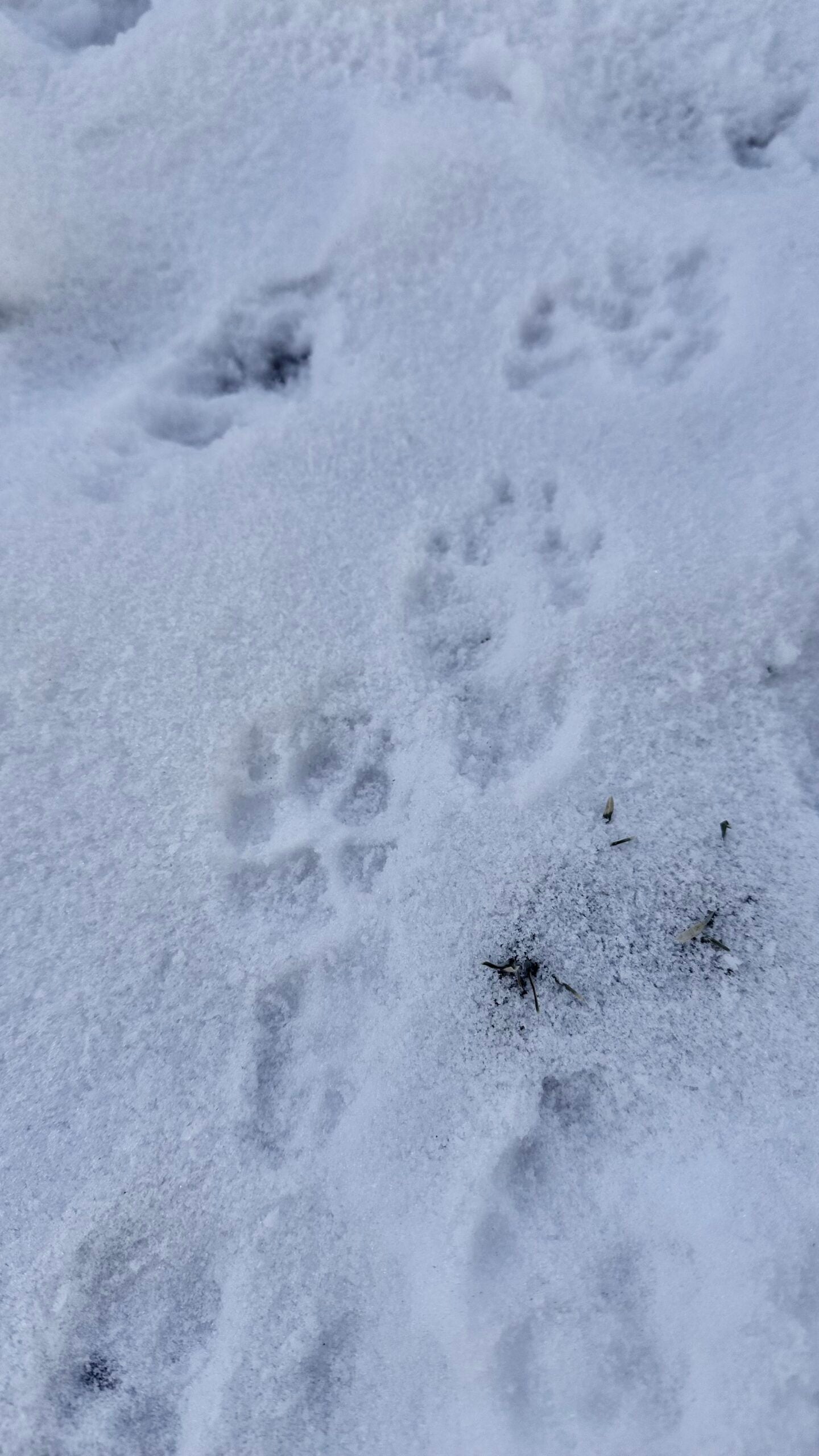
Johnson said squirrels are active this time of year as they continue to maintain food supplies. She categorizes the common critters, like rabbits and mice, as “hoppers” because they have short front legs and long back legs.
“A squirrels’ small front feet lands on the ground in front of them. Then those big back legs swing around,” she said.
Johnson said that movement can often be misleading because tracks can appear as if the squirrel is moving in the opposite direction.
In the snow, Johnson said she can draw a square around squirrel prints. Meanwhile, rabbit prints form a triangle because they land front feet first.
Raccoons vs. opossums
During Wisconsin winters, Johnson said raccoons and opossums are in a torpor or “light sleep” mode. Therefore, they’re more likely to appear in the southern part of the state.
Johnson categorizes the creatures, along with bears and porcupines, as “waddlers” because they have a side-to-side gait.
While raccoons and opossums have five toes in the front and back, she said raccoons have flat feet.
“It almost resembles human tracks, but really quite a bit smaller,” she said.
In addition, a opossum has a thumb that sticks out far from its toes.
Turkeys vs. pheasants vs. eagles
As a bird enthusiast, Johnson loves looking for wild turkey footprints. While urban areas are reporting growing turkey populations, plenty are leaving their snow mark in the northwoods.
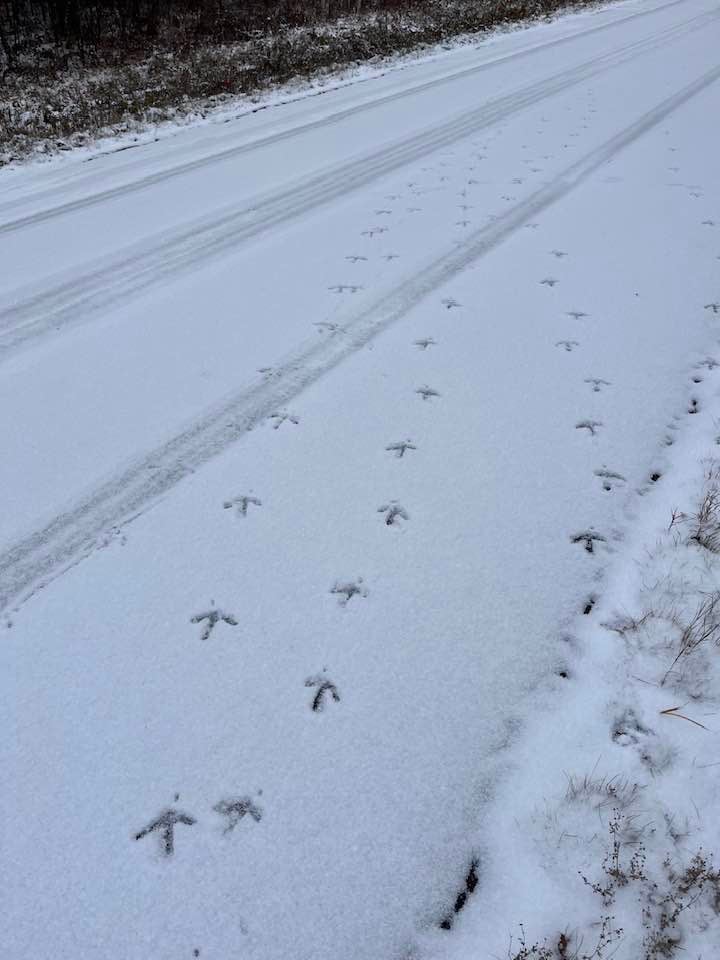
She said they walk in a straight line and leave behind skinny footprints, about 5 inches long.
“You’re only really going to see the three toes that mark in the front, you’re not really going to see a back toe,” she said.
Pheasants also move forward in a straight line, but their three toes are significantly smaller than turkeys.
Eagles, Johnson said, have thick feet and are wider than both turkeys and pheasants, and about 7½ inches long.
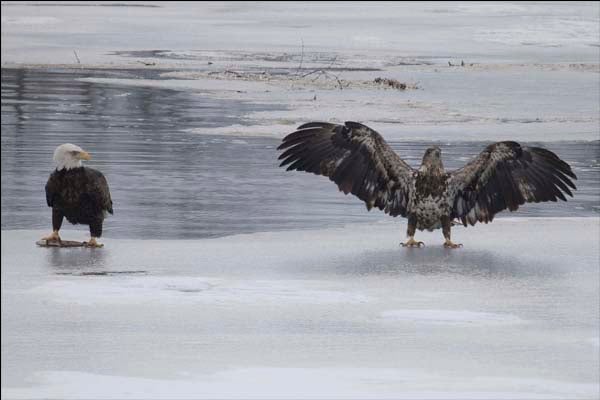
“When you see an eagle track, you’re going to see three front toes and then one back toe sticking out,” she said.
Johnson said it’s uncommon to spot eagle tracks as they tend to only drop from the sky to seek prey.