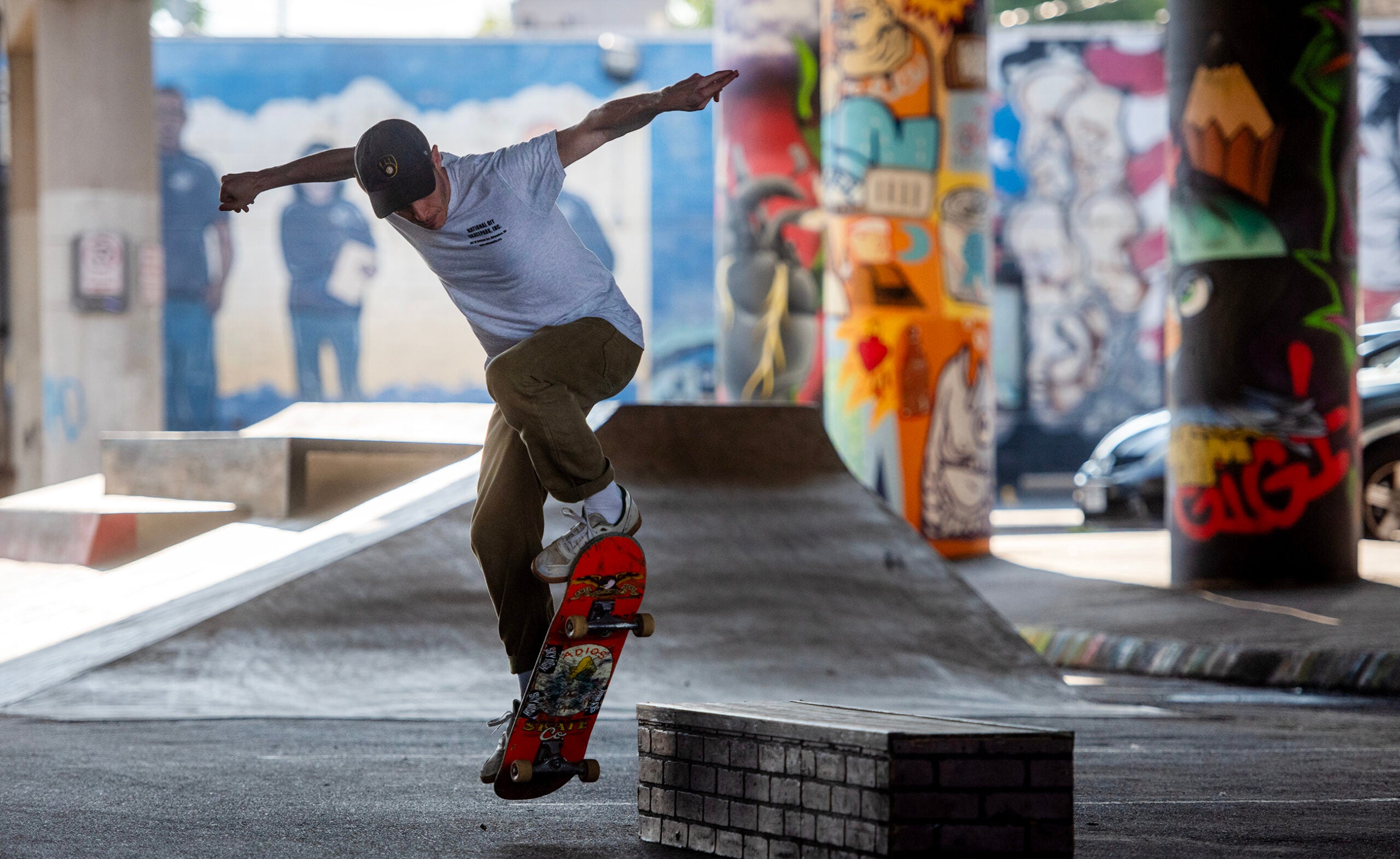
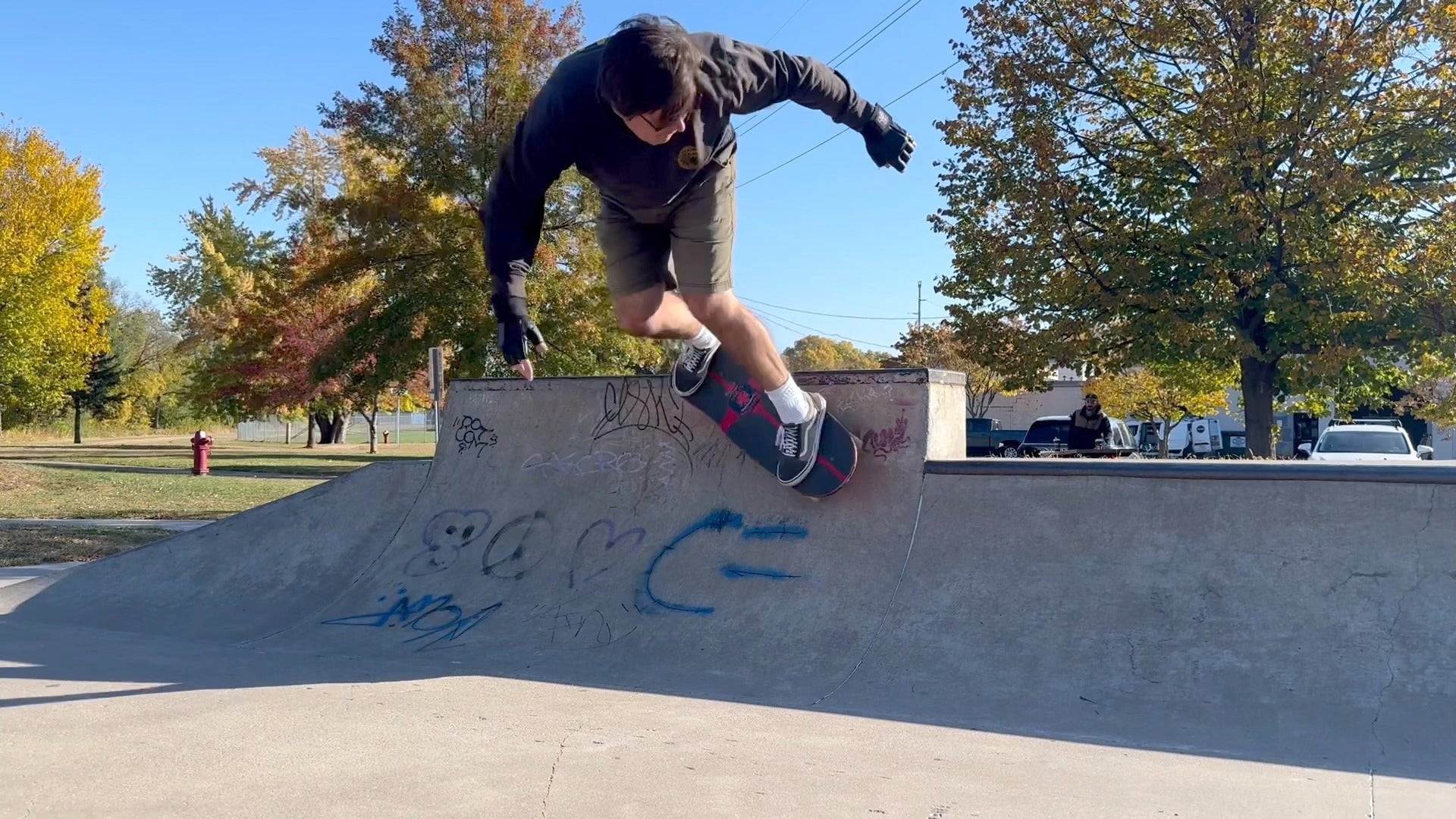
When he was a graduate student, Thomas Kemp’s professors told him that skateboarding wasn’t a viable topic of study if he wanted to be taken seriously as an economist. Now chair of the economics department at the University of Wisconsin-Eau Claire, Kemp has taken a skater’s “why not?” attitude, marrying his love of skateboarding and his academic career.
The result is a study he recently published in the Journal of Economic Analysis about the economic and other benefits skate parks bring to their local communities.
“We’re finding that well-constructed skate parks end up having these broader community effects,” Kemp told WPR’s “Wisconsin Today.”
News with a little more humanity
WPR’s “Wisconsin Today” newsletter keeps you connected to the state you love without feeling overwhelmed. No paywall. No agenda. No corporate filter.
Part of Kemp’s research is figuring out the secret sauce for what makes a skate park become a community hub. Through his travels, he’s noticed that the most successful skate parks are not only used and loved by skaters but become a feature of the neighborhood for people walking their dog or out riding a bike.
“We’re finding that when parks are done right, they become places that are welcoming, where people feel safe — skaters and community members alike,” he said in an interview with UW-Eau Claire.
Growing up in the Milwaukee area in the 1980s, Kemp recalled that he and his friends didn’t have a lot of places where they could safely and legally shred on their boards.
“Skate parks were very, very few and far in between back in those days,” he said.
Now, skate parks are cropping up around the state. Kemp estimates there are about 50 throughout Wisconsin, with more in the works like the All-Wheel Spot at Elvehjem Park in Madison. Earlier this summer, the Turf Skatepark in Greenfield officially reopened “after a DIY-led initiative over 15 years in the making,” according to OnMilwaukee.
“People are traveling from all over the world to use that park,” Kemp said, referring to the Turf.
When skate parks are destination attractions like that, visitors end up booking hotel stays and shopping at local businesses as part of their stay — all clear indicators of economic value.
But at many of these skate parks, there are also what economists call “intangible benefits” like giving people a place to gather and build community.
“Everybody’s really friendly in the skateboard scene,” Patrick Hasburgh, who skates at the Goodman Skatepark in Madison, told “Wisconsin Today.” “A lot of times when you’re hanging out there, you’ll see a veteran skateboarder that is helping out a little kid trying to learn a trick or offering tips.”
Skate parks draw increasingly diverse crowd
The growth in skate parks tracks with an overall rise in the hobby. Kemp said the world of skateboarding nowadays is “much more diverse” than it was when he was a kid, with people of all ages hitting the ramps.
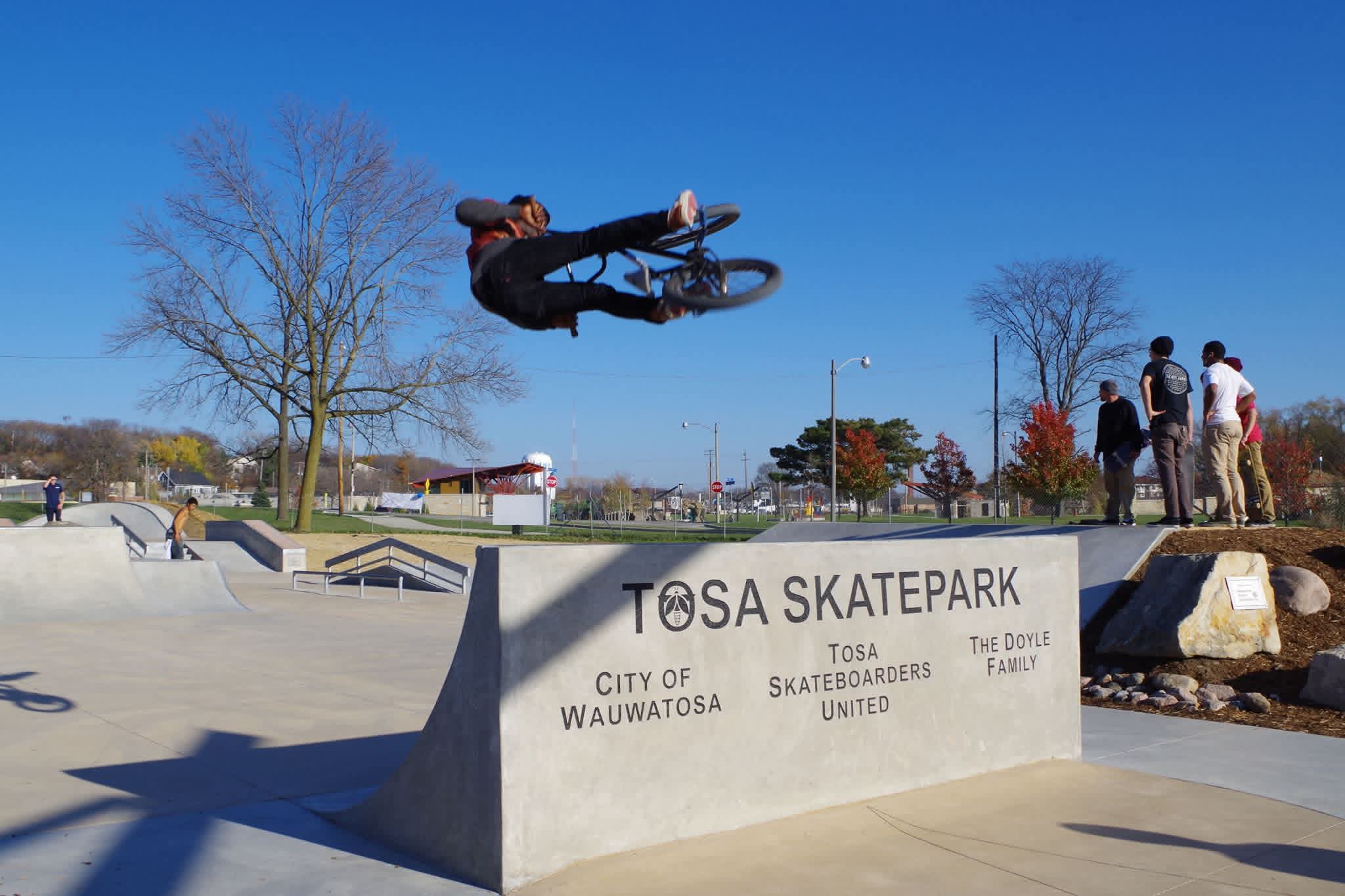
One example of this is a group of adults in Wauwatosa in their 40s and 50s who call themselves the “Old Man Skate Cartel.” Mike Doyle, one of the community members behind the Tosa Skatepark, said that the group meets every Sunday morning to skate.
“People think of skateboarders as being little kids or teenagers — it’s not,” Doyle said. “There’s plenty of older guys that grew up skateboarding, and now they’ve got a place to go, too. There’s just a lot of good vibes.”
And these parks aren’t just for skateboarders. Kemp said it’s not unusual to see people on roller skates, BMX bikes and kick scooters using the bowls and ramps at a skate park.
“You might even see some folks in wheelchairs — that’s amazing to me, absolutely incredible,” he said. “So you see quite a wide variety of users in these places, and that’s a great thing.”
Madison skaters band together to build Goodman Skatepark
While skate parks seem to be having a moment right now, it hasn’t always been this way. Skateboarders of previous generations remember struggling to find a place to ride. It’s against the law to operate a skateboard on the road or sidewalk, and it can be difficult to get permission to skate in parking lots or on private property.
Hasburgh is the “spokesdude” of the Madison Skatepark Fund, a group that formed in 2001 in response to this frustration.
“We were just a bunch of skateboarders who were tired of getting tickets for skateboarding around Madison,” he said.
Hasburgh said the idea to build a skate park came when he appeared as a guest on a call-in talk show at WORT 89.9 FM, a community radio station in Madison. Shortly after, he and some other skateboarders started a petition at Freedom Skate Shop. Within a week, the group had more than 100 signatures.
From there, they started holding monthly meetings and getting the ear of city council members to figure out where and how they could build the park.
“At first, we thought we’d be able to get it done just by having, like, bake sales and punk rock shows,” Hasburgh said. “But we soon realized that a skate park costs a lot of money. And so we sort of spun our wheels for maybe 10 years.”
As the group got more serious about fundraising, they were able to secure multiple five- and six-figure donations from local businesses and groups like the Willy Street Co-op, the Goodman Foundation and the Madison Community Foundation. Eventually, Dane County pitched in $200,000 after the group convinced them it would be a “regional attraction,” Hasburgh said.
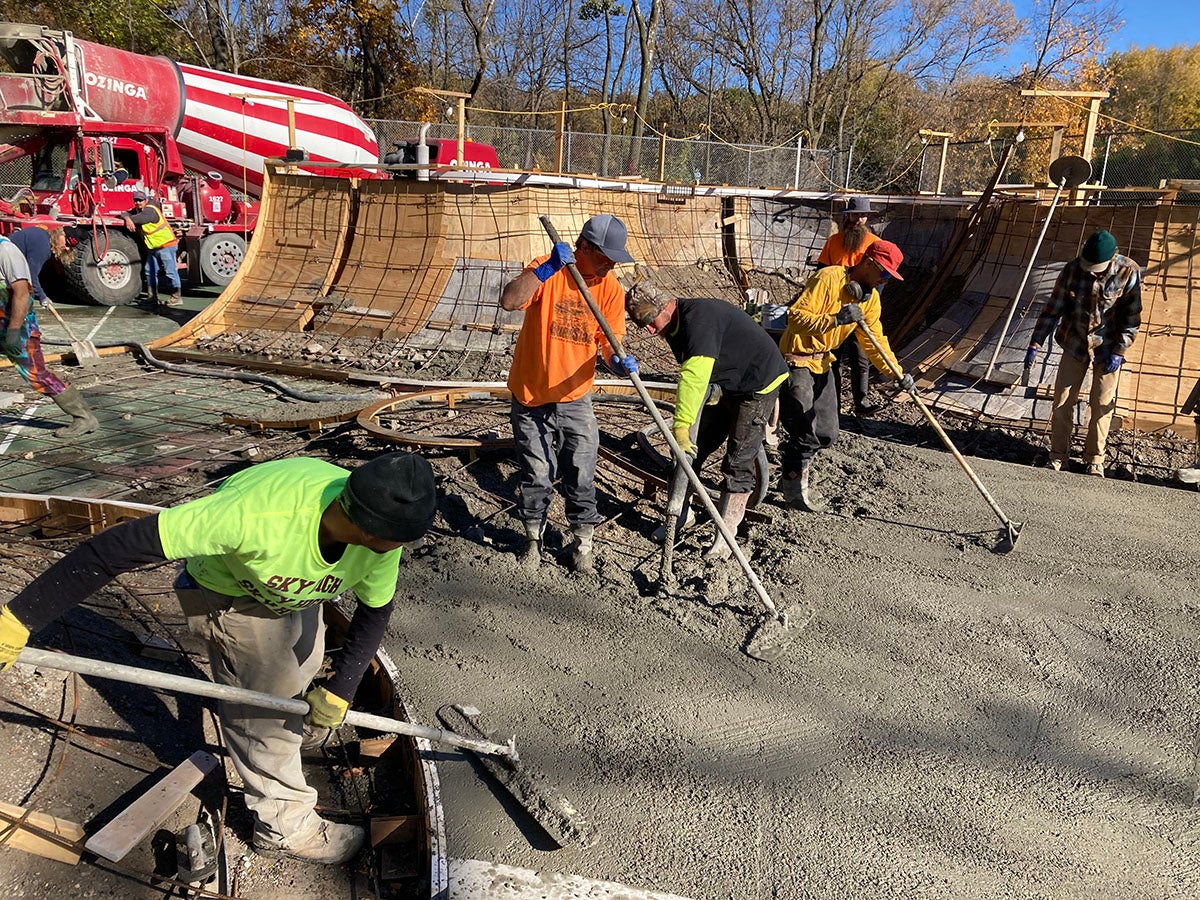
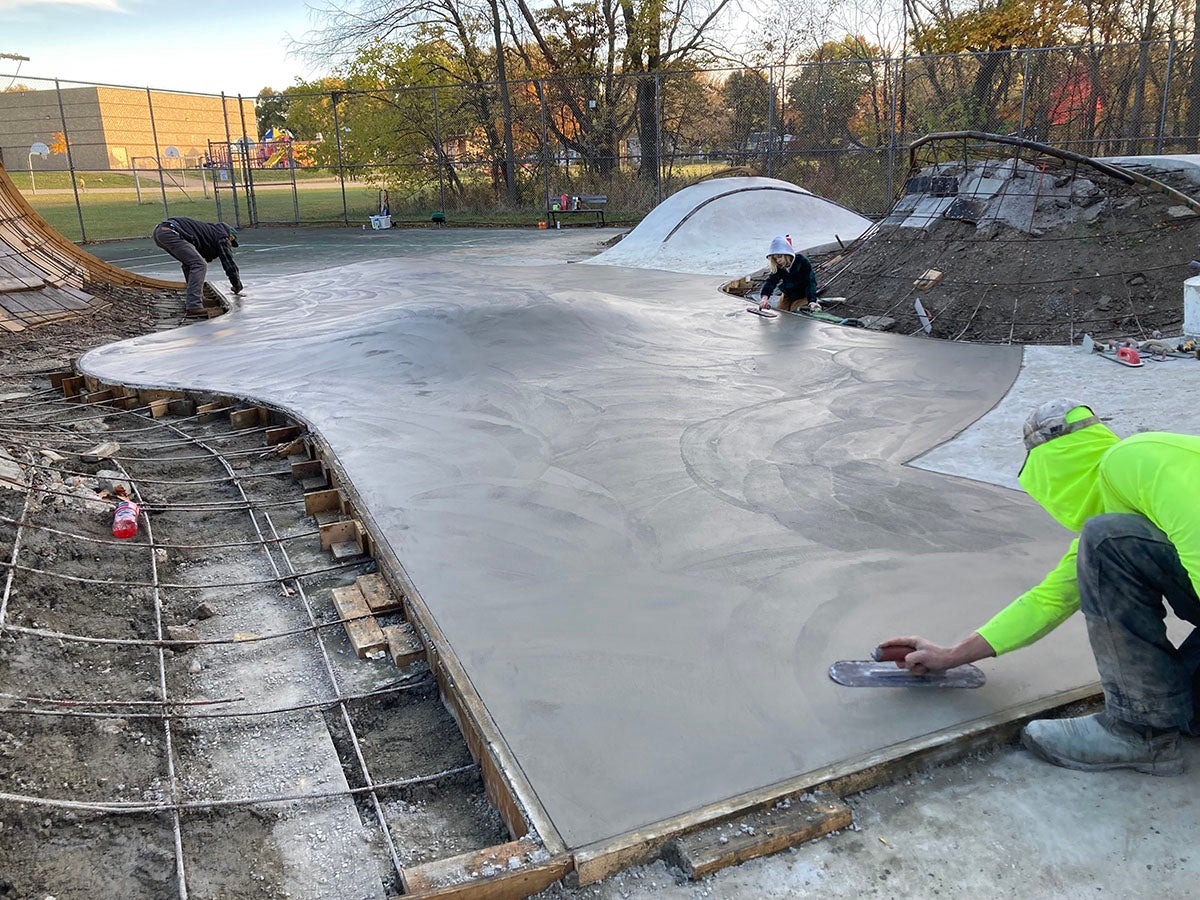
All in all, the Goodman Skatepark, which opened to the public in 2015, cost $1.2 million to build. Today, it is one of the most popular facilities in the Madison Parks system.
“The city was so happy with how the Goodman Skatepark worked out, they came back to our group and asked us to ‘come out of retirement’ and help them identify places around Madison that would be good fits for a network of skate parks,” Hasburgh said.
After a pause in the project during the COVID-19 pandemic, the Madison Skatepark Fund is back at it. They oversaw the volunteer construction of the Lily Pad, an all-wheel park in Warner Park, and are now working on a new DIY project on the east side.
“It’s really cool that the city is letting us do this,” Hasburgh said. “I don’t know of any other cities that allow people to build skate parks like we are.”
In Kemp’s view, Madison offers an example of skate parks done right. Same for the Turf and the Tosa Skatepark. And the proof is in the pudding: People show up, sometimes traveling long distances, to spend time at the park, whether it’s to ride or just to watch and enjoy the vibe.
Kemp is continuing his research, now with the help of his students at UW-Eau Claire. They are in the process of surveying 16 neighborhoods that have skate parks in Wisconsin and Minnesota to find out how community members — and the skaters themselves — feel about the park. They hope this will shed light on what makes a skate park successful and why cities should consider investing in building more.
“There’s a pretty clear under-investment in skate parks,” Kemp said, referring to a long history of cities spending more money on baseball fields and tennis courts. “That’s what we’re truly trying to illuminate and understand and inform public policy in a way, so that as more of these things get built, they get built right.”