In Wisconsin, public schools are primarily funded in two ways: property taxes and state money in the form of general school aid.
Educators say the budget compromise reached last week by Gov. Tony Evers and Republican leaders — and their decision not to increase funding for general school aid — will shift more of the burden to local taxpayers.
The new state budget gives $1.4 billion to K-12 education over the biennium.
News with a little more humanity
WPR’s “Wisconsin Today” newsletter keeps you connected to the state you love without feeling overwhelmed. No paywall. No agenda. No corporate filter.
That includes $500 million to special education by increasing the reimbursement rate from 32 percent to 42 percent in the first year and 45 percent in the second year.
But when the budget was signed on July 3, without an increase in general school aid, education leaders were surprised. They say while the increase in state support for special education will free up money for districts, it is not enough to solve budget problems caused by the strains of inflation.
“The state of Wisconsin currently has a $4.2 billion surplus, but no new general state aid has been provided to help schools meet rising costs,” said Madison Metropolitan School District Superintendent Joe Gothard.
MMSD is expecting to see a decrease of nearly $12 million in general aid compared to last year, which will result in a $12 million increase in property taxes, Gothard said.
Gothard said the special education reimbursement rate is a “step in the right direction,” but far short of the 90 percent that Dane County superintendents were advocating for and the 60 percent Evers proposed in his budget.
Even with the 42 percent increase, MMSD faces a $64 million shortfall in the 2026 school year with the federally-mandated services the school district must provide, Gothard said.
“I want to be clear, this is not a district leader complaining about the fact that we have to provide those services,” Gothard said. “It’s a moral imperative that we serve our students, all of our students, with the very best of our abilities. Last week, we learned that (federal) funds were going to be withheld from states. More than $1 million of federal funds is being withheld from Madison School and Community Recreation.”
Madison School and Community Recreation, or MSCR, runs afterschool programs at elementary schools across the Madison school district.
Green Bay planning a referendum following the budget release
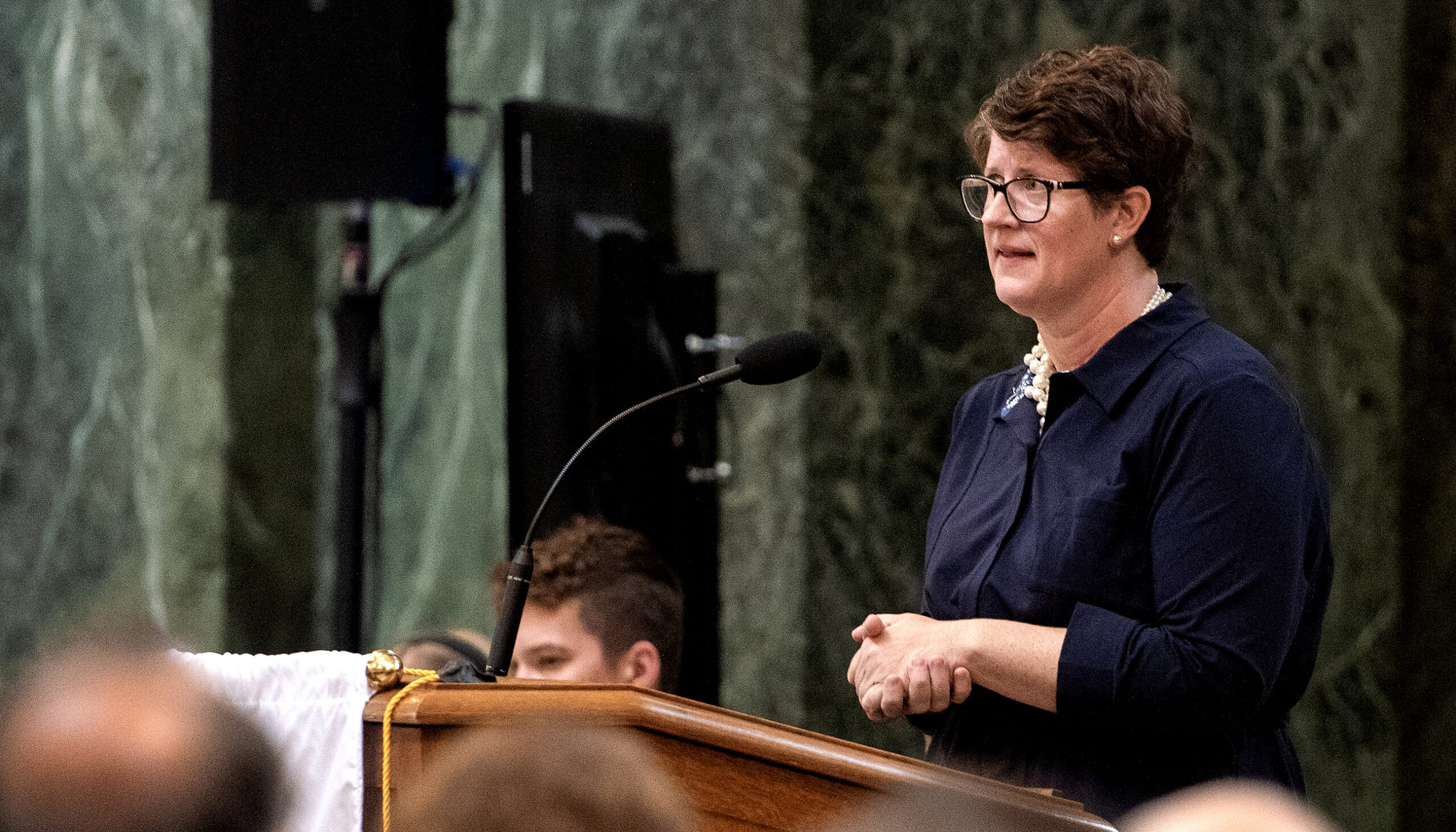
Green Bay Area Public School District Superintendent Vicki Bayer said she’s grateful the special education reimbursement rate was increased. But that alone won’t help Green Bay address its funding problems.
Green Bay is facing at least a $10 million deficit in 2026-2027 and will likely have to go to referendum, according to a statement released by the district this week.
Bayer said the Green Bay school district spends about $35 million a year on special education. The state reimbursement increase amounts to about $3 million a year.
And without additional general school aid dollars to address inflation, Bayer says the school district will have to increase its tax levy.
“I think our representatives and the governor all recognized that compromise is an important way to resolve our issues in the state, and this compromise was the best deal they could get,” Bayer said. “And again, we’re grateful that there was an increase. I just wish it did more to support public schools, especially at a time when we have a budget surplus in the state.”
This week, during a stop in Milwaukee to tout the budget, Evers defended the education spending plan while meeting with reporters.
Evers said the budget did just what school districts were asking for — increased the special education reimbursement rate.
“I know some people were thinking that maybe it should be distributed in a different way,” Evers told reporters. “But we’ve always, we’ve always heard from the school folks that we need our money for special education.”
Nearly 50 Democrats voted against the budget, with many of them saying not increasing the general school aid was unacceptable.
According to the Wisconsin Education Association Council, 66 percent of school districts are set to lose state aid next year. State aid for each district is calculated using a formula that includes factors like student enrollment, spending and the overall value of property in the district.
Gothard said he’s not sure if parents and community members know what is happening in the schools. He’s hoping to create a movement about public school funding so people will advocate for it and improve it.
“This isn’t about pointing fingers or blame,” Gothard said. “This is about what do we want, demand and expect for our public school districts, for our children, for our staff, for our families. It’s my hope that we can come together and continue in a voice of solidarity to improve funding for public schools.”
What else is and isn’t included in the education budget?
Act 20 literacy funds: After a Wisconsin Supreme Court ruling, Republicans released $50 million to support literacy initiatives. The budget also includes $37.1 million in the first year to provide grants to public and private schools to adopt literacy curriculum and pay for professional development. And $1.4 million for early literacy assessments.
Universal free school meals: Not included.
Student mental health: $300 million was proposed; $30 million was included.
Science teachers: $250,000 for professional development.
Vouchers: Private school payments remain with per-pupil payments increasing $174 in the first year and decrease by $25 in the second. In total, funding for vouchers increased $13.2 million in 2025-26 and $12.5 million in 2026-27.
High-cost special education: Reimbursement rate is increased from 26 percent to 50 percent in 2025-26 and 90 percent in 2026-27.
Library aids: $36 million.
Holocaust Education Resource Center: The center would receive an increase of $300,000 above base-level funding of $200,000.
Editor’s note: WPR’s Jenny Peek contributed to this report.

Wisconsin Public Radio, © Copyright 2026, Board of Regents of the University of Wisconsin System and Wisconsin Educational Communications Board.