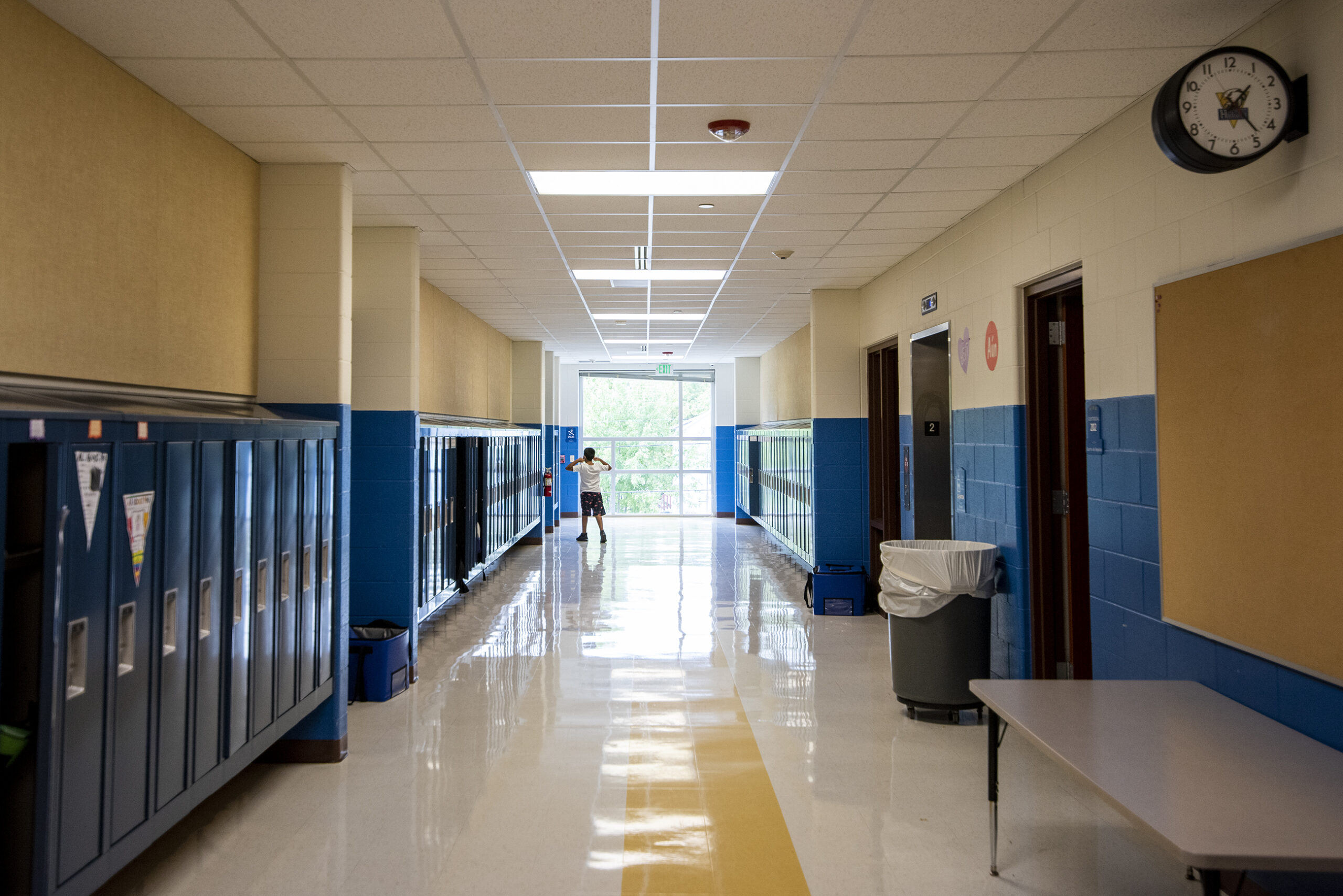
Twenty Wisconsin school districts located on tribal lands that collectively enroll more than 21,000 students have not received routine federal funding for operations, including teacher salaries.
The federal government issued about $23 million in Impact Aid payments to Wisconsin school districts in fiscal year 2025, according to the National Association of Federally Impacted Schools, or NAFIS.
The first round of payments for this fiscal year were expected in mid-October. But the combination of the government shutdown and cuts to the Department of Education has delayed the funding, said Anne O’Brien, NAFIS spokesperson.
News with a little more humanity
WPR’s “Wisconsin Today” newsletter keeps you connected to the state you love without feeling overwhelmed. No paywall. No agenda. No corporate filter.
“There is a lot of uncertainty right now for federally impacted school districts across the country,” O’Brien said. “These school districts rely on Impact Aid — in some cases for half of their budget. It can fund teacher salaries, special education, transportation, or really anything else that a school district needs.”
More than 1,000 school districts nationwide qualify for the Impact Aid program, established in 1950 by Congress to make up for districts’ lost local property tax revenue in places with non-taxable federal land. In Wisconsin, this is largely tribal land in the northern part of the state.
The districts include the Menominee Indian School District, the School District of Bayfield, Lac du Flambeau Public School and the Hayward Community School District.
The amount of Impact Aid a district receives is calculated by how much taxable property is available.
The School District of Ashland is expecting to receive about $750,000 in Impact Aid this year. That’s only about 2.5 percent of the district’s budget, but the money funds three to four positions and additional programs, said business manager Amanda Tutor.
“Every dollar that comes in daily, weekly, monthly is accounted for,” Tutor said. “So this money was earmarked for these positions and now paying for the positions need to come from the general funds so we can make payroll.”
Tutor said the district hasn’t heard anything about when the federal dollars might come — just that the money is delayed.
According to records from the Department of Public Instruction, the majority of students in the 20 school districts are economically disadvantaged. And most districts are majority Native American.
O’Brien said nationwide, the school districts that receive Impact Aid serve vulnerable student populations.
“Many school districts are dipping into their reserves to make payroll,” O’Brien said. “School districts are exploring borrowing money to tide them over, until Impact Aid funds come through. I mean, we’re hearing about spending freezes, hiring freezes, the elimination of after-school programs.”
Even when the shutdown ends, O’Brien said it will be difficult for school districts to receive the impact aid.
In October, NAFIS learned the majority of people working in the U.S. Department of Education Impact Aid Program Office were terminated as part of ongoing, wide-scale cuts to the department.

Wisconsin Public Radio, © Copyright 2026, Board of Regents of the University of Wisconsin System and Wisconsin Educational Communications Board.