Democratic leaders in Milwaukee say a proposed constitutional amendment would have dire consequences for programs aimed at diversity, equity and inclusion initiatives across the state.
The proposed amendment would prohibit “governmental entities in the state from discriminating against, or granting preferential treatment to, any individual or group on the basis of race, sex, color, ethnicity, or national origin in public employment, public education, public contracting, or public administration,” according to an analysis by the Legislative Reference Bureau.
The resolution passed in the Assembly last week with only Republican support. It’s part of an effort from legislative Republicans against DEI practices, which Assembly Speaker Robin Vos has described as “cancerous.”
News with a little more humanity
WPR’s “Wisconsin Today” newsletter keeps you connected to the state you love without feeling overwhelmed. No paywall. No agenda. No corporate filter.
A statement in support of the amendment from Dan Lennington, the managing vice president and deputy counsel for the Wisconsin Institute for Law & Liberty, said the amendment would “end discriminatory DEI programs throughout Wisconsin.”
The proposal’s author, State Rep. David Murphy, R- Hortonville, said the goal is to “end discrimination based on race and sex.”
“The programs would be based on need, and those need-based programs would then be available to minorities, but they would also be available to white people,” Murphy said.
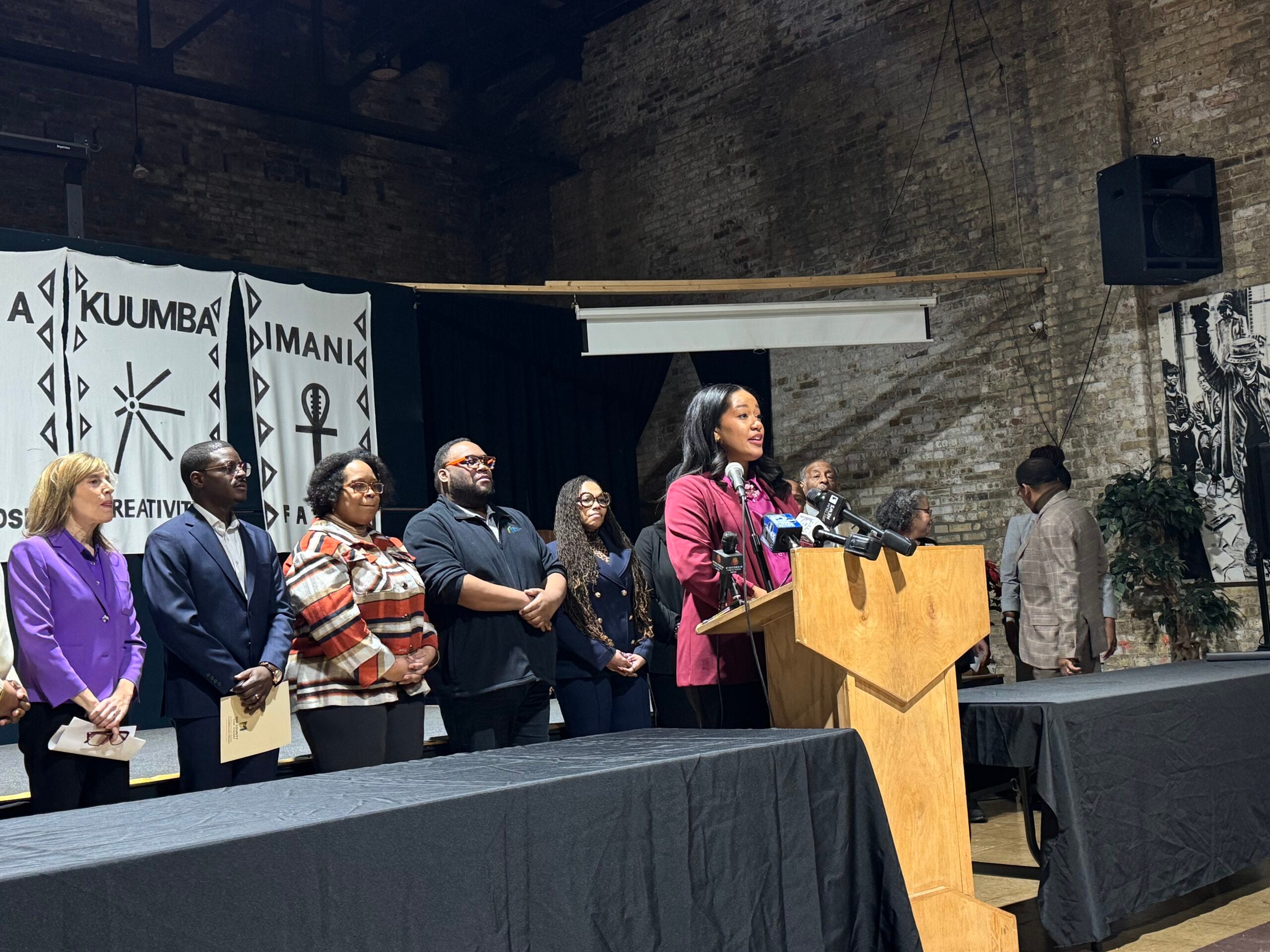
But during a press conference Friday morning, State Sen. Dora Drake, D-Milwaukee, called the amendment dangerous.
“This constitutional amendment is dangerous because it eliminates programs that prevent discrimination, uplift the merit of all Wisconsinites and limits our ability to govern based on the data that is presented to us,” Drake said.
Drake said one state program that would be impacted is the Supplier Diversity Program, which has been around since the 1980s and certifies minority-owned, women-owned and “Service-Disabled Veteran-Owned” businesses “to provide better opportunities for them.”
“If this resolution were to pass, that means the state could not give any funding to that program,” Drake said. “And if it were to do so, then that would face litigation.”
State Rep. Kalan Haywood, D-Milwaukee, called the amendment a “hate-filled proposal” at the press conference. He urged residents to vote against it if it shows up on their ballot.
Milwaukee County Executive David Crowley said “equity-based efforts” are an important part of the county’s work.
“It’s how we utilize the data to target resources, to target programs and investments most effectively, to provide the support where it’s most needed,” Crowley said.
Sumaiyah Clark, Milwaukee County’s chief equity officer, said county programs that focus on people with disabilities, veterans, women or people with mental health needs could be impacted by the amendment.
“It’s really our job to make sure that folks across Milwaukee County have what they need,” Clark said. “And so, this threatens that, but it’s written in a way where people wouldn’t understand that.”
Crowley said the county has a goal of helping older adults, veterans, people with disabilities and “individuals of all races, genders and religions.” He said the proposed amendment “threatens” those efforts.
“The amendment says you can’t discriminate based on race or sex,” Murphy said in response. “It doesn’t say that you can’t have a veterans program. It doesn’t say that you can’t have a program for elderly.”
The Senate could take the resolution up soon, according to Murphy.
In Wisconsin, constitutional amendments have to pass two consecutive sessions of the Legislature. This amendment was passed in the last session.
If the resolution passes, it could appear on ballots during the general election this November. Constitutional amendments are not subject to a governor’s veto.

Wisconsin Public Radio, © Copyright 2026, Board of Regents of the University of Wisconsin System and Wisconsin Educational Communications Board.