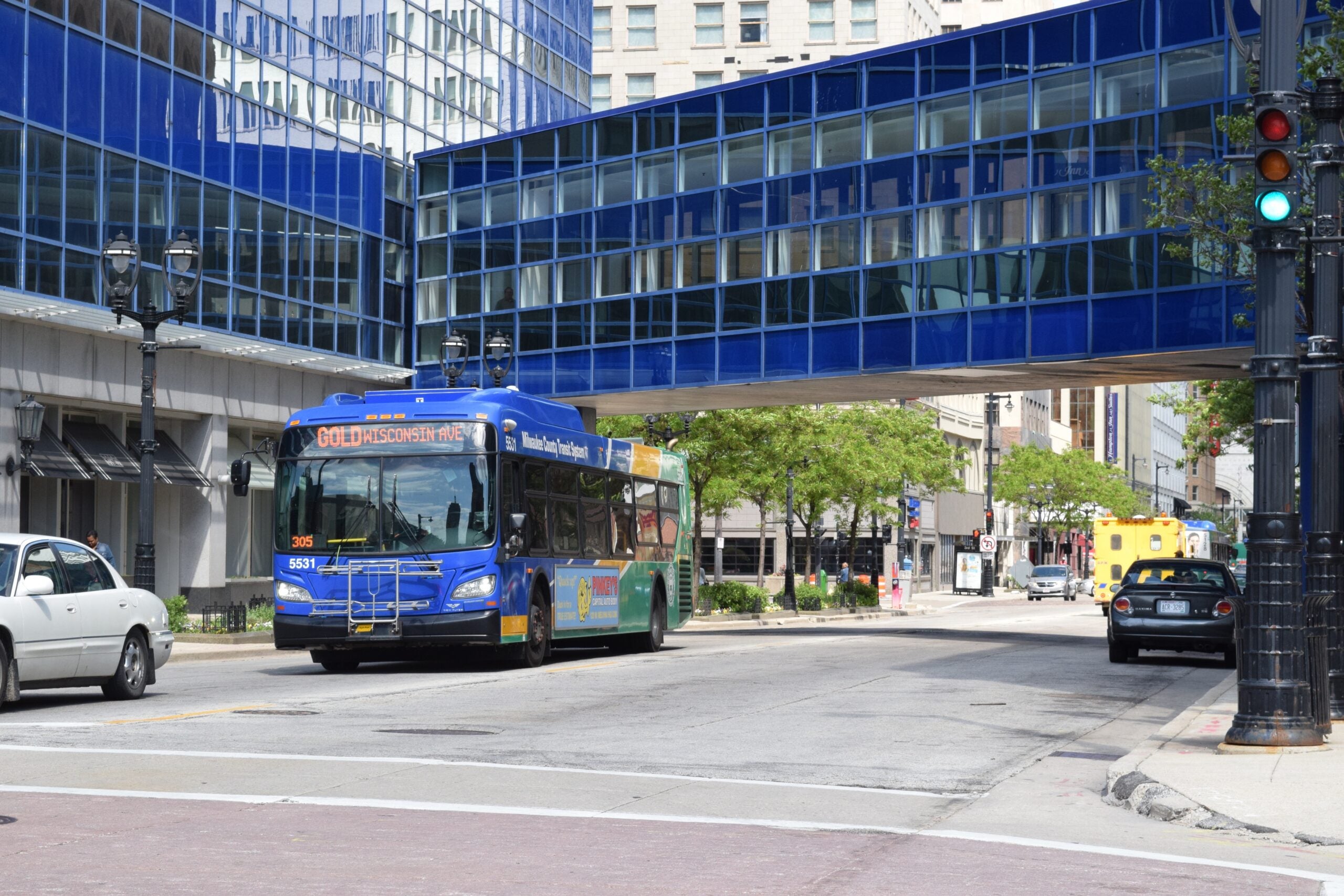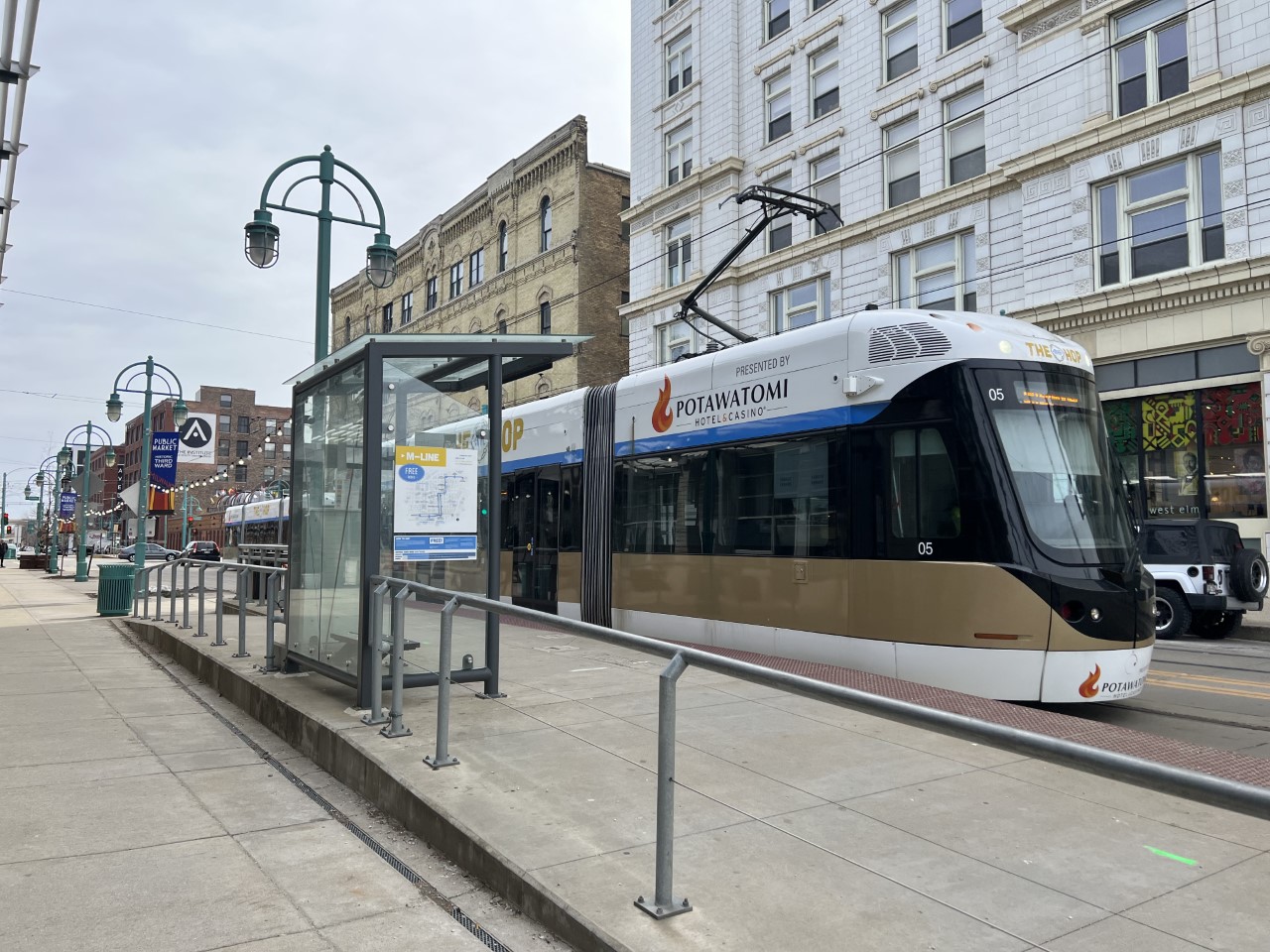
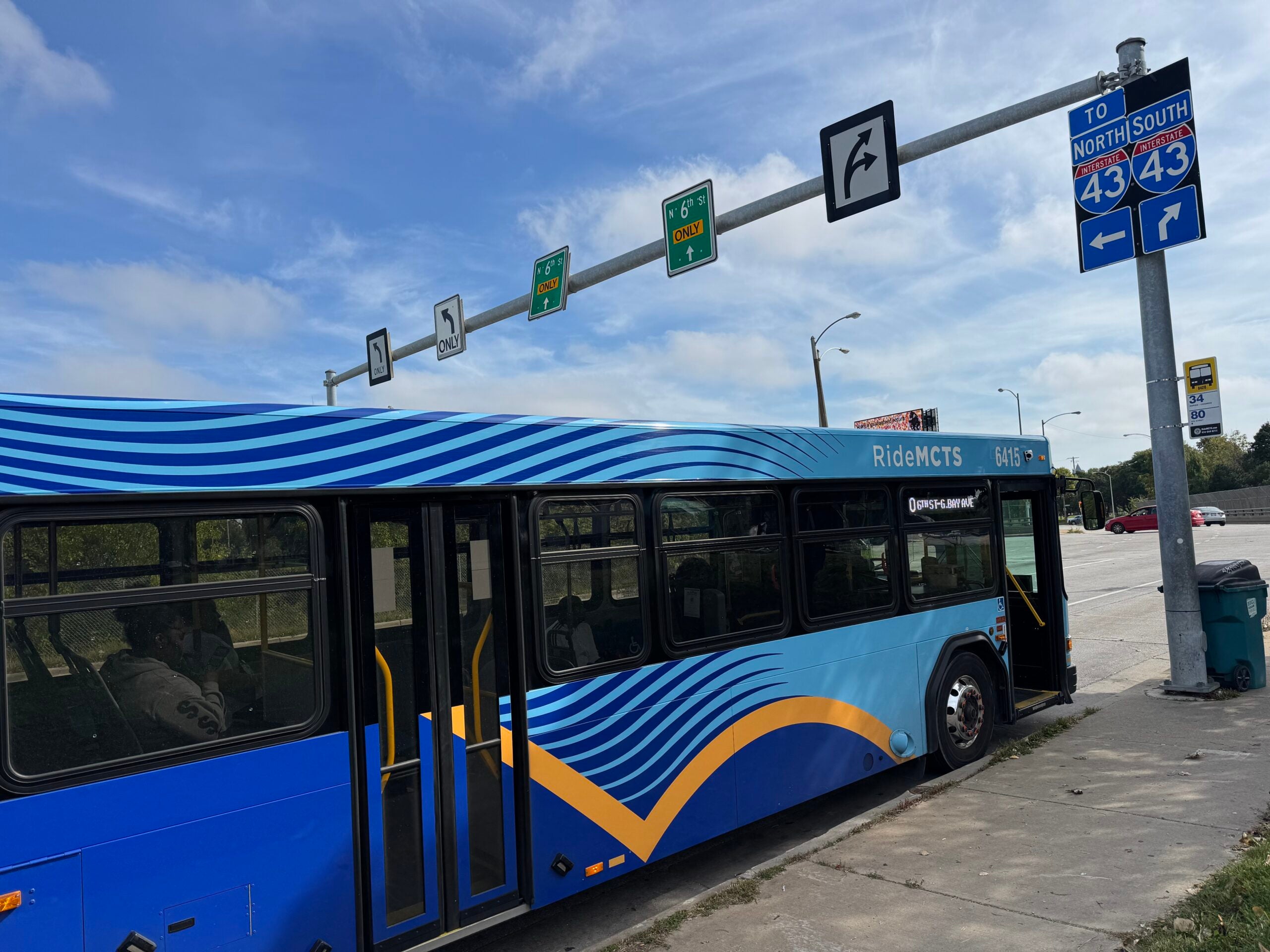
Bus riders in Milwaukee County could soon have fewer options to get to work or school while also paying more for rides.
The recommended changes are included in Milwaukee County Executive David Crowley’s proposed 2026 budget, which he presented to the county board Tuesday. The proposed budget calls for eliminating six bus routes, modifying five routes and increasing bus fares from $2 to $2.75 for adults.
During his budget address, Crowley said the Milwaukee County Transit System, or MCTS, is facing a $14 million budget deficit in 2026 due to federal pandemic relief aid running out.
News with a little more humanity
WPR’s “Wisconsin Today” newsletter keeps you connected to the state you love without feeling overwhelmed. No paywall. No agenda. No corporate filter.
“We are running out of options, and we are running out of time before MCTS’ fiscal cliff is too much to overcome,” Crowley said.
The Milwaukee County Transit System has relied on $192 million in federal American Rescue Plan Act (ARPA) funds since 2020. The transit system used $20 million in ARPA funds in 2025 and will use another $9 million in ARPA funds next year.
But that money will run out in 2026.
“This will be an even bigger issue in 2027 when there are no ARPA funds available,” Crowley said. “That’s why MCTS will pursue a rightsizing of the system to ensure it is fiscally sustainable, it meets the needs and (criteria) of our residents and can stay solvent for many years to come.”
A county recommended operating budget document says MCTS faces “particularly steep challenges.”
“With rising operating costs, declining farebox revenue, and the loss of federal relief funds by mid-2026, the system faces a $14 million shortfall,” the document says.
The Wisconsin Policy Forum has been warning of a looming “fiscal cliff” for MCTS for years. Rob Henken, immediate past president of Wisconsin Policy Forum, said the system faces another budget deficit in 2027 without the ARPA funds available.
“So then the question becomes: What do policymakers want to do next year?” Henken said.
Bus fare increase could impact low-income residents
MCTS has more than 40 bus routes across the county. Last year, ridership was at 25,300,649 — a 13 percent increase over 2023 numbers, according to the MCTS annual report.
The six bus routes that would be eliminated make up about 4 percent of the system’s ridership, according to a recommended budget summary document. Some of the routes that would be eliminated are within a 5 to 10 minute walk to another bus route option.
Anna Schryver, communications manager for the Milwaukee County Transit System, said route modifications for the five bus routes mean the length of those routes would be shortened.
“So those are some serious adjustments to the transit system that are going to have an impact on bus riders and perhaps on local employers,” Henken said.
The fare increase would be the first fare increase for MCTS riders since 2007. Even so, Henken said the proposed increase could be tough on many riders.
“A vast majority of the riders on the Milwaukee County Transit System are people with low or limited incomes, and so every little bit hurts,” Henken said.

Milwaukee County Supervisor Shawn Rolland said one of the bus routes that would be eliminated under the proposed budget drops off riders next to the Milwaukee County Marcia P. Coggs Health and Human Services Center and the Milwaukee County Mental Health Emergency Center.
“So we made huge investments, tens of millions of dollars in these facilities, and I’m worried that we’re going to make them inaccessible for people who have the greatest needs in our community,” Rolland said.
Schryver said the agency takes a “data-informed approach, evaluating ridership levels and equity concerns, while staying within compliance of federal requirements” before making service changes.
“When making any changes to service we look to minimize impact to the public,” Schryver wrote in an email. “To do this, we target routes with lower productivity and focus on times and days with lower ridership. We also determine if those routes are already well-served by nearby, adjacent routes, and consider which areas within the system have greater access to a car.”
State help?
The Milwaukee County Transit System gets funding from the State Urban Mass Transit Operating Assistance program. That program provides money to local transit agencies in Wisconsin “in order to alleviate local tax burdens,” according to the program website.
However, a county budget summary document says those funds have “remained flat.” In 2010, Milwaukee County received $66.5 million from the program. In 2026, the county anticipates receiving $66.7 million.
“So we must work together to advocate for transportation funding from our state and federal partners,” Crowley said during his address. “Our ability to continue providing reliable public transit services depends on it.”
Rolland also said the county should continue to advocate for more help from the state and federal government “to help us fill these budget gaps and to offer the robust bus system that we hope to be able to provide.”
Wisconsin Rep. Bob Donovan, R-Greenfield, said he wouldn’t support increasing state aid to MCTS before they figure out a plan to stop people who don’t pay their bus fares. Milwaukee County leaders have discussed plans to stop fare evasion.
MCTS officials recently estimated that 33 percent of riders don’t pay their bus fares, according to an Urban Milwaukee report.
“That is a huge, huge concern to me,” Donovan said.

Wisconsin Public Radio, © Copyright 2026, Board of Regents of the University of Wisconsin System and Wisconsin Educational Communications Board.