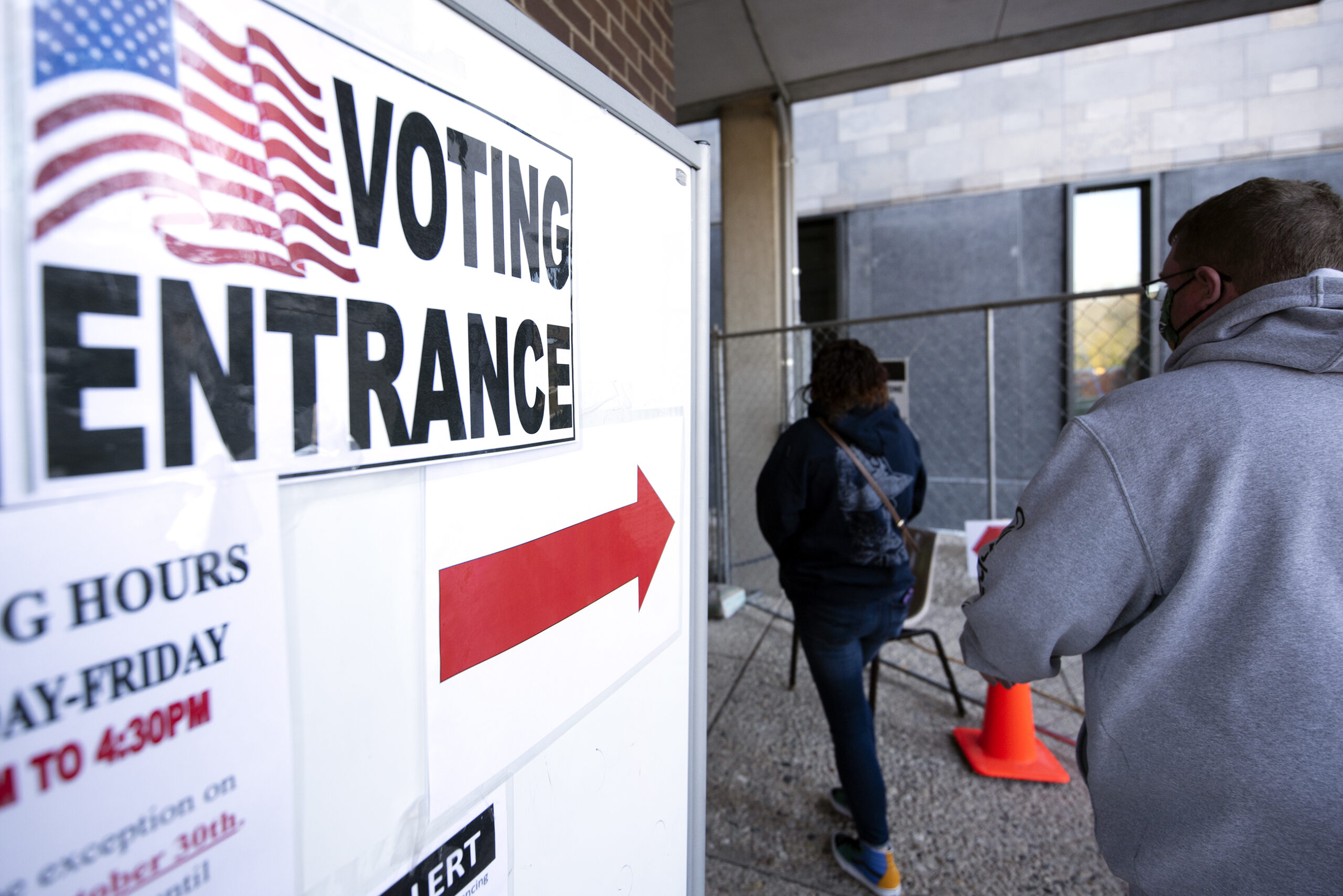
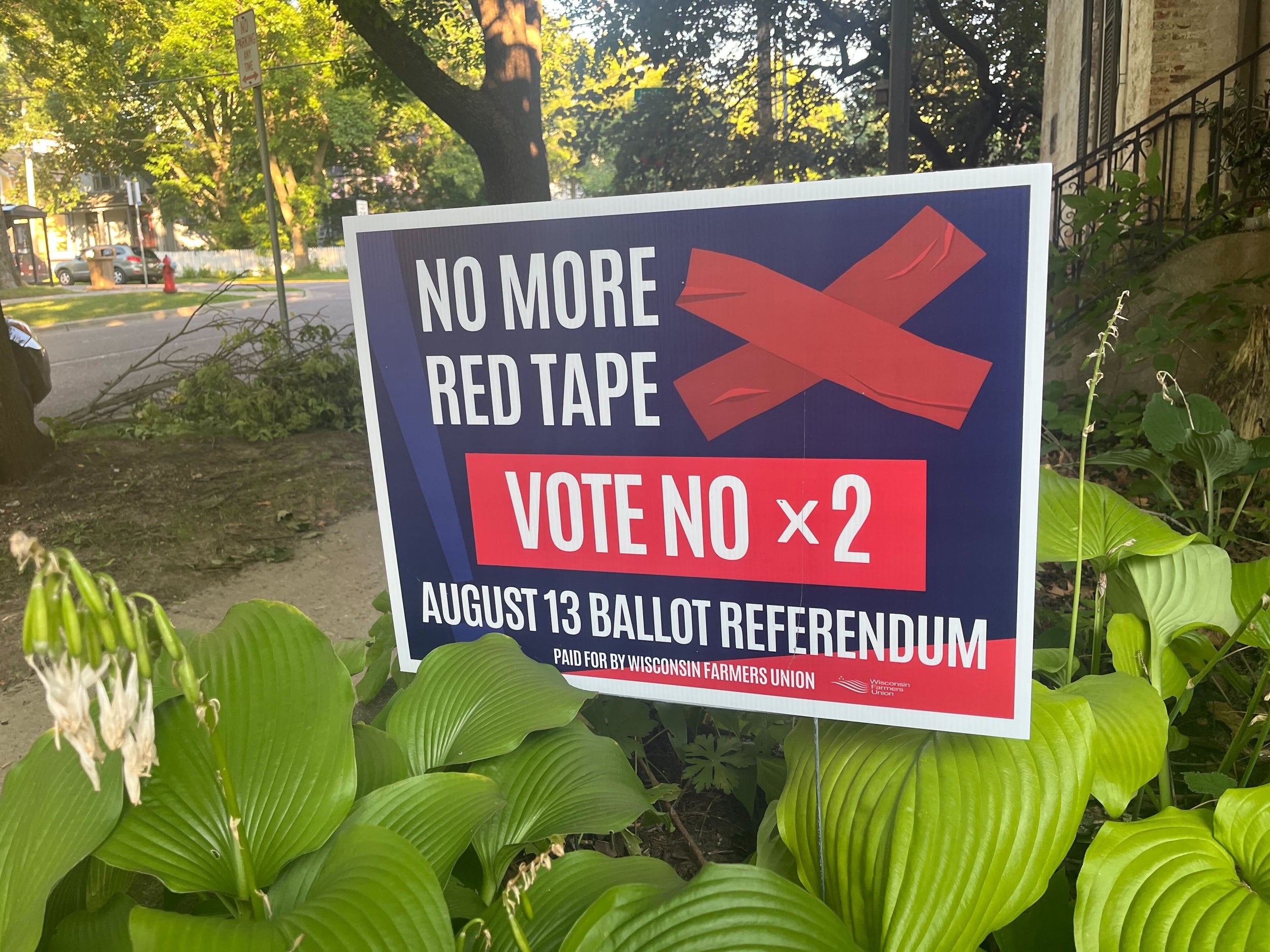
When Wisconsin voters heads to the polls, there are sometimes questions alongside candidates’ names. And those questions can have big consequences, like amending the state constitution.
Now, voters could get more information about some of those referendum questions in advance of voting, under a proposal being considered at the state Capitol.
As written, the bill would require the nonpartisan Legislative Reference Bureau — which drafts bills for the Legislature — to provide a plain-language summary of any statewide referendum. It would also need to clearly explain what a “yes” or “no” vote would do.
News with a little more humanity
WPR’s “Wisconsin Today” newsletter keeps you connected to the state you love without feeling overwhelmed. No paywall. No agenda. No corporate filter.
Because Wisconsin does not have a process for voters to put policy-changing questions on the ballot, sometimes called citizen ballot initiatives, the proposal would primarily affect constitutional amendments. Those go to voters for approval after passing two consecutive sessions of the Legislature. In recent years, Republicans who run the Legislature have used this tool more frequently as they seek to bypass the veto pen of Democratic Gov. Tony Evers.
The bill is authored by Republicans and backed by statewide voting rights groups, including All Voting Is Local Action, League of Women Voters of Wisconsin and the Wisconsin Democracy Campaign.
At a November committee hearing, lead author Sen. Cory Tomczyk, R-Mosinee, said he wrote the bill in response to confusion from friends and constituents, “even people with college degrees and professional titles.”
“The legalese, if you will, that is used on the ballots is, of course, necessary and should be presented,” he said. “But for regular, everyday residents of Wisconsin, it might as well be in a different language.”
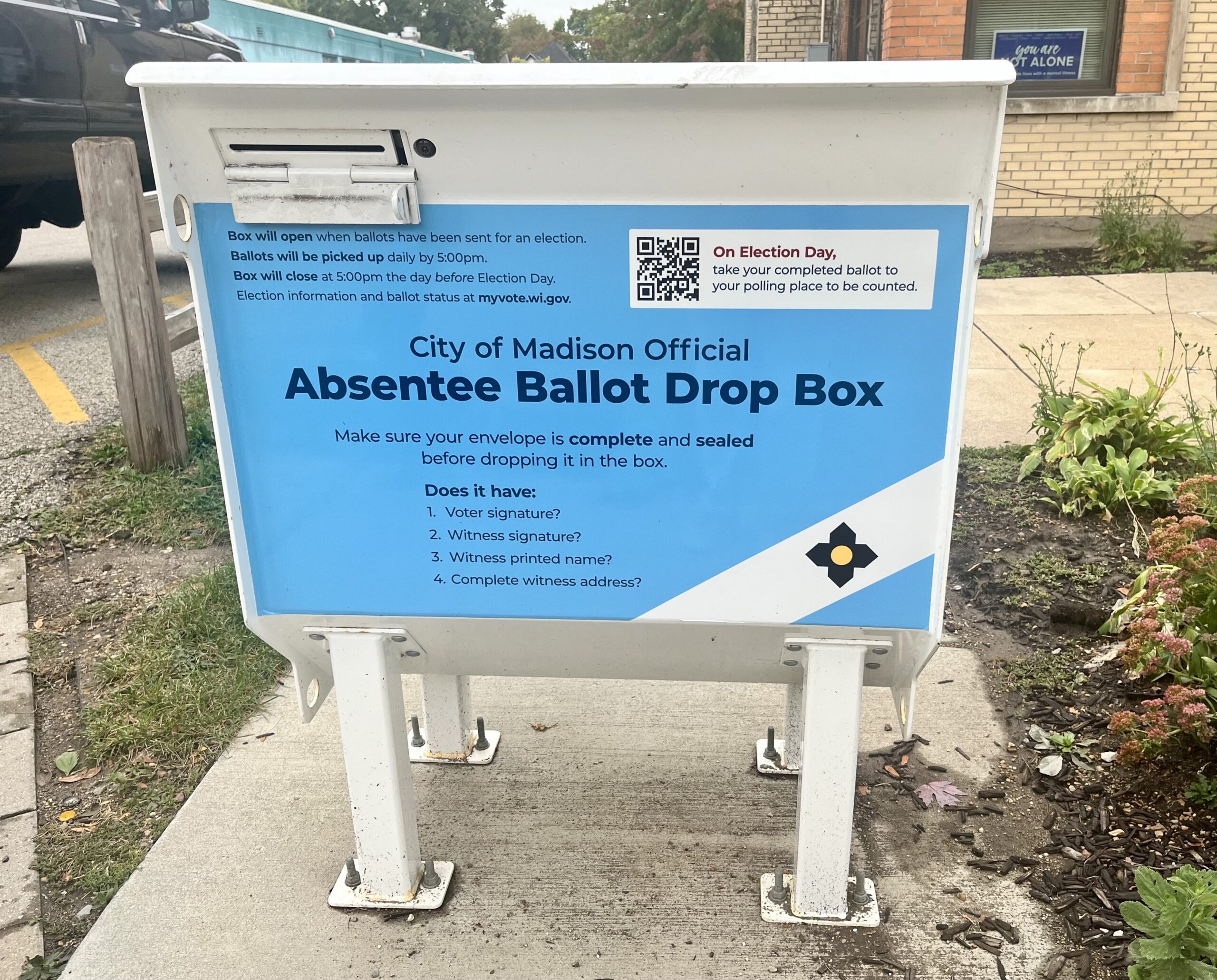
The explanations created under the bill, alongside the full text of the amendment and the date of the vote, would need to be posted at polling places and online. They’d also be included alongside absentee ballots when they’re mailed out.
The ACLU of Wisconsin has not formally registered in support, but on its website describes it as a “step in the right direction for ensuring that voters understand what a statewide referendum question means before they vote on critical issues.”
But, the ACLU adds, it supports including a definition of “plain language” to clarify exactly what the the Legislative Reference Bureau is being asked to do.
According to a fiscal estimate from the Wisconsin Elections Commission, the bill is not expected to have a significant cost associated with it. An attorney for the Legislature said the Reference Bureau would draft the explainers at the same time as they draft the resolution language itself.
Wisconsin already has some requirements about wording ballot questions. Currently, the attorney general, who is elected under a partisan label, prepares an explanatory statement of each question. This bill would do away with that responsibility. Current law also states that referendums cannot be written so that a “no” vote approves a proposition or a “yes” vote rejects a proposition.
The Wisconsin Supreme Court has previously ruled that ballot questions “must reasonably, intelligently, and fairly comprise or have reference to every essential of the amendment.”

Wisconsin Public Radio, © Copyright 2026, Board of Regents of the University of Wisconsin System and Wisconsin Educational Communications Board.