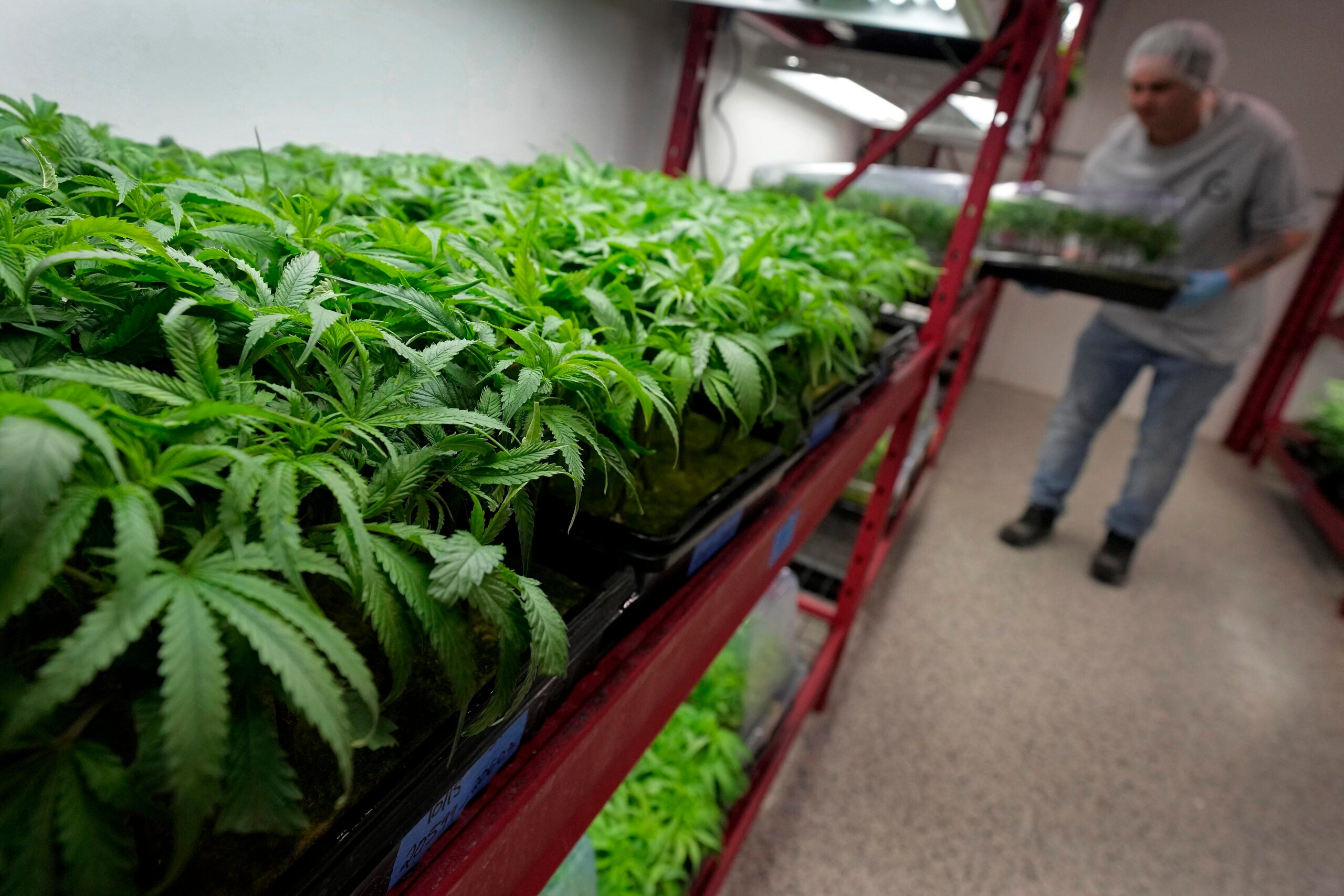
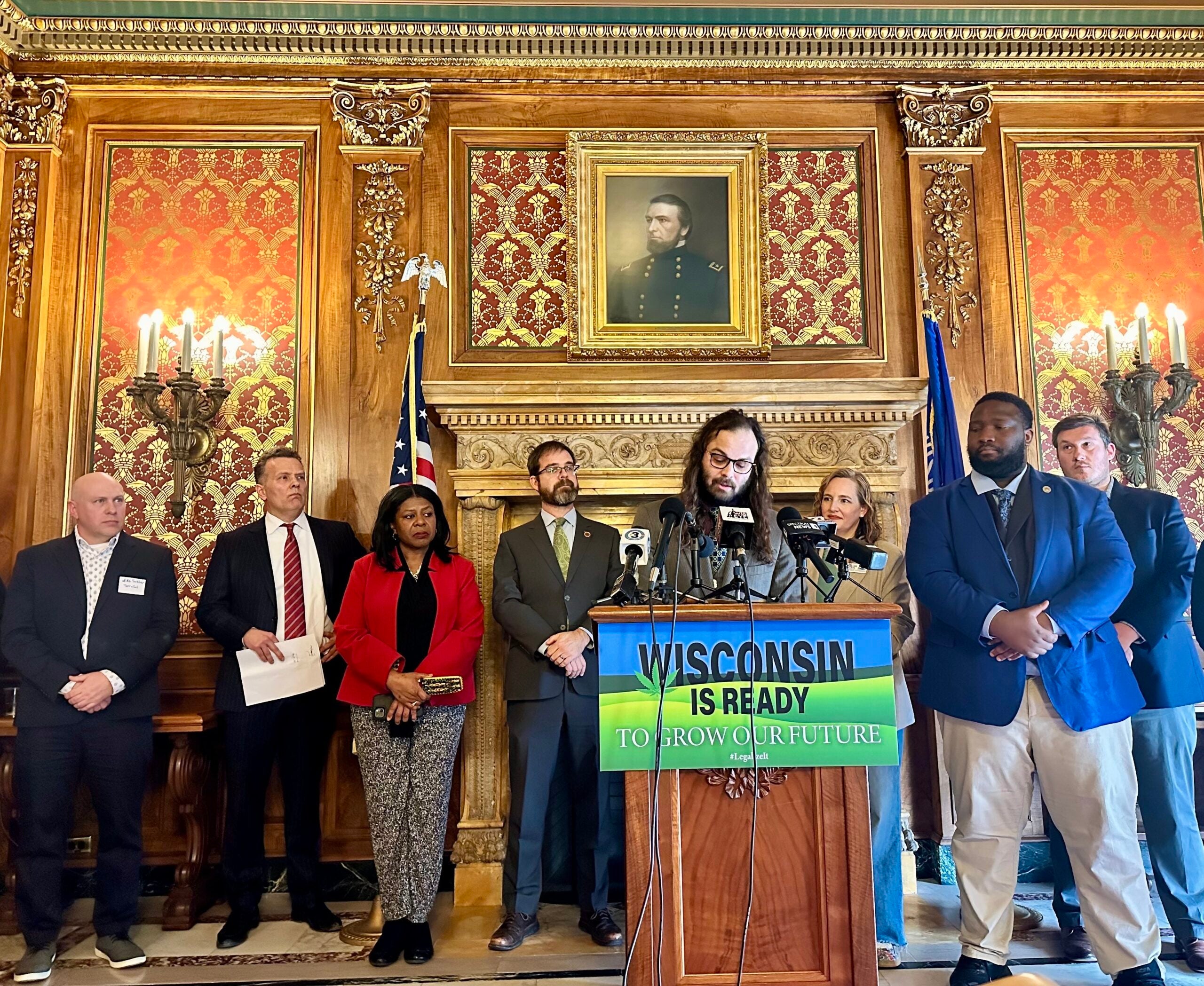
In a bid to capitalize on recent bipartisan pushes to regulate the state’s hemp industry, Wisconsin Democrats have introduced a bill to fully legalize marijuana.
But the effort to create legal recreational and medical programs is all but sure to fail. Republicans, who control both chambers of the Legislature, have not taken up previous Democratic attempts at legalization and have nixed repeated attempts by Gov. Tony Evers to include legalization in his state budgets. GOP leadership has said it will only consider limited medical programs.
Still, Democrats who introduced their latest proposal Monday said that, in the face of a changing federal approach to hemp regulation, full legalization would be both an economic boon for the state, and a way to limit incarceration.
News with a little more humanity
WPR’s “Wisconsin Today” newsletter keeps you connected to the state you love without feeling overwhelmed. No paywall. No agenda. No corporate filter.
“Arresting someone for smoking weed does not make our neighborhoods safer,” said Rep. Darrin Madison, D-Milwaukee. “It limits access to jobs, housing, education and stability for life and … those arrests fall overwhelmingly on Black and brown communities.”
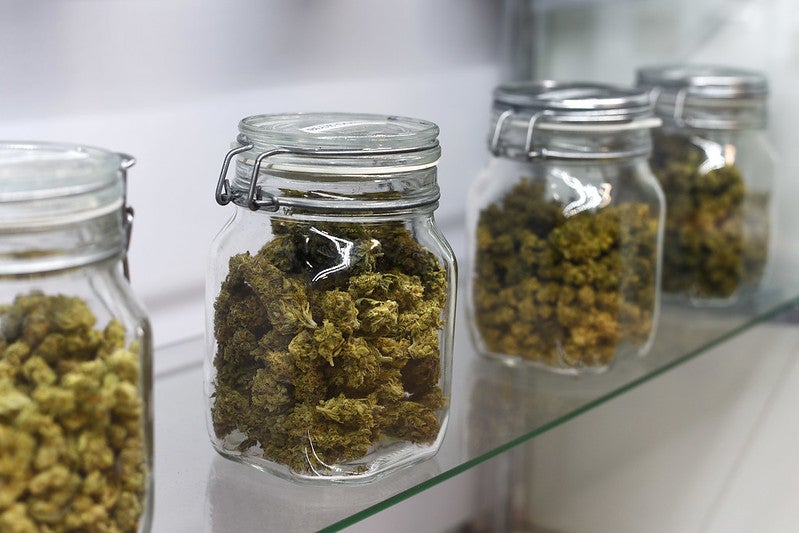
The proposal would create a licensing system for growers, processors and retailers, and regulate the testing and distribution of marijuana products.
And it would create a process for reviewing the sentences of people locked up on drug charges, with a path to vacating current convictions, or expunging a person’s record of past convictions.
At a press conference announcing the legislation, Mike Sickler, who owns a Menomonee Falls-based cannabis retailer TerraSol, said that legalization would let businesses like his continue under a clear legal framework.
“We already have the infrastructure. We already have the best practices in place. We already have the workforce. We already have the market. What does not exist is a clear state law that allows us to continue operating responsibly,” Sickler said. “Legal cannabis … allows businesses like mine to transition into a regulated system instead of shutting down or leaving the state. It protects jobs, it supports farmers, it keeps revenue here, instead of it going to Illinois and to Michigan.”
According to the National Conference of State Legislatures, 40 states have legal medicinal marijuana programs, and 24 allow some form of recreational use. Wisconsin advocates point to public polling in the state that shows that most voters support legalizing cannabis, including just under half of Republicans and a large majority of Democrats and independents.
But Assembly Speaker Robin Vos, R-Rochester, has said he won’t back recreational marijuana, and GOP leaders across the Assembly and Senate have struggled to create a unified plan for establishing a medical program.
Instead, recent GOP efforts have been focused on regulating the existing hemp industry. Those businesses flourished in the wake of a federal loophole created by the 2018 Farm Bill, which was unexpectedly closed late last year as part of the deal to end the 2025 government shutdown. That move sent Wisconsin hemp farmers and producers of low-dose THC products derived from hemp scrambling to understand the new landscape.
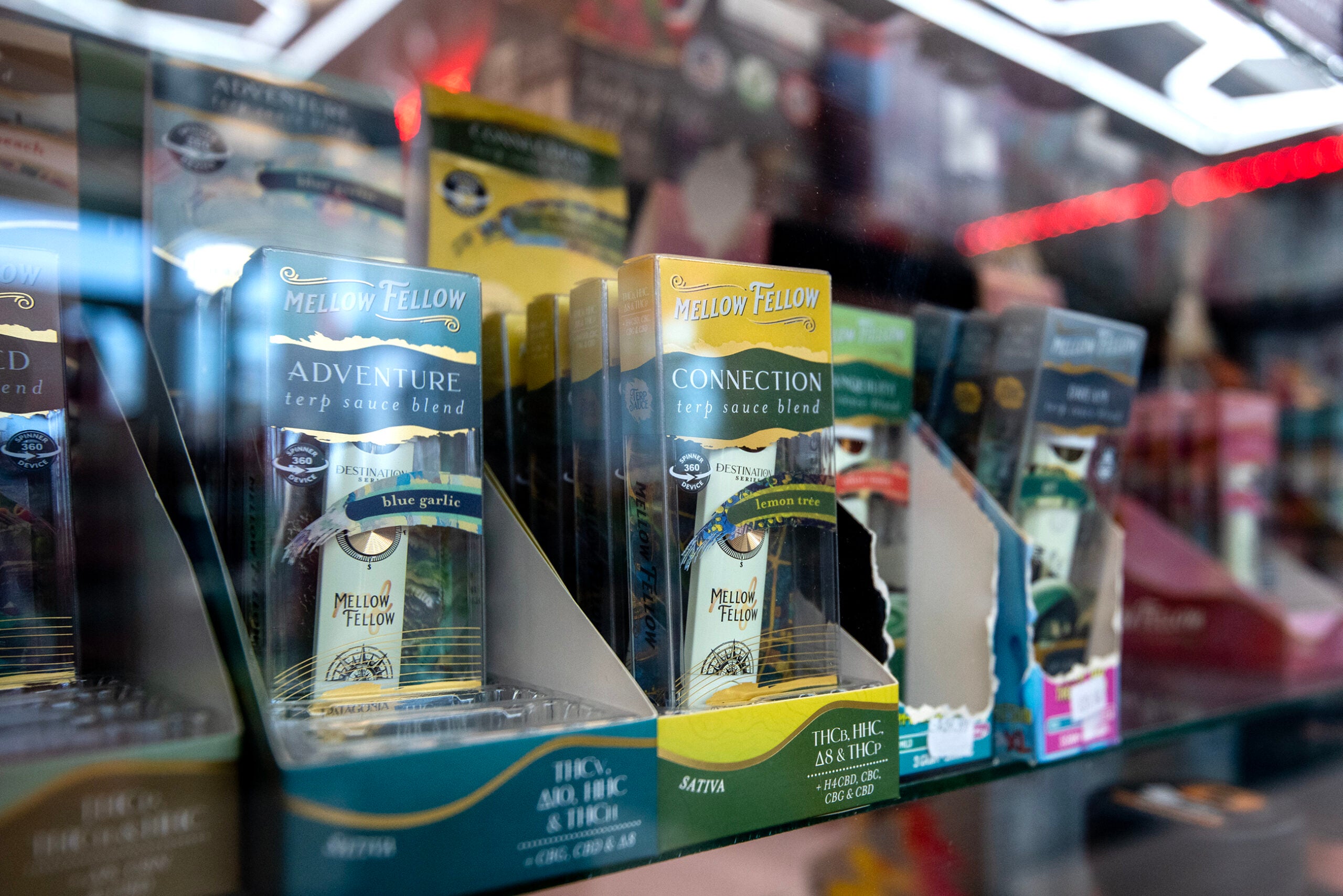
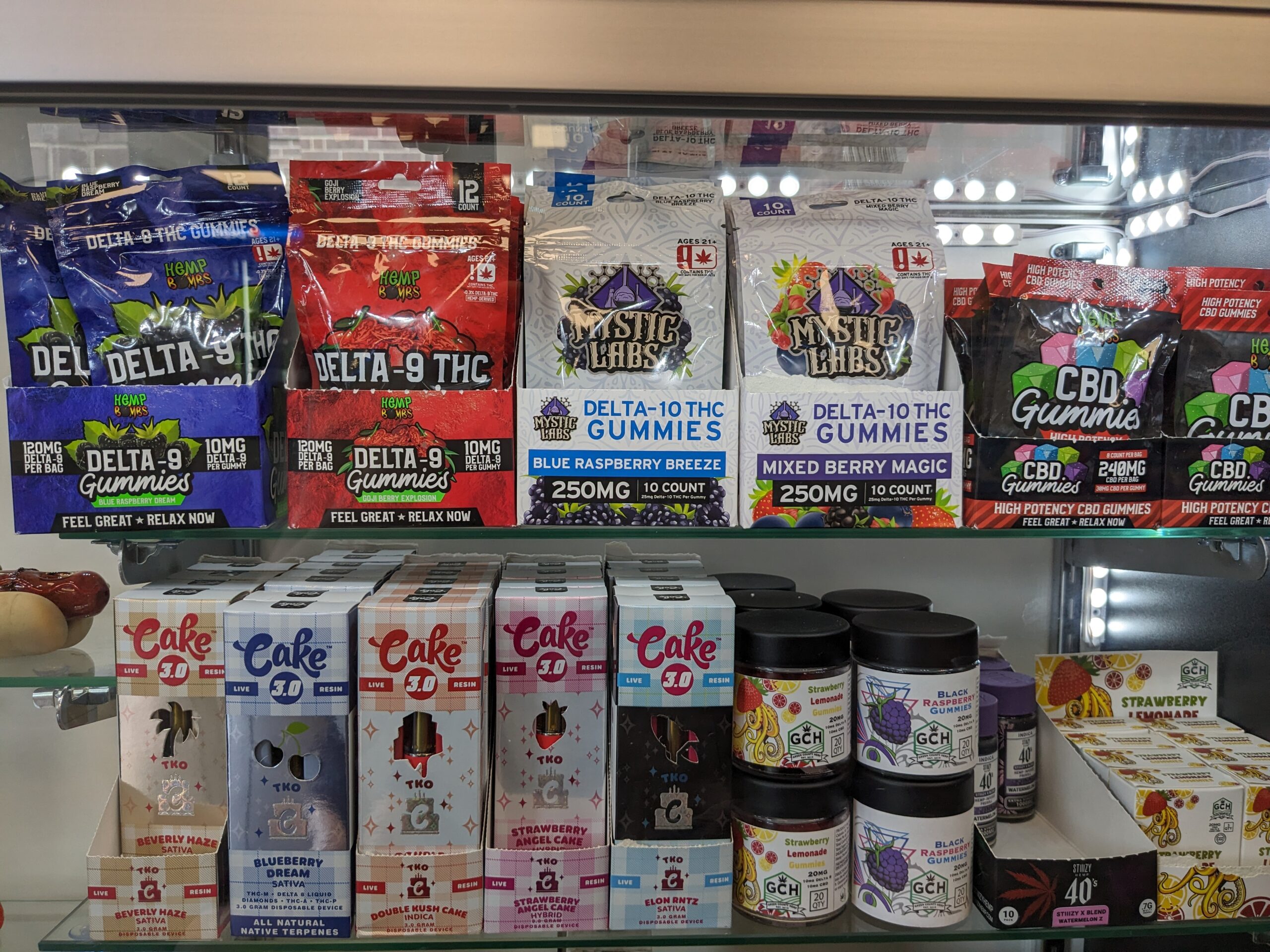
Bipartisan bills have since been introduced to adapt Wisconsin’s legal hemp framework. One would introduce a three-tier regulatory system similar to how alcohol is regulated. Another would essentially add guardrails to the status quo, adding safety standards to the existing market of vapes, gummies, edibles and beverages that have proliferated across Wisconsin.

Wisconsin Public Radio, © Copyright 2026, Board of Regents of the University of Wisconsin System and Wisconsin Educational Communications Board.