A grassroots effort in Door County built a network of composting sites across the peninsula, creating a system that gives residents places to drop off their food scraps within just a few miles of their homes.
Jeff Lutsey, the executive director of Climate Change Coalition of Door County, established one of the first sites on his family farm a few years back. Before leading the group he was an environmental advocate volunteering for an effort to make composting more accessible. He said creating a community composting system for Door County came with unique challenges.
“We’re long and spread out, and we’re far away from any landfill,” Lutsey said. “So we kind of need a different system than anybody else has.”
News with a little more humanity
WPR’s “Wisconsin Today” newsletter keeps you connected to the state you love without feeling overwhelmed. No paywall. No agenda. No corporate filter.
Because of the county’s geography, it’s not a good candidate for traditional composting pick-up programs, which often require residents and restaurants to pay a fee.
But because the Door County community is small enough, and because many residents are nature-lovers who are motivated to compost themselves, it was a good candidate for a community compositing drop-off program, Lutsey said.

Jess Reinke helped the village of Egg Harbor run its own composting pickup program. It’s one of the few municipalities in the state that has one. Reinke then worked on the founding of the county-wide program.
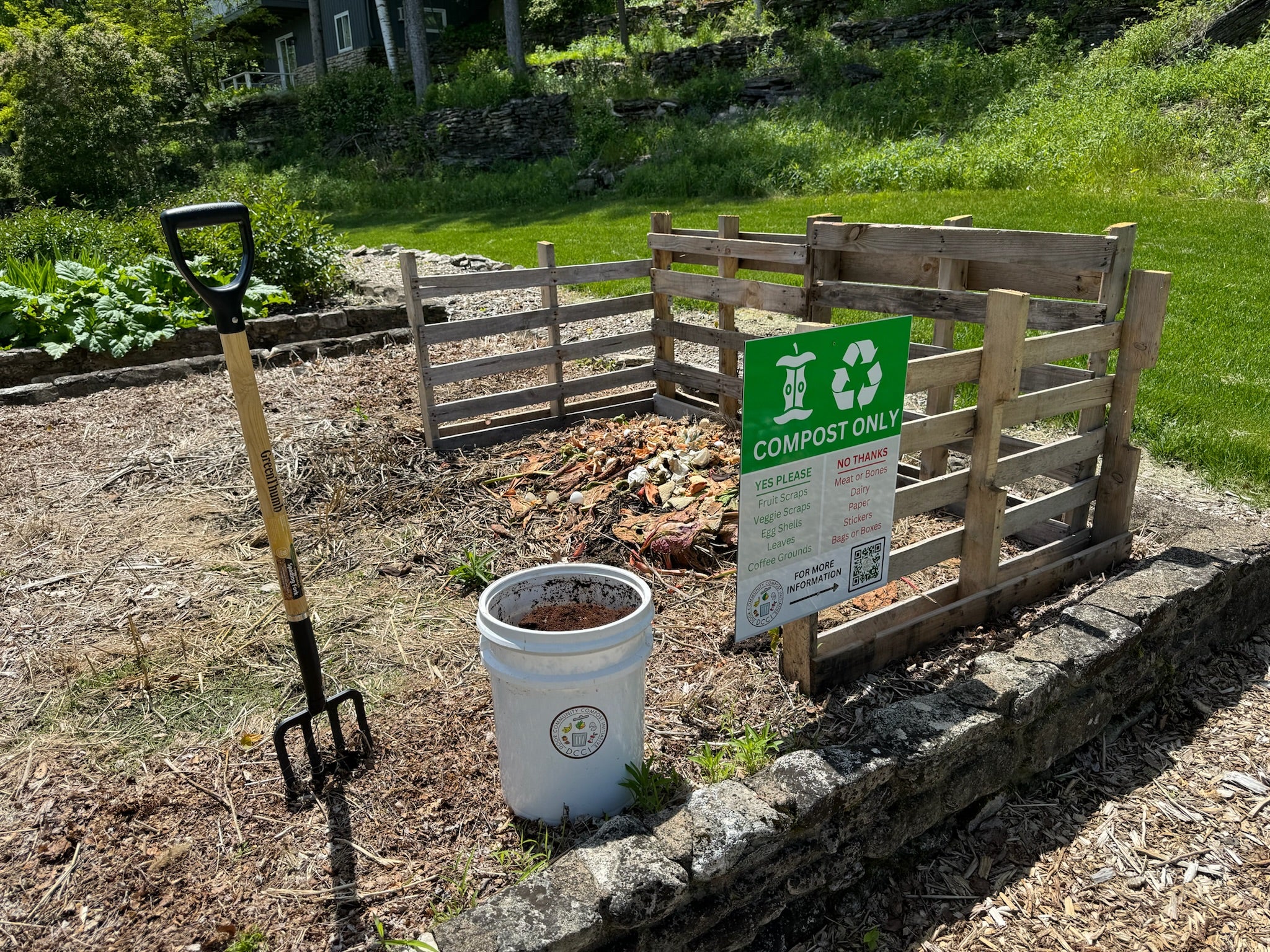
But rather than pick up compost, Door Community Compost Initiative’s network would create an easy way for people to drop off compost at sites across the peninsula.
“Having a really kind of transient community with second homes, folks don’t want to commit to having their own compost site,” Reinke said. “So we developed a bucket system in which folks can collect food scraps and dump them at our different community compost sites.”
The network launched in 2022 with seven sites, and has more than doubled since.
“(We) called around and tried to get one compost drop site in each community,” Reinke said.
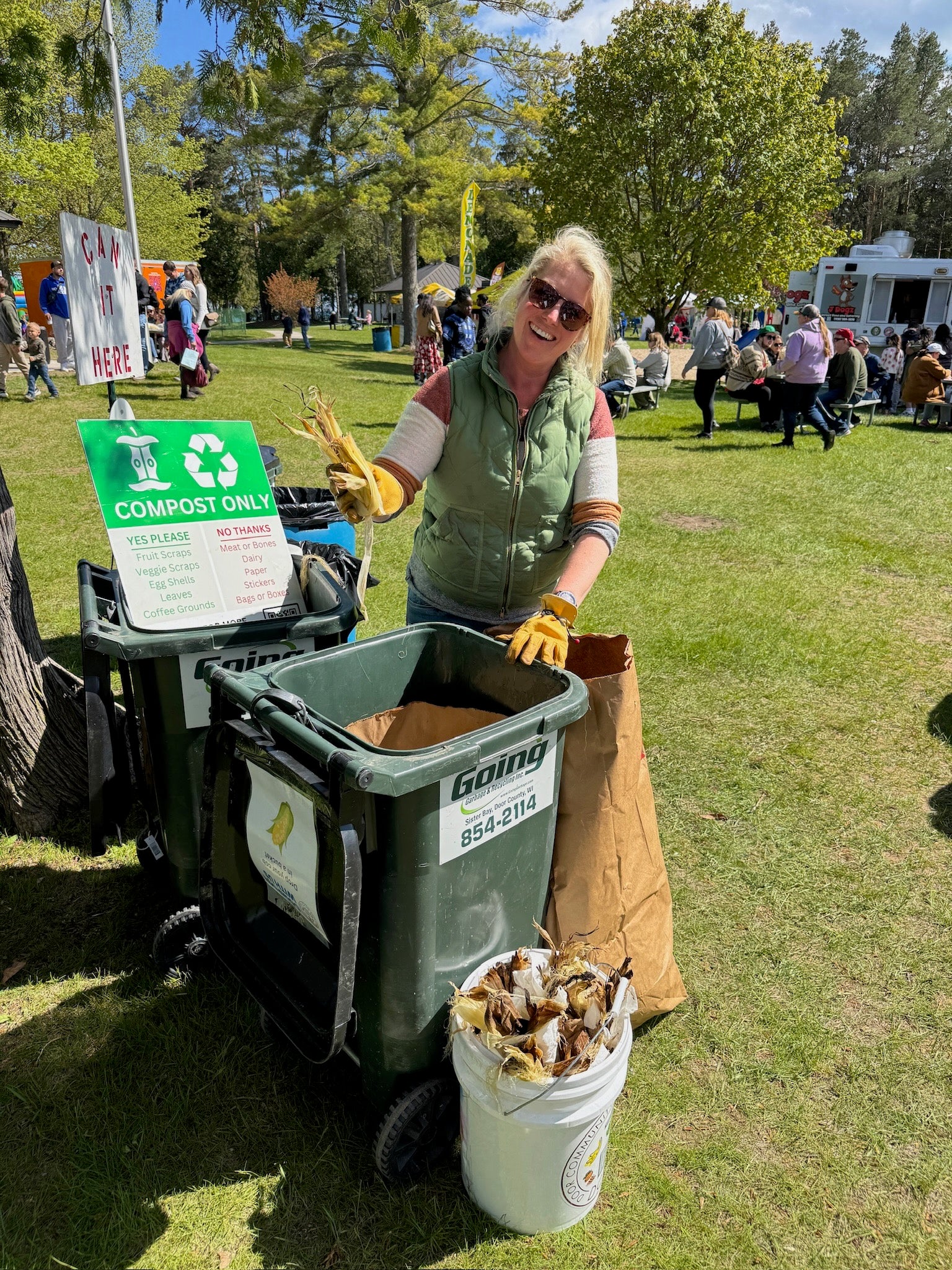
The sites include people’s backyards, nonprofits and small farms. Reinke said once she recruited a few people, others started approaching her at farmers markets to offer their property.
“I think it definitely helped to know your neighbor,” she said. “For people to feel comfortable to open their properties up.”
She estimates the network has over 400 buckets in circulation for people to store and transport their compost to sites

Next, Reinke and Lutsey said, the goal is to get more restaurants to join the movement, or build out a widespread pickup system.
“The hard part is going to the next level, and that’s convincing either the public or the private company to go pick up our stuff,” Lutsey said. “There’s so many people that would pay $15 bucks a month … for another bin and a pickup every two weeks. But it seems like the economics don’t work out yet for that.”
They’re also hoping to collect more compost from festivals and events.
“Compost is going to be hopefully as important and as easy and second nature as recycling is,” Reinke said. “I always joke to my husband: ‘It’s like the recycling of the 90’s.”
A ‘hero city’
The Door County organizers said they look up to Milwaukee’s Compost Crusader business, which collects compost from an estimated 3,000 residents and 150 businesses in the area, according to owner Melissa Tashjian.
“We partnered up with a composter out in Caledonia called Blue Ribbon Organics, and they do large scale commercial composting,” Tashjian said.
The program, which sends a handful of collection trucks out five days a week to collect compost, is 11 years old and diverts about 2.5 million pounds of compost per year from the landfill, she estimated.
She recalled comparing program notes with Reinke and Lutsey when they were growing their Door County initiative.
And, Tashjian said, she’s currently helping to start a Wisconsin chapter of the US Composting Council and hopes the team can provide resources to advocates across the state hoping to improve access to composting.
“So that people like Jeff and Jess have a network that they can rely on,” Tashjian said. “And we want to be able to learn from their experiences as well.”

Wisconsin Public Radio, © Copyright 2026, Board of Regents of the University of Wisconsin System and Wisconsin Educational Communications Board.