
What if you woke up tomorrow and looked outside and realized your home wasn’t where it was the night before?
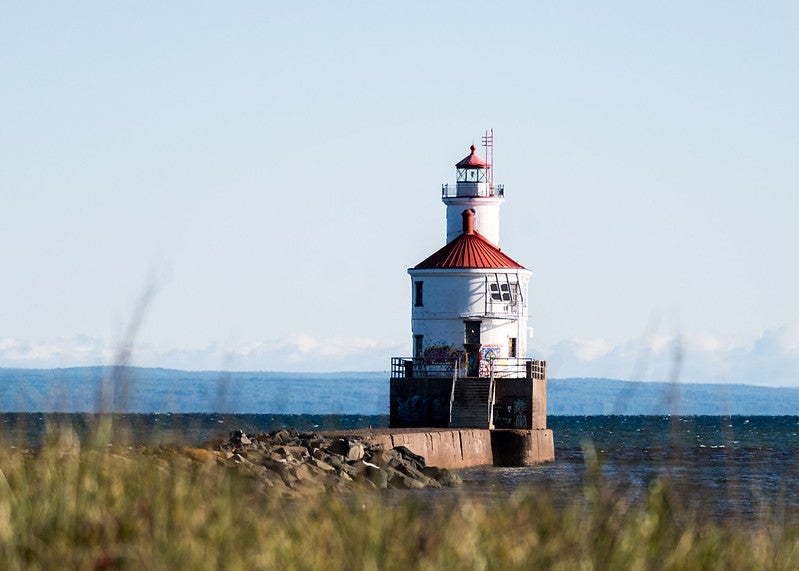
That’s the premise of “The Unmapping,” the debut novel by Wisconsin author Denise S. Robbins. In the book, a strange geographic disaster spreads through New York City — and its mysterious origins are traced back to Wisconsin’s Door County.
Robbins grew up in Madison and returned there after years working on climate issues on the East Coast. She said part of the action in her novel had to take place in the state: “I love Wisconsin, and there’s a big place in my heart for it.”
News with a little more humanity
WPR’s “Wisconsin Today” newsletter keeps you connected to the state you love without feeling overwhelmed. No paywall. No agenda. No corporate filter.
Robbins talked about the book and her connections with Wisconsin on WPR’s “Wisconsin Today.”
This interview has been edited for brevity and clarity.
Rob Ferrett: There’s this surreal disaster really early in the book — this is not a spoiler. What happens when a city experiences the unmapping?
Denise S. Robbins: The unmapping is what happens when your city sort of gets sick and reacts very negatively. Every building rearranges with each other at four o’clock in the morning. Every single day.
So you wake up one day on one side of the town and the next day on the next side of the town, and everything around you is completely not what it’s supposed to be. You don’t know how to get to the grocery store. You can’t get gas, you can’t get to work or get to school.
RF: It all starts in a strange fictional community in Door County called Gleamwood City. Tell us a bit about this odd little place.
DSR: It is definitely an odd place. I invented Gleamwood City in the tip of Door County. I was very inspired by Wisconsin’s aluminum Christmas tree history in Manitowoc, and rolled with that and created this community where they sprung up.
This is a very isolated, bizarre, almost too-perfect kind of a place that is the beginning of something crazy. So the unmapping does begin there, but it’s so small and kind of perfect, nobody really is bothered by it or really understands what’s happening.
RF: There are elements of climate change and the COVID-19 pandemic in the book, but it isn’t a policy statement — you’re writing about people dealing with a difficult situation and how they live their lives in this unusual position.
DSR: Yeah, what I really wanted to write most about is how individuals can live in times of crisis, and have times of crisis be a catalyst for change, for internal transformation.
That’s what happened with some people when COVID happened, they had to take a step back and think, “What actually really matters to me right now?” All the things that I used to take for granted, I have to throw them out and sort of rebuild what matters from scratch.
RF: A lot of times an author or someone in the entertainment industry leaves Wisconsin to go to a coast, because that’s where you have to go to make it. Do you think that Wisconsin can be a successful place to be an author?
DSR: Living in Wisconsin, I feel like I have a calmer pace of life and I have more opportunities to connect with writers from all over the country, all over the world even. I feel much more connected to the national literary community than when I was in Washington, D.C. because I just have more time for it.