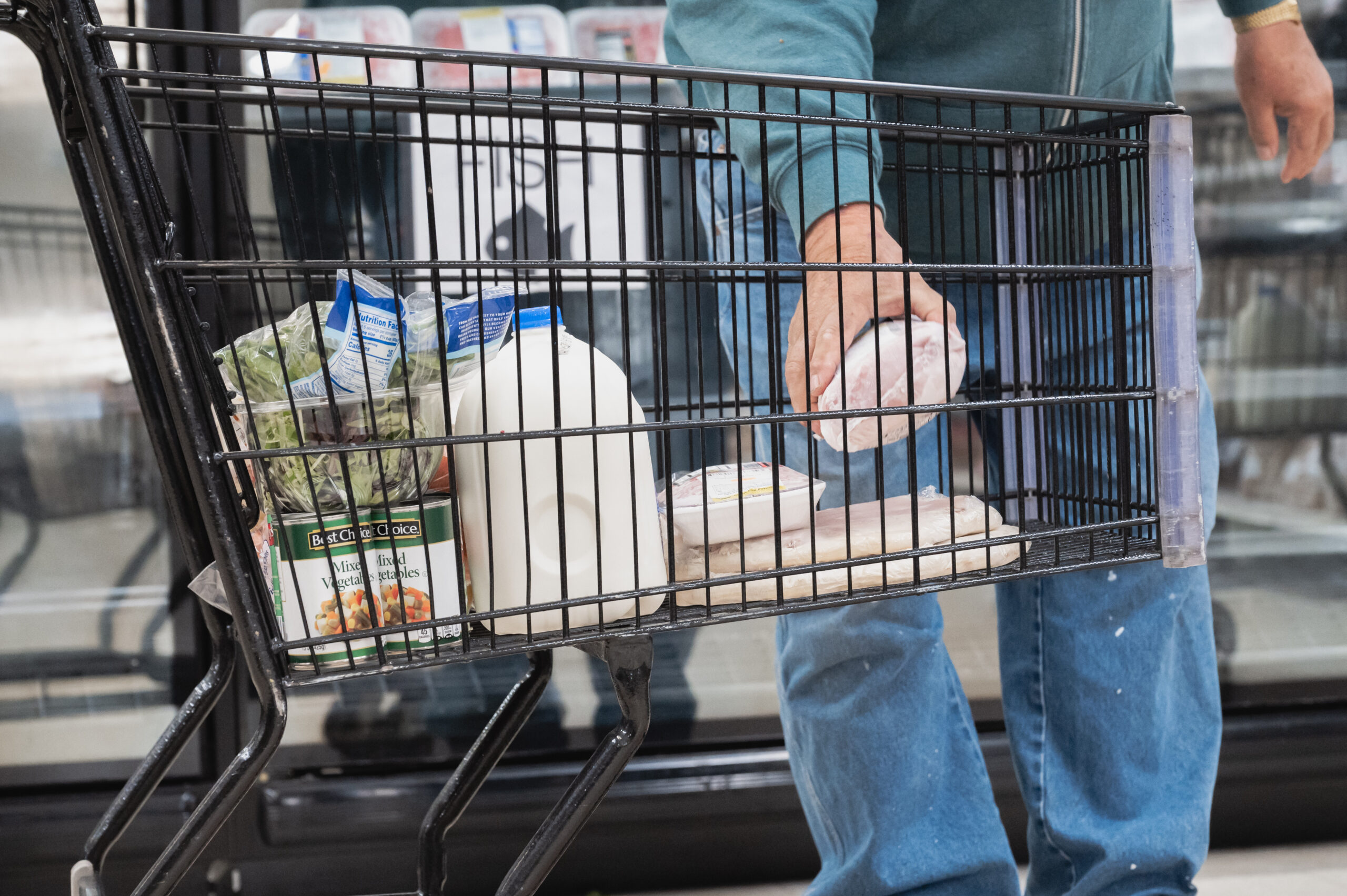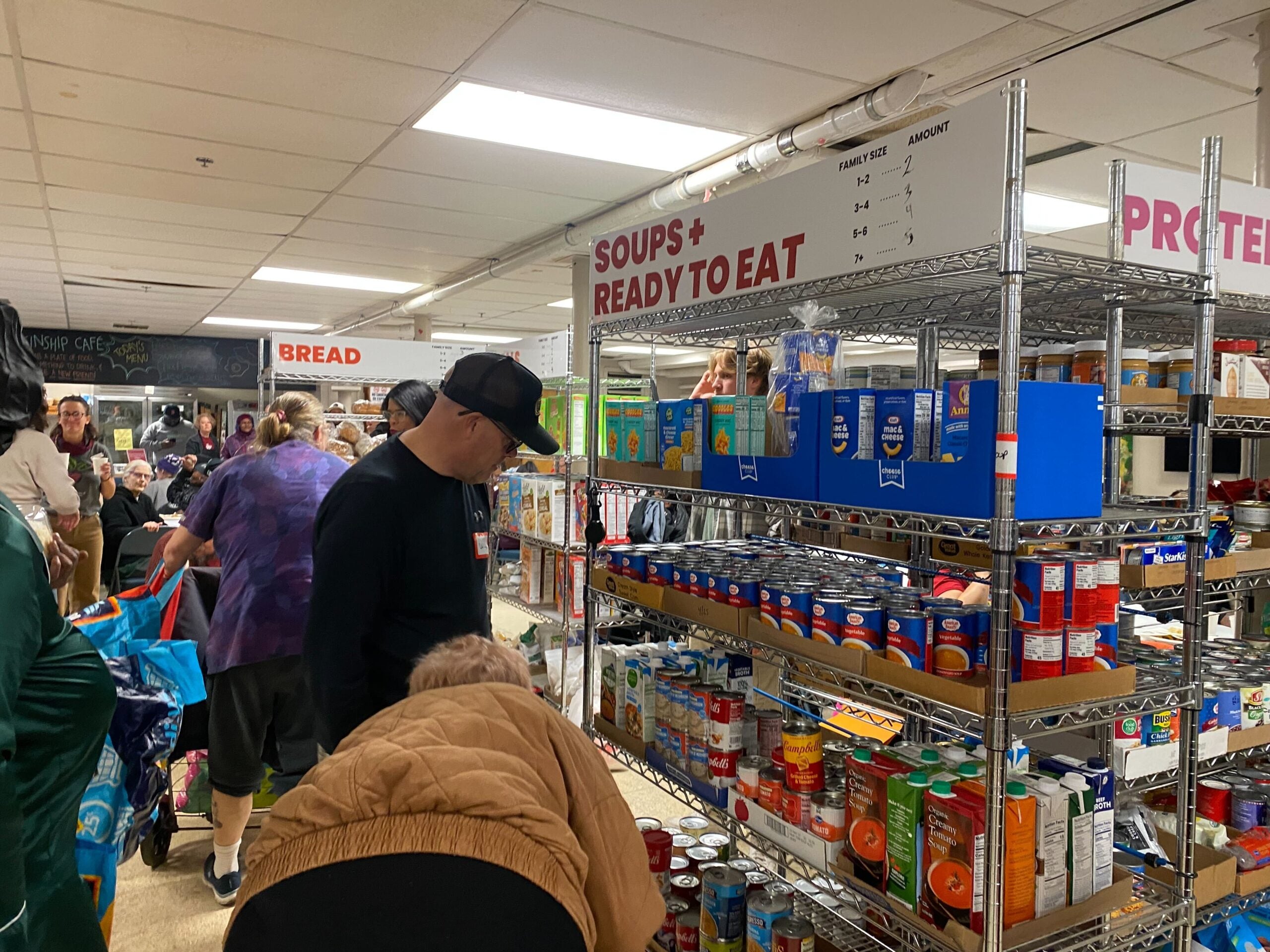
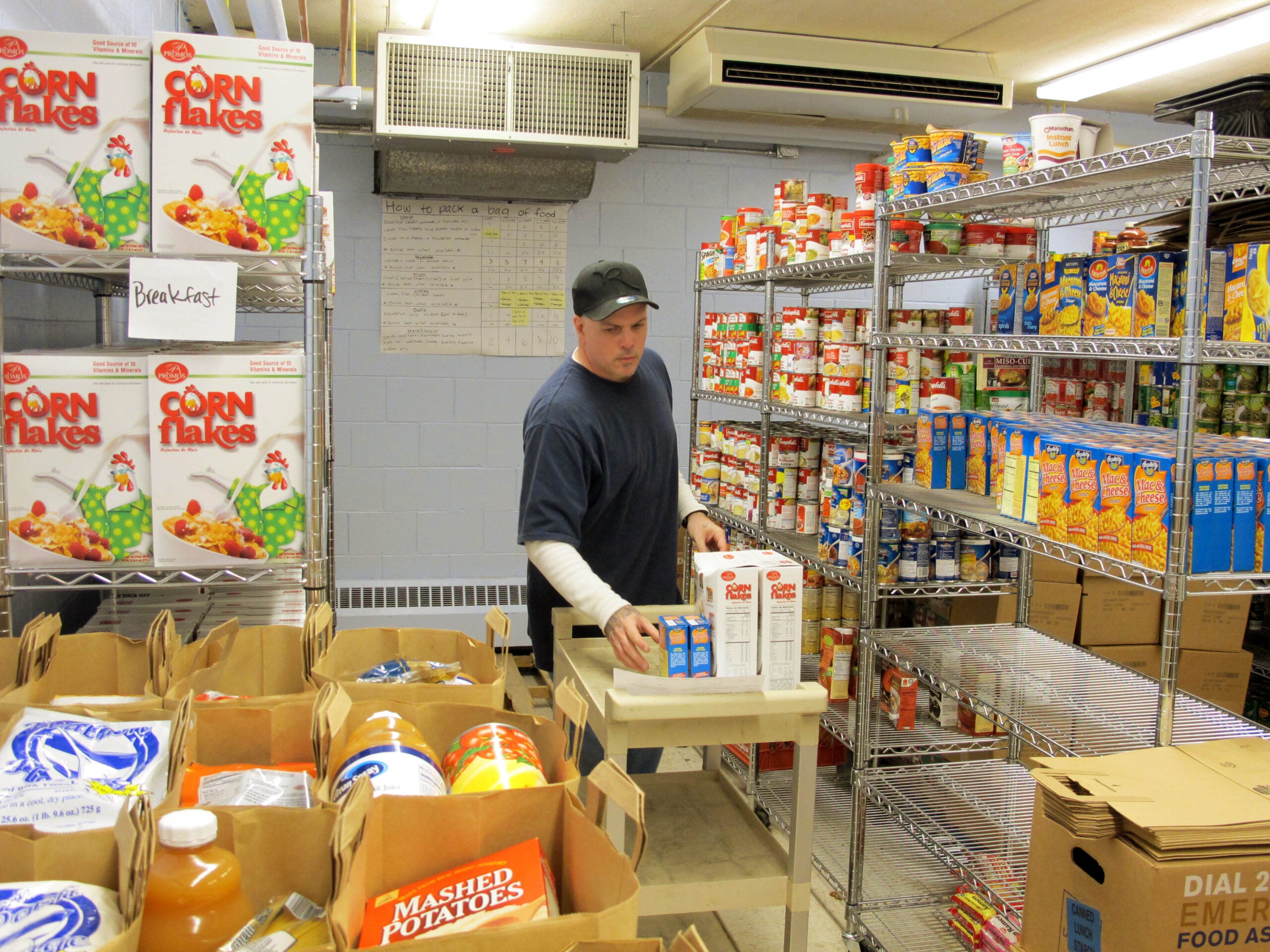
For Amber Daugs of the Grow it Forward food pantry in Manitowoc, the spike in demand has already started as people prepare for their benefits to run out.
“Personally, I can’t keep up. I pick one thing up, and I set one thing down,” said Daugs, the founder and CEO of the nonprofit. “Our shelves are being depleted very quickly.”
Last month, the food pantry served roughly 370 people. Over the last few weeks, however, Daugs said the pantry has seen a 40 percent increase in visitors. She anticipates that demand will increase even further once benefits expire.
News with a little more humanity
WPR’s “Wisconsin Today” newsletter keeps you connected to the state you love without feeling overwhelmed. No paywall. No agenda. No corporate filter.
Federal funding for the Supplemental Nutrition Assistance Program, or SNAP, is set to run out on Saturday, leaving up to 700,000 people in Wisconsin without access to assistance. In Wisconsin, this aid is distributed by the FoodShare program.
Throughout the state, community members are jumping into action to fill at least some of the gap by feeding their neighbors through food drives, free meals and volunteer grocery trips.
In Milwaukee, the city and county have teamed up with Feeding America Eastern Wisconsin to host a local food drive. From now until the government shutdown ends, people can donate nonperishable food items at dropoff locations throughout the city, including all public schools and libraries.
Some private businesses are also stepping up in response to growing needs in their communities.
Starting Saturday, Juanito’s Pizza in Beloit is offering free cheese pizzas to families with children under 12 who are SNAP recipients.
“I have five children myself, and I know the struggle,” shop owner Katrina Mar told WTVO.
Ollie’s, a restaurant in Fitchburg, is offering a pay-what-you-can system for a fixed menu of meals three days a week.
Diners can order roast chicken or smoked tofu with mashed potatoes and herbed carrots and then pay “any price that feels comfortable.” Same goes for a kid’s menu that includes mac and cheese or buttered noodles.
“For me, food is love,” said Dave Heide, the chef and owner. “We just thought we could help alleviate the burden on some of the food pantries and soup kitchens and all the other great resources in the area.”

A grassroots group in Madison pairs grocery shoppers
Makenzie Stanberry, a project manager in Madison, said she was surprised to learn how many of her community members face food insecurity and found herself eager to contribute.
With some inspiration from social media, on Wednesday she launched a mutual aid group, Madison Grocery Share. The idea is to pair up “Madison neighbors who’ve lost SNAP benefits with those who can help with grocery costs,” according to the website.
It’s a “neighbors helping neighbors” approach, Stanberry said, and the response has been overwhelming.
“In 24 hours, we have over $60K requested from 90+ households that need help. We’ve been able to match about 20 of those,” she wrote in an email to WPR.
The effort is meant to be a complement to — not a replacement for — food banks, which serve thousands of households around the state. Stanberry said she hopes the grocery share can be a small but meaningful addition to the pool of community resources, especially for families who may have dietary restrictions or other special needs.
“Some of the comments from neighbors who want to help are: ‘I have celiac. I’m comfortable shopping for gluten-free, if you want to pair me up with someone that way.’ Or, ‘Good at checking labels. My son has an allergy,’” she said.
“I think there are so many people out there that are feeling the same way that I was: I see a problem, I want to be able to do something about it, and I’m not sure what,” she added. “This is one tangible thing that people can do to hopefully make a difference.”
How to make your food bank donation go further
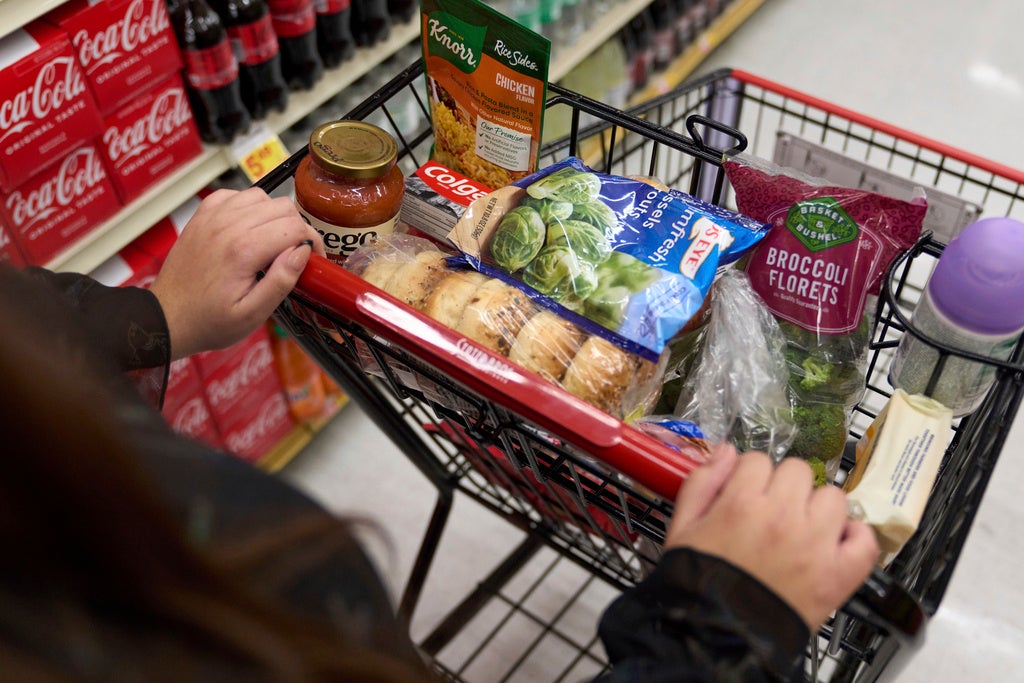
Food pantries throughout the state report seeing an uptick in visitors the past couple years, with unemployment and inflation on the rise. Now with SNAP benefits set to expire, they are bracing for a surge in demand during the already-busy month of November, when families are preparing to gather for the holidays.
Jackie Anderson, executive director of Feeding Wisconsin, said that the best way for people to support their local food bank is to donate money directly. Beyond that, she recommended calling a specific pantry in the community to see what they need.
“Maybe the pantry will get a donation of loads of pasta, but they don’t have pasta sauce to be able to create an entire meal,” Anderson said. “So reach out to your pantry or food bank, because they always keep a pulse on where donations are most needed.”
Dairy and protein products like milk, eggs, meat and fish are frequently requested, Anderson said, but it’s important to work closely with the pantry to make sure that proper refrigeration is available.
Other hot-ticket items include can openers — which can be a lifeline for pantry-goers without a kitchen — and sweet treats. While food banks can’t accept homemade baked goods, donations like shelf-stable cookies and boxed cake mixes are appreciated.
“Think about what makes our lives happy — the same thing holds true for anyone visiting a pantry,” Anderson said. “So really thinking about: what do you need and what are your desires when you’re cooking a meal? That’s the same thing we need to think about for all our neighbors we’re supporting.”
WPR’s Sarah Lehr contributed reporting to this story.