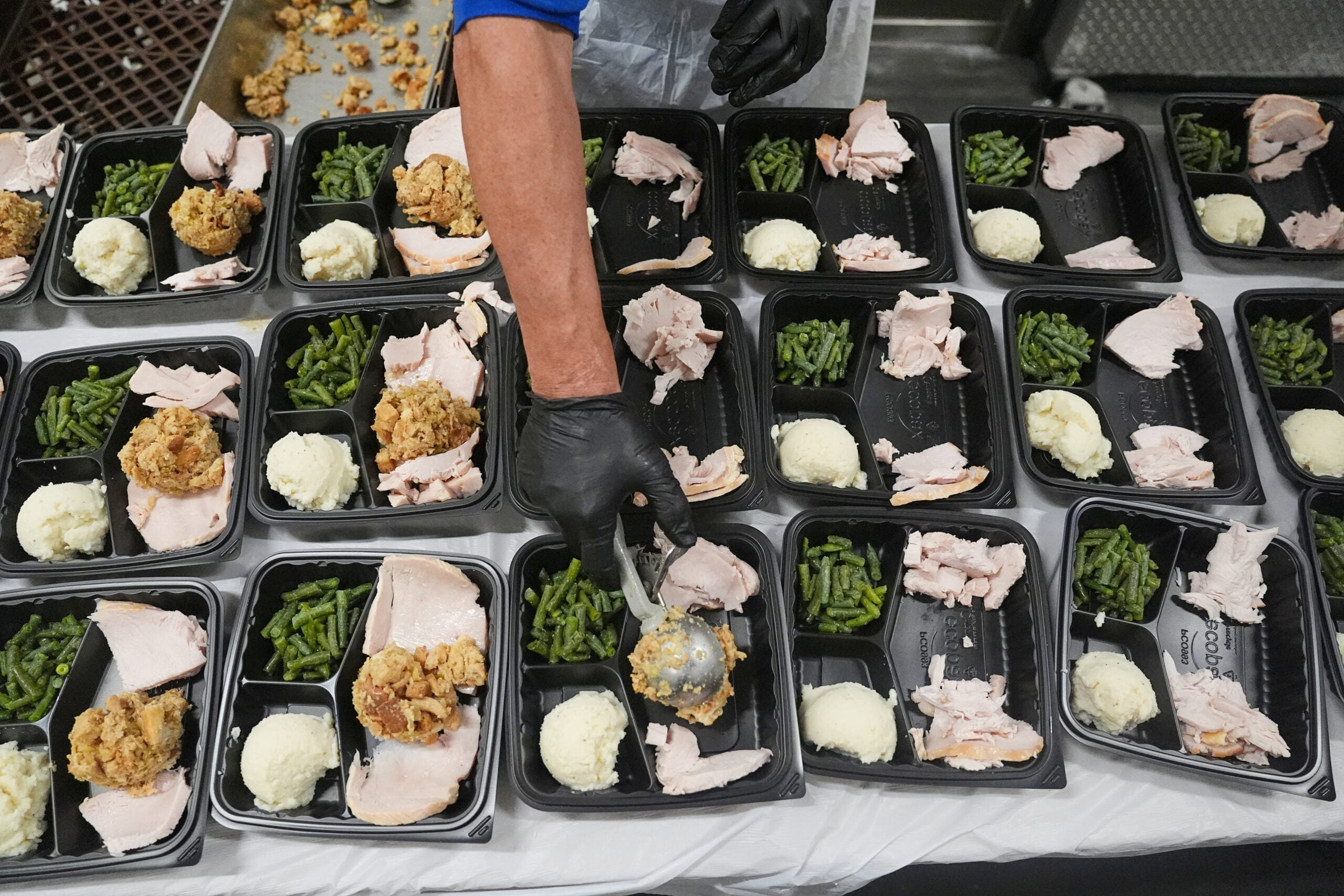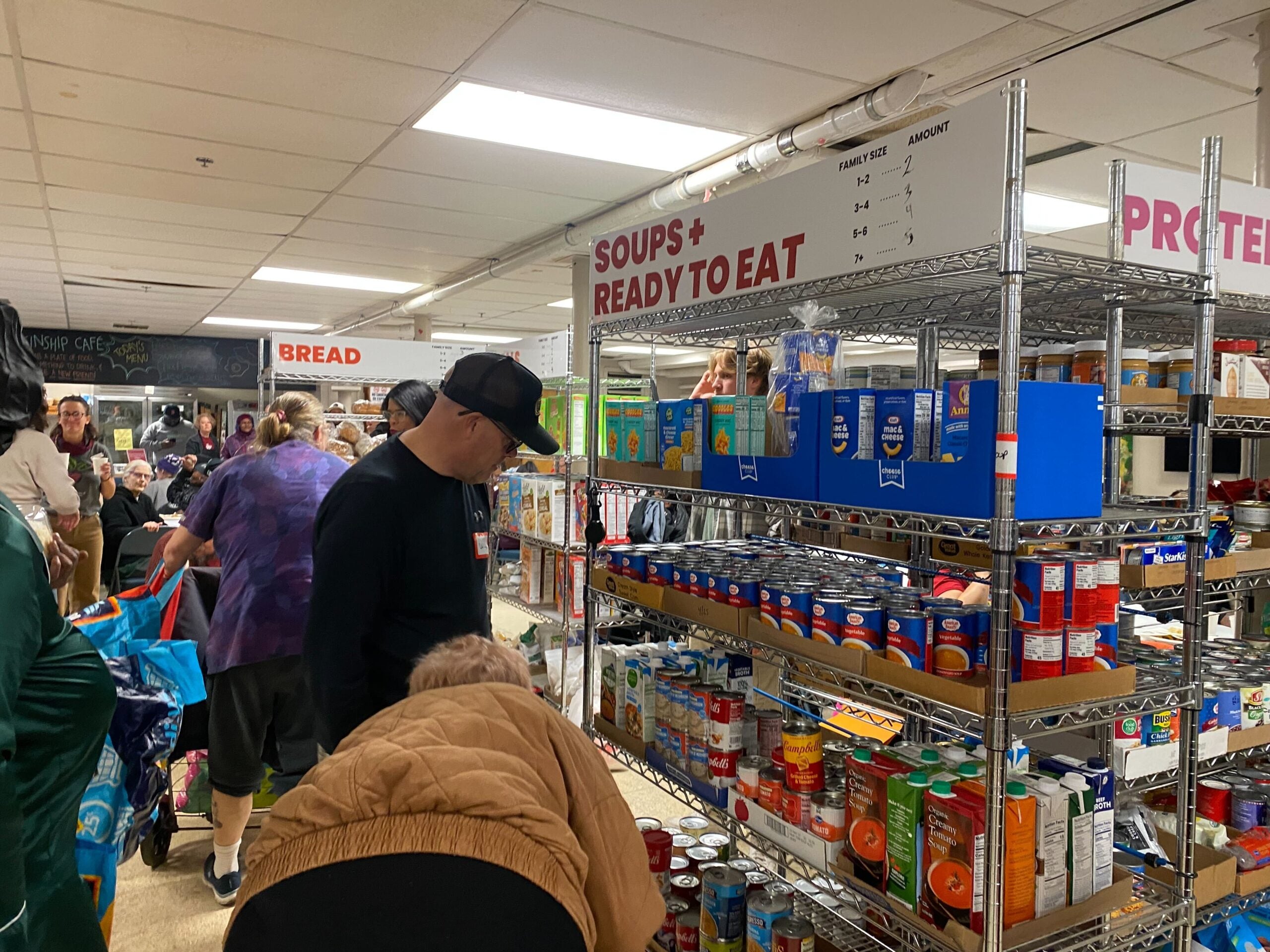
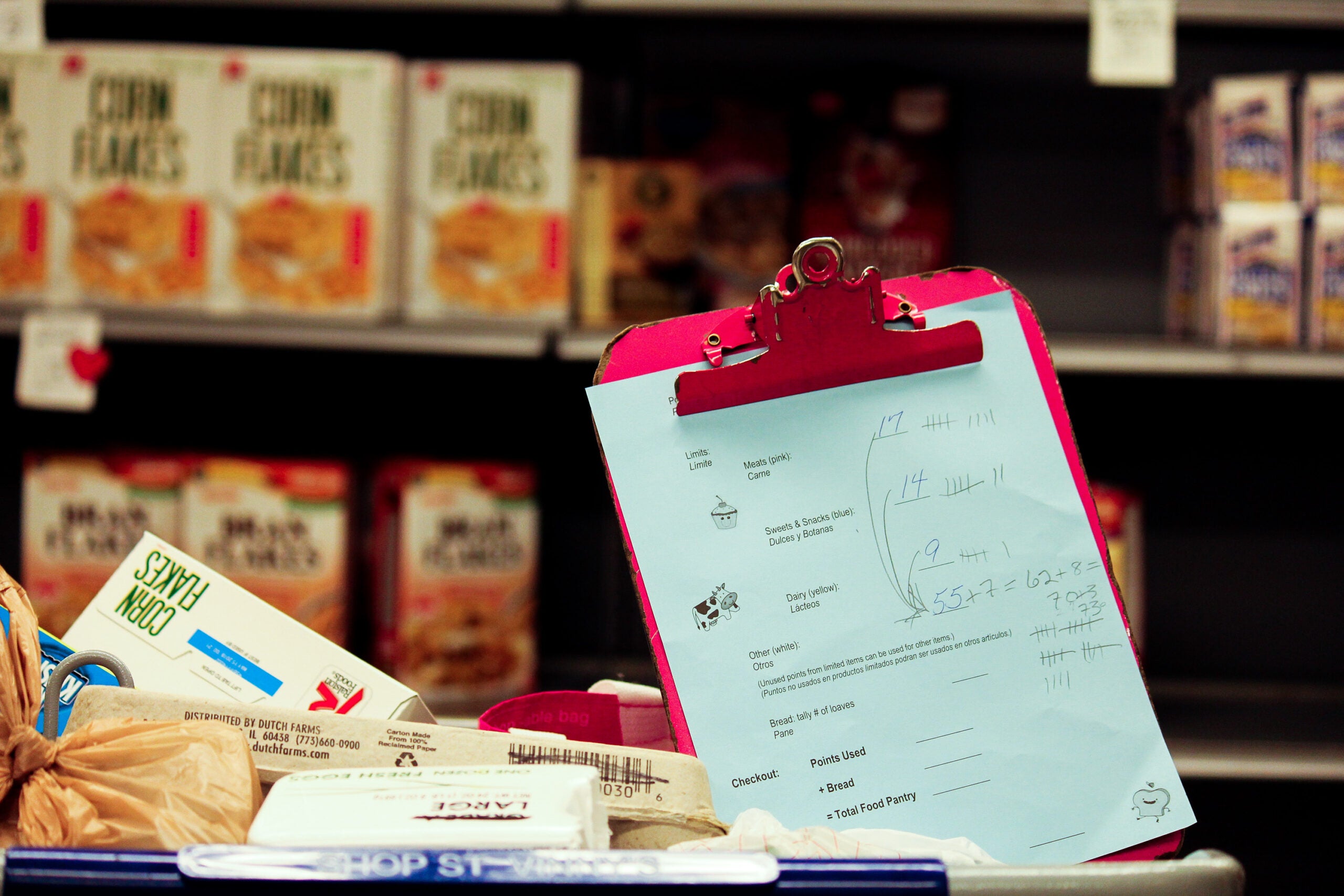
Four times a month, the Feed My People food bank hosts a distribution night in Eau Claire, handing out food to anyone in need. On a typical night, about 300 people pass through, according to the group’s executive director, Padraig Gallagher.
This past Monday night, 464 people showed up — a more than 50 percent increase.
Food service providers across Wisconsin say they’ve felt a squeeze in recent months, as household costs have increased and federal programs for the needy have been canceled. Now, with the prospect of a pause in federal food assistance looming, they’re bracing for an acute spike in need.
News with a little more humanity
WPR’s “Wisconsin Today” newsletter keeps you connected to the state you love without feeling overwhelmed. No paywall. No agenda. No corporate filter.
“A good number of them are folks that our volunteers and staff hadn’t seen before,” Gallagher said of the people who picked up food on Monday. “A lot of them had a lot of questions and a lot of concern.”
That confusion from Gallagher’s clients comes a week after the U.S. Department of Agriculture announced that it would not be issuing benefits through the Supplemental Nutrition Assistance Program, or SNAP, beginning on Nov. 1.
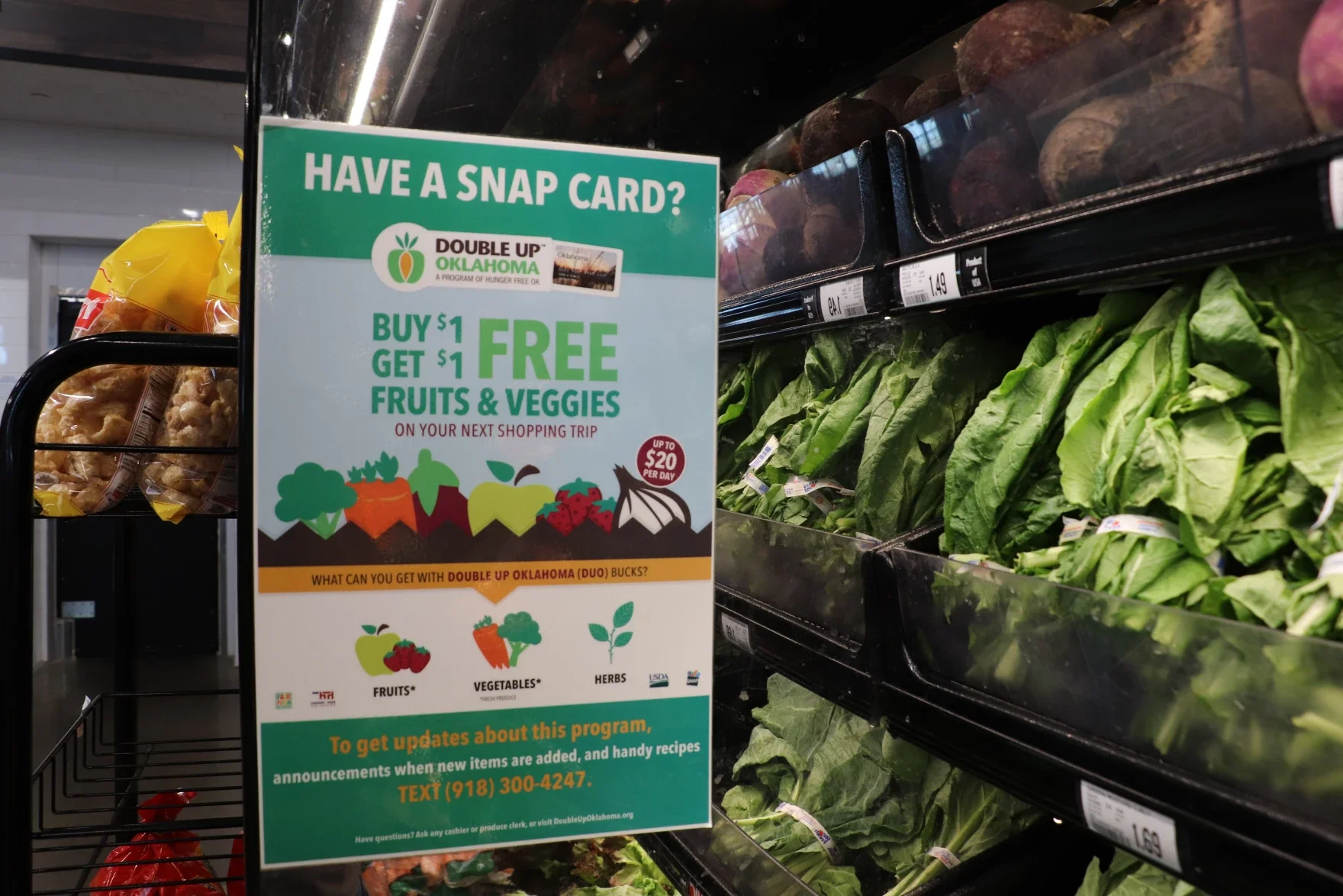
In Wisconsin, that means some 700,000 people will not receive SNAP benefits — in the form of money added to their FoodShare debit cards — for the month of November. Many of them will turn to places like food banks to supplement the groceries they would otherwise be buying with federal food assistance.
Food banks say they exist to fill the gaps in people’s pantries, but not to fully cover an open-ended emergency.
“The scale of the problem is way beyond what we would be able to accomplish for any significant amount of time,” said Gallagher, whose organization operates a range of hunger relief programs across 14 counties in western and central Wisconsin.
In response to last week’s announcement that SNAP funding would run out, Gov. Tony Evers issued a letter to USDA Secretary Brooke Rollins urging the Trump administration to use discretionary funds to keep SNAP operational.
“Empty cupboards and stomachs are not abstract outcomes. They are the very real and near consequences of the dysfunction in Washington. These are also consequences you can prevent today,” Evers wrote. “USDA must use all available legal authorities, and there is simply no justification for failing to use these same authorities to protect SNAP recipients.”
On Tuesday, Wisconsin joined 25 states and the District of Columbia to file a lawsuit in a Massachusetts U.S. district court arguing that withholding SNAP benefits is illegal, and demanding that the federal government use contingency funds to keep the program running.
While SNAP is administered jointly by the federal, state and local governments, its benefits are entirely federally funded. Right now, there are no indications that the state would backfill that funding should the shutdown continue.
“My heart goes out to people, but this is a federal issue, and I don’t see the state having the resources to do that,” said Sen. Mary Felzkowski, R-Tomahawk, in an interview with WISN-TV.
Felzkowski blamed Democrats in Congress for holding up a government spending bill. Democrats say they will not support legislation that cuts subsidies for health care, which has been the sticking point during the nearly month-long shutdown.
Amid that political back-and-forth, food service providers say they’re just trying to serve those in need.
“Food security is not political,” said Gallagher. “We’re not trying to say, ‘This person’s to blame, vote for that person, this is the legislation that’s the answer.’ We are very much ringing the bell and saying, ‘Come look at the problem.’”
A slow-burning, long-developing crisis
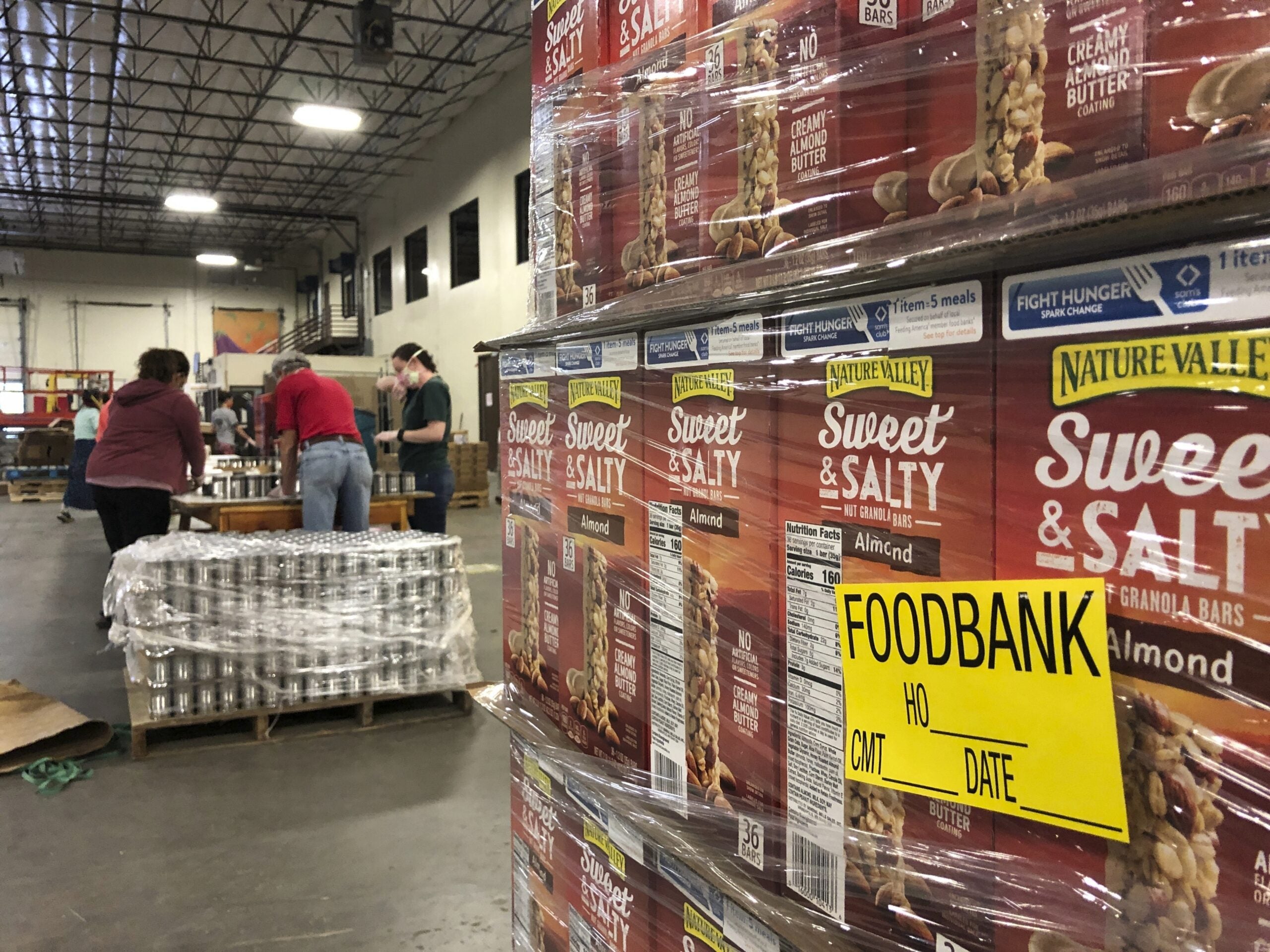
But the scale of the problem extends back before the federal shutdown, service providers say. Household costs have increased alongside inflation, rent levels have outpaced wages and some federal assistance programs have ended since President Donald Trump began his second term with a goal of curbing federal spending.
Those changes affect lower-income Wisconsinites, who depend on programs like FoodShare, said Liz Seefeldt, executive director of The BRICK, a faith-based organization that operates food pantries in Ashland and Bayfield counties.
“Many people live paycheck to paycheck, and they’re really … timing things down to the day,” she said. “We’re definitely anticipating that come Nov. 1, we’re going to see an influx of pantry shoppers who might have never used our services before.”
That organization’s food pantry program has seen an increase in need over the last year of about 15 percent, she said, with a particular increase among families with children. The group is also preparing for the possibility of furloughed federal workers beginning to use their services for the first time.
Increased costs also affect the service providers, who rely on a mix of donated and purchased food to line their pantry shelves, said Gallagher.
“We know that the need among the people that we serve is going up significantly, but because of the same causes — higher prices, disruptions of markets and availability — that are challenging individuals and households in our region, we’re also seeing much more difficult times sourcing food or getting food in at rates that would be affordable for us and our partners,” he said.
In the short term, Gallagher says his group is “confident” it can meet its clients’ needs. When he first heard rumblings that, unlike past shutdowns, this one might include a pause in coverage for FoodShare, he started ordering food “at very high levels.”
“I said, ‘I want (the warehouse) to be full to the rafters by Oct. 31,’” Gallagher said.
But, he added, food charities typically cover a tenth of a needy family’s food needs. SNAP benefits cover the other 90 percent.
“The scale of assistance that is provided through FoodShare, compared to the scale of assistance that is typically provided through a food bank, does not bode well, as far as any sort of a long-term arrangement,” he said. “We can respond in the short term by providing up to double the amount of food that our partners would typically get. But when nine times the amount of food is distributed through FoodShare, it can’t be sustainable.”
Clearing up confusion
Of the 700,000 Wisconsinites who receive federal food assistance, about 40 percent are children, and 12 percent are senior citizens. Three-quarters are employed, and they live in every county of the state, according to data from the Wisconsin Department of Health Services, which administers the program.
That agency recently sent out an updated letter to service organizations to clear up confusion about how benefits can be used during the shutdown.
“The shutdown will need to end before members can start getting new benefits again,” reads one email sent out this weekend, which was shared with WPR. “To be clear, benefits that are already on their card will not be removed because of the shutdown and members can continue to use their current benefits during the shutdown.”
DHS did not immediately respond to WPR’s request for comment.
Matt King, the executive director of Hunger Task Force, which operates programs across the greater Milwaukee area, said his group has been working to get good information to people who rely on SNAP payments.
“There’s been a lot of anxiety amongst our clients, a lot of uncertainty around their existing benefits,” he said. “There’s been a significant amount of energy and resource just put into getting people the right information.”
Like the other food providers who spoke with WPR, Hunger Task Force has seen an increase in visits over the last year of between 30 to 35 percent, according to King. That amounts to about 50,000 visitors per month.
“What we’re really bracing for is a continued shutdown … and the impact and strain that that will put onto the emergency food system and food pantries around the state.”
King added that there’s a ripple effect when people rely on free, emergency food sources instead of buying food at the grocery store.
“It also has an economic impact for retailers around the state, particularly those in rural and remote spaces,” he said. “It shouldn’t be underestimated the impact that this can have for small businesses and retailers and the Wisconsin economy as well.”
But first and foremost, providers say, they want to reassure those in need to come and eat.
“We want people to understand that they don’t need to be concerned about us running out of food,” said Seefeldt. “We don’t want people to think, ’Oh, they’re going to be inundated, we shouldn’t go. We don’t need it as badly.’ If you qualify for our program, we want you to use our pantry.”

Wisconsin Public Radio, © Copyright 2026, Board of Regents of the University of Wisconsin System and Wisconsin Educational Communications Board.