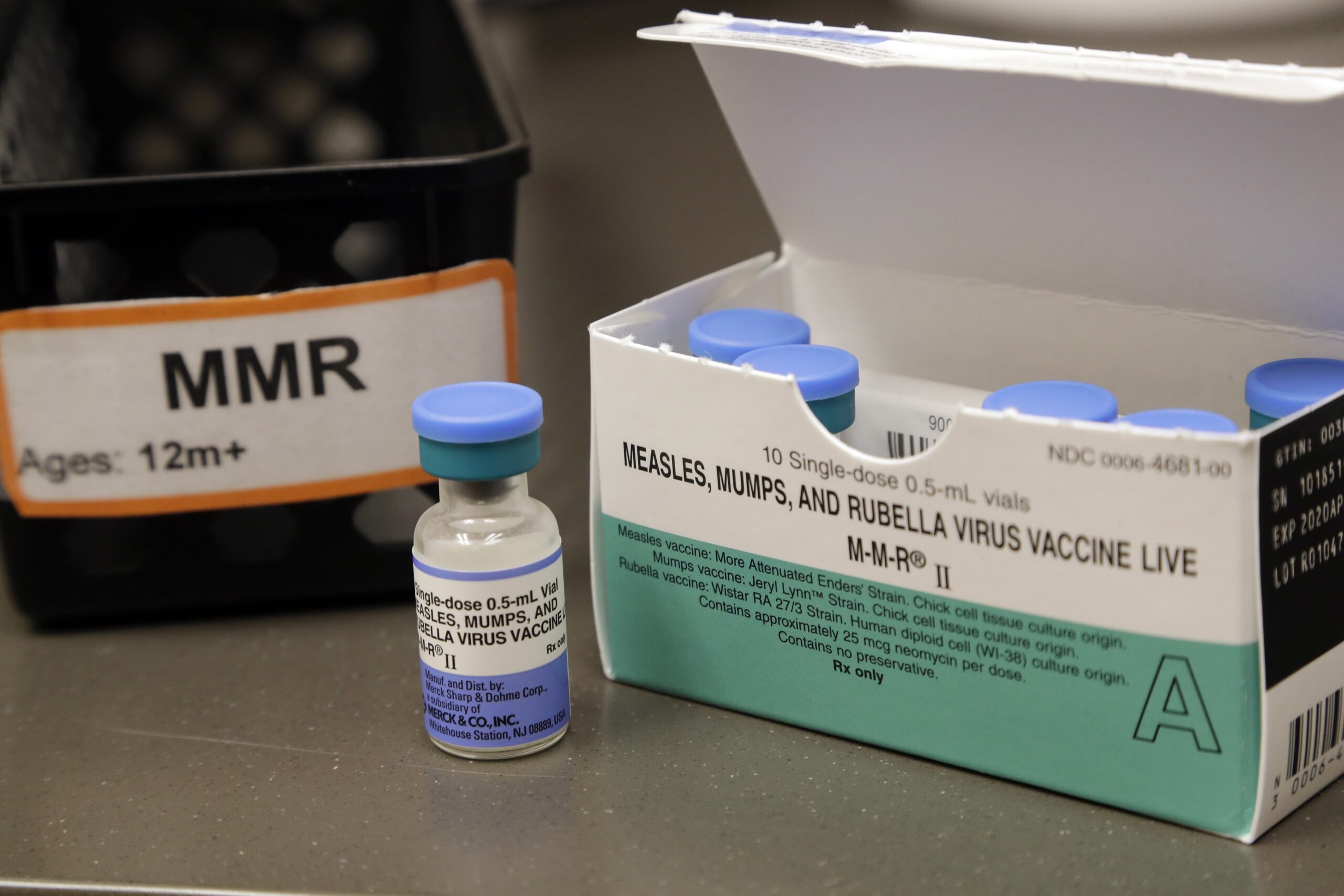
Republican lawmakers are backing a proposal that would require schools to give more notification to parents about the process of getting a waiver from vaccine requirements.
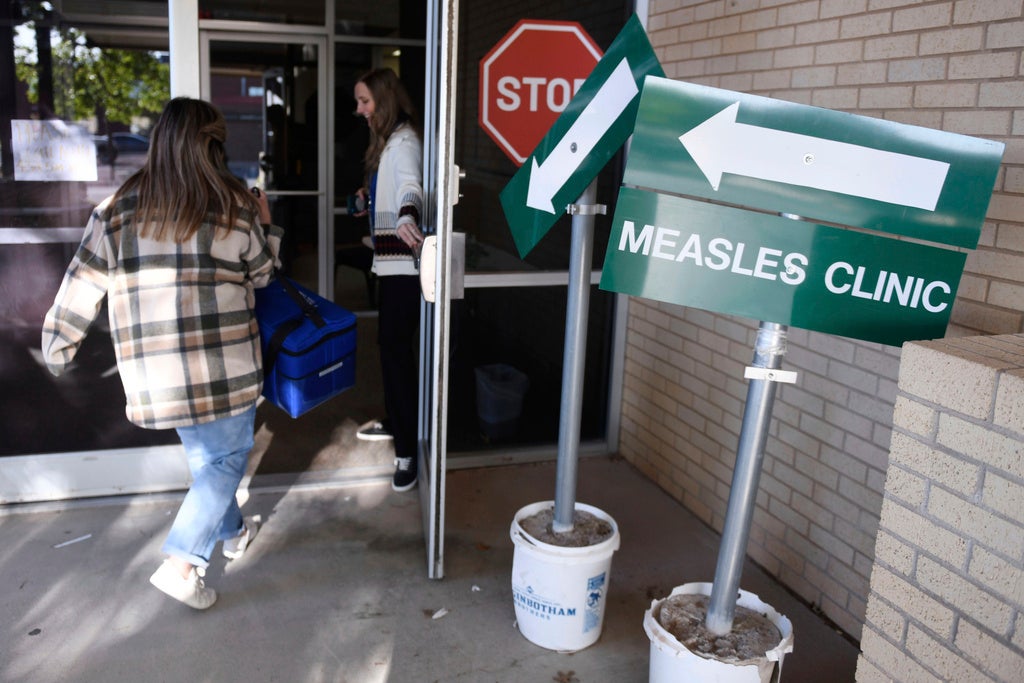
The debate over that legislation is unfolding at time while northeast Wisconsin deals with an outbreak of measles, after nine Oconto County cases were confirmed in early August.
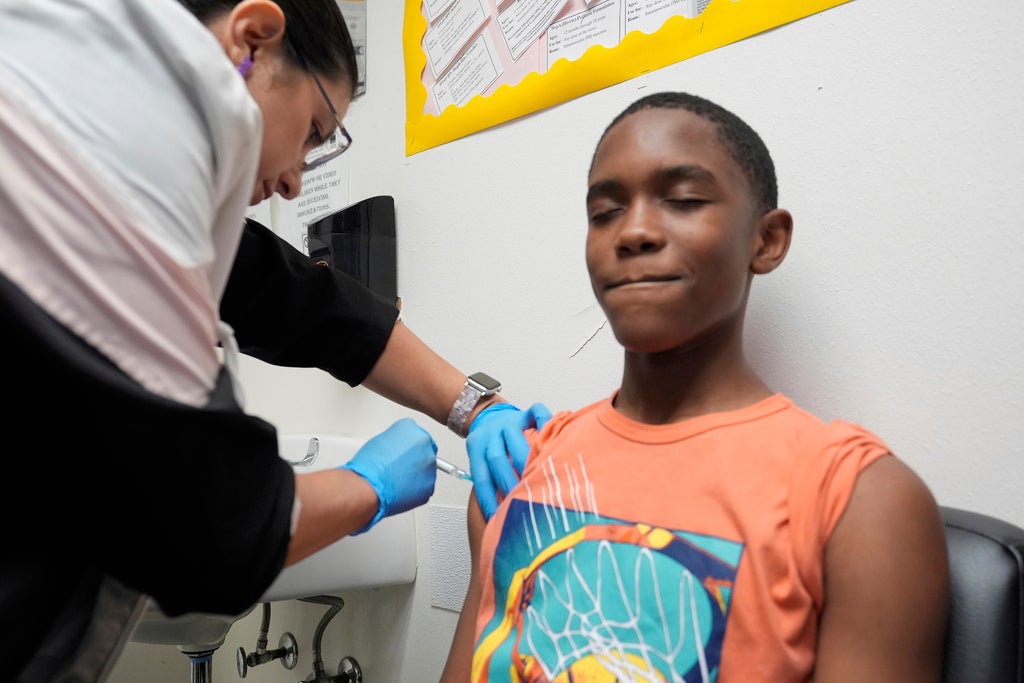
In Wisconsin, children of certain ages are required to get specific vaccinations before going to school or day cares. That includes the MMR vaccine, which guards against measles, mumps and rubella.
News with a little more humanity
WPR’s “Wisconsin Today” newsletter keeps you connected to the state you love without feeling overwhelmed. No paywall. No agenda. No corporate filter.
But, under Wisconsin law, children can be exempt from those requirements if their parents or guardians provide a waiver citing religious or medical reasons. Parents can also get a waiver based on “personal conviction.”
Under current state law, when a school or day care notifies parents about the immunization requirement, they must simultaneously tell parents about their right to a vaccine waiver.
But some Wisconsin lawmakers say the current processes don’t provide parents with enough information about getting a vaccine waiver.
“Many families are not made aware of this right at the time of enrollment, and some institutions do not provide clear or consistent procedures for submitting a waiver,” read a memo released by Rep. Lindee Rae Brill, R-Sheboygan Falls, and Sen. Rachael Cabral-Guevara, R-Appleton. “This lack of transparency can create confusion and unnecessary barriers for parents.”
The new proposal would add language to state law, requiring that schools or day cares provide information about the procedure for getting a vaccine waiver on any health forms that parents have to fill out before their child enrolls.
When asked about the bill during a news conference this week, a top state health official pushed back against the assertion that parents aren’t given enough information about vaccine waivers.
“We feel in public health that knowledge of the exemptions or the waivers is commonplace,” said Dr. Ryan Westergaard, the chief medical officer of the Bureau of Communicable Disease within the Wisconsin Department of Health Services. “We don’t hide them. But our recommendation is that people get their kids vaccinated.”
The proposal would not alter Wisconsin’s list of required vaccinations, nor would it change the criteria for getting an exemption.
A draft bill began circulating for sponsors in late July. As of Thursday afternoon, the legislation had not yet been formally introduced.
Health experts strongly urge vaccination
The American Academy of Pediatrics “strongly” urges children to get vaccines according to the recommended schedule. Along with protecting individual kids, vaccines help establish herd immunity. That makes it difficult for an infection to spread, and helps shield even the most medically vulnerable members of a community.
“Immunizations are one of the greatest public health achievements, preventing tens of thousands of deaths, millions of cases of disease, and saving billions of dollars per decade,” the nationwide organization said in a statement. “Immunizations are a safe, effective way to protect children from disease, including some cancers, as well as hospitalization, disability, and death.”
In Wisconsin, just under 87 percent of children were up to date with their required vaccines during the last school year, which is down from the year prior, according to data from the state health department.
In a news release, state health officials attributed the decline to “unfamiliarity” with the recently-altered vaccine schedule. Before the last school year, Wisconsin updated that schedule, which included adding the meningitis vaccine for students entering seventh grade. When the meningitis vaccine is excluded from the data, the percentage of students who were up to date with all their vaccines rose to 89 percent, according to DHS.
At the same time, the percentage of students getting vaccine waivers increased during the 2024-25 school year compared to the year before.
Most of Wisconsin’s vaccine waivers are based on personal conviction. Last school year, 5.7 percent of all Wisconsin students had personal conviction waivers, 1 percent cited religion and 0.4 percent had a medical waiver, according to DHS data.
Earlier this week, state health officials held a news conference to highlight the importance of vaccines, and to remind parents about getting those shots before school starts.
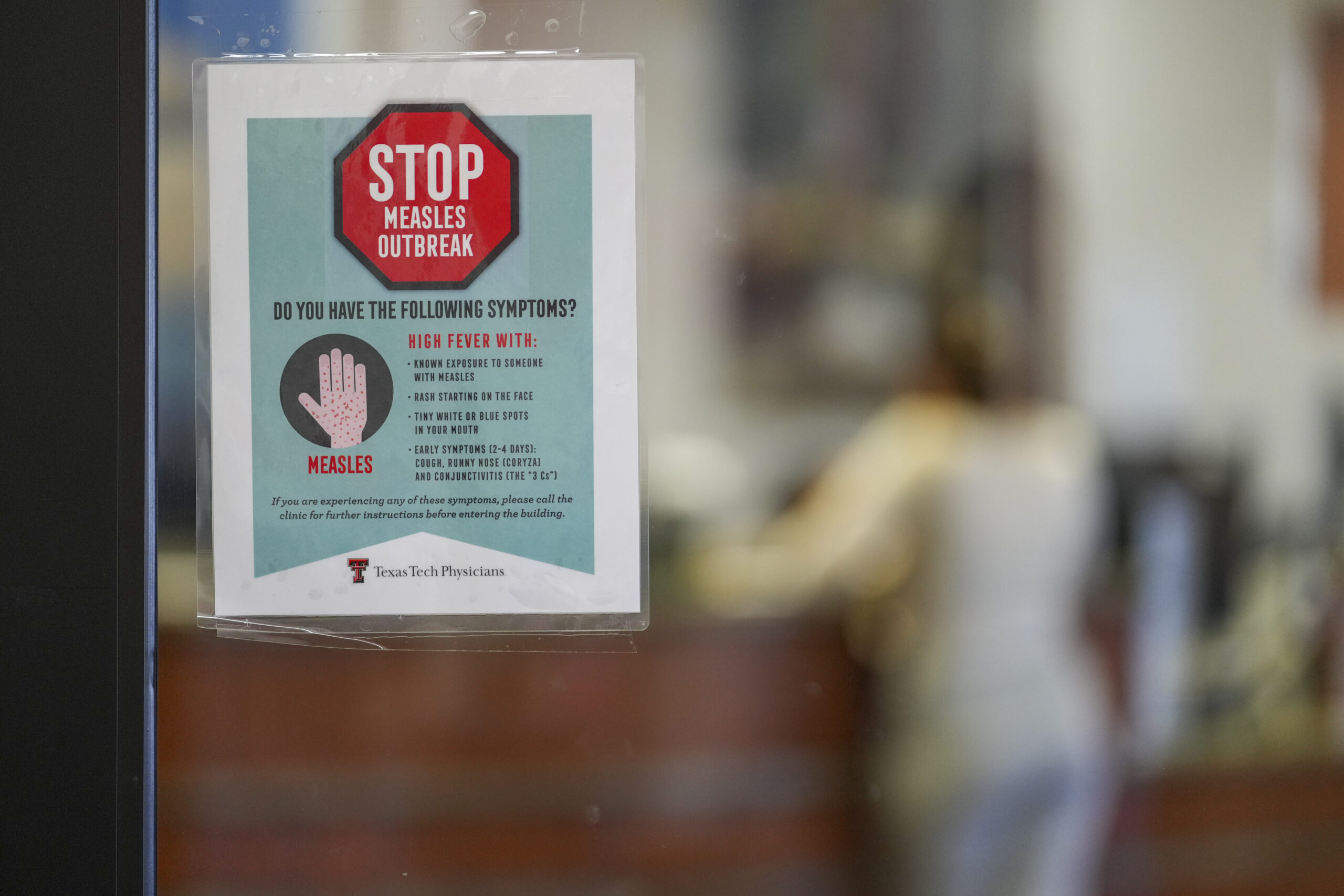
Officials also drew attention to the Oconto County measles outbreak, which marked the state’s first measles cases of 2025.
Measles is highly contagious. To establish herd immunity against measles, health experts say roughly 95 percent of the population needs to be vaccinated against it.
In Wisconsin, however, CDC data shows that just 85 percent of kindergarteners were fully vaccinated against measles in the last school year, which was one of the lowest rates of any state in the country.
Those immunization rates also vary by region, with some Wisconsin counties reporting even lower levels of vaccination against measles.
Two doses of the MMR vaccine are 97 percent effective at preventing measles. The CDC recommends that children get their first dose when they’re between 1 year and 15 months old, and the second dose between the ages of 4 and 6. Under Wisconsin’s schedule, students are supposed to have two doses of the MMR vaccine before they start kindergarten.
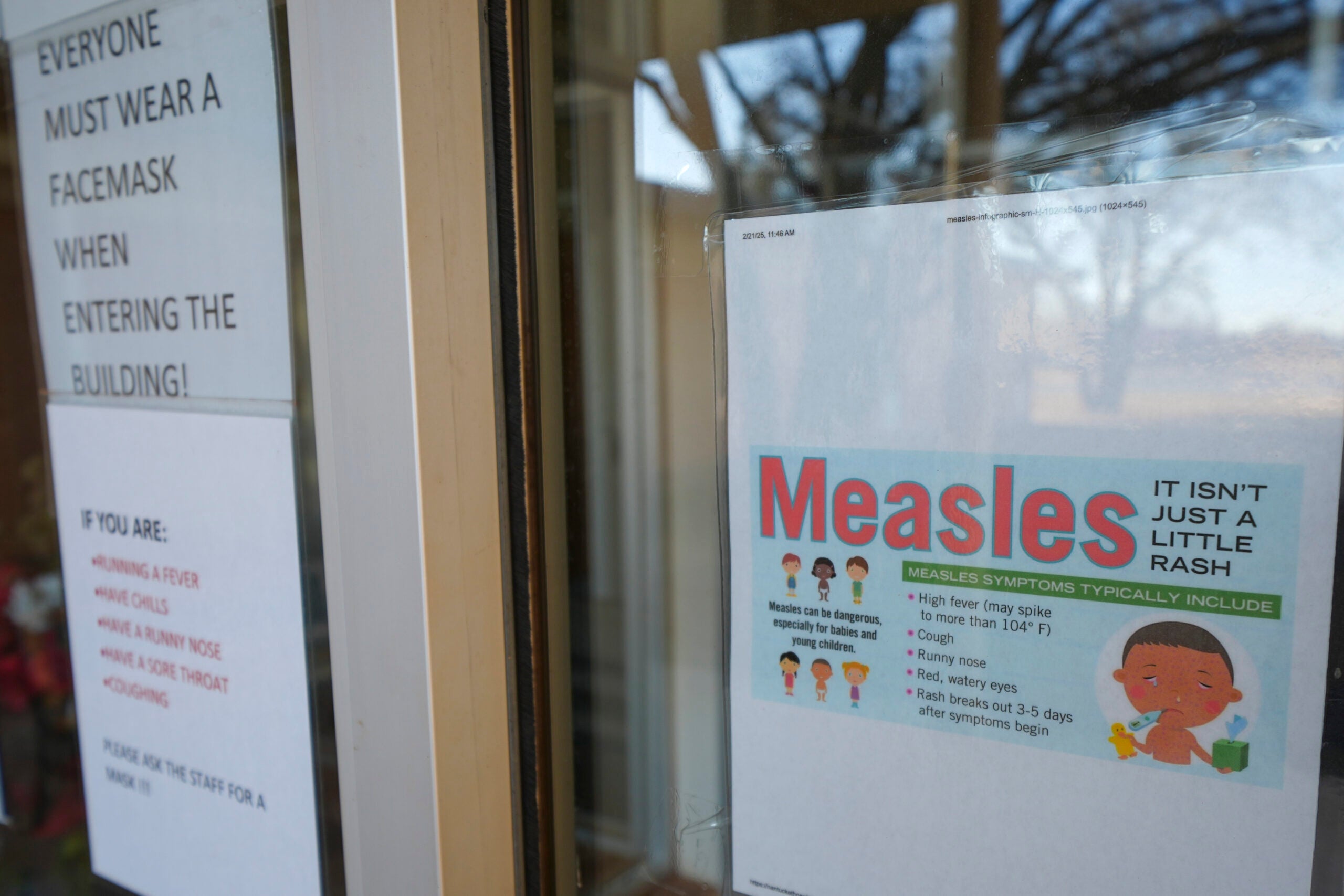
Measles is especially dangerous for babies and young kids.
In the U.S., one in five unvaccinated people who get measles ends up hospitalized. And, out every 1,000 children who get it, between one and three end up dying of respiratory or neurological complications, according to the CDC.

Wisconsin Public Radio, © Copyright 2026, Board of Regents of the University of Wisconsin System and Wisconsin Educational Communications Board.