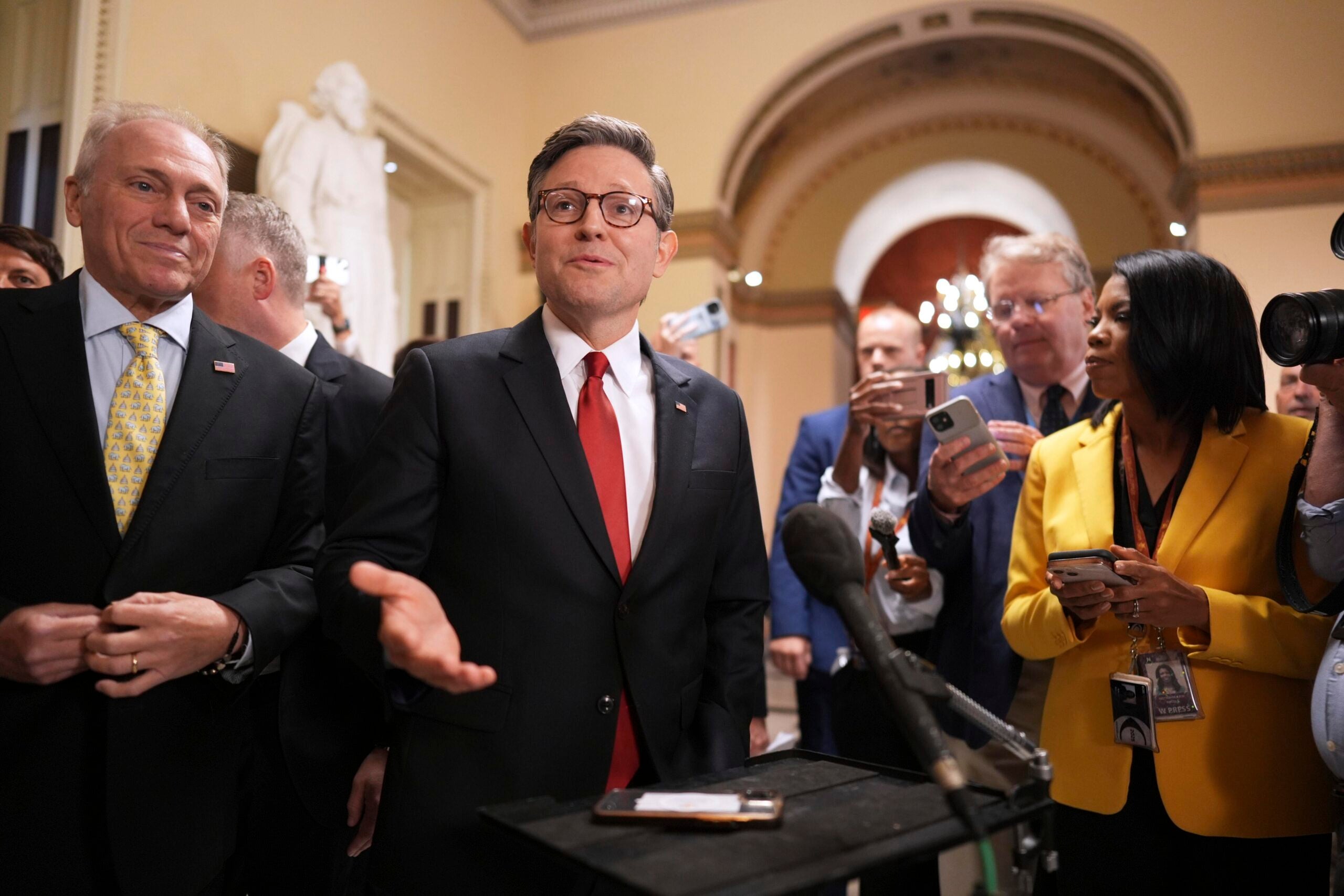
The author of a bill that would limit the emergency powers of local government leaders said it’s needed to realign local policies with state law.
In extraordinary circumstances, the chief executive of a local government — like a mayor or county executive — can declare an emergency and take many actions without input from other local leaders. The new bill would limit that executive’s authority to 60 days before needing an extension by other local government officials, like a city council.
The bill’s author, Rep. Brent Jacobson, R-Mosinee, recently told WPR’s “Wisconsin Today” that the COVID-19 pandemic was the latest showcase for how current laws operate under emergencies.
News with a little more humanity
WPR’s “Wisconsin Today” newsletter keeps you connected to the state you love without feeling overwhelmed. No paywall. No agenda. No corporate filter.
“By declaring that emergency power, the chief executive pretty much assumes total control of the local government,” he said. “What this bill does is it limits that length of time to 60 days. … This essentially aligns us with state law at the local level and provides some certainty to local units of government, should we find ourselves in a very unfortunate situation again, like we did during the COVID-19 pandemic.”
Jacobson shared with “Wisconsin Today” his motivation for the change and his hopes for the bill’s future.
The following was edited for brevity and clarity.
Rob Ferrett: Under current law, what is the time limit for emergency powers?
Rep. Brent Jacobson: The time limit can be indefinite. The local governing body can meet under current law and act to terminate that proclamation of an emergency declaration. But in this case, for whatever reason that a local unit of government is continuously prevented from meeting, that could be a problem. In this case, we’re putting a definite stop of 60 days there unless that local unit of government needs to extend it.
And 60 days should be more than plenty of time for that local unit of government to meet if it decides it wants to extend that emergency declaration. But what you’re really doing here is making sure that your entire elected body is involved in the decision and not just the chief executive, whether that be a mayor or county executive, village president, etc.
RF: What is the motivation for doing this now?
BJ: First of all, I wasn’t here in prior sessions, so this is my first opportunity. But more importantly, you often hear in the state Capitol building that, unfortunately, our state government is reactive. A problem happens and then we address it.
What we’re trying to do now is, at least in my opinion, be proactive. We’re in a state right now where we’re out of the COVID-19 pandemic so we should be looking to learn from that experience and address things during a time when we’re not in a crisis.
RF: The League of Wisconsin Municipalities registered as saying they appreciated you addressing some of their concerns. What kind of concerns were raised that maybe led you to tweak some of the details?
BJ: The League of Municipalities really only had one request, which was a technical correction on our part that we missed. We had to insert a village manager into the definition of executive because some villages don’t have a village president; they choose to go the route of a village manager, and then the governing elected body is the village board.
RF: The state budget has passed so there’s more air in the room for a lot of these pieces of legislation. How do you approach getting legislation that will be signed by a Democratic governor with an election on the horizon?
BJ: I can’t speak for Gov. (Tony) Evers, but I think that the governor would like to leave a legacy behind. And he’s looking to continue in this session to work across the aisle. You saw that in the state budget. It was refreshing for my first state budget to be actually a compromise and a discussion with the governor, where I think each side got things they were interested in. And I’m hopeful that’s going to continue into the fall session.