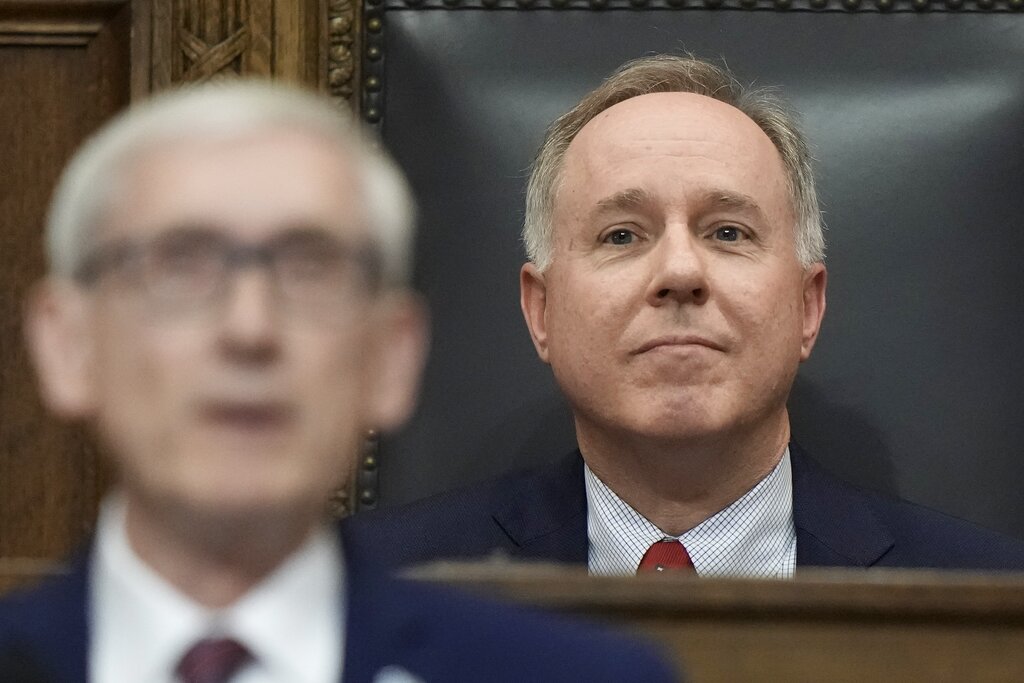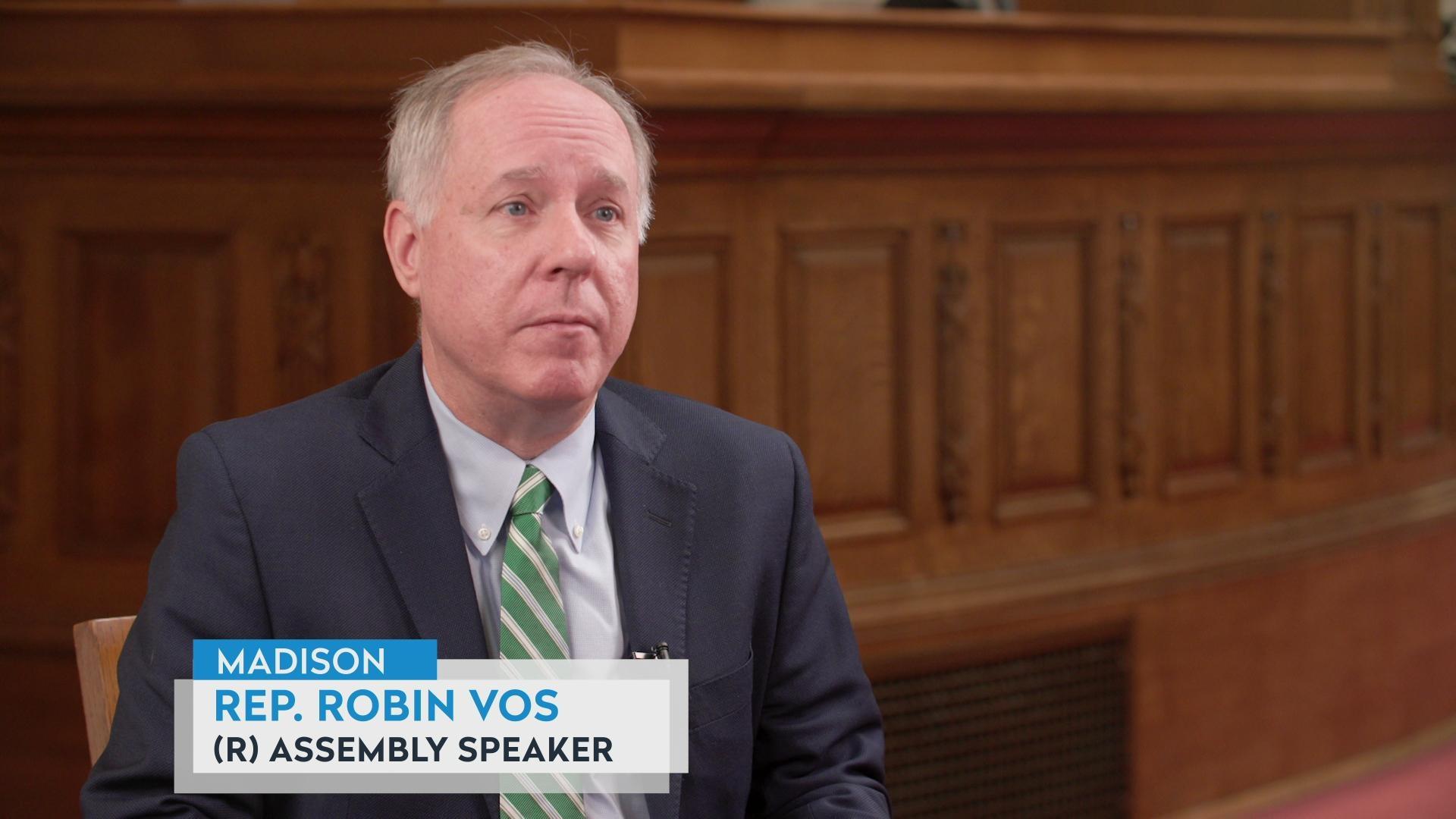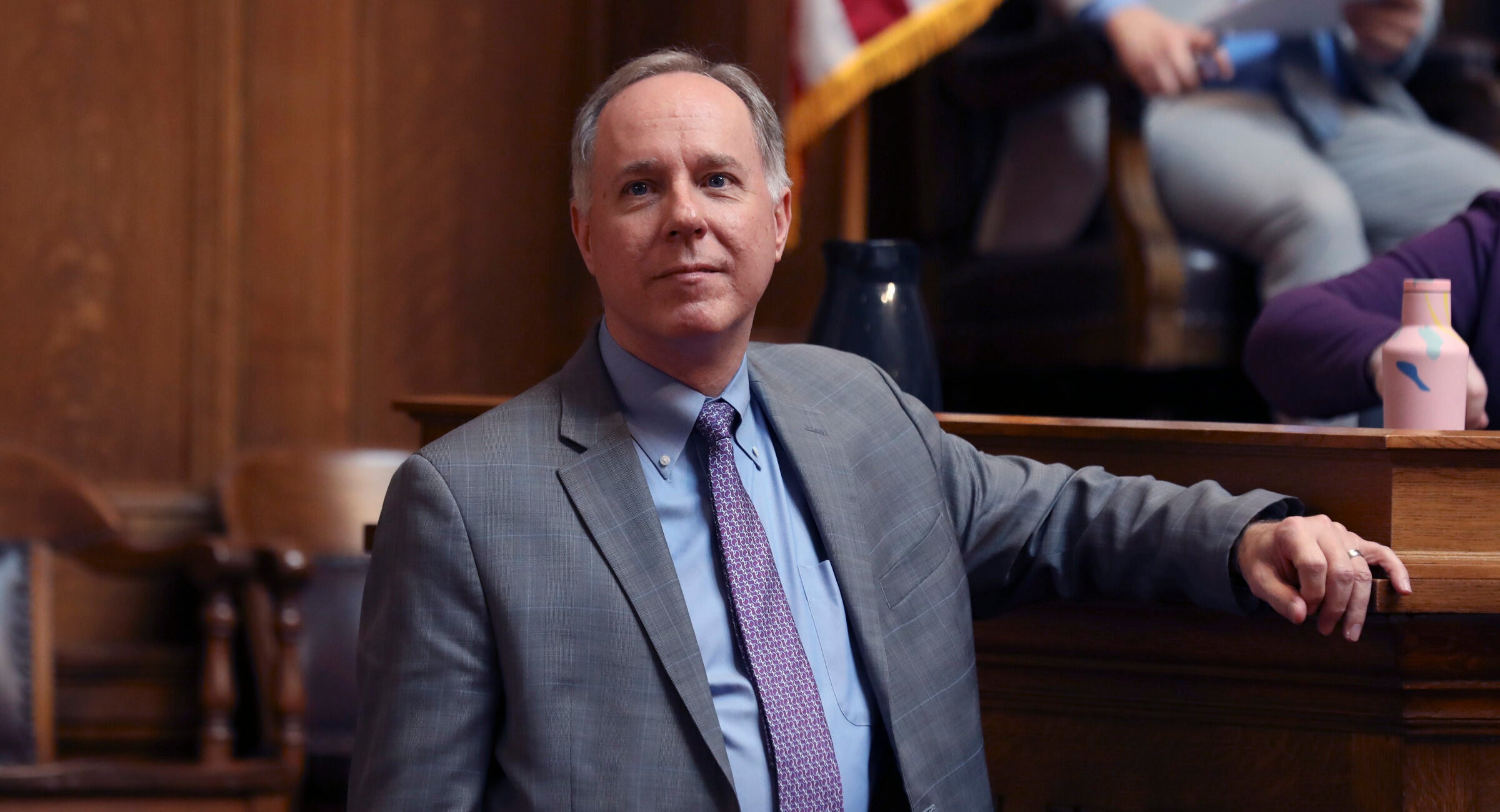
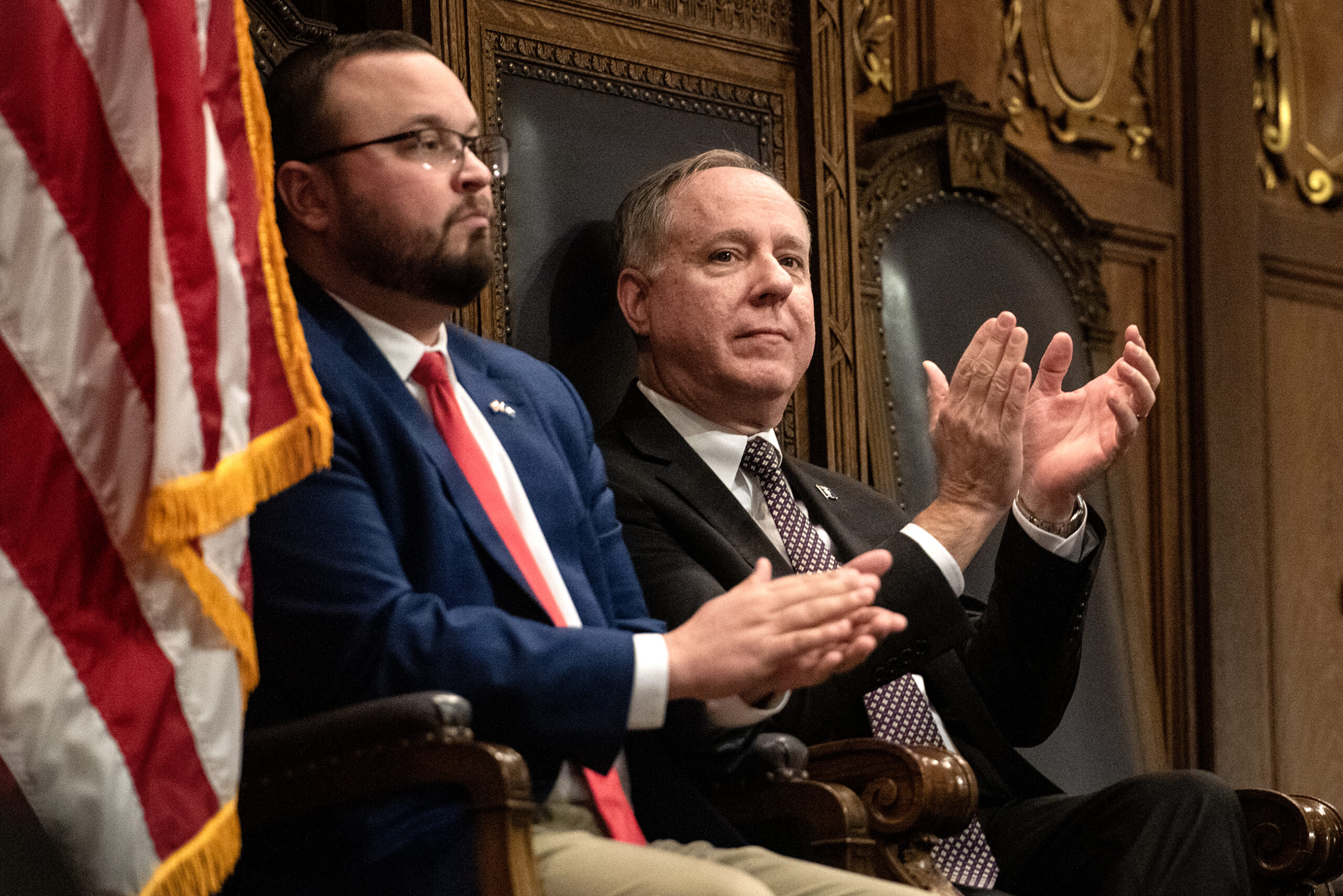
Wisconsin’s longest-serving state Assembly speaker predicted Tuesday that Republicans will win the governorship next November — even as he wouldn’t confirm whether or not he’ll run for reelection himself.
State Rep. Robin Vos, R-Rochester, raised eyebrows in October when he said he might not seek his 12th term representing the southeastern Wisconsin district he’s represented since 2004. But in a wide-ranging, end-of-year interview with WPR, Vos said he probably won’t decide until February.
“I love what I do,” he said. “I feel like I’ve helped to make sure that Wisconsin stays in the center lane, as opposed to going to the far left like Illinois or Minnesota.”
News with a little more humanity
WPR’s “Wisconsin Today” newsletter keeps you connected to the state you love without feeling overwhelmed. No paywall. No agenda. No corporate filter.
And one appealing prospect for the Republican leader: the end of Gov. Tony Evers’ tenure as a Democratic executive, after eight years in office.
“We have a good chance that (his replacement) will be a Republican, which would be exciting to work with,” said Vos.
Vos heralded the bipartisan budget deal struck between Evers, Vos and Democratic leaders in the Senate as proof that the two sides of the aisle could work together. That deal, which included tax cuts pushed by Republicans and spending increases for the Universities of Wisconsin and child care as Democrats wanted, was made possible by disunity in the Senate Republican caucus, which gave the Democratic minority an unusual amount of leverage.
Legislature to take up food stamp funds, affordability bills
On Tuesday, Vos said the remaining days in the legislative session, scheduled through March, will be aimed at lowering property taxes and working toward a bipartisan deal on how the state administers the federal Supplemental Nutrition Assistance Program, also known as SNAP or food stamps.
Republicans have put forward a bill that would limit how SNAP benefits can be spent, disallowing things like candy and soda. Meanwhile, Democrats have denounced recent changes to the program that put more costs on the state. Vos said he thought Democrats and Republicans could work out a deal that includes both the junk food ban and some increased resources for the program.

He said the GOP would advance a proposal to eliminate taxes on tips and overtime work, echoing a provision in President Donald Trump’s signature tax and immigration law. Evers had included a similar policy in his own state budget proposal in early 2025, but it was nixed by Republicans.
And Vos said that Republicans would put forward a constitutional amendment targeting the 400-year increase to school funding that Evers famously enacted in the 2023 budget, when he used his partial veto pen to strike out some letters and punctuation to transform two years of funding into four centuries’ worth.
The use of that veto was upheld by the Wisconsin Supreme Court in April, and Republicans have since introduced two possible changes to the state constitution in response. One, which has passed one session of the Legislature but not yet been reintroduced, would bar the use of partial vetoes to create or increase taxes or fees.
Constitutional amendments must pass two separate and consecutive sessions of the Legislature, and then be approved by voters. They are not subject to a governor’s veto.
Vos said reducing property taxes is one way of addressing rising costs statewide.
“The word of the year, in my mind, is affordability,” Vos said. “People are really concerned about prices and being able to afford the lifestyle that they want.”
Democrats, meanwhile, criticize Vos and other Republican leaders for not investing in priorities that they say will lead to lower costs down the line, such as the child care industry, school meals and expanding Medicaid.
‘Once-in-a-decade’ Wisconsin-focused election cycle
Much of 2026 will be taken up with political campaigns. Half of the Senate, and the entire Assembly, will be on the ballot. Two years after new legislative maps gave Democrats more seats in both chambers, and made some districts more closely competitive going forward, political observers say Democrats have a good shot at flipping the Senate and steeper odds at flipping the Assembly.
There are also races for U.S. Congress, two of which are considered competitive for the incumbent Republicans holding them.
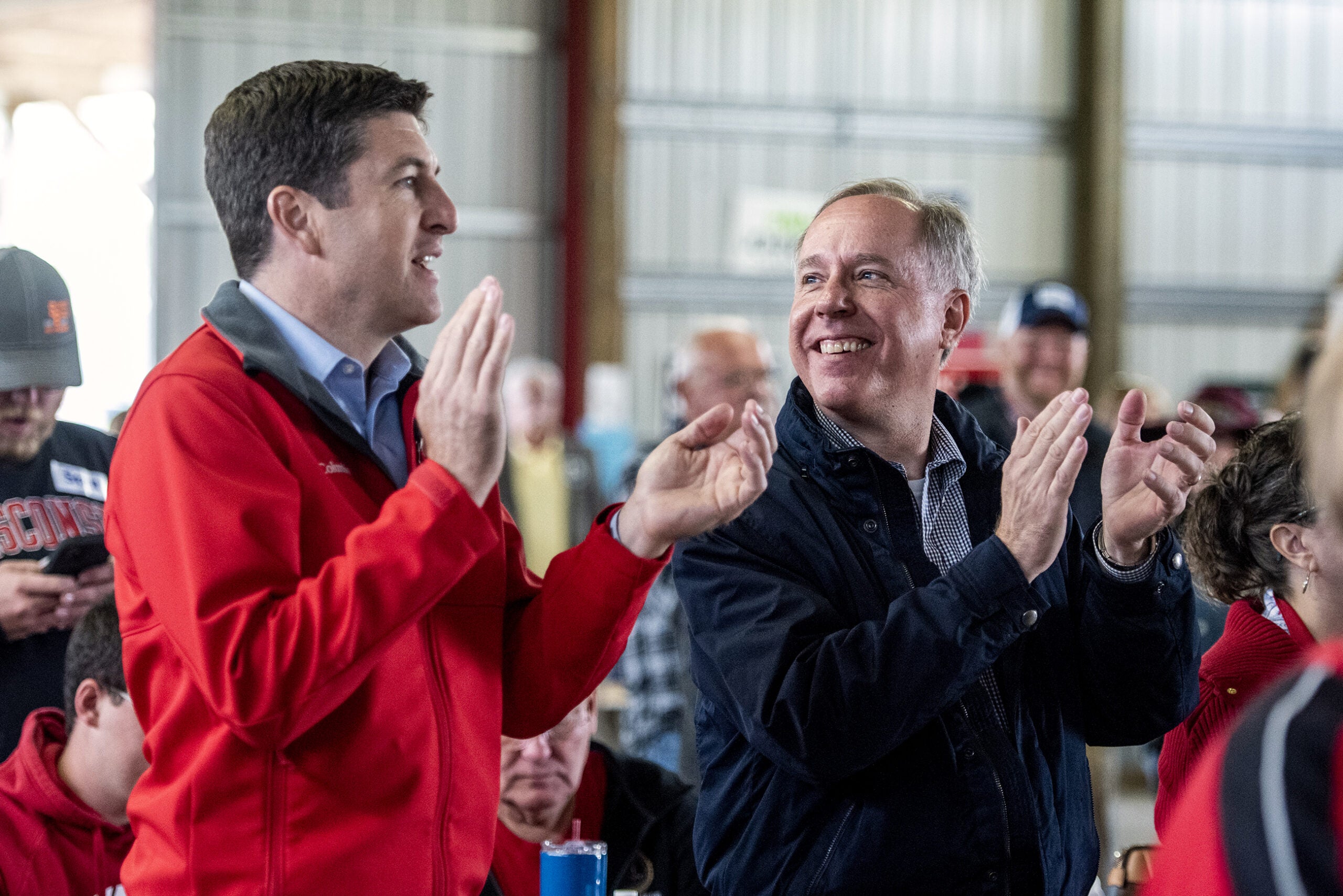
Vos said it’s a unique opportunity for Wisconsinites, so accustomed to being in the national crosshairs as a swing state, to have ballots solely focused on Wisconsin races.
“I love this once-in-a-decade opportunity for us to talk about Wisconsin,” he said. “Once every 12 years, it occurs where there is no presidential ballot and there is no U.S. Senate race on the ballot. It’s literally just about Wisconsin.”
But he said he’s not worried about Democratic success in the Legislature, and predicted that a Republican will clinch the governor’s race, pointing to a pattern of Wisconsin switching back and forth between governors of different parties.
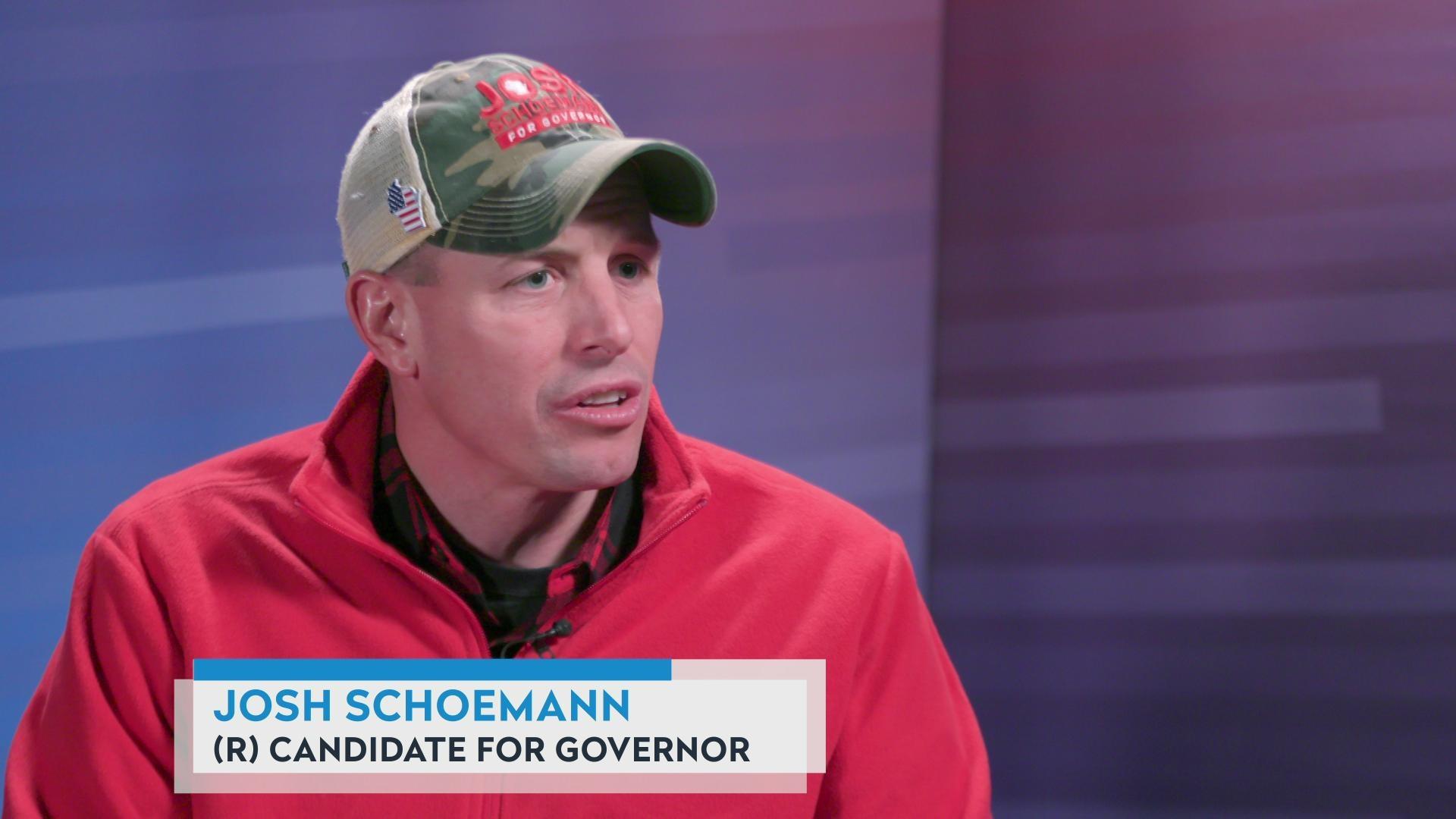
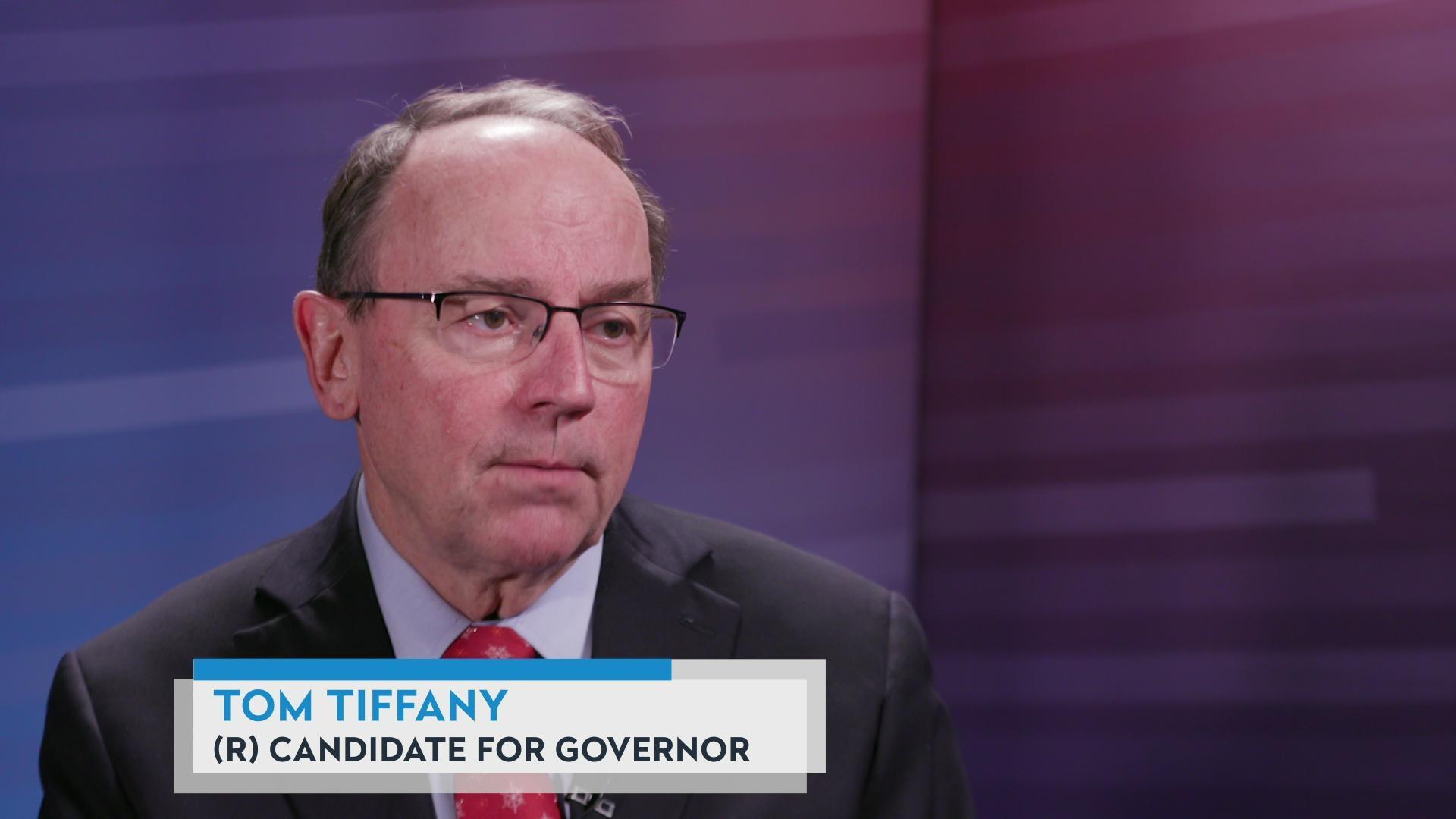
He declined to pick a favorite among the two declared Republican candidates for governor, U.S. Rep. Tom Tiffany and Washington County Executive Josh Schoemann, but said he’d happily support either.
Vos also criticized Wisconsin Democrats for being too focused on Trump, and argued that they don’t present ideas that resonate with most Wisconsinites. In the crowded Democratic field for governor, most candidates have cited the effects of the Trump administration as a reason for entering the race.
Vos has his own complicated history with Trump. For years, Trump regularly criticized Vos for not doing more to overturn the results of the 2020 presidential election in Wisconsin. In 2022, Trump backed a Republican primary challenger for Vos’ Assembly seat.
But Vos said he approves of many Trump policies — except for his tariffs. One of Vos’s own Racine-area businesses, he said, chose to swallow about $200,000 in increased costs tied to tariffs, rather than pass those increases on to customers.
But he said he supports the tariffs as a bargaining chip in international negotiations.
“I think an awful lot of folks are suffering with the cost of some of those tariffs, but granted, some of those things brought other nations to the negotiating table, which is positive for our country,” he said. “But I think we should use them like a surgical scalpel, not some kind of a hammer.”

Wisconsin Public Radio, © Copyright 2026, Board of Regents of the University of Wisconsin System and Wisconsin Educational Communications Board.