Throughout her career as an arborist, Rebecca Seibel hasn’t seen a lot of other women pruning branches and clearing wood in the treetops.
Forestry has historically been a male-dominated field, and she’s trying to change that through her consulting work at Tree Spirit Consulting in Holmen.
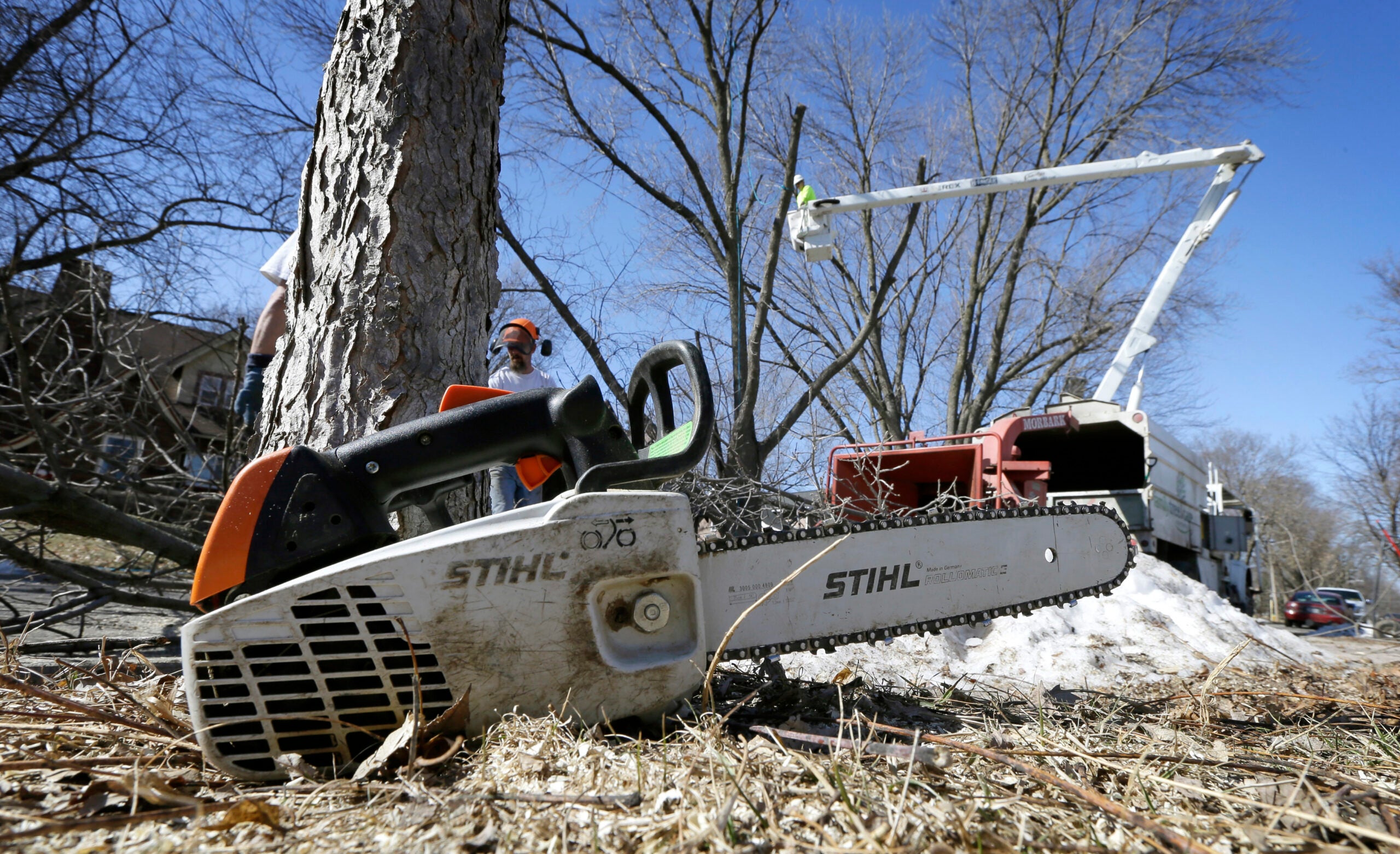
She recently taught chainsaw safety classes for the Dane County Parks Department geared toward women and gender minorities as she hopes to inspire a greater appreciation of arboriculture.
News with a little more humanity
WPR’s “Wisconsin Today” newsletter keeps you connected to the state you love without feeling overwhelmed. No paywall. No agenda. No corporate filter.
Seibel joined WPR’s “Wisconsin Today” to share her experiences and her efforts to make arborist activities more accessible.
The following interview was edited for clarity and brevity.
Rob Ferrett: How underrepresented are women in your field?
Rebecca Seibel: It depends on how you parse out the details. There are a fair few women in the field of arboriculture, which is professional tree care. But if you drill down a little bit and say, “How many women are field climbing arborists?” — then you start to get a much, much smaller percentage.
RF: What led you into that line of work, given that there might not be as many female role models with the chainsaws and up in the trees?
RS: My background is in biology. It’s in environmental physiology, actually, but I found myself gravitating towards working outside. I have enough of an athletic background, and I love nature.
So being able to be out in nature, where every day is different, it’s a challenge. And then you get to use your body to climb the trees. It’s an added challenge.
Every time you’re pruning a tree, you’re leaving something behind. So it’s like this winning trifecta of being able to be active, being able to be outside, and then having a living legacy of work.
RF: You teach classes on chainsaw safety and other outdoors topics. What are those like?
RS: Sometimes I’ve got people who are completely new to the tool. Sometimes I’ve got people who work for a municipality who only work with the chainsaw once or twice a year. It’s a challenge to be able to teach sound fundamentals in a short period of time, plus more advanced skills that are necessary to know if you’re going to operate the chainsaw safely. Because the chainsaw is a hazardous tool, and because we have to learn by being hands-on, it’s not for the faint of heart.
Just think of driving a car. When you first learn how to drive a car, once you know what you’re doing, you know the rules of the road, then you become comfortable so that you can mitigate the risks. That’s by work habits, and it’s by driving habits. So it’s a similar thing. The more hands-on experience you get, the more competent and more comfortable you become with the tool, and then you can do more.
RF: Not everyone who takes your classes will become a professional arborist, but do you try to instill a love for working outdoors?
RS: Oh, definitely. The field of arboriculture has got room for people who are doing invasive species management, ecological restoration and prairie restoration.
Volunteer organizations a lot of times will be interested in taking the classes. But as a professional arborist, it’s really a rewarding field. It’s a rewarding career, because if you plant a tree, for instance, I will die, but the tree will go on. There’s a sense of the greater good, and also leaving something that lasts beyond our lifetime on the Earth. We need a lot more of that.