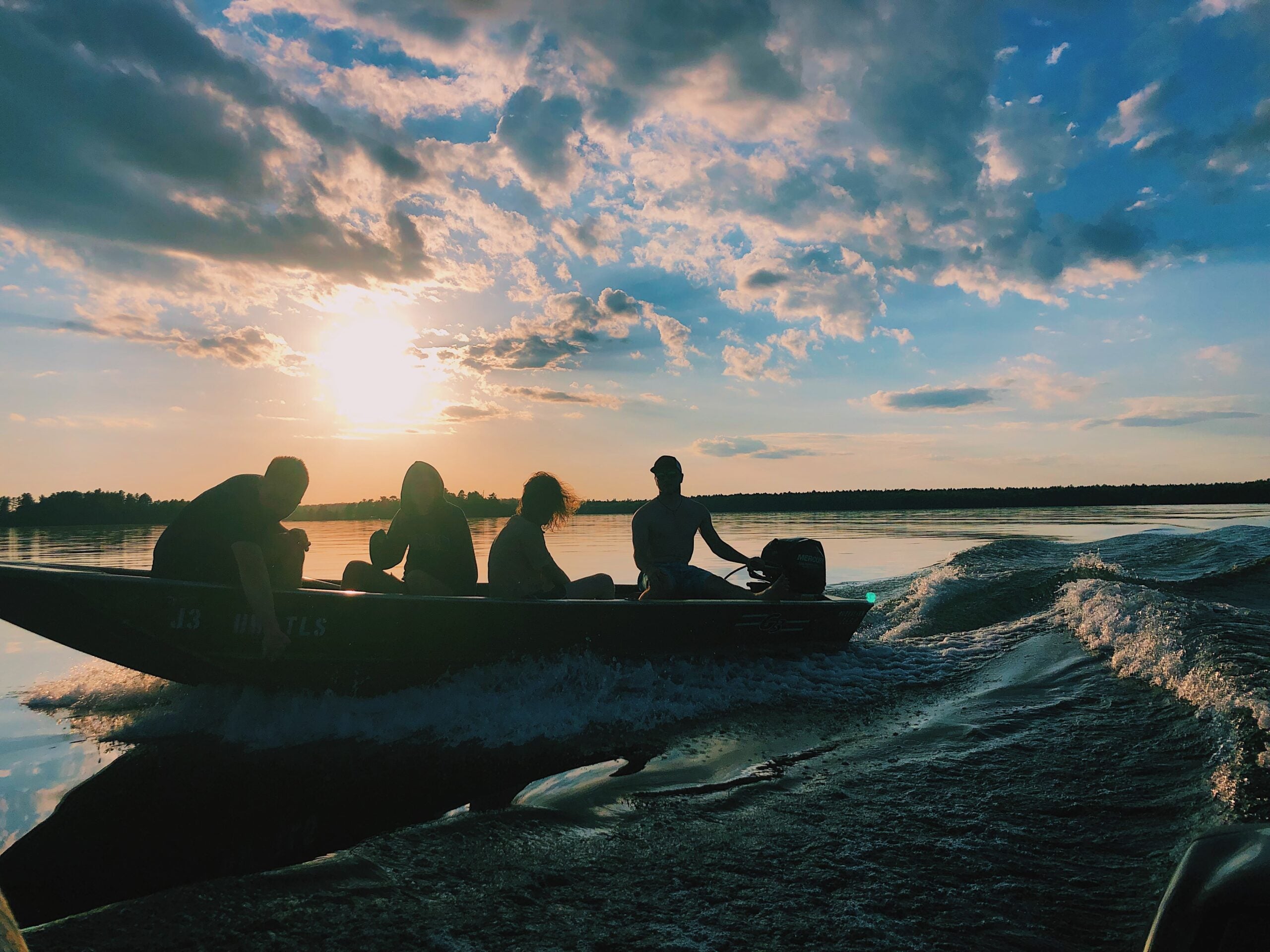

In the middle of the Mississippi River, between La Crosse and Minneapolis, sits a naturally forming lake that stretches 22 miles long. It’s the largest of its kind on the entire river.
But in recent years, the community around Lake Pepin has noticed their beloved natural resource filling in with sediment from upstream that forms islands and extends sand bars that have grounded boats and disrupted wildlife habitats.
Lovers of the lake formed a nonprofit group, the Lake Pepin Legacy Alliance, to take action to reduce sedimentation and protect the body of water they call home.
News with a little more humanity
WPR’s “Wisconsin Today” newsletter keeps you connected to the state you love without feeling overwhelmed. No paywall. No agenda. No corporate filter.
Executive Director Michael Anderson joined WPR’s “Wisconsin Today” to share the human-made causes and solutions to the problems affecting the lake.
The following interview was edited for clarity and brevity.
RF: Why are we seeing this sediment forming at the northern reaches of the lake?
MA: We get tons of sediment coming into Lake Pepin from the Mississippi River upstream of us, and in particular from the Minnesota River.
About 80 percent or so of the sediment that comes to Lake Pepin originates from the Minnesota River and all of that washes down once it gets to the lake. Where it gets wider, the sediment spreads, settles out and slows down, dropping out at the head of the lake.
That sediment that we’re seeing is coming from agricultural spaces. It’s coming to a lesser degree from urban runoff and a lot of what is termed “near-channel” sources: those areas that are close to the channel of a stream or a river that are eroding. A lot of our sediment has been fingerprinted back to those locations.
RF: What kind of ecological concerns are there with this sediment buildup?
MA: We’re really reducing the capacity for fish and water fowl in areas where this sediment is accumulating.
Once you start to get that buildup, it will resuspend into the water column, so it makes really cloudy, muddy water. Then aquatic vegetation won’t grow.
And once you start to lose your aquatic vegetation, you can lose the fish that require that for habitat and food. And you’re going to lose water fowl for similar reasons.
RF: What kind of efforts are you taking to cut down on the amount of sediment coming in?
MA: Things that we can do to reduce the sediment are activities that slow the flow of water. We want to keep water on the land longer. So if we can create different types of storage features of water, like restoring wetlands that hold water on the landscape, not only are we capturing whatever sediment may have been in that, but we now have less erosive potential in the river itself.
There are some other erosion control measures that can be implemented in farm fields and agricultural spaces that will slow water, keep it on the land longer, and in ways that don’t harm crops either.
Cover crops are a great one. They not only hold the soil in place, they will hold nutrients in place and they’ll hold water on the land. Farmers also can do things that fall under the umbrella of reduced tillage, things that don’t disturb the soil column.
When we have a more intact soil structure, that can hold more water and more nutrients on the land.
RF: What can you do about the sediment that has already built up in the lake?
MA: One great example of what you can do is an ongoing, nearly completed project in Bay City on Lake Pepin.
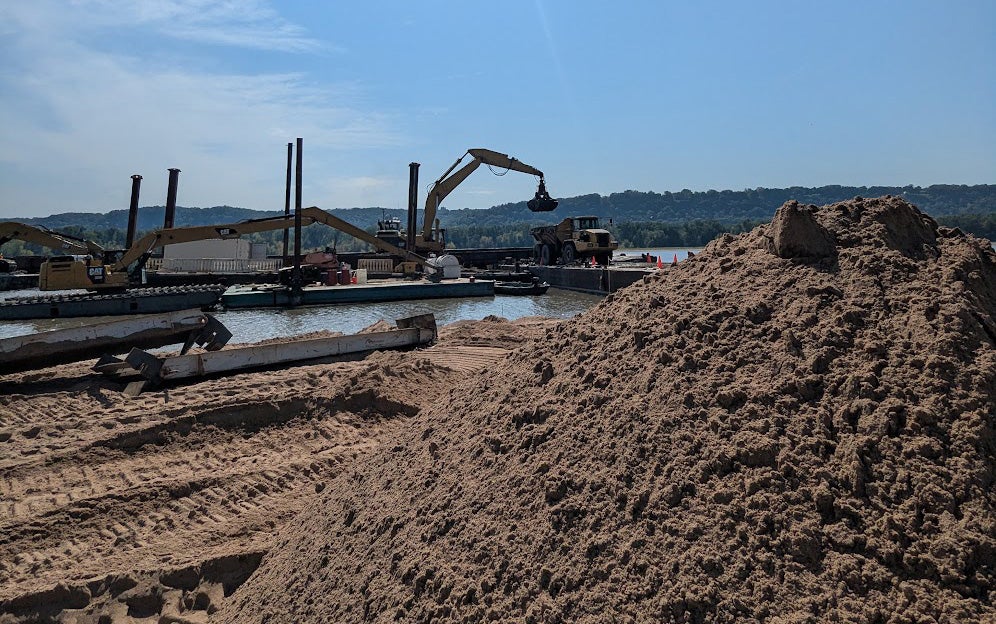
It’s colloquially called the Bay City Restoration Project. That project is building islands and it’s dredging out wintering pools where fish can congregate in the winter. The fine sediment is getting placed on top of these islands that were created and that is then going to be used as the growing medium for plants, trees and everything that’s there in a restoration project.

RF: Who is covering the costs for these projects?
MA: It is labor intensive and expensive. This project near Bay City is in the low $20 million price range. It is mostly federally funded, with a large part coming also from the state of Wisconsin, which put in over $3 million to get this project going.
The state of Minnesota, through one of its granting programs, put in $750,000, as well as some local partners in cities that put in money in like Bay City, Stockholm and Red Wing, Minnesota. They all realized the value that this project would have. Everyone pooled their money and that then triggered the federal government to release more money to be able to do this project.
RF: What is it about Lake Pepin that is special to you?
MA: I’ve lived on both sides of the lake. I’ve farmed on both sides of the lake. I was married on top of Maiden Rock Bluff, in the dead cold of winter, looking out over the frozen lake.
Not seeing the lake in a day can be hard. A good friend of mine who lives over in Stockholm used to farm right down near the water and they could see the lake every day. They moved their farm to the top of the bluff and I remember her telling me how much she missed seeing the lake on a daily basis.
She got to a point where she climbed one of the trees on her property so she could see the lake from where they were, on top of the bluff.
It just becomes a part of you.