
Darren Thompson’s journey as an Ojibwe flute player began at his home on the Lac du Flambeau Reservation in northern Wisconsin, but his music and message now reach audiences around the world.
A professional musician and multimedia journalist, Thompson uses his artistry not only to preserve Native American music but also to advocate for issues close to his community, from cultural revitalization to environmental conservation and missing and murdered Indigenous people.
In a conversation on “Morning Edition,” Thompson said his work is driven by a desire to raise awareness about Native American issues.
News with a little more humanity
WPR’s “Wisconsin Today” newsletter keeps you connected to the state you love without feeling overwhelmed. No paywall. No agenda. No corporate filter.
“It’s important to acknowledge that our people are still here and have contributed to the success and the safety of this country and the lands here,” Thompson said. “That will never stop.”
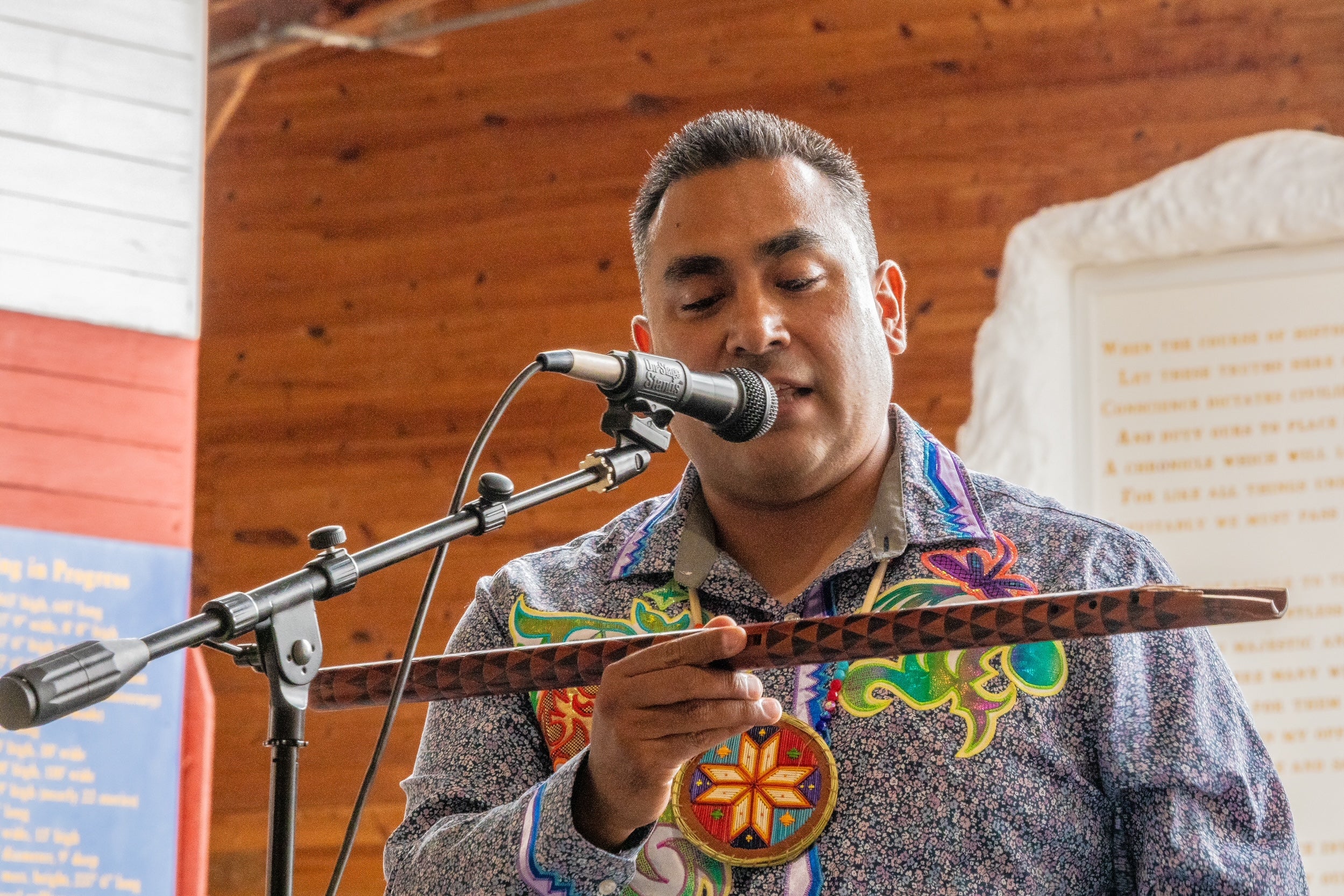
Though he first was entranced by the sound of the flute as a child, Thompson’s career playing the Native American flute began while he was a student at Marquette University. Within a few years, he became a respected performer and presenter at universities, conferences and cultural gatherings. His dedication to preserving American Indian music has brought him to venues such as the Smithsonian’s National Museum of the American Indian, the North American Indigenous Games, and the Gathering of Nations Powwow.
Over the years, Thompson has released three albums. His 2015 release, “Between Earth and Sky,” earned national recognition and a nomination from the Native American Music Awards for Flutist of the Year in 2016 — the first for a flute player from Wisconsin. His music has been featured by the Wisconsin Chamber Orchestra and professional sports teams such as the Phoenix Suns, where he performed the national anthem on the Native American flute in 2023.
For Thompson, the flute is both an instrument and an extension of Native identity — a way to ensure that traditions, stories and songs continue to be heard.
The following interview was edited for brevity and clarity.
Shereen Siewert: What makes a flute Ojibwe in sound or style?
Darren Thompson: Two things, essentially: who the maker is and the style of the song. There’s not much differentiation between the Ojibwe style and the Menominee or Lakota style. In times past, the instrument was personal; you wouldn’t hear it in a group setting or public setting. Each flute was used by a single individual person.
Many of the songs made today are influenced by old Ojibwe songs that are still sung and heard to this day. Much of the unique Ojibwe style of singing was influenced by the Dakota style, and it is very similar to Native American flute music. The style of Native American flute music was influenced first by the voice and singing style of American Indian songs.
SS: What role does the flute play in Native American tradition and storytelling?
DT: The flute has played various roles throughout history, particularly in the Southwest. There were many examples that the Spanish wrote about in their meetings with tribes as they saw that people were playing flutes to their plants or in their farmland. Flutes back then were very simple, with only three holes, and the melodies played were not very complex. It really reflects a history of trial and error, experiencing how plants respond to music.
There are many other Indigenous cultures that have approaches to plants like that, as well. Further north and east, the instrument was used while people traveled on horseback as a way to sing a song. One role the flute plays is a scientific one, while another is for traveling or peace. But the most common style is love, songs that are played for romantic purposes. Most stories about flute song from the 1800s and earlier are centered around expressing love from a man to a woman.
SS: How do you see music helping revitalize Native American culture and identity in Wisconsin?
DT: The instrument is one of those aspects of Native American knowledge that has made it through generations. It has shared experiences with us. There are museums throughout the world in which you can see the different styles of flutes that are on display, from Minnesota to Wisconsin and throughout the Great Lakes region, as well as in other areas of the world.
SS: You have used music as a tool for advocacy and awareness. What are some causes that matter most to you?
DT: Over the years I have built tremendous partnerships with communities and tribal leaders, individuals leading at the forefront of whatever the issues may be, including serious ones. There are a lot of stereotypes out there, and music provides an opportunity for me to expose people to issues they wouldn’t have otherwise been exposed to.
We are all connected and related, and it’s important to know that essentially what can happen to us, or to me, can also happen to you. Conservation is also a big area that brings tribes and people together. Regardless of whether people are from a tribe or not, we only have one place that we call home. For the sake of those we don’t know yet, it deserves to be preserved. That’s essentially a big component of my advocacy.
If you have an idea about something in central Wisconsin you think we should talk about on “Morning Edition,” send it to us at central@wpr.org.