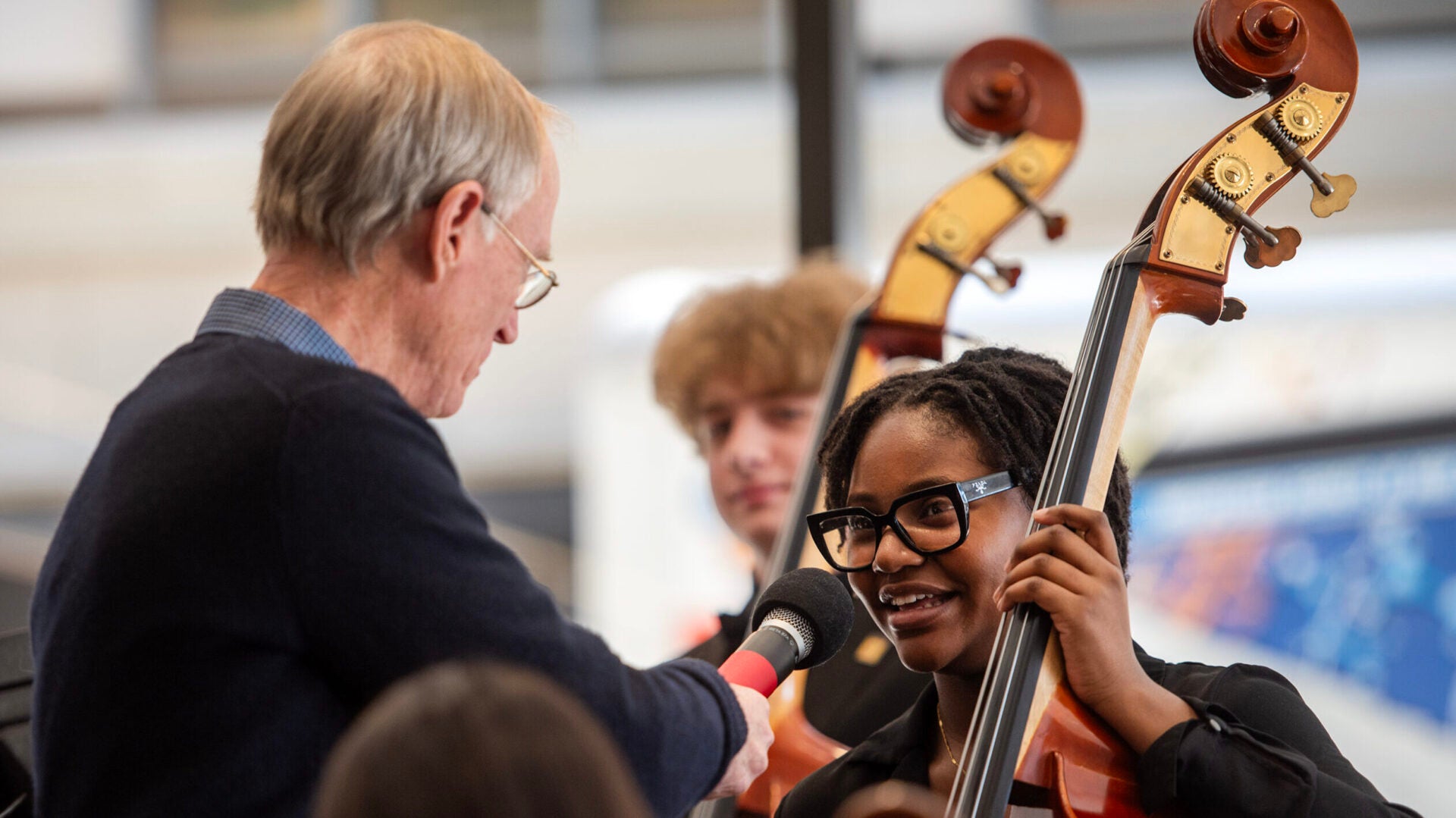
Our WPR Music staff members are here every day, bringing you curated playlists and expert insight into the pieces they play. Their voices accompany you on your commute, throughout your work day, while running errands and even into the evenings, serving as a soundtrack to cooking dinner or catching up with your loved ones.
Having recently started working as WPR’s new music producer, one of my favorite parts of the job is getting to know the hosts. They are all so knowledgeable about what they do, and it’s a real treat to work with such passionate and talented people.
In an effort to learn more about each host, I spoke with them about what songs or pieces made them fall in love with music. (To those of you, like me, who didn’t know the difference: a song is typically words set to music, while a piece is music without lyrics.) I wanted to learn about their tastes and experiences and open the floor for them to talk about other genres they might not talk about on air.
News with a little more humanity
WPR’s “Wisconsin Today” newsletter keeps you connected to the state you love without feeling overwhelmed. No paywall. No agenda. No corporate filter.
Read on to see their responses — hopefully you find a new favorite piece of music along the way!
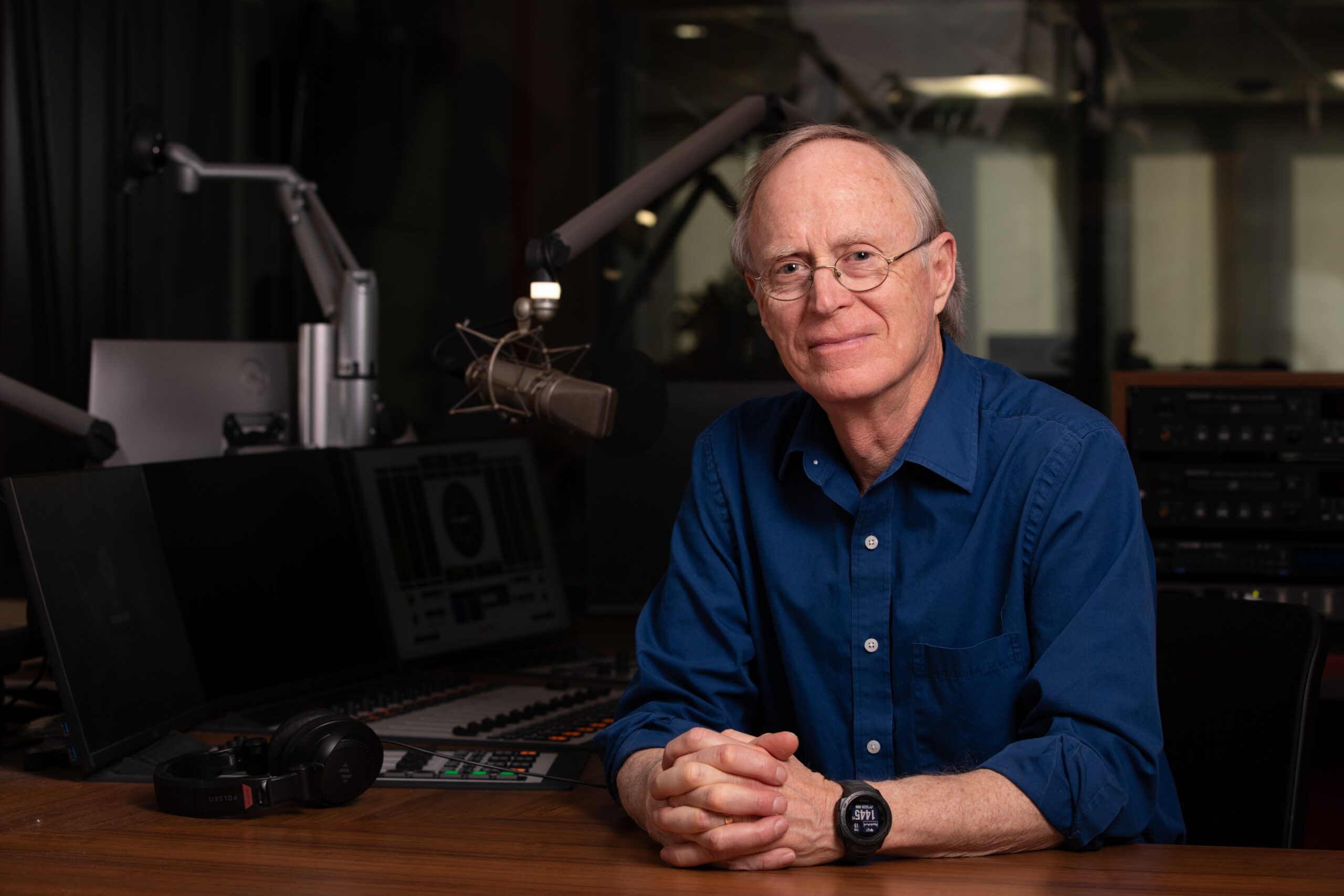
Norman Gilliland, ‘Midday Classics’
Atlanta Symphony Orchestra: “O Come, All Ye Faithful”
It’s the first song I remember hearing. I was about 4 years old. My older sisters and I were at some kind of Christmas event. Being only about 40 inches tall at the time, I couldn’t see around them to determine if someone was leading the singing. But since I remember the song and the scene, it must’ve had a lasting effect. I later learned to sing the song in Latin, which gave it a pleasant air of antiquity and deepened the sense of music’s continuity across generations.
Sergei Prokofiev: “Peter and the Wolf”
By the time I was 5, I discovered the pleasure of eating Ritz crackers while listening to a story in which all the characters were represented by musical motifs. The narrator was Basil Rathbone, who gave the story of childish disobedience and repercussions wonderful urgency. It was on 78 RPM shellac discs that spun like buzzsaws and, if nicked, became a clear and present danger.
Pyotr Ilyich Tchaikovsky: “The Nutcracker”
When I was in preschool, the teacher conducted an interesting interdisciplinary experiment. She had us coloring to music with our eyes shut. The dances from “The Nutcracker” were well suited for the exercise and the music was so entrancing that when I opened my eyes, I discovered my coloring had sailed right off the paper and onto the tabletop. To this day, “The Nutcracker” makes me think of abstract art.

Jonathan Øverby, ‘The Road To Higher Ground’
Paul Robeson: “Go Down, Moses”
The spiritual “Go Down, Moses” created by an unknown enslaved bard carries deep significance — historical, cultural and sacred. Rooted in the biblical story of Moses, its haunting melody is among the most moving of all Afrocentric sacred songs, serving as an allegory for the bondage of African Americans who, like the Israelites of old, longed for home and freedom in this life or the next.
I have embraced this song as one of the few true protest anthems within the canon of spirituals. My personal connection deepened when I first heard bass-baritone Paul Robeson’s stirring rendition, which inspired me to include it regularly in my European concert tours. More often than not, I turned to Harry T. Burleigh’s masterful arrangement, which still speaks directly to my spirit.
“Go Down, Moses”— alongside “Sometimes I Feel Like a Motherless Child”— remains a reminder that suffering, oppression and struggle are never meaningless. Its message affirms a higher power at work for justice, a belief that continues to guide the way I live my life.
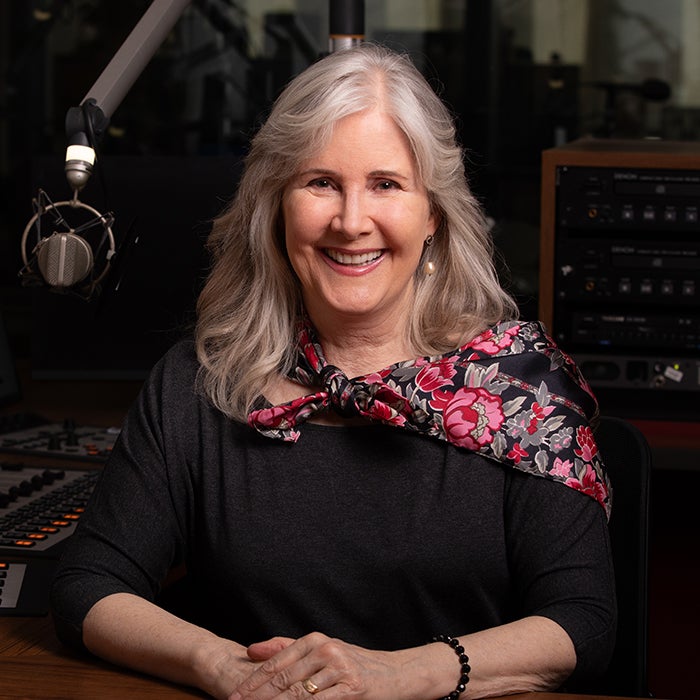
Stephanie Elkins, ‘Morning Classics’
J.S. Bach: Mass in B Minor, “Gloria in excelsis Deo”
My love affair with music was kindled at a young age by singing with others. My sister, brother and I created three-part harmonies while I played folk music on the guitar. We sang lots of John Denver; the Eagles; and Crosby, Stills, Nash & Young — especially on long road trips and around campfires.
I also sang classical music from an early age in church choirs and later in school ensembles, at university and in community choruses. The best of those was the Bach Choir of Bethlehem (of Bethlehem, Pennsylvania), which produces the Mass in B Minor by Johann Sebastian Bach every year with a full orchestra and professional soloists.
Performing that magnificent piece while surrounded by fellow singers and stellar artists was always a deeply transcendent experience. There were a few occasions when I was so overcome with emotion that I had to lip sync and others when I succumbed to tears, simply lost in the beauty and power of the music.
Folk music and Bach might seem worlds apart, but singing in parts with others never fails to move me, to lift me up. Listening to good choral music does the same, whether it’s from the Renaissance or the 21st century.

Jason Heilman, ‘Drivetime Classics’
Ottorino Respighi: “Roman Festivals”
I feel like I’ve always had music around me, so I can’t remember what made me fall in love with it in the first place. But I do remember when I fell in love with the orchestra.
I was a freshman, playing trumpet in my high school marching band, when I heard another band play something from Ottorino Respighi’s “Roman Festivals” at a competition. I was impressed enough to go out and buy it on CD, with Eugene Ormandy conducting the Philadelphia Orchestra, and that record opened up a whole new world to me.
Respighi’s music was full of colors and layers and textures that were beyond anything I’d experienced before. From that point on, I was hooked.
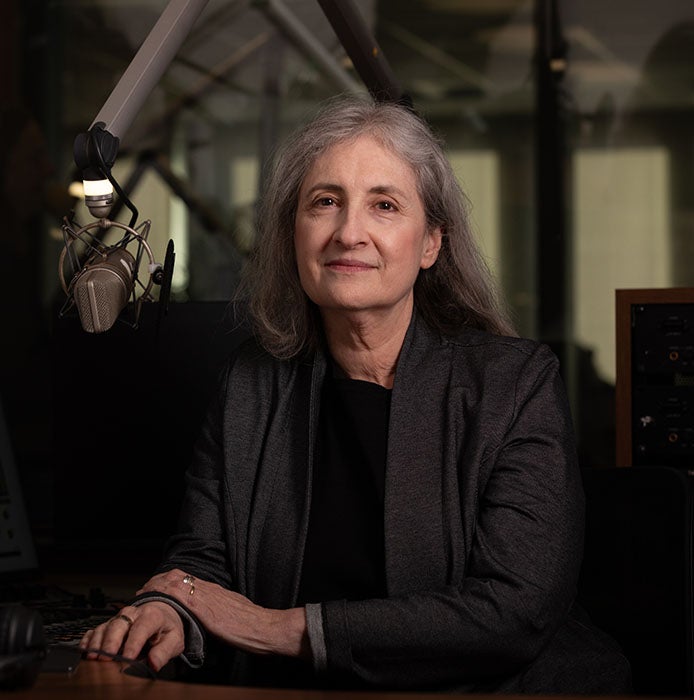
Ruthanne Bessman, ‘Classics By Request’
Claude Debussy: “Clair de lune”
Since my childhood, my mother would tell the story of hearing her older sister, Ruth, play Claude Debussy’s “Claire de lune” beautifully on the piano and later on the harp.
As a young art student growing up and then years later as a harpist myself, this piece continued to have great meaning for me. I have always loved the painted landscapes by the French artists: Jean-Antoine Watteau, Jean-Baptiste-Camille Corot, Camille Pissarro, Paul Cézanne, Claude Monet and others. It was easy to pretend to be inside those idyllic pastoral settings.
Years later, learning pieces by Debussy on the harp was a magical experience. The gorgeous sounds made by the exquisite melodies, lush chords and glissandos was truly breathtaking to experience. To this day, when I hear “Claire de lune,” it conjures up those special memories from long ago.
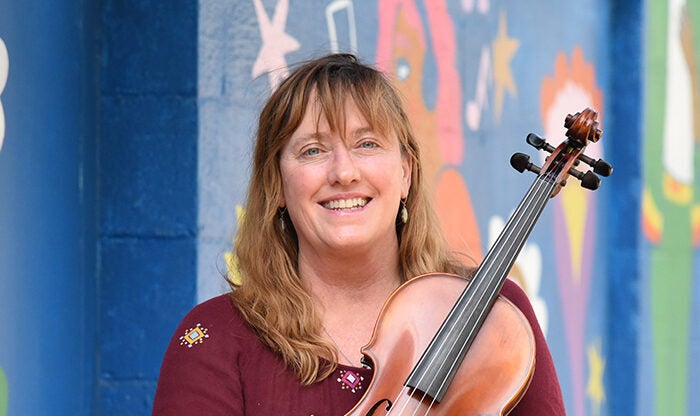
Síle Shigley, ‘Simply Folk’
Clannad: “Gaoth Barra na dTonn”
After moving to Wisconsin as a child, I developed a habit of listening to folk and Celtic music on the radio. To this day, I haven’t been able to solve the mystery of where exactly I was on the dial when I first heard the song that changed my life.
I had run in from playing outside, knowing I’d have just enough time to stretch out on the floor in front of my dad’s sound system and hit “record” on my portable cassette player. The first few songs flowed by, and then… a quiet, unaccompanied, rich voice singing in a language I didn’t recognize. The song was “Gaoth Barra na dTonn” sung by Máire Ní Bhraonáin of the avant-garde Irish traditional group, Clannad.
Tá gealach na gconnlach ag éirí sa spéir
‘S grian bhuí an Fhómhair ag tomadh sa weir
Tá na beachógaí ‘dranndián sa tsean duilliúr donn
Tá Gaoth Barra na g’Coillte, Gaoth Barra na d’Tonn
In the coming hours, I rewound the cassette tape over and over again, writing down the Irish Gaelic sounds phonetically as best I could. I kept — and eventually wore out — that paper for years, learning the song by memory. It became a kind of sacred mission to not allow myself to look for a translation. I wanted to study Gaelic until I understood the song I treasured.
Over the years, my Gaelic slowly improved and I kept singing the song until, finally, most of the pieces were in place.
The harvest moon is rising into the sky
Autumn’s yellow sun is dipping into the weir
The young bees hum in the old brown leaves
In Gaoth Barra of the Woods, Gaoth Barra of the Waves
This ode to a treasured river in Donegal, Ireland led to a lifetime of devotion to Celtic and folk music, and ultimately to a career at WPR where — most likely, though I may never be sure — I first heard the song that changed everything.
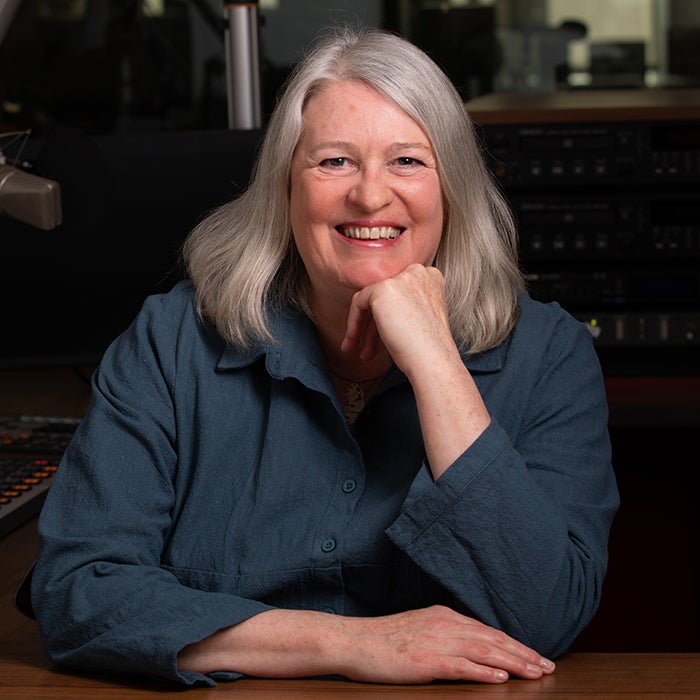
Lori Skelton, ‘Afternoon Classics’
Wolfgang Amadeus Mozart: Symphony No. 36, K. 425 “Linz Symphony”
My first real awareness of classical music came through ballet, and for a long time, if it wasn’t Tchaikovsky, I didn’t like it. I thought Mozart was boring, and anything written in the 20th century was noise.
However, when I was 16, I had the opportunity to take a music analysis class, learning how to take a piece of music apart to study its structure. One of the pieces we studied was Mozart’s “Symphony No. 36” in C Major, the “Linz Symphony,” and as I pondered the puzzles of harmonic progressions and movement of the inner voices in chords, Mozart wasn’t boring anymore.
The next piece we examined was Krzysztof Penderecki’s “Threnody to the Victims of Hiroshima.” Now that I had the structure of Mozart in my brain, I could appreciate the different techniques Penderecki was using with the strings, and I became increasingly curious as to how classical music evolved, and what else could be created. Decades later, Mozart’s “Linz” is still my favorite of his symphonies, and a great reminder to keep your ears open.
Ava Kuredjian, producer
“Gole Sangam” is a classic Persian melody I grew up listening to. The song’s title translates to “flower of stone,” the singer lamenting that without the light of their lover, they will wither, turning gray and cold. The heart-wrenching (and at times melodramatic) nature of these lyrics along with Sattar’s rich voice and the delicate instrumentals cement “Gole Sangam” as one of my favorite songs.
I became obsessed with Sattar in high school, stemming from this song. For my 17th birthday, I celebrated by going to see him perform live (which was absolutely amazing). Later, I joined KCSB, my college radio station, and hosted a weekly show focused on music from the Middle East and North Africa. This later expanded to a world music show, a job training volunteers at the station, a deeper connection with my Iranian heritage and a love for radio.
It’s all led me to where I am now, working as WPR’s music producer and continuing to explore all that the radio medium has to offer. I’ve got Sattar and “Gole Sangam” to thank for it all!
Peter Bryant, WPR Music Program Director
Hymn: I Will Arise and Go to Jesus
This is a hymn I first remember hearing at the Baptist church my family attended in Bowling Green, Kentucky. I was about six or seven and never cared much for hymns (still don’t), but this one was different. Something about the melody made everything else fade away for a few minutes. This had never happened to me before, and the effect was so strong I can still remember where we were sitting and that it was a stormy spring morning.
The melody is based on an American folk tune, and in this version of the hymn the words are beautiful and strange. Many years later this experience contributed to my interest in composers like Ralph Vaughan Williams, whose work with folk songs from the British Isles influenced so much of his music.
Our work in radio gives us the privilege of hearing similar stories from many listeners about how one piece of music can have a powerful effect like this. Often the experience catches them by surprise. It’s a rare thing, and something to be grateful for.
This is a short and somewhat polished arrangement of the hymn, but the haunting melody still comes through. We play it on the air occasionally.