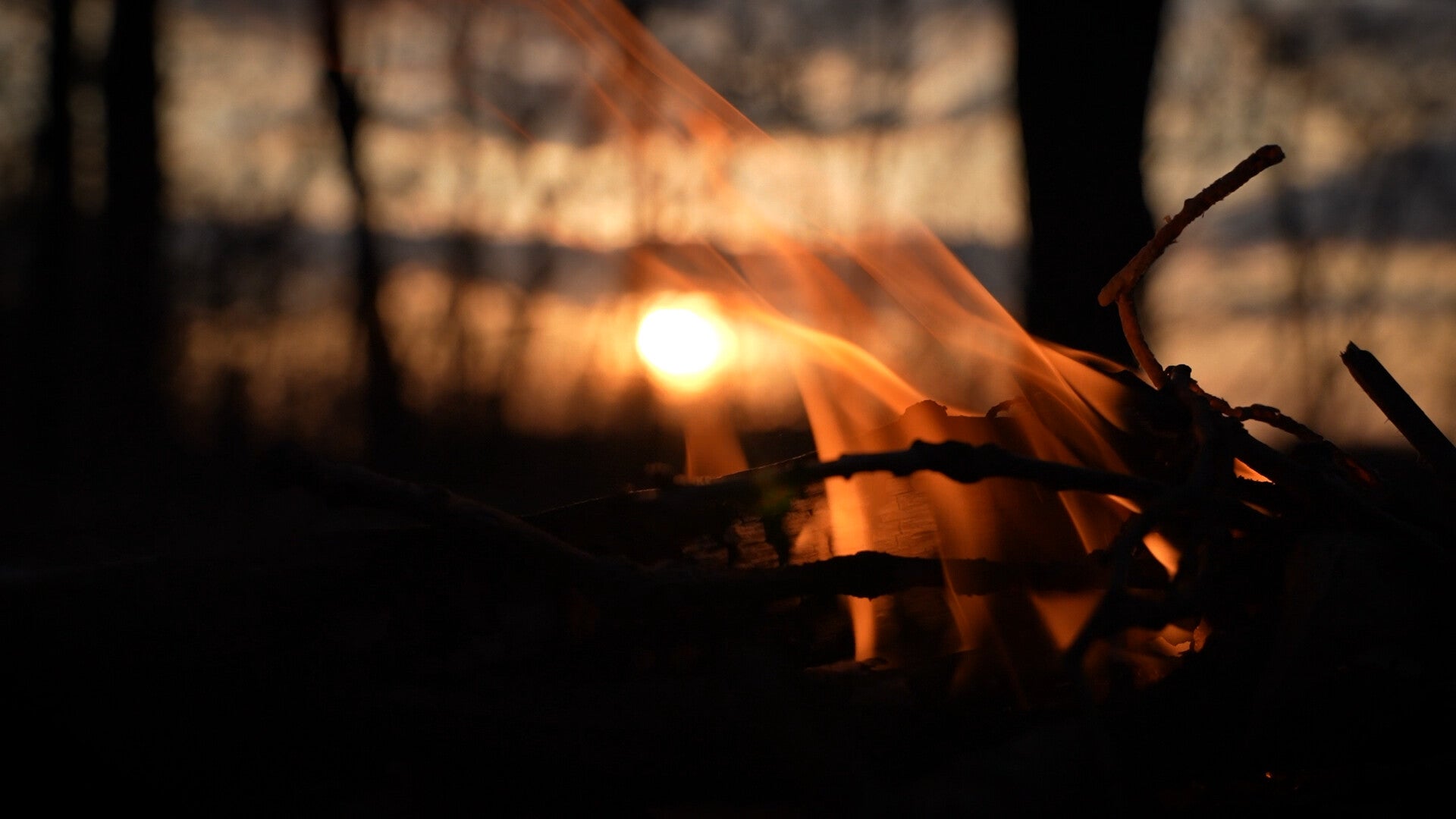
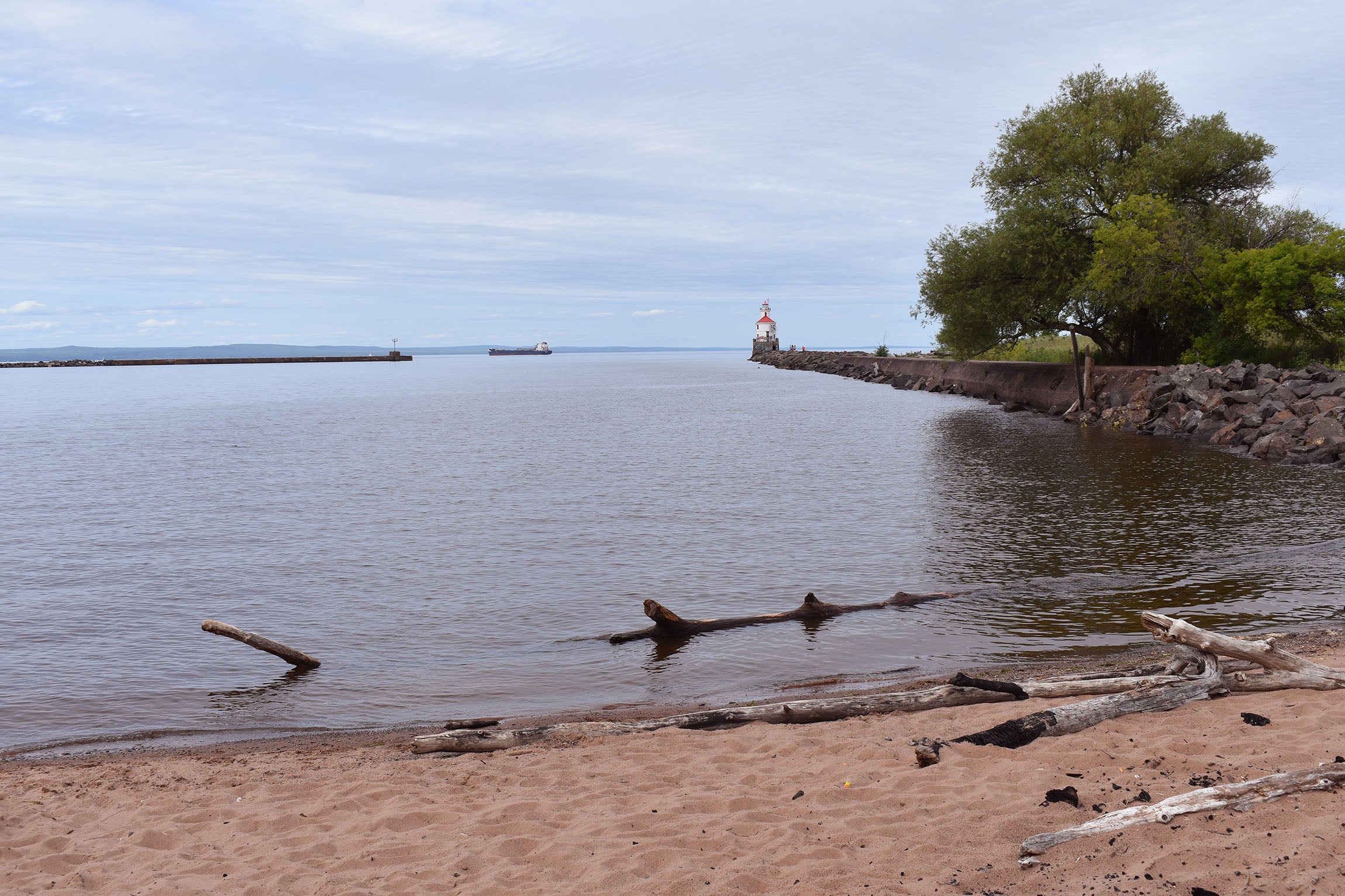
For the first time in generations, fire will return to Wisconsin Point — not as a wildfire, but as a pathway to renewal.
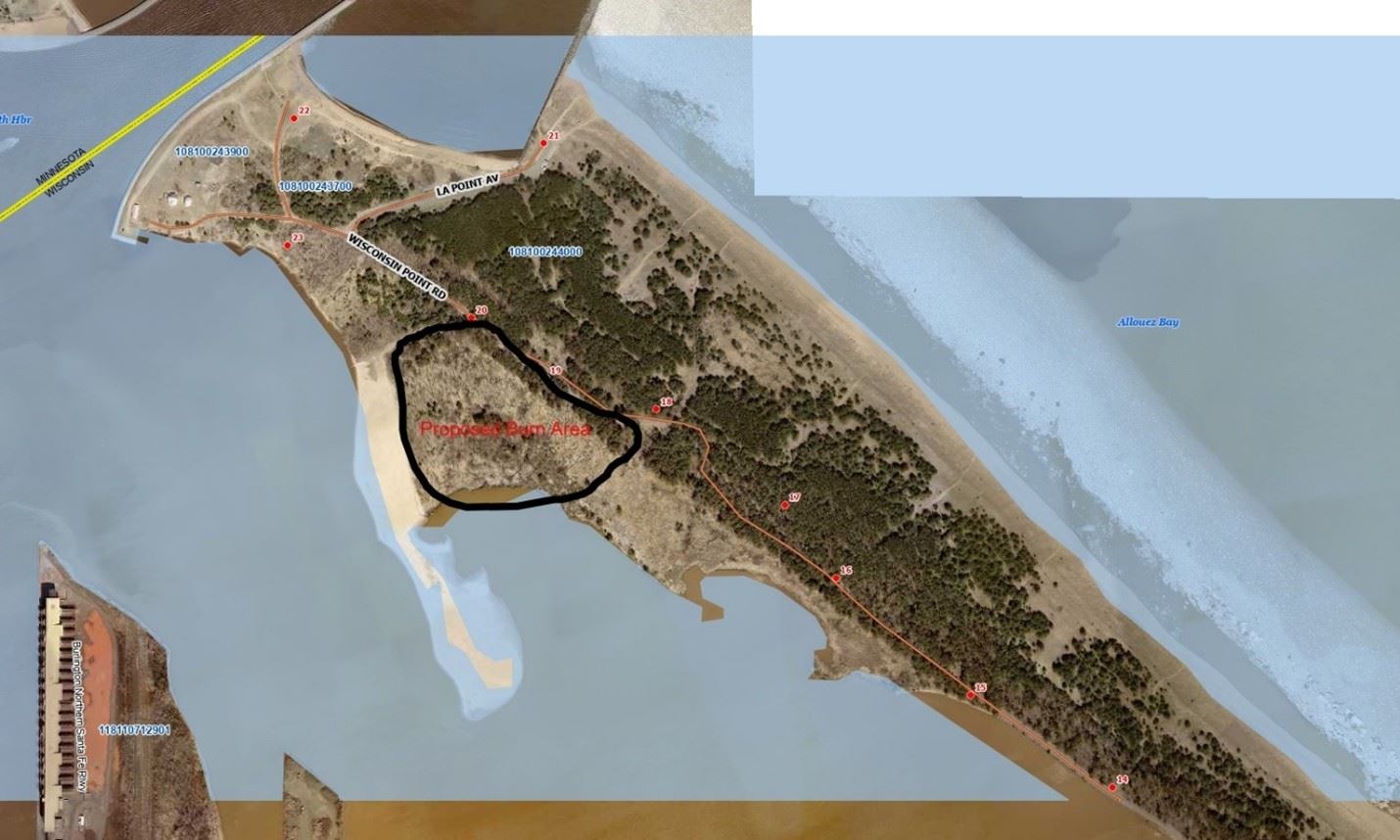
The Fond du Lac Band of Lake Superior Chippewa and the Superior Fire Department this month are planning a cultural prescribed burn on the spit of land jutting out into Lake Superior.
Called Ishkode, which means “good fire” in Ojibwe, the burn will clear invasive species, return nutrients to the soil and help native plants thrive while honoring the sacred relationship between the Ojibwe people and the land.
News with a little more humanity
WPR’s “Wisconsin Today” newsletter keeps you connected to the state you love without feeling overwhelmed. No paywall. No agenda. No corporate filter.
“People have populated the point for thousands of years,” said Vern Northrup, a Fond du Lac Band elder and firekeeper. “They used fire to gather. They used it for hunting. It was always used on the point up until about the 1920s, when all fire became ‘bad.’”
Northrup, who spent 24 years with the Bureau of Indian Affairs as a fire operation specialist, along with Alex Mehne, the forestry supervisor for the Fond du Lac Band, and Superior Fire Chief Camron Vollbrecht joined WPR’s Robin Washington on “Morning Edition” to talk about the burn.
This interview has been edited for brevity and clarity.
Robin Washington: How exactly is the burn carried out and will there be any differences between those in the past and what’s happening now?
Alex Mehne: I can only speculate about exactly how the burns were carried out before the 1920s. There is a large volume of lost knowledge, particularly with the advent of residential schools.
But we’re going to be using some fairly modern tools that are used in prescribed burns, in terms of implementing control lines, having hose lays that assure the fire goes exactly where we want it to.
One of the similarities that we’re hoping to emulate is to make the burn more of a mosaic style, where we try to have the burn more intense in some areas and less intense in others, with the explicit purpose of favoring different communities of medicinal and culturally utilized plants.
RW: This is notable in that it’s a collaboration between the Fond du Lac Band, the Lake Superior National Estuarine Research Reserve, The Nature Conservancy and the city of Superior. The fire department is normally putting out fires. What will its role be?
Camron Vollbrecht: We’ll be there working alongside members from the Fond du Lac Band and Forestry Department to help initiate the fire and then control it, including setting up control lines, having apparatus to make sure the fire burns how we want it to burn.
RW: Vern, I imagine this is something you’ve had a great amount of experience doing in your career in fire operations for the Bureau of Indian Affairs.
Vern Northrup: When I first started, we had no prescribed fire on the Fond du Lac reservation. It was mostly just out-of-control wildfires. And the population was concerned about using fire for clearing and for hunting. So we started a campaign to bring it back and it’s been very successful.
Other reservations have joined in and they’re very successful in their burn programs too.
RW: We mentioned the spiritual nature of the burn, but obviously people want to see what’s happening out of curiosity, if nothing else. What’s the respectful way of watching?
AM: I don’t know if the media plans on doing any videotaping. Anytime there’s more people around the fire, that always complicates matters.
CV: During burn day, the point will be completely closed for public access. We have to know where everyone is and who needs to be trained as firefighters and working with our group. But there will be an opportunity for the public to watch at the Bunge Dock in the East End of Superior. It’ll be directly across from the burning on the other side of Allouez Bay, at a safe distance in a safe area.
VN: Our aim is to bring some healing to that land. One of my concerns is that the invasives are starting to take hold out there. It’s concerning to see where they’re choking out our native vegetation.
So hopefully we can bring it back to the condition that it was before they removed all fire, because back then it definitely didn’t look like what it looks like now.
If you have an idea about something in northern Wisconsin you think we should talk about on Morning Edition, send it to us at northern@wpr.org.