For Jessica Skeesuck, vice chair of the Brothertown Indian Nation, restoring wild rice goes beyond just helping the environment.
“It is an important food from a nutritional value perspective, but also from a very important cultural perspective for many tribes, including Brothertown Indian Nation,” Skeesuck told WPR’s “Wisconsin Today.”
Skeesuck and Jessie Conaway, an outdoor educator at the University of Wisconsin-Madison, are co-leads on the Intertribal Lake Winnebago Wild Rice Revitalization Project.
News with a little more humanity
WPR’s “Wisconsin Today” newsletter keeps you connected to the state you love without feeling overwhelmed. No paywall. No agenda. No corporate filter.
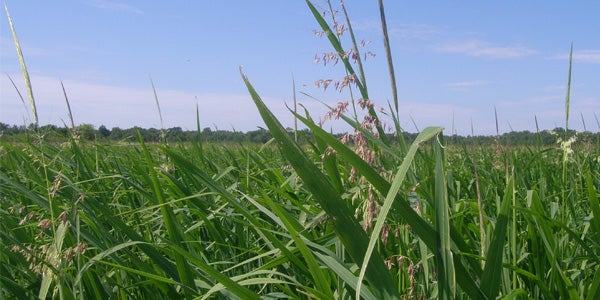
Wild rice, also known by several Indigenous names including “Mayom” and “Manoomin,” is a plant that grows in the soil of shallow waters native to the Great Lakes region. The state Department of Natural Resources reported in August that the wild rice crop was low in 2025, continuing a recent trend that it attributes to unfavorable weather in 2024.
For three years, Skeesuck, Conaway and other collaborators have worked to reseed wild rice across the lake by combining mainstream science and Indigenous reseeding methods. This can mean reseeding via “broadcasting” — throwing rice directly into the water — or by mixing wild rice with nearby clay and sediment to create “mud balls” to then place into the water.
Skeesuck said restoring wild rice creates a healthier ecosystem in the area.
“The wild rice and the fish … need one another to continue to sustain themselves for the future,” Skeesuck said.
In December, the Environmental Protection Agency awarded the project a roughly $3 million Community Change Grant. The money was set to be used for a variety of purposes for the project, including hiring staffers to collect water samples and monitor the health of reseeded rice.
Although the funding was granted in December, Conaway said it disappeared from the website they use to access the funds about six weeks later.
“We had a couple months where we were unsure. We were hearing rumors,” Conaway said. “Fast forward to May 1, 2025, we received the termination letter from the Environmental Protection Agency indicating that the grant had been terminated.”
The funding cut was part of a move by the Trump administration to cancel more than $29 billion in community environmental and renewable energy grants awarded by the Biden administration, according to an analysis by the Natural Resources Defense Council.
The council created an interactive map detailing the projects that have had their funding cancelled or frozen. According to this database, members of the Lake Winnebago wild rice project were only able to use about $1,500 of the allocated $3 million before the funds were pulled by the Trump administration.
Another notable cancellation in Wisconsin includes the state’s Solar for All program. The EPA awarded roughly $62 million to the Wisconsin Economic Development Corporation to fund small rooftop and community solar energy projects for low- and moderate-income families through this program. The state was only able to use about $250,000 of the funding before it was canceled, according to the database from the Natural Resources Defense Council.
Skeesuck said the funding cancellation has hampered the Winnebago project’s ability to bring communities together and share knowledge of how to care for the lake’s wild rice beds.
“Being able to have those funds to further support the sharing of knowledge across each of these communities of interest around the watershed, that’s an important goal for us,” Skeesuck said. “It’s absolutely been interrupted with the loss of the community change grant funds.”
Despite the pulled funding, the team was able to seed wild rice for its third year in September.
“My great hope is that we will continue to have improved collaborative relationships … so that the quality of the water and the quality of the sediment is improved,” Skeesuck said. “In this day and age, we know that water is a scarcity. We have some really high quality water in the area. If we are able to do that in a good way, then the rice will survive and we will be able to take care of our people and our animal relatives that depend on it.”