For the sake of first hand reporting, the Peabody-award-winning journalist Katie Thornton let a creature known as the vampire fish latch onto the palm of her hand.
“The suction is so powerful — it’s about four times as powerful as a normal vacuum cleaner,” she said of the highly invasive sea lamprey that kills six in seven fish it attacks.
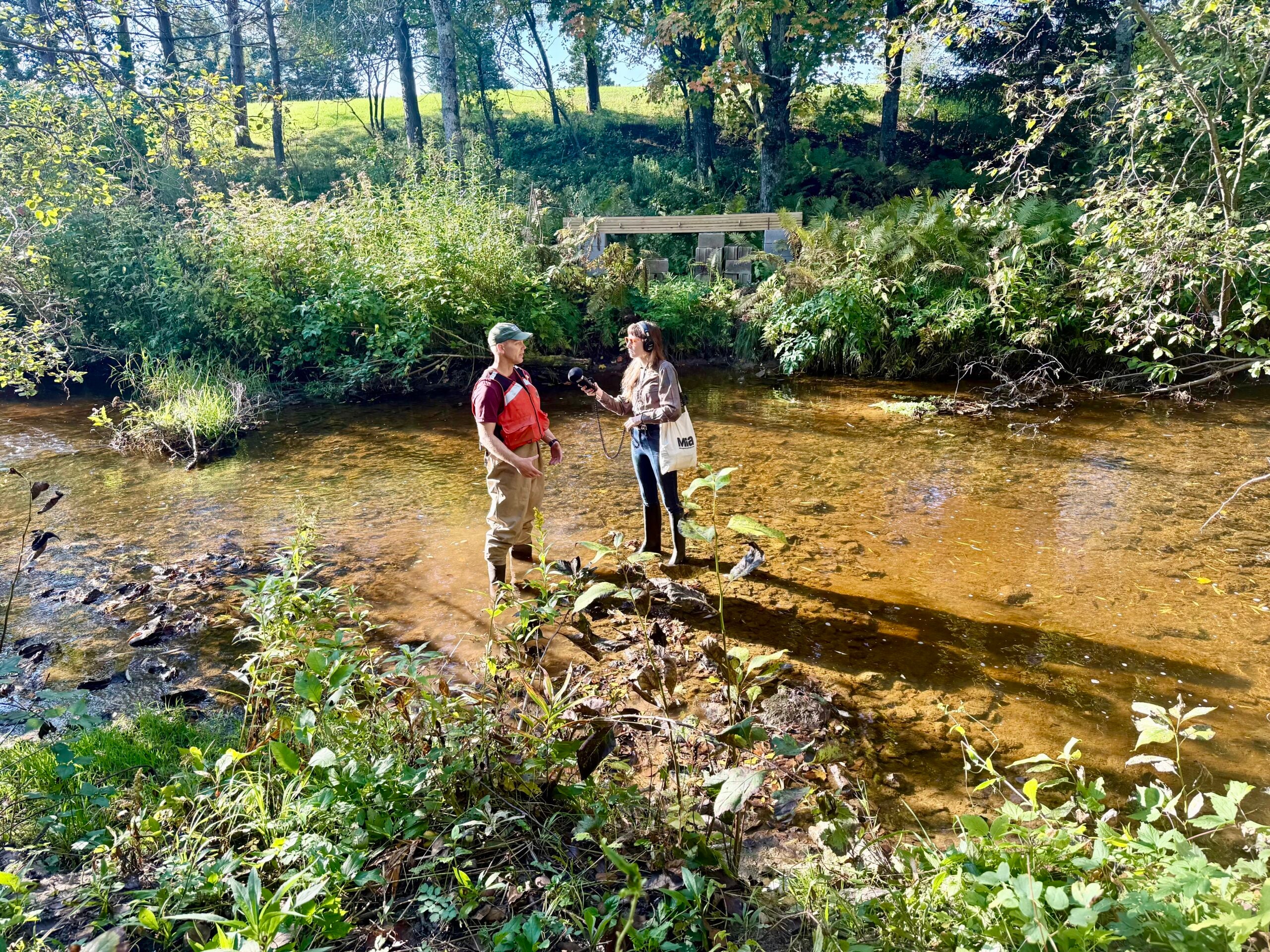
She was reporting for The New Yorker about the creature that once decimated fish populations in the Great Lakes. In her article “The Feds Who Kill Blood-Sucking Parasites,” she spends time with the people throughout the Midwest who are controlling the population.
News with a little more humanity
WPR’s “Wisconsin Today” newsletter keeps you connected to the state you love without feeling overwhelmed. No paywall. No agenda. No corporate filter.
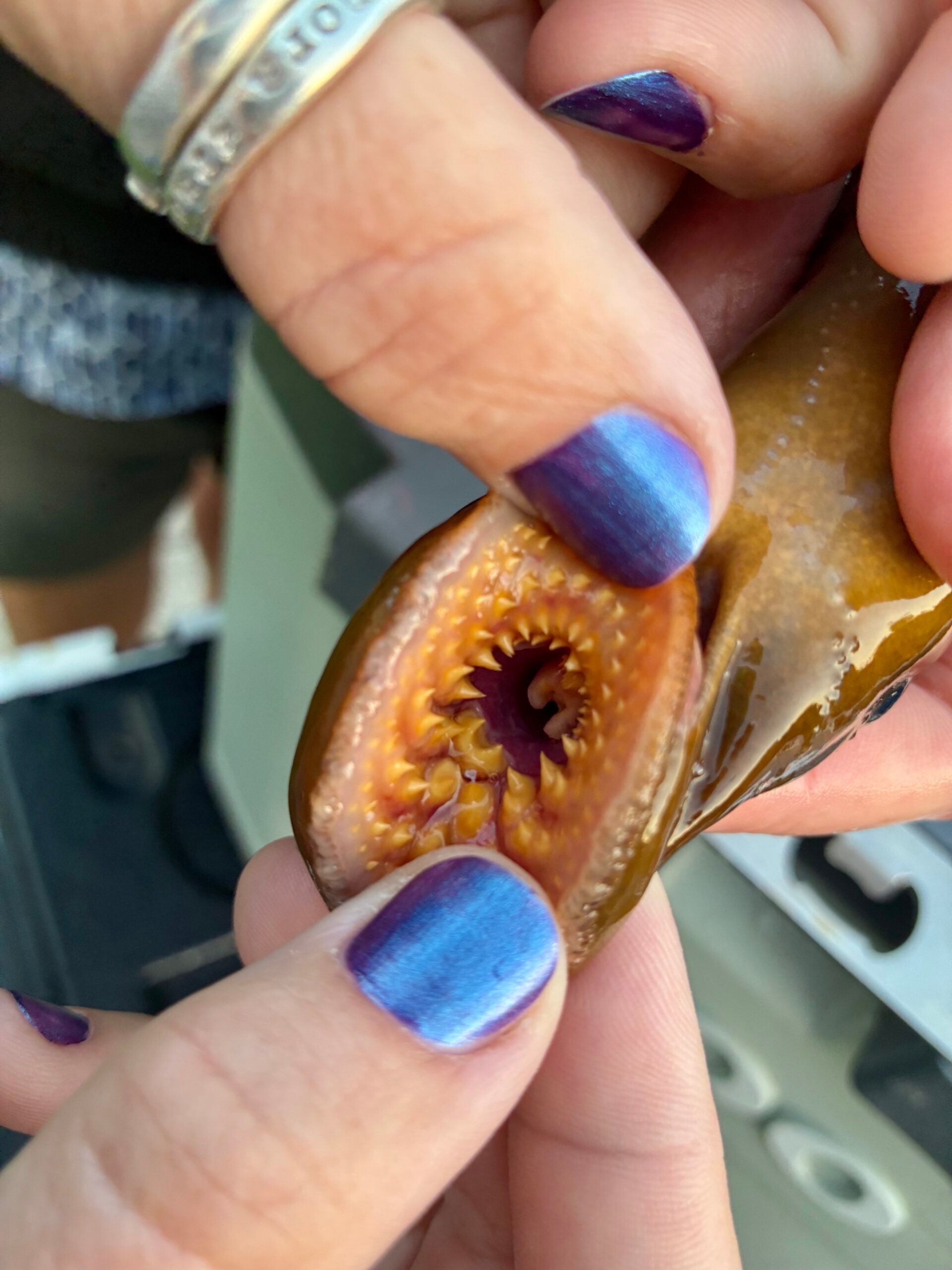
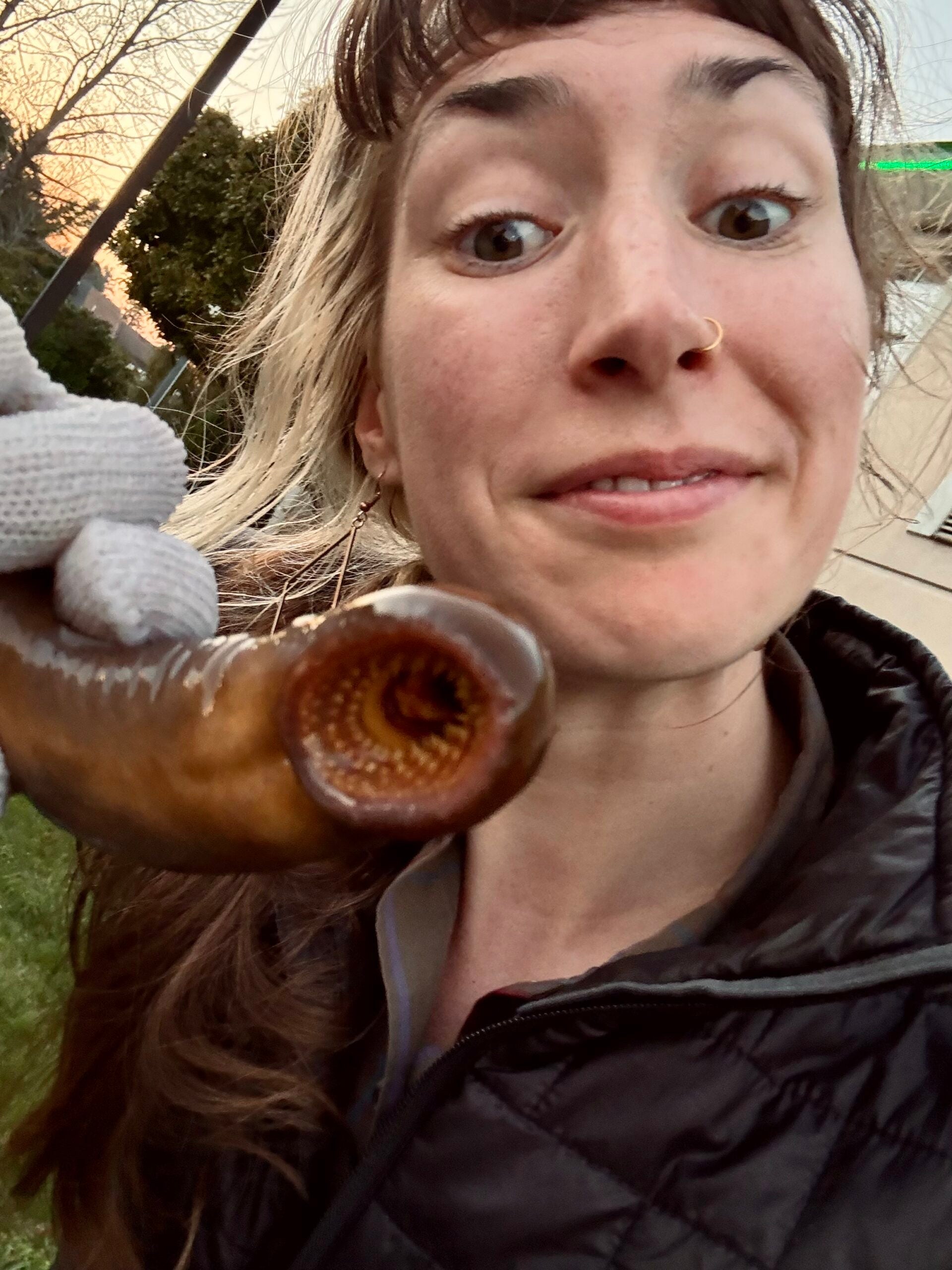
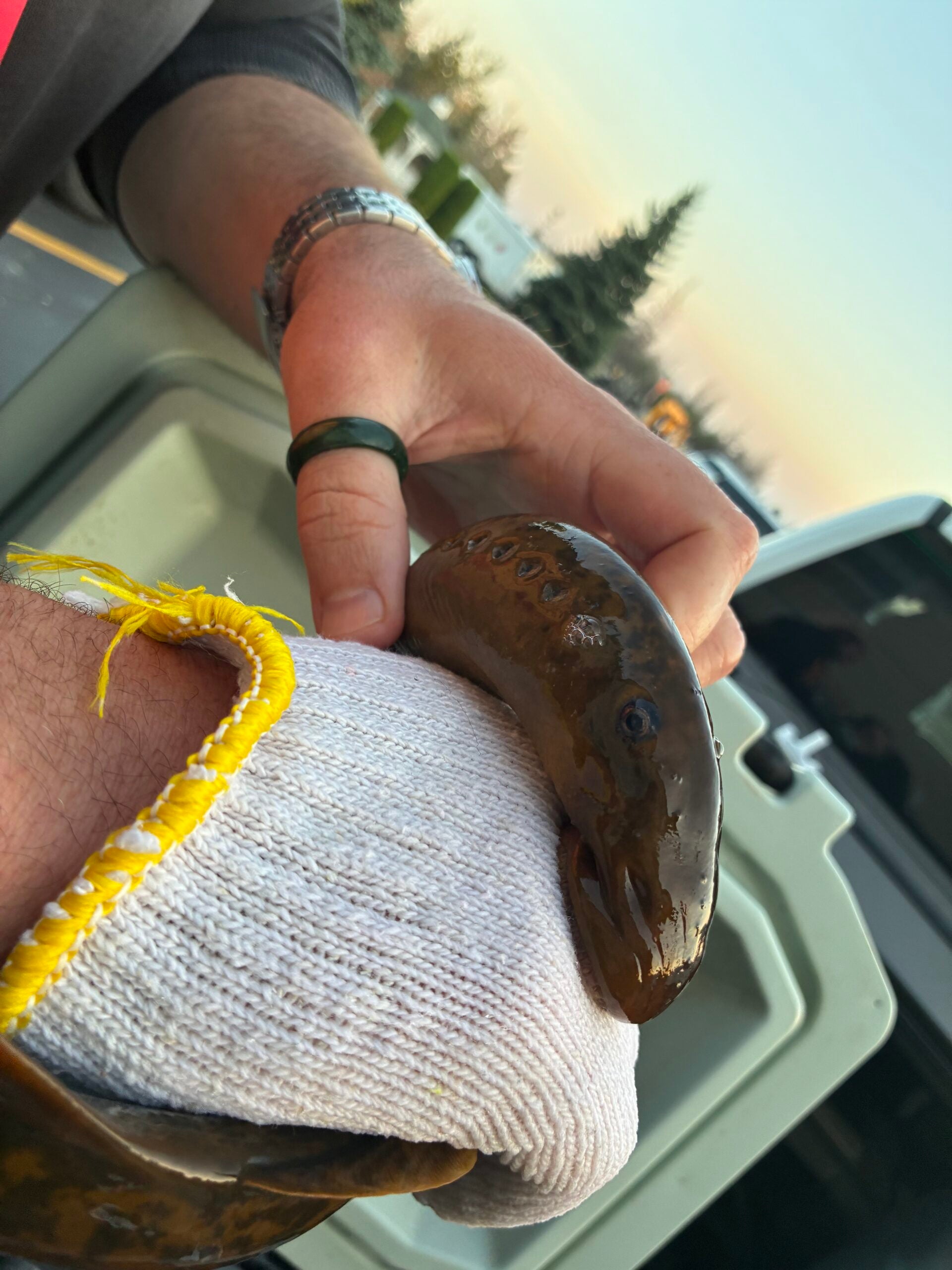
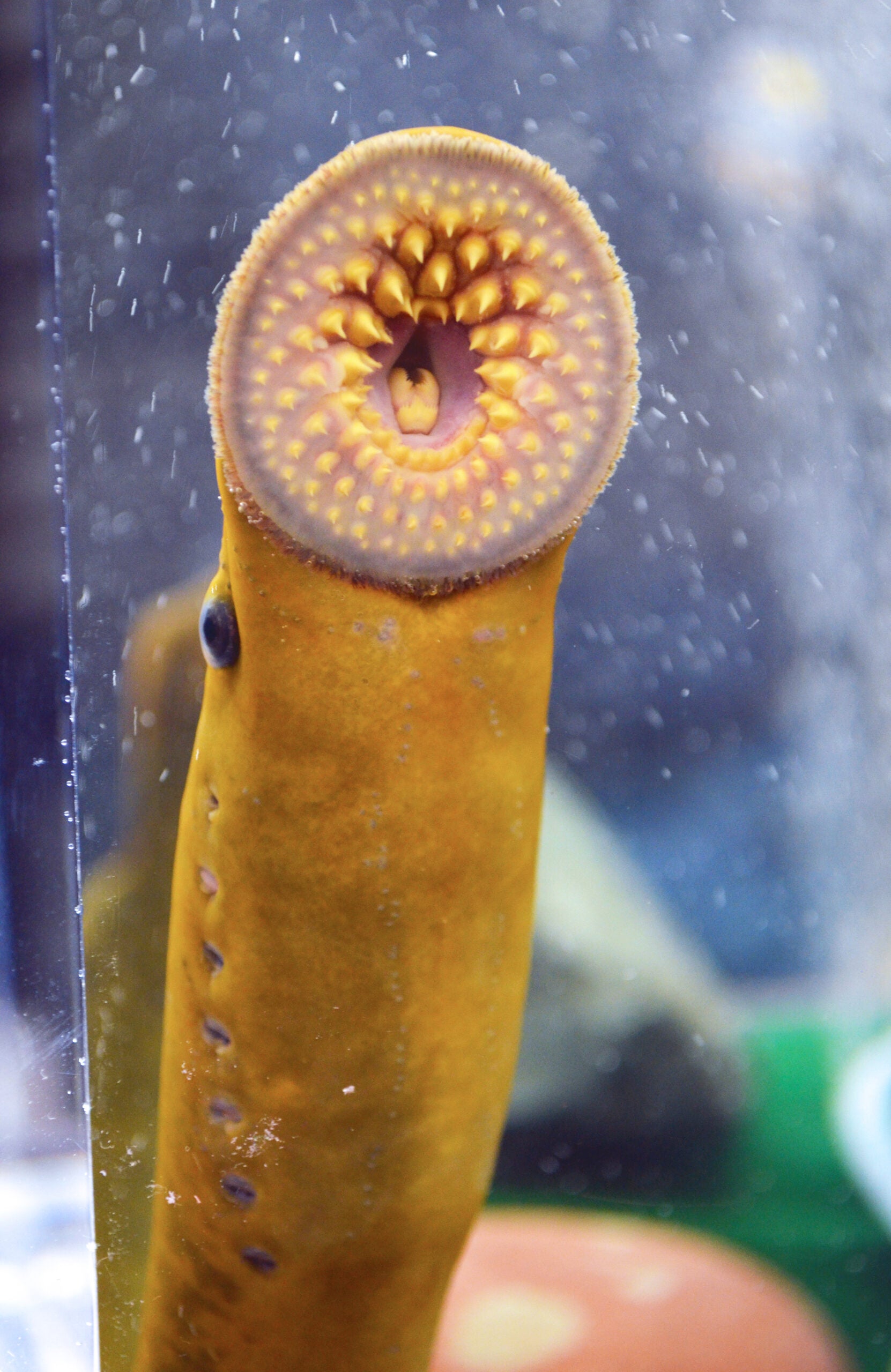
She said the sea lamprey looks like an eel but with a jawless sucker mouth at the end. Inside its mouth are more than 100 razor sharp teeth. Although lampreys do not feed on warm-blooded humans, when they latch onto a fish, it is almost certain death.
“The tongue comes up from the throat, slices up the flesh of the host fish, and they drain the fish of their blood and bodily fluids,” Thornton told WPR’s “Wisconsin Today.”
In the first half of the 20th century, commercial trout harvests fell 98 percent, Thornton found. From 1944 to 1954, Lake Michigan’s harvest dropped from 6 million pounds to zero.
Fishermen said that the lakes’ tributaries were teeming with so many lampreys that the water looked like spaghetti.
“They’re kind of something out of a horror movie,” Thornton said.
But due to the work of the Great Lakes Fishery Commission their destruction decreased over time. The commission is not a public agency but a nonprofit treaty organization created in the 1950s by the U.S. and Canada.
Within a decade, the native fish population came roaring back, Thornton said.
But earlier this year the commission faced funding cuts. Thornton reports that while some funding was restored, more investment may be needed to ward off a new challenge: sea lampreys are appearing to show resistance to the pesticide commonly used to kill them.
Government funded research is underway for alternatives, but the Trump administration has proposed a 79 percent cut to the Great Lakes Science Center, which is where a lot of the research takes place.
Thornton spoke with “Wisconsin Today” about the potential recurrence of sea lampreys.
This interview has been edited for clarity and brevity.
Rob Ferrett: What led to some of the successful efforts against these sea lampreys in Great Lakes waterways?
Katie Thornton: This has been considered one of the most successful invasive species control efforts ever in the mid century. They really wanted to find a chemical that would kill the Lamprey and stop it from reproducing without harming the rest of the ecosystem.
There is a lab up in the northern part of the Lower Peninsula of Michigan where a lot of this research was taking place. And after over five years and over 5,000 attempts at different chemical combinations, the researchers found a chemical that killed the lamprey without harming the native fish.
Within a couple of years they were deploying it in the tributaries and into the Great Lakes. And within a couple of decades the fish had come roaring back to life.
RF: As you write, without the monitoring, the successes can be reversed. There was an unintentional trial run during the coronavirus pandemic. What happened?
KT: It was described to me as “the forbidden experiment” by some of the scientists. Everybody wondered, we’ve been doing such a good job controlling these lampreys could we let our foot off the gas a little bit?
That is a really dangerous experiment to conduct when you’re out in the wild and people’s livelihoods are at stake. But COVID-19 sort of forced that experiment onto this region.
Because of travel restrictions and other issues there wasn’t as much treatment in 2020 and 2021 and the lampreys came roaring back to life.
One of the lake’s treatments was halted for one year in 2020 and the lamprey came back tenfold in just a year without treatment.
RF: A lot of the funding is coming from the U.S. federal government. What are you seeing that has impacted and could impact these anti-sea lamprey efforts?
KT: In February, like many public programs, (the lamprey control program) got hit with massive Department of Government Efficiency cuts.
There was a government-wide hiring freeze, and so they weren’t able immediately to hire seasonal workers, and the seasonal workers are the lifeblood of the lamprey control program. They’re the folks who are getting out there every year and treating these streams and making sure that these fish get killed before they can go out and kill fish in the open waters of the lakes.
There were also probationary employees, folks who were employed year-round but who had maybe changed jobs in recent years and were still in that probationary period. Those folks were fired due to all of these cuts and it was a massive upheaval.
The lamprey program was actually able to get back a lot of its staffing and staff up fully at the early part of the field season. There were delays, there were things that were not completed like assessment work that is really important, ironically, to long-term efficiency.
But the crews were able to get out into the streams and treat the lampreys. However, there’s definitely some uncertainty moving forward.
The treatment program itself is funded for next year. They should be able to get out into the stream and kill the lampreys. However, the research is really up in the air. Ongoing research is so important to this project.
The reason for this success story is because there was government-funded research. But with any success story, with any invasive species, that story relies on a pesticide. There’s always a concern the target could build up resistance to that pesticide.
And there’s a little bit of evidence that that might be starting to happen with the lampreys. If the lampreys become more immune to the pesticide, it will be a massive, massive change. And so researchers have been working to find other ways to control the population.
RF: What are some alternatives that researchers were digging into?
KT: There are many and there are some that are being deployed now. There are electric dams that send electrical currents through the water that can prevent lampreys from entering streams in the first place.
They’re also using pheromones to attract lampreys to areas to trap them. They attract them with something called necromones, which was described to me as a dead ground up lamprey. The smell of death repels these creatures, and you can use that to steer them away from an area where you don’t want them. That’s all being tested.
There’s also some research being done into how to use artificial intelligence in new dams to allow certain fish to pass through and keep other fish like lampreys out of certain waters.
There’s a lot of incredible research being done, but recently, it was announced that the Trump administration has proposed a 79 percent cut to the Great Lakes Science Center, which is where a lot of the science is funded through, and so there’s a big question mark about what the future is for this research.
RF: You were reporting in a part of Michigan that was Republican leaning, more pro the Trump administration. But when it came to lampreys, there was a lot of support for these efforts. What did you hear and see in the communities?
KT: The people I spoke with were overwhelmingly positive about the sea lamprey control program.
The damage that the lampreys did is close enough in our collective memory that I think people still understand just how bad the problem was before it got controlled.
What’s challenging is that there are plenty of other vital programs out there controlling other invasive species that … don’t have the same repulsive enemy that really unites people and helps people to rally around a program like the lamprey-control program.