When Brad Cortright opened his property tax bill this month, he saw the same thing most Wisconsin homeowners are experiencing: A big jump.
Cortright’s taxes on his Wauwatosa home are up $2,400.
“It’s not quite 50 percent, but it’s a lot,” Cortright said. “I think what happened to us was we didn’t get increased as much as we should have the previous cycle, and it caught up with us this cycle.”
News with a little more humanity
WPR’s “Wisconsin Today” newsletter keeps you connected to the state you love without feeling overwhelmed. No paywall. No agenda. No corporate filter.
A report released Tuesday from the Wisconsin Policy Forum found gross K-12 school property taxes rose an average of 7.8 percent in December, the largest increase in three decades.
That’s because of local referenda and increases to per-pupil revenue limits in the last two years, according to the report.
County property taxes are set to rise 3.1 percent, an increase more in line with recent years.
As a result, tax levies for all local governments are expected to see their largest increase since at least 2018.
The Policy Forum pointed to three factors driving up schools’ property tax levies: flat state support, an increase in per-pupil aid limits and widespread voter approval of school referendums.
School districts are funded by a mix of taxpayer dollars, state aid and federal aid.
“The responsibility for paying for local government services, especially schools, is shifting more heavily to property taxpayers this year,” the report says.
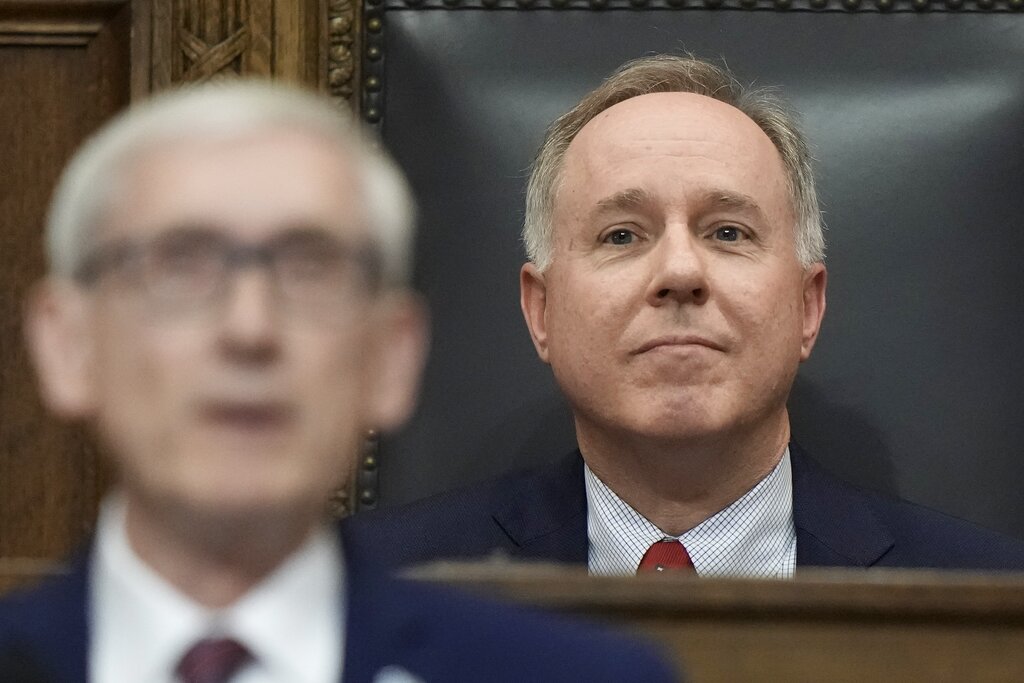
The Republican-led Legislature and Gov. Tony Evers maintained the state’s increase in the state’s per pupil revenue limit on districts at $325 per year, a limit set in the 2023-25 budget through the governor’s partial veto.
This limit sets how much school revenues can increase from the combination of general school aids and property taxes.
This decision alone would likely have increased K-12 property tax levies, according to the report.
“A second budget decision to freeze state general school aids also contributed to the record property tax increase,” the report says. “School districts can choose to increase their levy by less than the allowed limit. Rising pressure on both revenues and expenditures, however, appears to have prompted many districts to levy at or near the maximum amount.”
These pressures include rising teacher salaries and inflation, revenue limit increases in recent years that lagged the rate of inflation, and decreased funding associated with declining student enrollment and the expiration of federal pandemic relief funds, the report found.
Madison, Wauwatosa, Beloit all feeling the pinch
When Wayne Boardman purchased his home in September 2024, he choose Beloit for many reasons, but the the biggest one was the tax rate, which was right around 10 percent.
Boardman, who is a single parent of two teenagers, said when he bought his house the taxes were about $1,600. Now they are $2,200.
“I bought this house at the top end of my budget,” Boardman said. “I understand homeownership is a financial investment and unexpected costs will come my way. However, just this tax increase alone puts me at the absolute top of my original mortgage payment budget and I’m now out of wiggle room.”
The School District of Beloit levy nearly tripled, rising from $5.6 million in 2024 to $16.2 million in 2025 despite a failed fall referendum.
The Policy Forum found that’s largely because of a drop of $9.8 million in the district’s general school aids that the school district can make up for by increasing the tax levy.
“My kids go to Beloit schools and I see the financial needs,” Boardman said. “I’m all about funding them as much as I can, as I know a strong education system builds foundational growth for the community. I also know that they’ve been trying for a referendum approved operational spending increase and I fear many residents will now adamantly deny that.”
At least 192 of the state’s 421 school districts asked a referendum question in 2024.
In the Madison Metropolitan School District, voters passed two referenda in 2024 totaling $607 million.
Because the Legislature did not increase general school aids, Madison taxpayers will bear the brunt of the increase.
“Madison’s property tax increase alone accounts for 17 percent of the rise in total statewide K-12 levies,” the report found. “However, even without Madison’s increase, statewide tax levies would have increased by 6.9 percent, which would have been the third-highest rate in the last 25 years.”
In Wauwatosa, the average property tax levy increase exceeds 30 percent.
Cortright said he’s torn about the tax hike.
He has had five children go through the Wauwatosa School District. His oldest is a senior in high school, and he said all of his kids have gotten a good education.
“I’m more concerned about the tax increases that are coming than this one, because we know in Wauwatosa that there are more referendums coming from both the schools and the city,” Cortright said.
According to the report, property tax bills are going to get higher.
Gross statewide property tax levies are on pace to grow by roughly 5 percent, according to Department of Revenue data and Legislative Fiscal Bureau projections. That’s higher than this year’s growth of 4.4 percent and the highest since at least December 2007.
“Given the lack of increases to state tax credits to offset the impact of these tax levy raises, taxpayers will likely see the full impact on their incoming bills,” the report found. “At a time when housing affordability is a major issue, some taxpayers and voters will likely raise concerns about this year’s property tax increases.”

Wisconsin Public Radio, © Copyright 2026, Board of Regents of the University of Wisconsin System and Wisconsin Educational Communications Board.