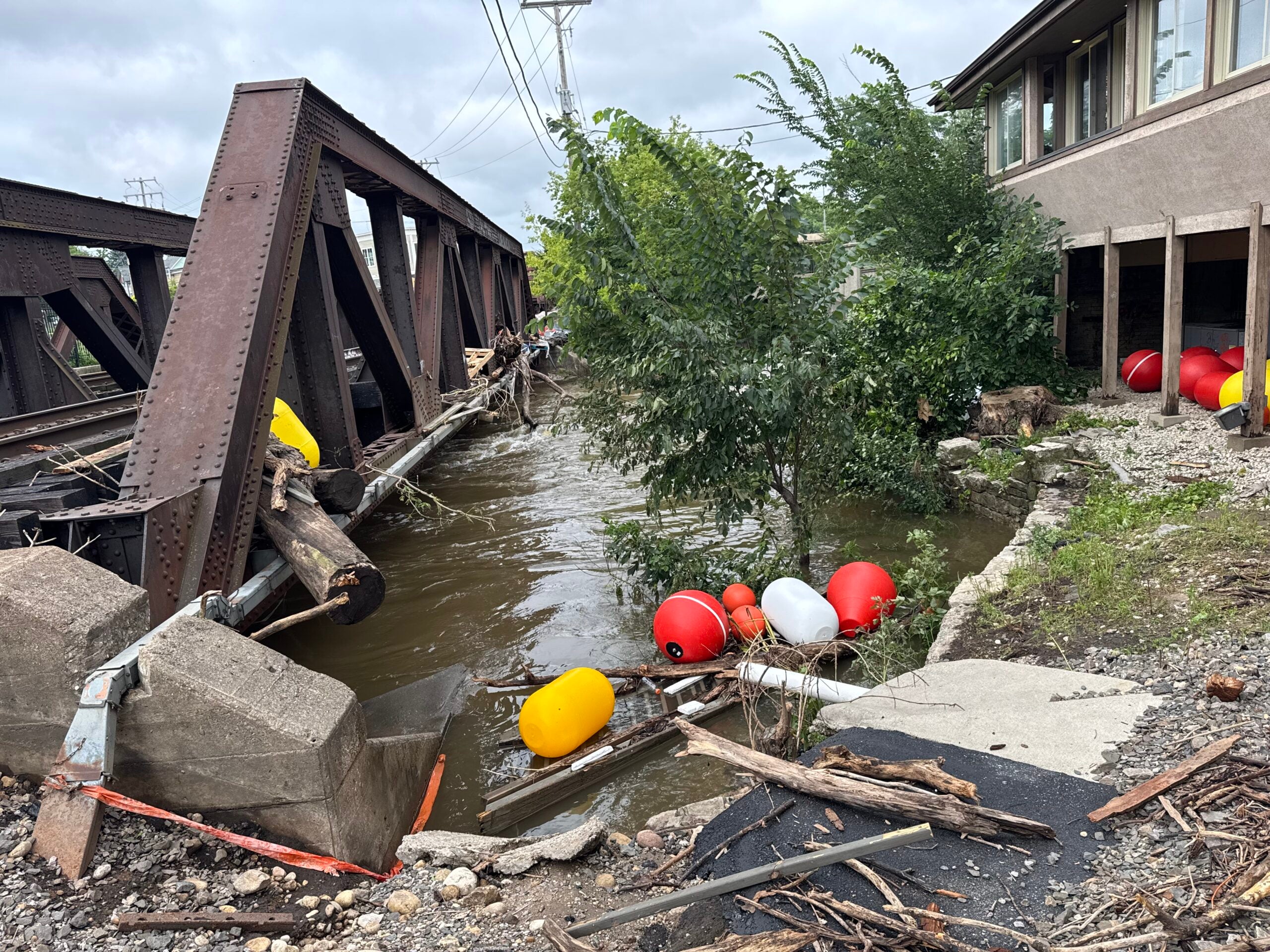

Teams with the Federal Emergency Management Agency will be in Wisconsin on Thursday to assess storm damage left behind by recent flooding.
That announcement came after every member of Wisconsin’s congressional delegation called on FEMA to conduct a “timely” storm damage assessment.
Gov. Tony Evers requested a joint preliminary damage assessment from FEMA on Aug. 13. The assessment will help determine if the state meets the threshold needed for a presidential disaster declaration.
News with a little more humanity
WPR’s “Wisconsin Today” newsletter keeps you connected to the state you love without feeling overwhelmed. No paywall. No agenda. No corporate filter.
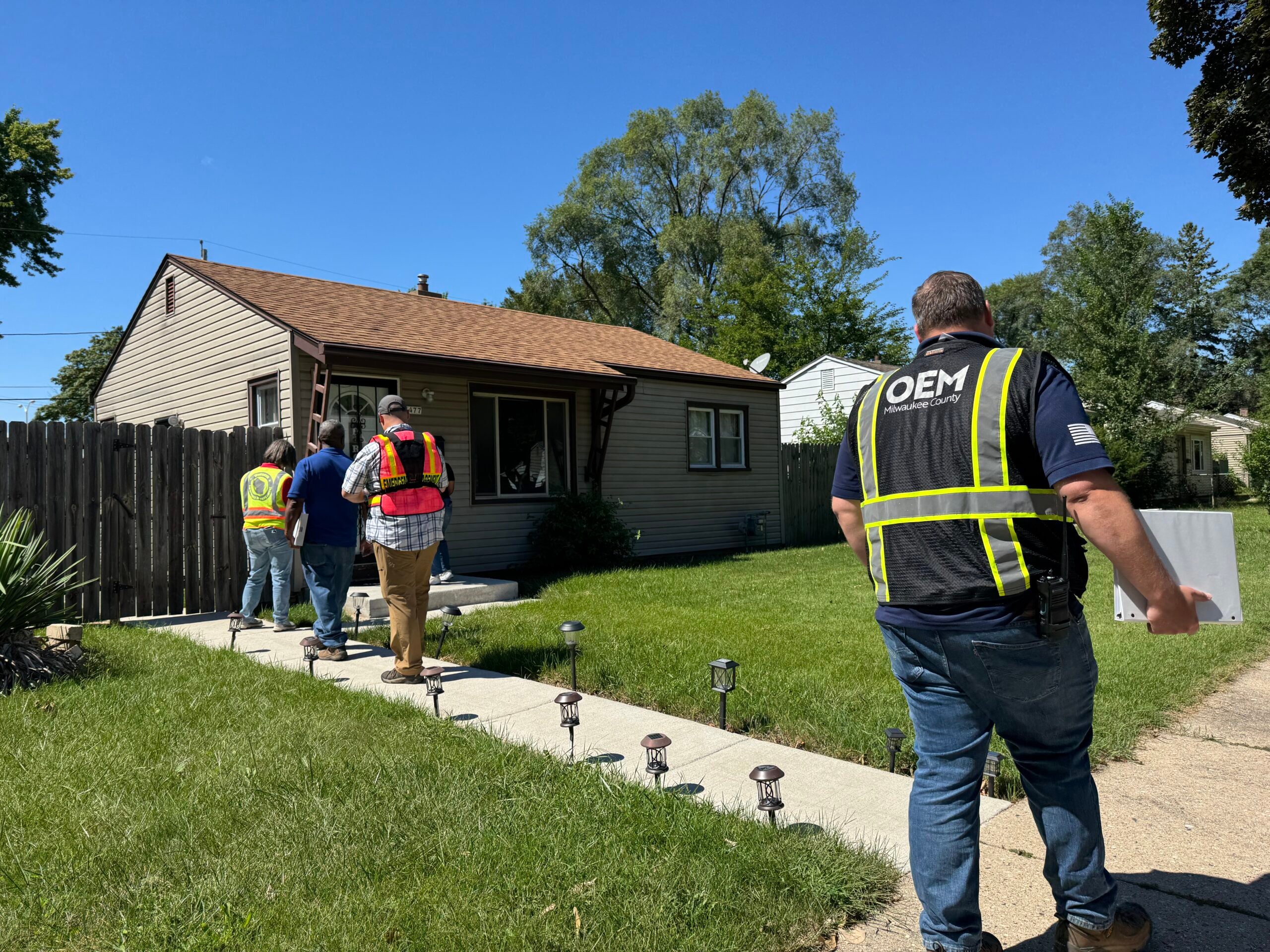
A Tuesday statement from the Wisconsin Department of Military Affairs said Preliminary Damage Assessment teams from FEMA will be assisted by state officials. The teams will “conduct thorough assessments by interviewing homeowners, renters, and business owners to document property damage and the impact of the storms and flooding.”
The statement says the teams will help determine the extent of damage that will inform “the state’s potential request for federal assistance for affected individuals and communities.”
A Tuesday letter signed by the entire Wisconsin congressional delegation to David Richardson, acting administrator for FEMA, said they are in “strong support” of the state’s request.
“Conducting a timely Joint Preliminary Damage Assessment is an essential first step in securing the federal support needed to help affected families, local governments, and communities recover and rebuild,” the letter states.
The teams are expected to be working in the state throughout the week, according to the Wisconsin Department of Military Affairs.
“This assessment is an important part of ensuring that Wisconsin receives the support it needs to recover fully from this severe weather event,” Greg Engle, the administrator of Wisconsin Emergency Management, said in a statement.
Christopher McGowan, the deputy director of the Milwaukee County Office of Emergency Management, said staff with his office, as well as with Wisconsin Emergency Management, will be working with FEMA.
“We’ll be guiding them through the areas that we’ve already documented as damaged, and so we will be taking them to locations that they want to see to verify the proof of damage,” McGowan said Tuesday.
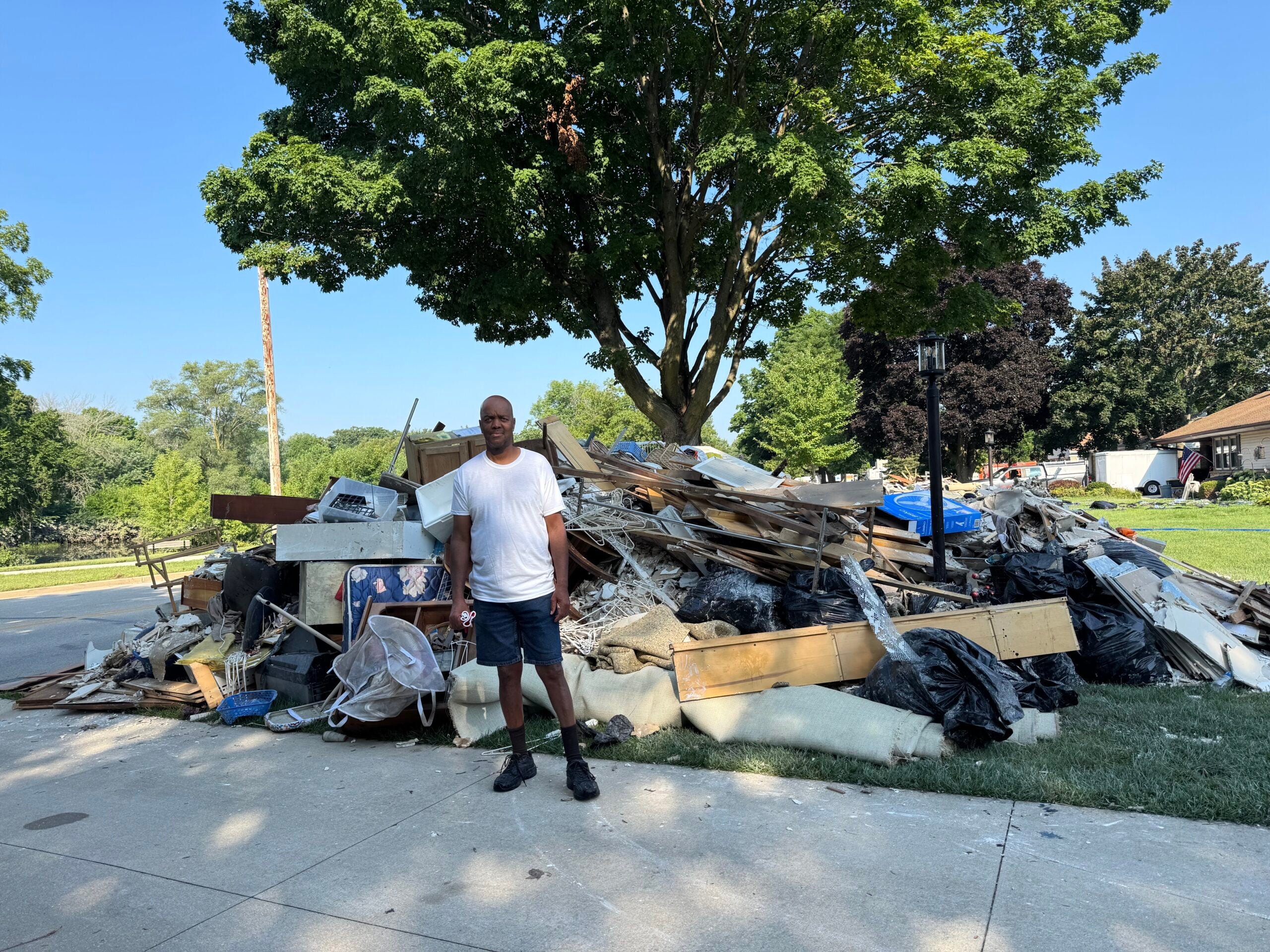
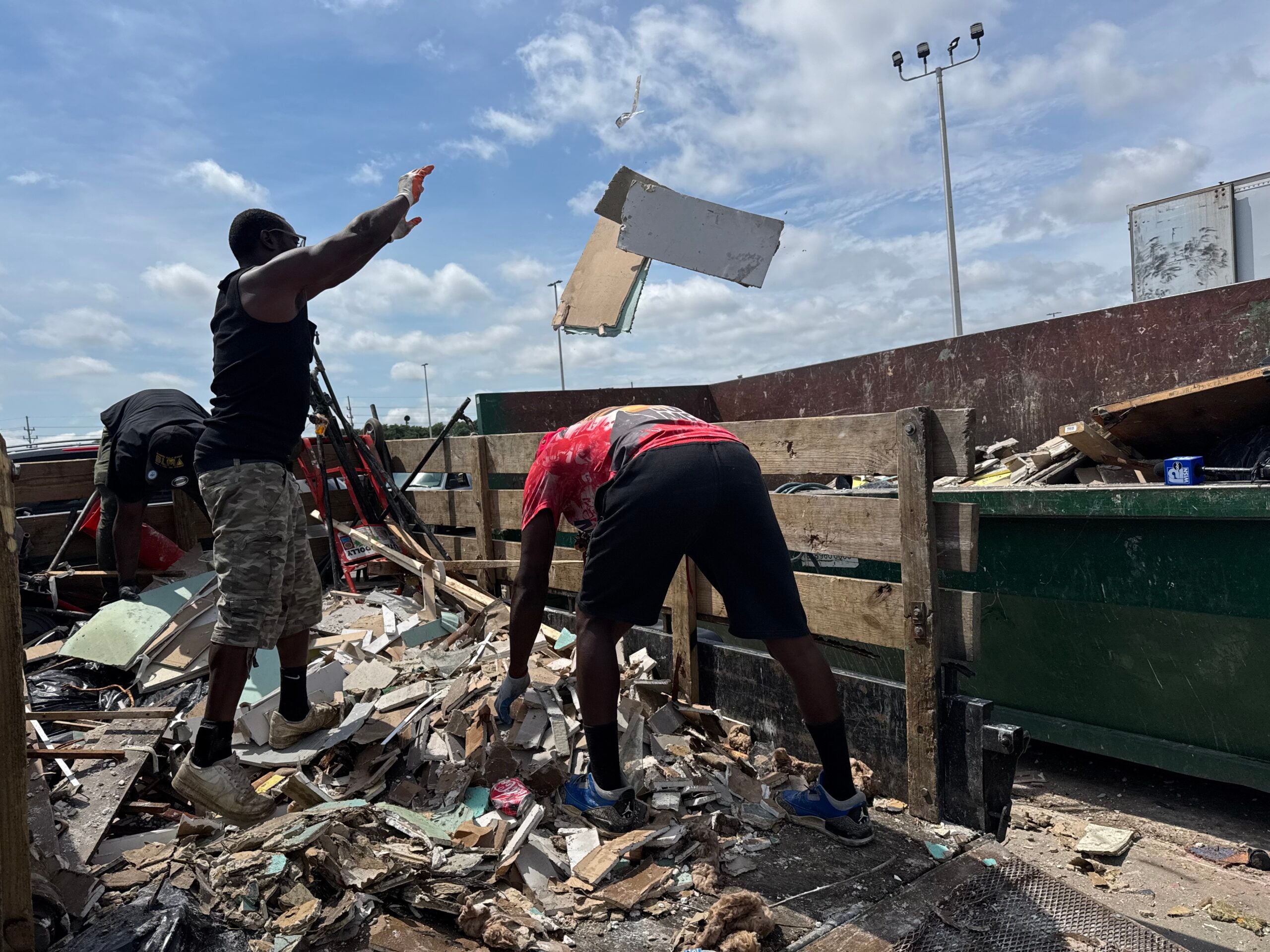
Thousands of people in southeast Wisconsin were impacted by the storm, which left flooded streets and basements, downed trees and power outages in its wake. Residents have filed more than 18,000 damage reports, according to the most recent Impact 211 data. Eighty-three percent of those residents live in Milwaukee County, according to the data.
As of Monday, staff with the Milwaukee County Office of Emergency Management have finished over 3,400 property damage assessments. Of those, about 53 percent of the properties are categorized as “destroyed” or as having “major damage,” according to a statement from Milwaukee County Executive David Crowley.
“Municipalities (in Milwaukee County) also continue to evaluate the impacts on public infrastructure, with preliminary damage estimates exceeding $34 million,” the statement says.
Waukesha County also saw widespread damage. A county spokesperson said local municipalities in the county have reported about $4.4 million in damage to public property.
Every member of the Milwaukee Common Council also signed onto a Monday letter to President Donald Trump and Richardson from FEMA calling for Trump to issue a presidential disaster declaration.
“While local and state agencies have mobilized initial help, they fall short,” the letter says.
The preliminary damage assessment teams will look at damage to houses, businesses and public infrastructure, according to a FEMA fact sheet. After the preliminary damage assessment is done, that data is then provided to the state.
“If (it) is determined that the losses are beyond state and local capabilities, then the State may submit a formal disaster declaration request to the FEMA regional office,” the fact sheet says. “FEMA and the Department of Homeland Security headquarters offices refer the request to the President.”
It’s then up to Trump to issue a major disaster declaration. That declaration can be for public assistance, individual assistance or mitigation assistance, according to the fact sheet.
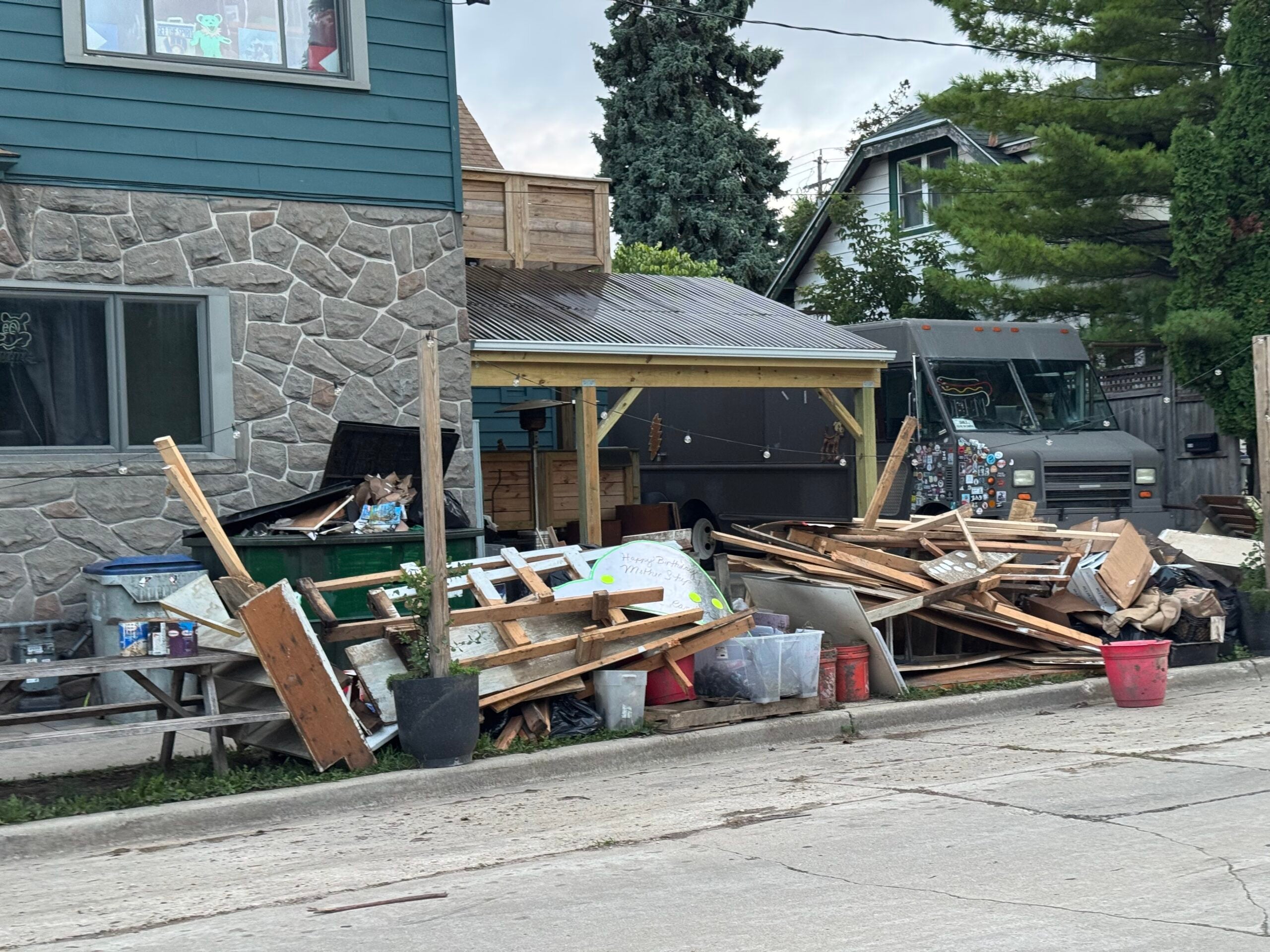
Businesses also impacted by flooding
Wauwatosa was one of the hardest hit areas from the storm. More than 500 homes and 50 businesses were impacted, while flood damage for city-owned properties is estimated to be $9 million, according to a statement from a city spokesperson.
Many of the items inside the Milwaukee Repertory Theater’s 30,000-square-foot production center in Wauwatosa are considered to be total loss.
“Essentially everything was under 4 feet of water,” said Chad Bauman, the executive director of the theater.
The flood water was mixed with sewage water, Bauman said.
“So if it was touched by the water itself, it’s unsalvageable,” he said.
About 75,000 props, costumes and set pieces will have to be thrown out. Bauman estimated losses to be about $5 million to $10 million.
“So it’s a massive undertaking even to inventory what we had that was unsalvageable,” Bauman said. “And as we continue to do that and get pricing on it, we realize that our losses keep increasing.”
The Mothership, a bar in Milwaukee’s Bay View neighborhood, has been closed since the storm after flood water filled the entire basement. Ricky Ramirez, the owner of the bar, said they’ll have to replace the furnace, coolers and ice machine.
Ramirez didn’t have a damage estimate Tuesday.
“I have no clue how long it would be until we reopen,” Ramirez said.

Wisconsin Public Radio, © Copyright 2026, Board of Regents of the University of Wisconsin System and Wisconsin Educational Communications Board.