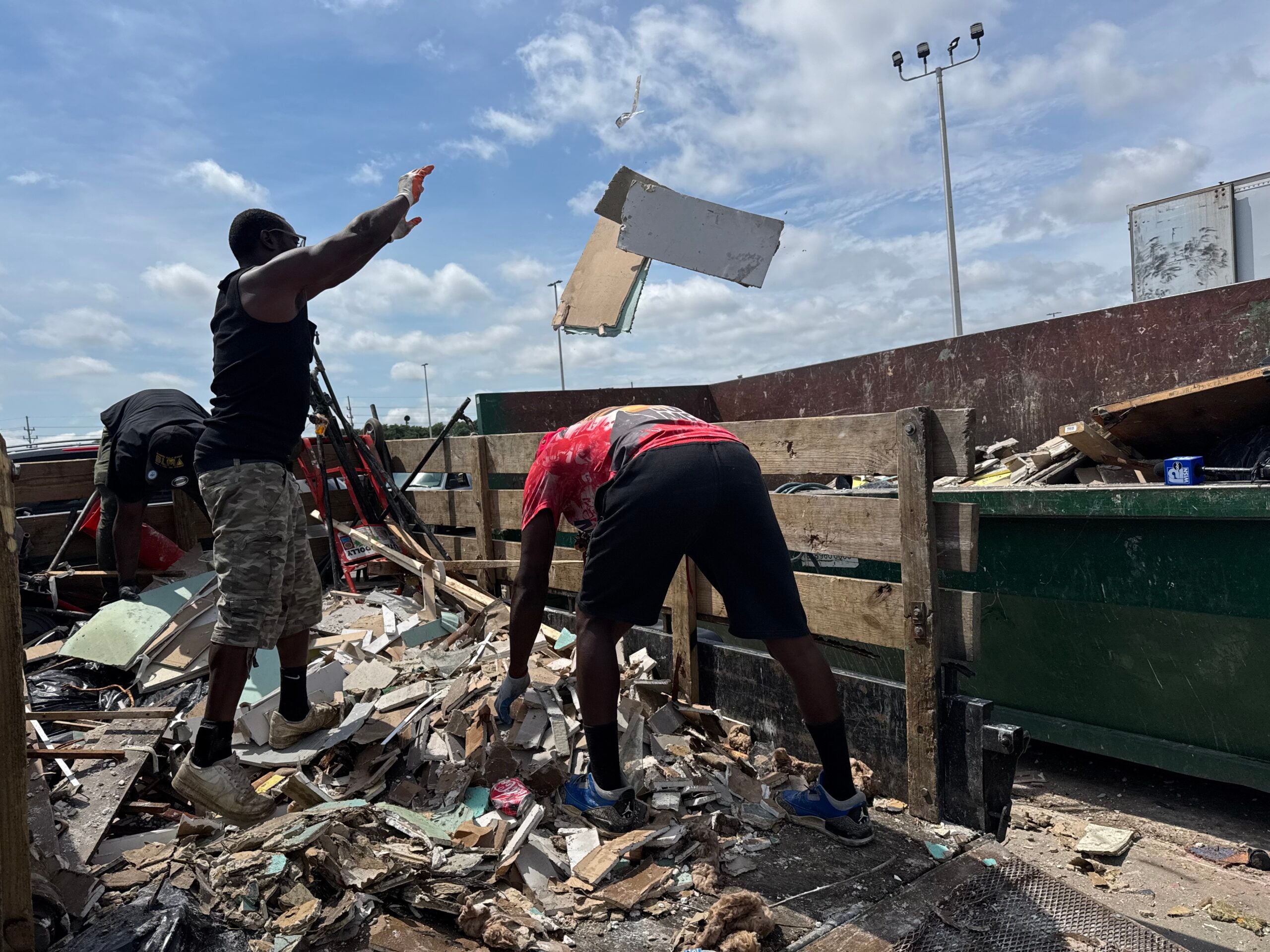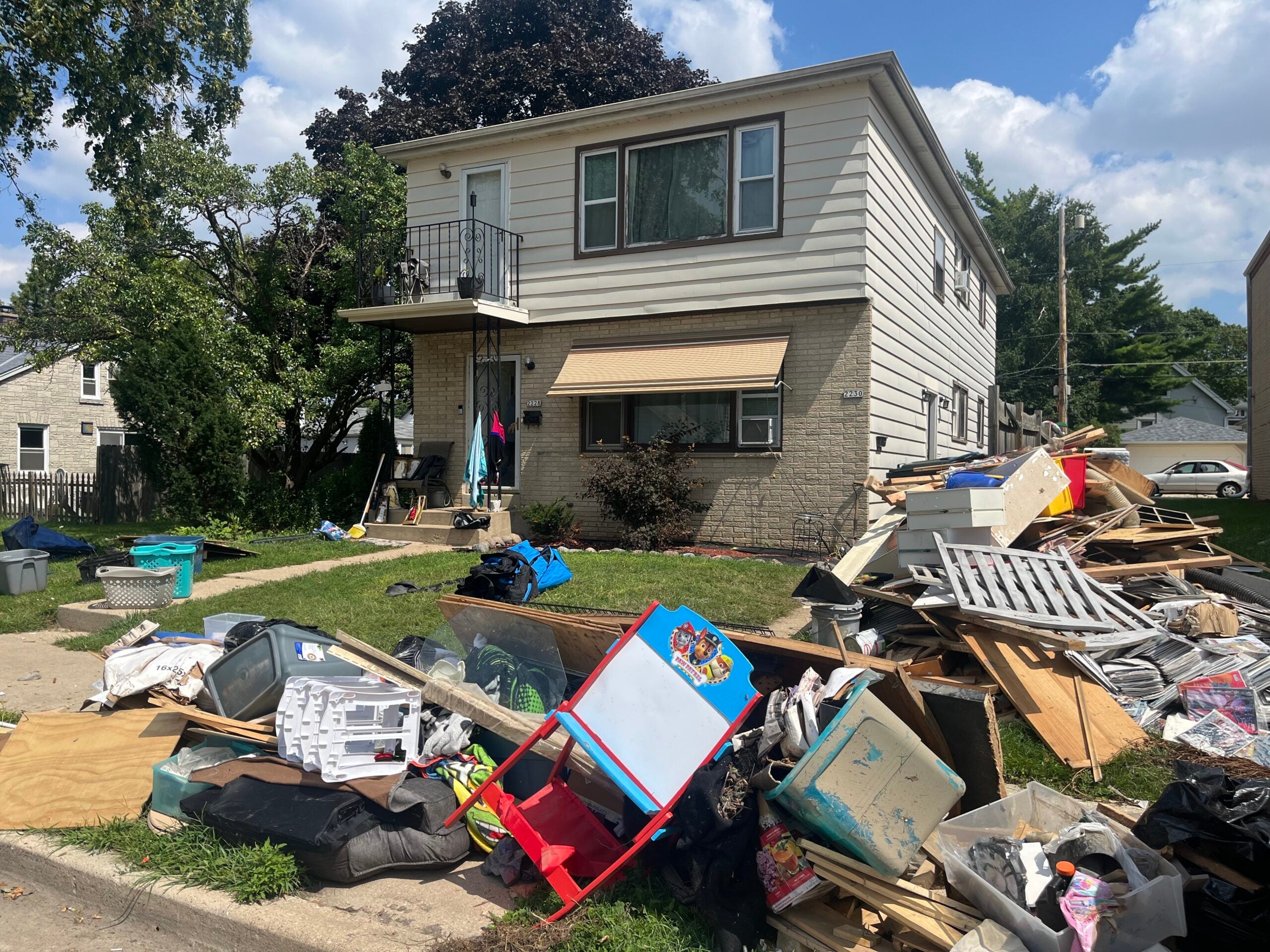
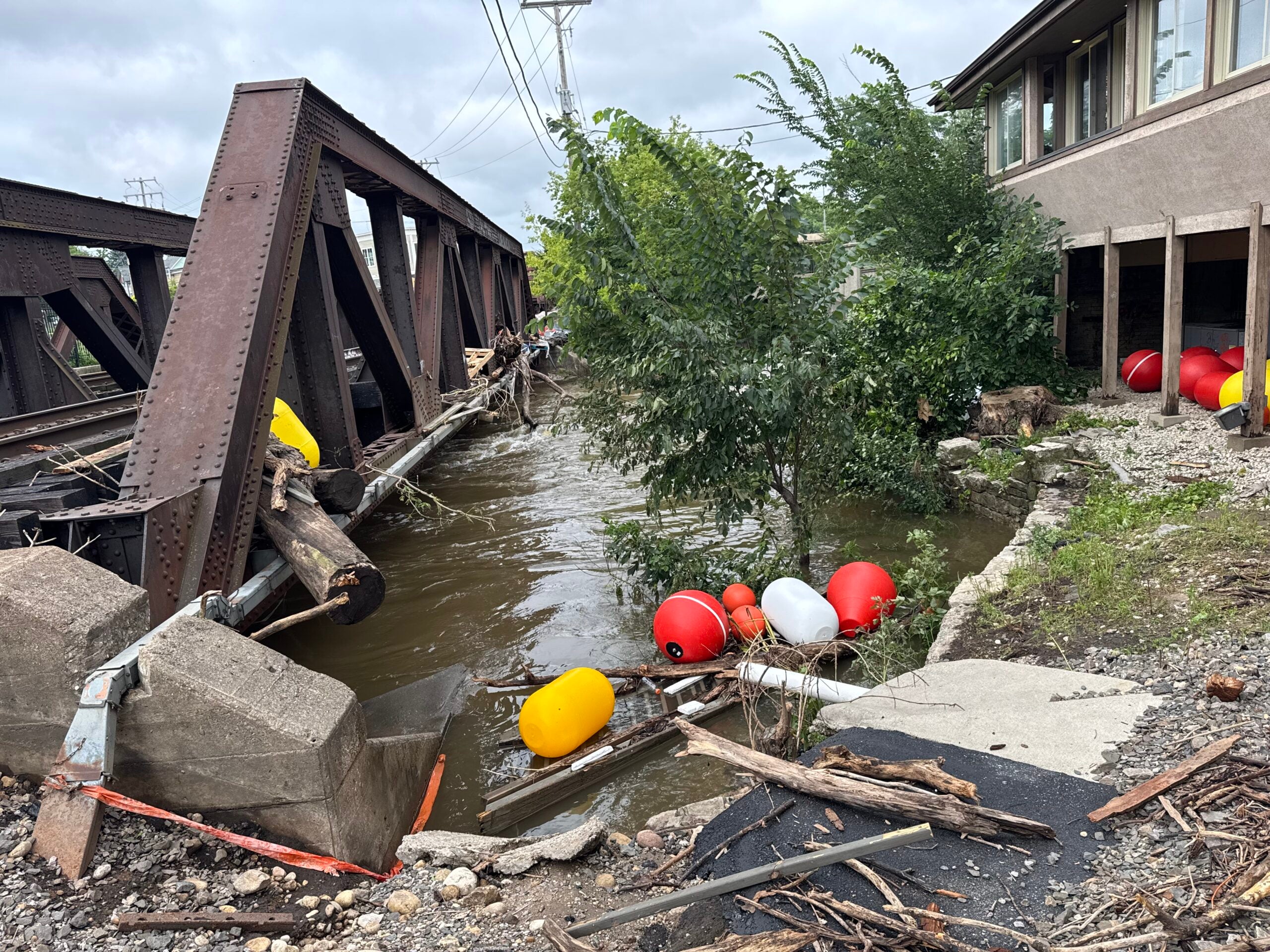
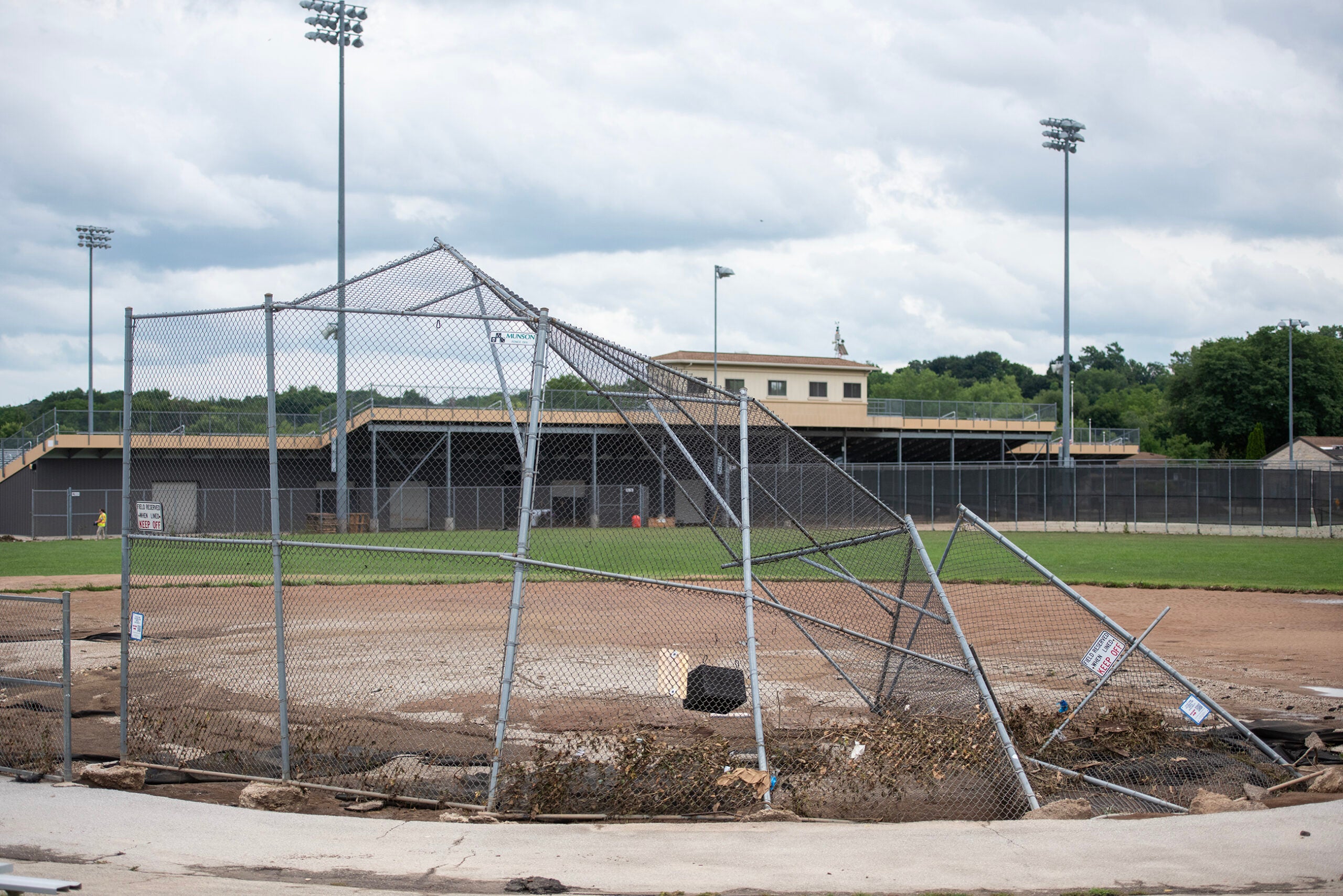
Wisconsin won’t get help from the Federal Emergency Management Agency to pay for damage to public infrastructure in six counties affected by historic rainfall that led to widespread flooding in August.
Gov. Tony Evers requested federal assistance in late August for Door, Grant, Milwaukee, Ozaukee, Washington and Waukesha counties to help with damages to public infrastructure from the storm. The decision comes after President Donald Trump announced in September that federal disaster relief aid was on the way for individuals that were affected by the flooding.
Keith Turi, associate administrator for the office of response and recovery at FEMA, wrote Thursday that based on the results of preliminary damage assessments, the “public assistance program … is not warranted.”
News with a little more humanity
WPR’s “Wisconsin Today” newsletter keeps you connected to the state you love without feeling overwhelmed. No paywall. No agenda. No corporate filter.
In a Friday statement, Evers said he plans to file an appeal to that decision.
“Denying federal assistance doesn’t just delay recovery, it sends a message to our communities that they are on their own, and that the Trump administration doesn’t think over $26 million in damages to public infrastructure is worthy of their help,” Evers wrote in the statement. “I couldn’t disagree more.”
“We are hopeful that the Trump administration will reconsider this decision, so we can make sure folks have the resources and support they need,” Evers wrote.
Teams with FEMA were on the ground in September to perform damage assessments for public property damage. Evers’ statement said that assessment validated more than $26.5 million in “eligible disaster costs.”
FEMA’s Public Assistance program provides grants to “state, local and tribal governments” and even some nonprofits, Evers’ statement said. The federal assistance can help repair roads, public buildings, bridges, public schools and public utilities.
In an email, a spokesperson for the Department of Homeland Security said the agency reviews requests closely.
“This request was determined that the damage from the event was not of such severity and magnitude as to be beyond the capabilities of the state and affected local governments to recover,” the spokesperson wrote.
Trump, who has called for FEMA to be shuttered entirely, has suggested that states rather than the federal government should bear the cost of disaster relief. The New York Times reported this month that Trump has approved 32 federal disaster declarations since January — a steep drop from the average of more than 60 declarations per year in fiscal years 2015 through 2024.
During a press conference Friday afternoon, Milwaukee County Executive David Crowley said the decision leaves the county on the hook for over $22 million in damages to public infrastructure.
“Today’s action by the Trump administration will send us back even further,” Crowley said. “It will delay progress in our recovery efforts from this natural disaster, and it will place a financial burden solely on local taxpayers who have already had to sacrifice so much as a result of these floods.”
“To put it plain and simple, federal funding is needed to afford the repairs of the public infrastructure that was damaged from these floods so we can continue to provide safe infrastructure for our entire community,” Crowley added.
Democratic U.S. Sen. Tammy Baldwin said the denial leaves “Wisconsin communities to fend for themselves.”
“No community can pick up these pieces alone, and Wisconsinites need support so they can rebuild and be on the road to recovery,” Baldwin wrote in a statement.
Waukesha County Executive Paul Farrow said the county had just over $2 million in public infrastructure damage from the storm. He said he supports Evers’ decision to appeal.
“The Trump administration approved millions of dollars in aid for individual assistance which was greatly appreciated for our residents who experienced flood damage during the August storms,” Farrow wrote in a statement. “People are getting the help they need to recover.”
In Milwaukee, more than 20 public schools were damaged from the flooding. Milwaukee Mayor Cavalier Johnson said he was “disappointed” by FEMA’s decision.
“In a time when local government budgets are extremely tight, Milwaukee could certainly have deployed disaster funding in a way that mitigated the burden our taxpayers will have to shoulder,” Johnson wrote in a press release.
Door County also experienced widespread damage from the storm. Door County Administrator Ken Pabich declined to comment on Friday, saying he is still working to understand the appeal process.
Evers said a decision from FEMA on granting funding through the Hazard Mitigation Grant Program is still pending. That program gives grants to communities “looking to protect against losses from disasters, and in advance of disasters,” according to FEMA’s website.

Wisconsin Public Radio, © Copyright 2026, Board of Regents of the University of Wisconsin System and Wisconsin Educational Communications Board.