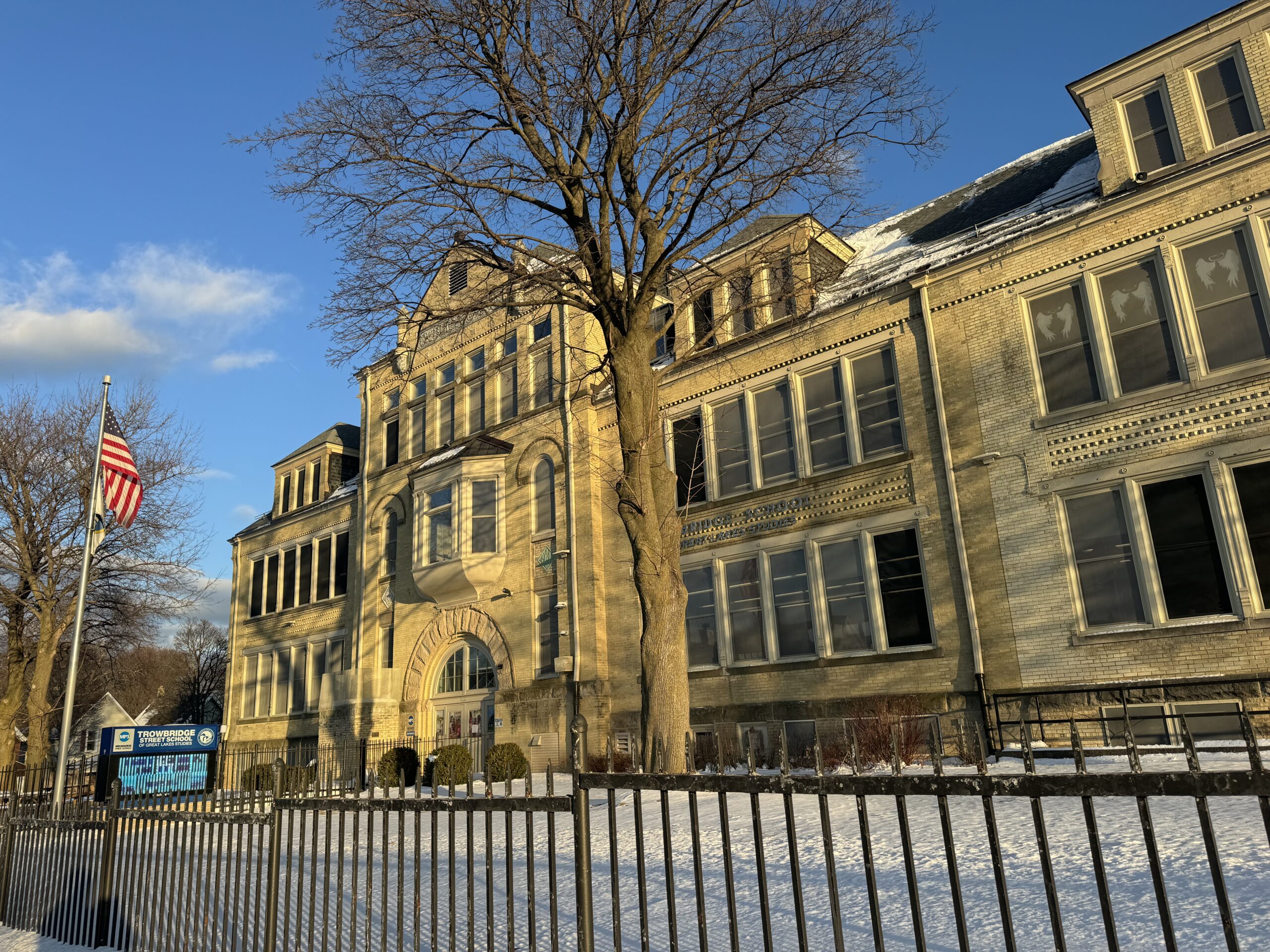
More than 20 Milwaukee Public Schools were damaged in recent flooding, a financial blow to a school district already dealing with the fallout of a lead paint crisis and aging buildings.
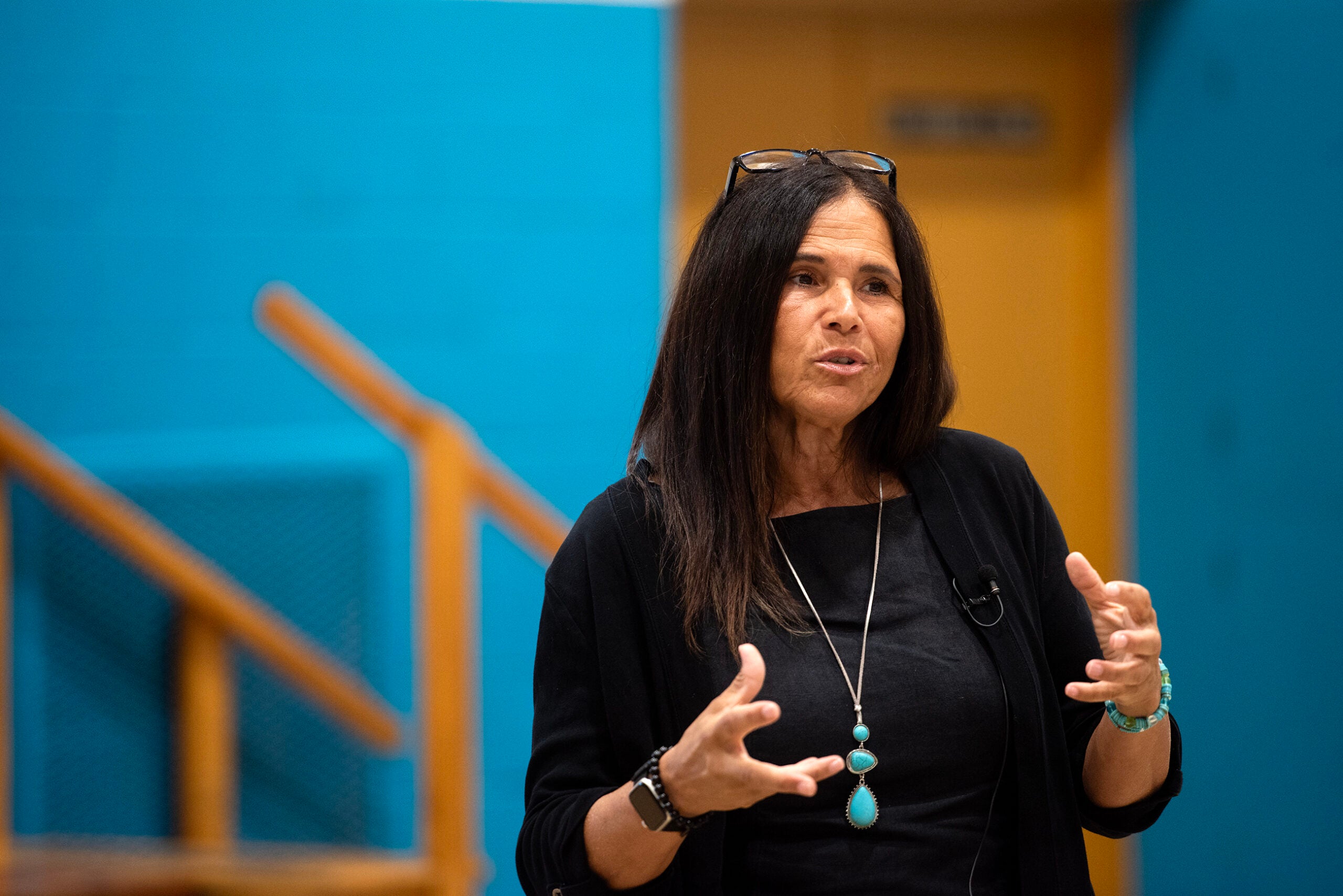
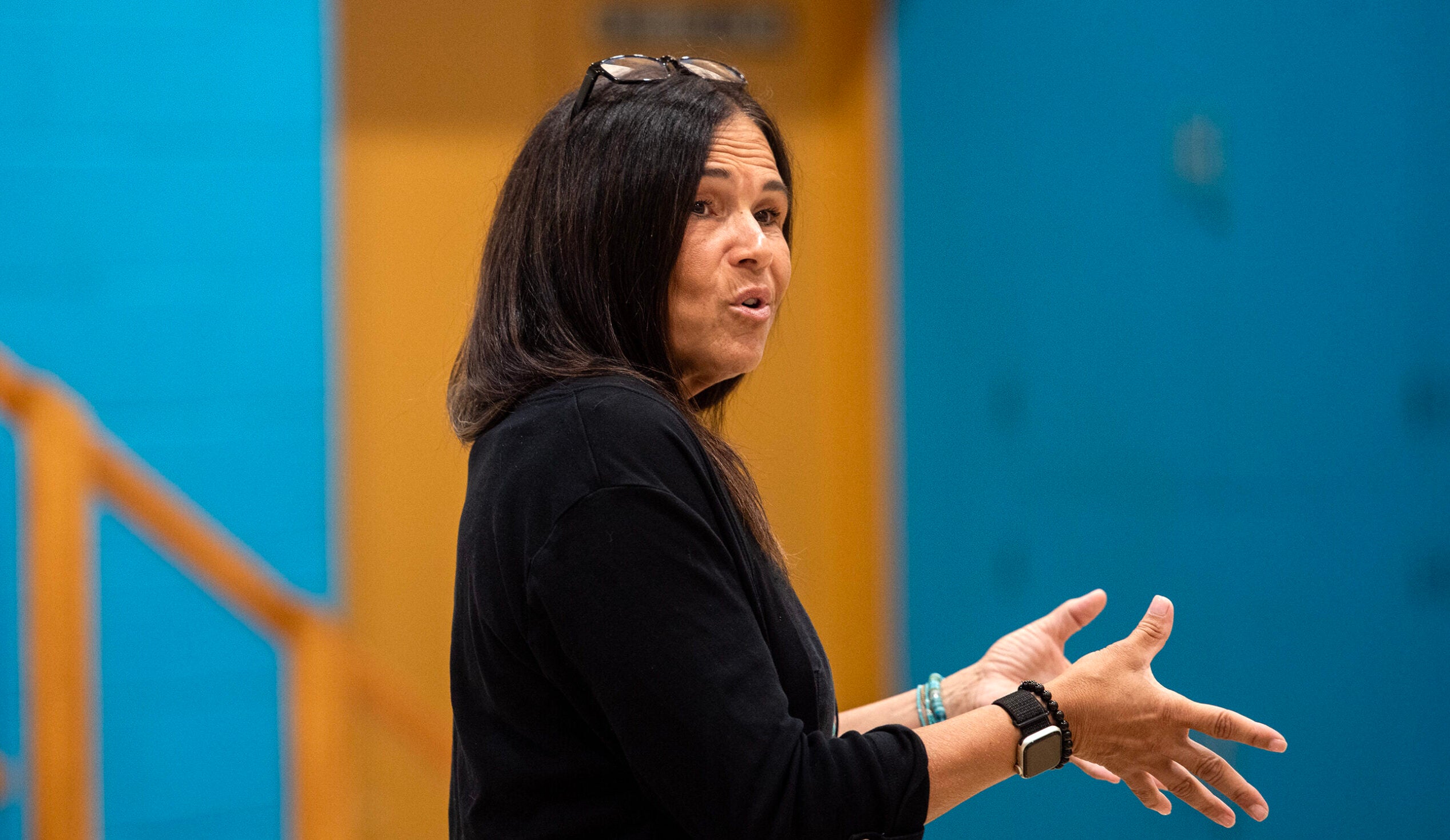
MPS Superintendent Brenda Cassellius said the schools will be ready to open in time for the first day of school Sept. 2. But she said the cost of repairs and replacement of damaged equipment could reach into the millions.
That comes as the district is spending about $25 million on lead remediation.
News with a little more humanity
WPR’s “Wisconsin Today” newsletter keeps you connected to the state you love without feeling overwhelmed. No paywall. No agenda. No corporate filter.
Cassellius said the region’s record-setting flash flooding on Aug. 9 and 10 damaged 22 MPS buildings. She said Riverside High School and Barack Obama School of Career and Technical Education had the most destruction.
And while the total cost of the damage is still being calculated, just one computer lab at Riverside will cost the district $100,000 to repair, Cassellius said.
“There’s a lot that needs to be replaced,” Cassellius said. “Floors that were buckling, different technology systems and wiring.”
Despite the damage, she said all of the buildings should be ready for students when classes open.
“We’re monitoring the situation closely, and making sure there’s no residual effects with any kind of mold due to the standing water that was there,” Cassellius said Wednesday.
Cassellius said the mounting financial cost of work in the district’s aging schools — the average age of the district’s 150 buildings is 87 years old — will require a long-term financial solution.
She said she would like to see the state Legislature create a separate bonding authority for school capital projects. That would be a new concept in Wisconsin, but Cassellius said her idea comes from the system used in several other states.
Currently, districts need to win voter support through referendum for most capital spending over $1 million.
Flooding affected lead remediation
The flooding also affected ongoing lead remediation work being done at schools across the district.
One of the main contractors working on the lead project was called away to help Milwaukee residents clean out their properties, Cassellius said.
The project was also set back by heat waves over the summer. She said there were a few days when 30 painters walked off the job because of the heat inside buildings.
MPS parents and guardians were first notified in January that a student had lead poisoning.
From there, the issue snowballed, revealing dangerous levels of lead contamination at multiple schools due to the use of lead paint prior to 1978.
Nine schools were temporarily closed and their students relocated during the 2024-25 school year. Those schools have been cleared of lead hazards. Another 14 schools are still in the process of stabilization and will be ready by Sept. 2, Cassellius said.
“It’s not like you just go and slap new paint on,” Cassellius told WPR. “Sometimes you go in there, and you have to replace electrical and change the plumbing out. You never know what you are going to find once you start doing the work.”
Lead remediation is costing MPS about $25 million. Cassellius has budgeted another $16 million for more janitors and deferred maintenance projects in next year’s budget.
That’s because once the lead issue is fixed, there is a lot more work to do to maintain the district’s nearly century-old buildings.
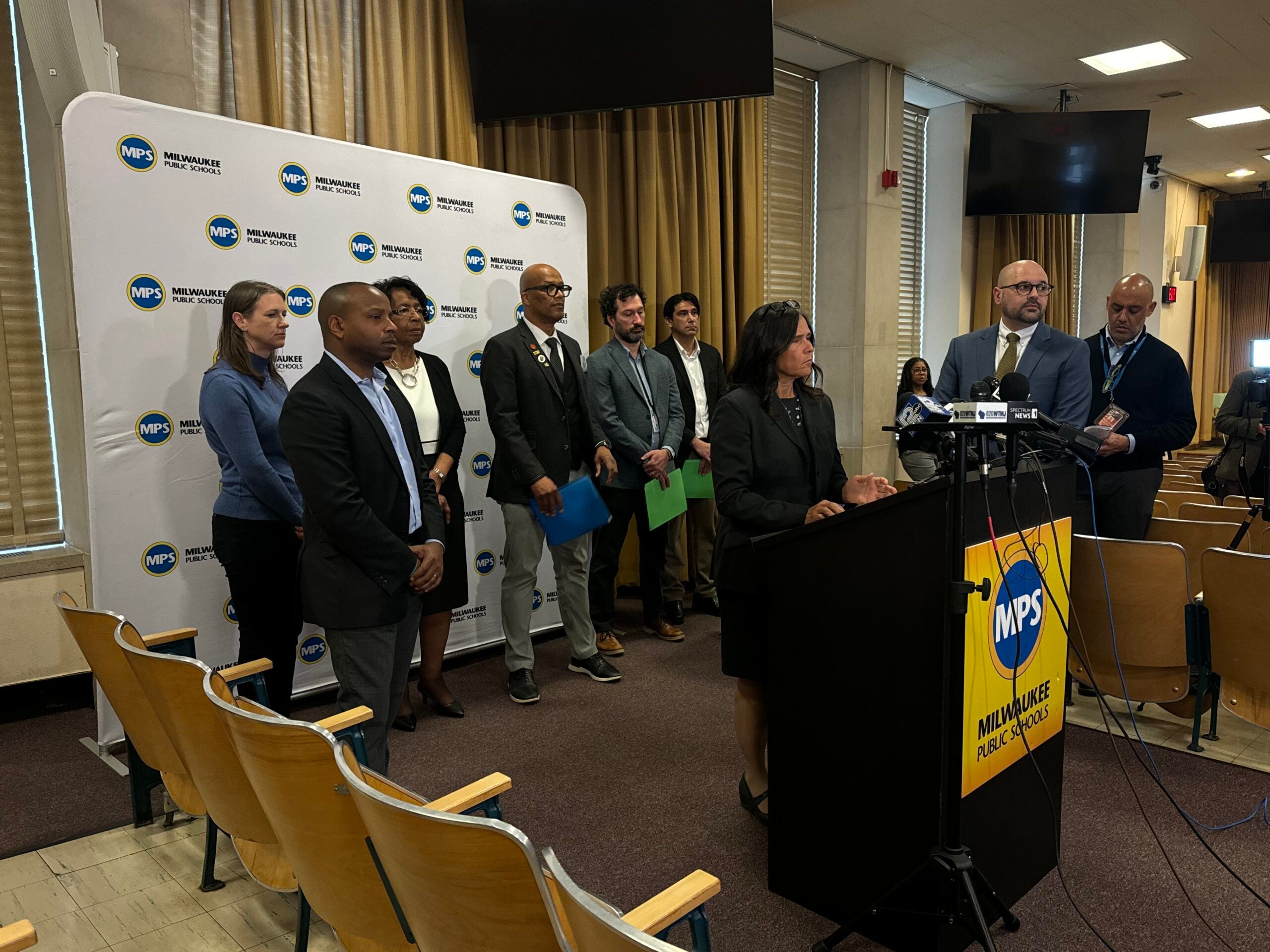
Cassellius wants state bonding authority for capital projects
Before coming to Milwaukee, Cassellius served as Minnesota’s Commissioner of Education and superintendent of Boston Public Schools.
While in Boston, she secured $2 billion in 2022 for the school district’s facilities working with the city and state.
She also worked with the Massachusetts School Building Authority to fund a $91.9 million project to replace a K-12 school with a new facility. The MSBBA receives a dedicated revenue stream of one penny from each dollar raised by that state’s 6.25 percent sales tax.
Cassellius believes a similar system can be set up in Wisconsin.
“They need to create a school bonding authority or a building authority because the needs in Wisconsin are huge, like they are in Massachusetts,” Cassellius said. “I would say we need a 100-year plan, because we have 156 schools.”
MPS already has the authority to issue bonds through the city of Milwaukee. The City issues short-term and long-term debt on behalf of MPS, but Wisconsin statutes do not allow MPS to issue debt on its own, said Bill Christianson, Milwaukee comptroller.
The Massachusetts School Building Authority is a quasi-independent government authority created in 2004 to replace the former school building assistance program administered by the state Department of Education. It works with local communities to create affordable, sustainable, and energy-efficient schools across Massachusetts, according to its website.
In Wisconsin, school districts depend on voter approval both for capital projects and for operating revenue above the state’s funding cap.
In April 2024, Milwaukee voters narrowly passed a $252 million referendum.
Cassellius said that money is for district operations — not the aging facilities and capital improvements needed.
“Climate change is real. We saw the flood and the disaster that has caused,” she said. “Those disasters will continue to happen as climate change continues to worsen.”
MPS already closes school when it is too hot. But some days, when it is 75 degrees outside, classrooms are still nearly 90 degrees because their windows don’t open and ventilation systems are old, Cassellius said.
“I’ve asked everyone to help us with funding for this,” Cassellius said. “I have talked to the Milwaukee delegation, asked them to go to the state.”
Cassellius said when she was superintendent of the Boston school system, she got $2 billion for school capital projects, and she would like the same for Milwaukee.
But getting the political support needed for that kind of change from Wisconsin’s GOP-led Legislature is unlikely.
“There’s the question of what’s possible via policy, and then there’s the question of what’s possible via politics,” said Sara Shaw, senior researcher with the Wisconsin Policy Forum. “Yes, there are cuts you could get from taxes and there are bonding possibilities. But those are policy possibilities.”
The state Legislature has long had an adversarial relationship with the city.
For years, the city of Milwaukee and Milwaukee County asked legislators to increase its sales tax to help cover budget shortfalls. An agreement was reached, with stipulations, including putting police back in Milwaukee schools.
Cassellius, who arrived in Milwaukee in March, is frustrated with the lack of support she has seen for her district.
“Not just for the money, but for the political will, and for their belief in the system and the importance that Milwaukee plays,” Cassellius said. “As the city schools go, so does the city. It’s a huge economic hub for the state. It’s very short-sighted not to invest in children’s future across all of Wisconsin.”
Over the next year, MPS will be looking at merging some schools and closing some of the school buildings.
It’s “nothing anyone wants to hear,” Cassellius said, “but I have to bring the tough conversation to the community and make some choices too.”
Thirteen schools, located mostly on the city’s north side, are candidates for possible closure or merger.
According to the district, those schools are less than 50 percent full, have experienced declining enrollment over the last five years, and are less than one mile from another under-enrolled school.
No schools will be closed during the 2025-26 school year.
Jason Stein, who heads the Wisconsin Policy Forum, said before any type of statewide bonding authority moves forward, MPS should have a handle on what buildings will still be open and what their needs are.
“And with respect to that, I would say we would need to have more information about this authority,” Stein said.
Editor’s note: This story has been updated to reflect the agreement between the city of Milwaukee and MPS.

Wisconsin Public Radio, © Copyright 2026, Board of Regents of the University of Wisconsin System and Wisconsin Educational Communications Board.